
In This Article
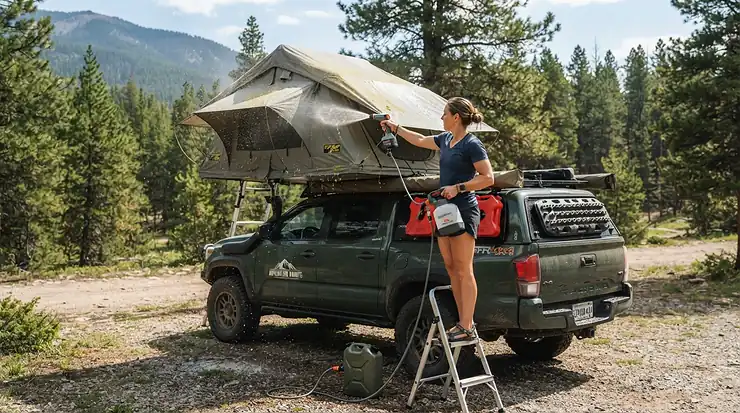
Mud has a personality. It waits until the exact moment you’ve loaded the last cooler into the truck, then it throws itself across your tires, your boots, your bike frame, and somehow the inside of the awning too. If you’ve ever tried scrubbing dried-on campfire soot off a folding chair with a damp paper towel, you already know why a portable pressure washer for camping earns its spot in the gear closet next to the tent poles and the propane stove.
A portable pressure washer for camping is a compact, battery-powered or lightweight electric cleaning tool that blasts water at higher pressure than a garden hose, letting you rinse mud, grease, and grime off vehicles, gear, and RV exteriors without a spigot or a generator running a full-size unit. Unlike the bulky gas rigs sitting in a garage corner, these tools are built to travel — some weigh less than a bag of charcoal.
This guide digs into seven real, currently sold models spanning ultralight cordless cleaners to a corded electric option built for a full RV rinse at a shore-power site. We’ll compare specs honestly, translate PSI and GPM numbers into what they actually mean at a campsite, and walk through setup, common mistakes, and campground etiquette so you’re not the person hosing down a truck bed at 7 a.m. three sites over from a still-sleeping neighbor. Whether you’re outfitting a weekend car-camping kit or maintaining a full-time RV, there’s a model here that fits your rig, your budget, and your patience for battery swaps.
What Is a Portable Pressure Washer for Camping?
A portable pressure washer for camping is a battery-powered or lightweight electric cleaning device — usually under 10 pounds — designed to spray pressurized water from a bucket, tank, or natural water source for cleaning vehicles, gear, and RVs away from a home spigot or outlet.
That definition sounds simple, but the category covers a surprisingly wide range of tools. On one end, you’ve got cordless “power cleaners” that top out around 300-500 PSI, closer in force to a firm garden hose than a driveway pressure washer — perfectly fine for rinsing sand off a kayak or dust off a mountain bike. On the other end, brushless cordless units pushing 700+ PSI can knock caked mud off tire treads, and corded compact electrics can genuinely deep-clean an RV’s siding when you’ve got a 110V outlet at the campsite. According to Wikipedia’s overview of pressure washing, consumer-grade machines typically range from a few hundred PSI up into the thousands, and the flow rate — measured in gallons per minute — matters just as much as raw pressure for how fast a job actually gets done. Keep both numbers in mind as you compare the picks below.
Quick Comparison Table
Before we get into the deep dive, here’s the fast version for anyone standing in a parking lot trying to decide between two browser tabs.
| Product | Power Source | Max PSI / GPM | Weight | Price Range | Best For |
|---|---|---|---|---|---|
| Worx Hydroshot WG629 | 20V Battery | 320 PSI / 0.53 GPM | 3.7 lbs | under $80 | Lightest budget pick |
| Ryobi ONE+ EZClean RY120352K | 18V Battery | 320 PSI / 0.8 GPM | 4.4 lbs | $90-$120 range | Ryobi tool owners |
| Ryobi ONE+ HP EZClean RY121850 | 18V Battery | 600 PSI / 0.7 GPM | 5.8 lbs | $130-$160 range | More power, same platform |
| Worx Hydroshot Max WG644 | 40V (2x20V) Battery | 450 PSI / 0.9 GPM | 7.3 lbs | $130-$150 range | All-day battery life |
| Worx Nitro Hydroshot Plus WG633 | 20V Brushless Battery | 710 PSI / 1.0 GPM | around 5 lbs | $150-$180 range | Baked-on grease and grime |
| Worx Hydroshot Ultra WG649 | 40V Brushless Battery | 725 PSI / 1.10 GPM | around 7 lbs | $180-$210 range | Most powerful cordless |
| Westinghouse ePX3100v | Corded Electric | 2100 PSI / 1.76 GPM | around 18 lbs | $150-$180 range | Full RV washdowns at shore power |
Looking at the spread, the jump from the sub-$100 cordless cleaners to the brushless 700+ PSI models roughly doubles cleaning speed on stubborn grime, while the corded Westinghouse ePX3100v lives in an entirely different weight and power class built for actual pressure-washer-grade jobs. If your camping setup rarely has access to an outlet, the battery-powered options above the table are your real shortlist; if you’re parked at an RV site with 30-amp or 50-amp shore power, the corded pick becomes worth the extra bulk.
💬 Already have a favorite on this list? Give this guide a share — it helps other campers find the right tool faster!
Top 7 Portable Pressure Washers for Camping: Expert Analysis
1. Worx Hydroshot WG629 — lightest cordless washer you can buy
At 3.7 pounds fully assembled with battery and lance, the standout feature of the Worx Hydroshot WG629 is that it disappears into a packed trunk without anyone noticing. This 20V model delivers 320 PSI and 0.53 GPM, numbers that put it firmly in “spot cleaning” territory rather than driveway-stripping territory. The included 20-foot draw hose and bottle adapter mean you can pull water straight from a lake, a filled bucket, or even a soda bottle, which matters more than raw PSI when you’re three miles from the nearest spigot.
Based on the spec comparison against the rest of this list, the WG629 is the clear pick for anyone who wants “better than a hose” without adding real weight to a packing list — think dusty bike frames, muddy boots, or a quick rinse on camp chairs, not caked-on RV road grime. Reviewers consistently note that the five-way adjustable nozzle covers everything from a gentle shower setting to a focused jet, and that battery life comfortably covers a full cleaning session for smaller gear.
Pros:
- ✅ Among the lightest true cordless washers on the market
- ✅ Bottle adapter lets you clean almost anywhere with any water source
- ✅ Compatible with the broader 20V Power Share battery ecosystem
Cons:
- ❌ 320 PSI struggles with heavily caked mud or grease
- ❌ Smaller battery means shorter runtime on bigger jobs
Priced in the under-$80 range at the time of research, the Worx Hydroshot WG629 is the easy first purchase for anyone testing whether a portable pressure washer for camping earns a permanent spot in the gear bin.

2. Ryobi ONE+ EZClean RY120352K — best pick if you’re already on the Ryobi platform
The Ryobi ONE+ EZClean RY120352K matches the Worx entry-level unit on paper — 320 PSI, but a slightly better 0.8 GPM flow rate — while weighing in at 4.4 pounds. The standout advantage here isn’t the spray itself; it’s the battery. If you already own an 18V ONE+ drill, string trimmer, or leaf blower, this washer runs on the exact same 4.0Ah pack, which means one charger and one battery drawer instead of juggling incompatible ecosystems in the camper’s storage bay.
What most buyers overlook about this model is that the 20-foot siphon hose pulls from any fresh water source — a river, a lake, a filled cooler — making it genuinely useful at primitive sites with zero hookups. The 3-in-1 nozzle (turbo, 15-degree fan, and rinse) covers most camp-cleaning scenarios without fussing over settings mid-job. On paper this means solid value for anyone with an existing Ryobi collection; less so if you’d be buying into a brand-new battery platform just for this tool.
Pros:
- ✅ Shares batteries with 300+ other Ryobi ONE+ tools
- ✅ 0.8 GPM flow clears debris faster than similarly rated rivals
- ✅ Water-resistant battery enclosure adds peace of mind outdoors
Cons:
- ❌ 320 PSI ceiling limits it to lighter cleaning duties
- ❌ Heavier than the Worx entry-level competitor
At around $90-$120 depending on the bundle, this is the rational choice for Ryobi loyalists — check current pricing before assuming the bare-tool or kit version fits your budget.
3. Ryobi ONE+ HP Brushless EZClean RY121850 — most pressure per pound on 18V
Nearly double the pressure of its sibling above, the Ryobi ONE+ HP Brushless EZClean RY121850 pushes 600 PSI at 0.7 GPM using an 18V brushless motor, weighing about 5.8 pounds with the battery installed. The brushless motor is the real story here: reviewers and tool testers who’ve run it side-by-side with older brushed cordless washers consistently report noticeably more power for spot-cleaning concrete, wheels, and grills without stepping up to a full pressure washer.
Here’s what to weigh: 600 PSI is enough to knock dried mud off tire treads and clean a grill grate in a fraction of the time a 320 PSI unit needs, but it’s still not a substitute for a driveway-grade machine on large flat surfaces like an RV’s full exterior. Aggregated reviewer sentiment describes the compact 31-inch wand length as more maneuverable than bulkier competitors, useful for reaching under a lifted truck or around a tight RV wheel well. The tradeoff for that extra pressure is battery drain — expect shorter total runtime than the entry-level EZClean per charge.
Pros:
- ✅ Brushless motor nearly doubles pressure over base ONE+ model
- ✅ Compact 31-inch wand fits tight RV and vehicle spaces
- ✅ Shares the same 18V ONE+ battery ecosystem
Cons:
- ❌ Shorter runtime per charge than lower-pressure models
- ❌ Still underpowered for large, flat concrete or siding areas
Expect a $130-$160 range for the kit with battery and charger, which is a fair value verdict for anyone wanting a genuine power step up without leaving the ONE+ platform.
4. Worx Hydroshot Max WG644 — best battery life for all-day trips
The Worx Hydroshot Max WG644 runs on two 20V batteries simultaneously (effectively 40V), delivering 450 PSI at 0.9 GPM while weighing about 7.3 pounds fully loaded. The dual-battery setup is the standout feature — it roughly doubles runtime over a single-battery Hydroshot, which the spec sheet won’t tell you outright but which matters enormously on a long weekend when there’s no outlet in sight to recharge.
Based on the spec comparison, the WG644 sits deliberately between the entry-level cleaners and the brushless premium models: enough pressure for washing down an RV’s lower panels, awning frame, and wheel wells, but not quite in “strip the driveway” territory. The four-way adjustable nozzle and dual high/low pressure settings (450 PSI high, 290 PSI low) give you flexibility between a gentle rinse for camp furniture and a firmer blast for tires. User reports consistently mention the onboard battery-level display as a small but genuinely useful touch when you’re rationing power across a multi-day trip.
Pros:
- ✅ Dual-battery design roughly doubles runtime per charge
- ✅ Two pressure settings cover delicate and tough jobs
- ✅ Onboard battery indicator helps plan multi-day power use
Cons:
- ❌ Heavier than single-battery Hydroshot models
- ❌ Requires two charged batteries to hit full 450 PSI output
Typically found in the $130-$150 range, the WG644 earns its price through runtime rather than raw pressure — a smart trade for RV owners cleaning multiple surfaces over a full weekend away from an outlet.
5. Worx Nitro Hydroshot Plus WG633 — best for baked-on grease and grime
Stepping into brushless territory, the Worx Nitro Hydroshot Plus WG633 delivers 710 max PSI and 1.0 GPM, and — unusually for this category — supports hot water use for tougher grease and grime. The brushless motor is the headline upgrade: WORX states it delivers more power, longer runtime, and significantly longer motor life than the brushed motors found in cheaper cordless washers, and reviewers evaluating brushless versus brushed Hydroshot models consistently back that up in practice.
What most buyers overlook about a 700+ PSI cordless washer is that it closes most of the performance gap with small corded electric units while remaining genuinely portable — this is the model that finally makes stubborn campfire grease on a grill grate or dried bug splatter on a bumper a two-minute job instead of a ten-minute scrub. The quick-connect hose still draws from lakes, pools, or any freshwater source, so you’re not tethered to a spigot even at this power level. The extended lance also reaches into wheel wells and behind slide-outs that shorter wands can’t manage.
Pros:
- ✅ Brushless motor delivers meaningfully more cleaning power
- ✅ Hot water compatibility helps cut through grease
- ✅ Extended lance reaches tight, awkward spots
Cons:
- ❌ Premium pricing compared to entry-level cordless models
- ❌ Higher pressure demands more careful handling near paint or decals
At roughly $150-$180, this is the pick for campers and RV owners who cook a lot over open flame and need something that actually cuts grease, not just rinses dust.
6. Worx Hydroshot Ultra WG649 — most powerful cordless model on this list
The Worx Hydroshot Ultra WG649 tops out at 725 max PSI and 1.10 GPM, powered by twin 20V batteries through a high-efficiency brushless motor — the strongest cordless option covered here. The four-way pressure nozzle and dual pressure settings (725 PSI high, 435 PSI low) mean you’re not locked into maximum force for every task; you can dial back for camp chairs and dial up for a mud-caked wheel well in the same session.
On paper, this means the Ultra edges out the Nitro Hydroshot Plus on both pressure and flow rate, though it drops the hot-water feature in exchange for that extra headroom. Reviewers and home-improvement testers who’ve run the Ultra against earlier Hydroshot generations consistently describe it as the closest a cordless unit gets to matching a small corded electric pressure washer’s actual cleaning speed, while still weighing in around 7 pounds with both batteries attached. That’s the honest tradeoff here: maximum cordless power, but you’ll want two charged batteries on hand for extended cleaning sessions.
Pros:
- ✅ Highest PSI and GPM of any cordless model reviewed here
- ✅ Dual pressure settings adapt to delicate and heavy-duty jobs
- ✅ Brushless motor extends both runtime and long-term durability
Cons:
- ❌ Highest price point among the cordless options covered
- ❌ Requires two charged batteries for peak performance
Expect a $180-$210 range at the time of research — a legitimate premium pick for RV owners who want cordless flexibility without sacrificing meaningfully on power.
7. Westinghouse ePX3100v — best for full RV washdowns at shore power
Stepping outside the battery-powered category entirely, the Westinghouse ePX3100v is a corded electric pressure washer delivering up to 2100 max PSI and 1.76 GPM — power that belongs to a completely different class than anything cordless on this list. At roughly 18 pounds with a built-in carry handle, it’s still light enough to lift in and out of an RV storage bay, and the detachable foam cannon and steel wand make it genuinely capable of stripping road grime off an entire motorhome exterior, not just spot-cleaning gear.
The spec sheet won’t tell you this, but user reports suggest the real value here shows up specifically at campgrounds and RV parks with 30-amp or 50-amp shore power hookups — the corded design is a non-issue when you’re already plugged in, and the extra pressure cuts washdown time dramatically compared to any cordless option above. Reviewers evaluating compact electric washers for RV use consistently flag the anti-tipping base and low center of gravity as practical wins on uneven gravel pads, where a top-heavy unit would otherwise tip over mid-job.
Pros:
- ✅ 2100 PSI delivers genuine pressure-washer-grade cleaning power
- ✅ Foam cannon simplifies full-exterior RV soap-and-rinse jobs
- ✅ Anti-tipping base stays stable on gravel or uneven pads
Cons:
- ❌ Requires a 110V outlet, ruling out boondocking sites
- ❌ Heavier and bulkier than every cordless option on this list
Typically priced in the $150-$180 range, the ePX3100v is the honest answer for anyone whose “camping” mostly means a seasonal RV site with hookups rather than backcountry dispersed camping.
Setting Up Camp Cleaning Day: A Practical Usage Guide
Getting the most out of any portable pressure washer for camping starts before you ever pull the trigger. Charge every battery to full the night before departure — cordless models lose a small amount of charge sitting in storage, and nothing kills a cleaning session faster than a “fully charged” pack that’s actually at 60%. Pack the siphon hose and bottle adapter even if you’re planning to use a campground spigot; water sources at dispersed sites are unpredictable, and having the option to draw from a lake or filled bucket is the whole point of “portable.”
On first use, start with the lowest pressure nozzle setting and work your way up. This isn’t just about protecting delicate surfaces like decals or awning fabric — it’s the fastest way to learn how a given model’s spray pattern behaves before you’re aiming it at something you actually care about. A common mistake in the first 30 days of ownership is holding the nozzle too close to painted surfaces at high pressure, which can strip clear coat on vehicles and RVs alike.
For maintenance, rinse the intake filter after every use, especially if you’ve been drawing water from a lake or river — sediment is the leading cause of reduced flow over time. Store batteries partially charged (40-60%) rather than fully drained or fully charged for long-term storage between trips, and keep them out of direct sun in a hot vehicle; the Consumer Product Safety Commission’s guidance on lithium-ion battery safety is worth a quick read if you’re new to cordless tool ecosystems, since heat and physical damage are the two biggest risk factors for any lithium-ion pack, not just the ones in your pressure washer.
Real Campsite Scenarios: Matching the Washer to the Trip
If you’re a weekend car camper heading out with a hatchback full of gear and a mountain bike on the roof, the Worx Hydroshot WG629 or Ryobi ONE+ EZClean RY120352K cover everything you’ll actually need — rinsing trail dust off bike frames, hosing sand out of camp shoes, and cleaning cookware without hauling anything heavy. Budget matters here, frequency of use is low, and the environment is usually dry campgrounds with a bathhouse spigot nearby as backup.
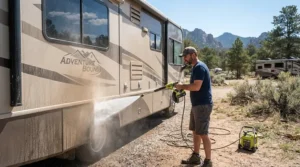
If you’re a full-time or seasonal RVer parked at a campground with 30-amp shore power, the math changes. The Westinghouse ePX3100v makes sense as your primary washer for full-exterior cleanings a few times a season, backed up by something like the Worx Nitro Hydroshot Plus WG633 for quick spot-cleaning between full washdowns — bug splatter on the front cap, mud on the steps, grease on the grill from last night’s dinner. This two-tool combination covers both “deep clean” and “daily touch-up” without forcing one machine to do everything.
If you’re a boondocker or dispersed-camping regular with zero hookups and limited water, the Worx Hydroshot Max WG644 or Worx Hydroshot Ultra WG649 are the honest picks — the dual-battery runtime and higher pressure per charge matter more than anything corded ever could, since you’re working entirely off stored power and hauled or siphoned water. Frequency of use tends to be lower per trip but the stakes for reliable runtime are higher when there’s no outlet for a hundred miles.
Problem → Solution: Fixing the Most Common Camp Cleaning Headaches
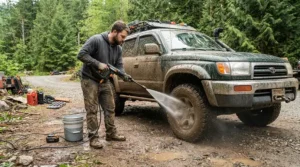
Problem: Dried, caked-on mud that a garden hose won’t touch. A sub-400 PSI cordless washer like the Worx Hydroshot WG629 often just scatters dried mud rather than lifting it. The solution is either stepping up to a 600+ PSI model like the Ryobi ONE+ HP Brushless EZClean RY121850, or pre-soaking the area for a few minutes before hitting it with lower pressure — patience saves battery life either way.
Problem: Running out of battery mid-job at a site with no outlet. This is where dual-battery designs like the Worx Hydroshot Max WG644 or Worx Hydroshot Ultra WG649 genuinely outperform single-battery units, but a simpler fix for any model is just packing a spare battery in your Power Share or ONE+ ecosystem rather than assuming one charge will cover an entire RV washdown.
Problem: Grease from cast-iron cooking that won’t rinse off with cold water alone. Cold-water cordless units struggle here regardless of PSI. The Worx Nitro Hydroshot Plus WG633‘s hot water compatibility solves this directly; short of that model, a degreasing pre-spray and cold water at maximum pressure is the workaround.
Problem: No fresh water source anywhere near the campsite. Every model on this list except the Westinghouse ePX3100v ships with a siphon or draw hose designed to pull from a bucket, lake, or bottle — the fix is simply remembering to pack it, since it’s often the first accessory left behind in a rushed packing job.
How to Choose a Portable Pressure Washer for Camping
- Start with weight, not PSI. Anything you won’t actually carry to the campsite is useless — prioritize sub-8-pound cordless models unless you have dedicated RV storage and shore power.
- Match PSI to your actual cleaning tasks. 320 PSI handles dust and light debris; 600-750 PSI handles caked mud and grease; anything beyond that typically means stepping up to a corded electric unit like the ePX3100v.
- Check battery compatibility with tools you already own. A washer that shares batteries with your existing drill or trimmer effectively costs less and takes up less storage space.
- Consider your water source situation honestly. If you’re regularly at sites without a spigot, prioritize models with siphon hoses and bottle adapters over raw pressure numbers.
- Factor in runtime, not just charge time. Dual-battery models roughly double usable cleaning time per outing, which matters far more on a multi-day trip than an extra 50 PSI.
- Decide whether hot water matters. If you cook over an open fire or grill often, a hot-water-capable model cuts grease-cleaning time significantly.
- Budget for accessories, not just the base unit. Extra nozzles, spare batteries, and a proper storage bag often add real value for a relatively small additional cost.
Common Mistakes When Buying a Compact Pressure Washer for RV Cleaning
The single most common mistake is buying based on PSI alone without checking GPM. A high-PSI, low-flow unit can feel underwhelming on larger surfaces like RV siding because it’s simply not moving enough water to cover ground quickly — flow rate is what clears debris across a wide area, while pressure is what dislodges it in the first place. Ignoring GPM is how buyers end up disappointed with a spec sheet that looked impressive in the store.
Another frequent misstep: assuming a corded electric unit will work at every campsite. Boondockers and dispersed campers regularly buy a compact electric pressure washer, only to realize there’s no outlet for three days. Always confirm your typical camping style before choosing power source over portability.
Buyers also tend to underestimate battery ecosystem lock-in. Choosing a cordless washer on a battery platform you don’t already own means buying into an entirely new charger and battery family — fine if you’re starting from scratch, costly if you already have a garage full of a competing brand’s tools. Finally, skipping the intake filter and siphon hose accessories is a mistake that surfaces later: without them, you’re limited to whatever water source is directly at hand, which defeats much of the “portable” appeal in the first place.
Portable Pressure Washer vs Garden Hose vs Full-Size Pressure Washer
A garden hose with a spray nozzle typically produces something in the range of 40-60 PSI — enough for watering plants, not enough to lift dried mud or grease. A portable pressure washer for camping, even at the entry level 320 PSI tier, delivers roughly five to seven times that pressure, which is the difference between rinsing and actually cleaning. On the other end, a full-size gas or corded pressure washer can push 2,000-3,000+ PSI, but at 25-35+ pounds with a bulky hose reel, it’s simply not something most campers are hauling to a site.
| Comparison | Garden Hose | Portable Pressure Washer (Cordless) | Full-Size Pressure Washer |
|---|---|---|---|
| Typical PSI | 40-60 PSI | 320-725 PSI | 2,000-3,000+ PSI |
| Weight | N/A (hose only) | 3.7-7.3 lbs | 25-35+ lbs |
| Power Source | Spigot required | Battery, portable | Gas or 110V/220V corded |
| Best For | Watering, light rinsing | Camping, RV gear, spot cleaning | Driveways, siding, heavy-duty jobs |
The analysis here is straightforward: a garden hose can’t lift caked-on grime no matter how long you spray it, while a full-size pressure washer solves the power problem but creates a portability problem that defeats the purpose for most camping and RV use. The portable pressure washer category exists precisely in the gap between those two extremes — enough force to actually clean, light enough to actually bring along.
What to Expect: Real-World Performance at the Campsite and on the Road
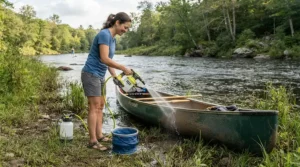
Specs on a box rarely translate directly into what happens in the field. A 320 PSI cordless model, in practice, handles a full bike-and-boots rinse in about two to three minutes per item — noticeably faster than a hose, but you’ll still be scrubbing stubborn spots by hand. Step up to 600-725 PSI and that same job often takes under a minute, with visibly less manual scrubbing required on mud and light grease.
Battery runtime in real conditions tends to run shorter than lab-rated numbers suggest, particularly in cold morning air at higher-elevation campsites — expect 15-25% less usable time than the manufacturer’s stated runtime once you factor in colder battery chemistry and continuous high-pressure use rather than intermittent bursts. Noise is another underrated factor: cordless models run notably quieter than gas units, which matters more than people expect at 7 a.m. in a quiet campground where a rumbling engine can draw irritated looks from neighboring sites.
Water consumption surprises first-time buyers too. Even a modest 0.7-0.9 GPM unit runs through a 5-gallon bucket in under ten minutes of continuous spraying, so realistic sessions involve pausing, refilling, and working in shorter bursts rather than one continuous blast — a rhythm that becomes second nature after the first trip or two.
Long-Term Cost & Maintenance for Camping Equipment Maintenance
Total cost of ownership for a portable pressure washer for camping extends well beyond the sticker price. Replacement batteries for cordless models typically run $40-$80 each depending on capacity, and a well-used unit might need a replacement pack every two to four seasons of regular camping trips. Corded electric units skip battery replacement entirely but carry a higher upfront price and less flexibility at sites without power.
Maintenance costs are relatively low across the board. Intake filters occasionally need cleaning or replacing, and O-rings on quick-connect fittings wear out after repeated seasons of use — inexpensive parts, but worth budgeting a small annual allowance for. Value-per-use calculations favor the mid-range picks like the Ryobi ONE+ HP Brushless EZClean RY121850 or Worx Hydroshot Max WG644 for most campers: enough power to handle real jobs without the premium price tag of the top-tier brushless models, and without the shore-power dependency of the corded option. For RVers who use their washer weekly during camping season, the higher upfront cost of a premium model like the Worx Hydroshot Ultra WG649 or the Westinghouse ePX3100v amortizes quickly against the time saved per cleaning session — the math tilts differently for someone who camps three weekends a year versus someone living in their rig full time.
Safety, Regulations & Campground Water Rules
Even a compact cordless washer produces a forceful jet of water, and basic precautions apply regardless of PSI rating. Never point the nozzle at yourself, another person, or an animal, and keep the trigger lock engaged during transport and storage. While OSHA’s workplace standards are written for professional settings rather than casual camping use, the underlying logic still applies at home: OSHA’s eye and face protection standard recommends protective eyewear whenever there’s a risk of flying debris, which is exactly what happens when a jet of water dislodges gravel, dried mud, or bark from a surface at close range. Basic safety glasses are cheap insurance against a genuinely unpleasant afternoon.
Campground-specific rules matter just as much as equipment safety. Many private campgrounds and public sites restrict or outright prohibit vehicle and RV washing on-site, particularly where wastewater could run into shared grass, gravel pads, or nearby water sources — always check posted rules or ask the campground host before setting up a cleaning session. Where washing is permitted, direct the runoff away from any stream, lake, or shared water source; the National Park Service’s Leave No Trace principles specifically call out keeping wastewater and soap well clear of natural water sources, which applies just as directly to pressure-washer runoff as it does to dishwater. A biodegradable, phosphate-free soap is worth the small extra cost if you’re cleaning gear anywhere near a natural water source.
Lightweight Compact Design: Why Ounces and Inches Matter More Than PSI
It’s tempting to shop by pressure rating alone, but lightweight compact design is arguably the more important spec for anyone actually hauling this tool to a campsite. A washer that’s technically more powerful but sits unused in a garage because it’s too bulky to pack delivers zero real-world value. The difference between the Worx Hydroshot WG629 at 3.7 pounds and the Westinghouse ePX3100v at roughly 18 pounds isn’t just a number — it’s the difference between a tool that rides in a backpack pocket and one that needs a dedicated storage bay.
Compact design also affects how these tools perform in tight spaces. Shorter wands, like the roughly 31-inch design on the Ryobi ONE+ HP Brushless EZClean RY121850, maneuver more easily under a lifted truck or into an RV wheel well than the longer wands found on some competing models. Folding or collapsible components, quick-release nozzles, and mesh storage bags — features found across several Worx and Ryobi models here — all reduce the amount of space these tools consume in a packed vehicle or RV basement compartment. For anyone genuinely tight on space, prioritizing a sub-5-pound model with a compact folded footprint over an extra 100-150 PSI is usually the smarter trade.
RV and Gear Cleaning Beyond the Rig: Bikes, Boots, and Kitchen Kit
RV and gear cleaning covers far more than the vehicle itself. Mountain bikes, kayaks, camp chairs, cast-iron cookware, hiking boots, and even tent footprints all accumulate the kind of dirt that a quick hose rinse doesn’t fully remove. A portable pressure washer handles all of these without the scrubbing marathon a sponge and bucket demand, and the lighter cordless models covered above are arguably better suited to this gear-cleaning role than to full RV exteriors, simply because most gear doesn’t need 700 PSI to come clean.
Cast-iron cookware deserves a specific note: never use soap or high heat settings on seasoned cast iron, since it strips the seasoning layer that keeps it non-stick. A quick cold-water rinse at low pressure, followed by a thorough hand-dry and light oil coat, keeps cookware in good shape without pressure-washing away months of seasoning. For bikes and kayaks, a lower pressure setting protects bearings, seals, and decals from being blasted loose — high pressure aimed directly at a wheel hub or paddle seam can force water past seals meant to keep it out.
When you’re done for the day, always dispose of collected wastewater away from any stream, lake, or shared water source, consistent with standard outdoor wastewater guidance. A little care here keeps both your gear and the campsite in good shape for the next visitor.
Frequently Asked Questions
❓ How much PSI do I need for a portable pressure washer for camping?
❓ Can a compact pressure washer for RV cleaning actually clean an entire motorhome?
❓ How long does a cordless pressure washer battery actually last per charge?
❓ Is a portable pressure washer strong enough to remove dried, stuck-on mud?
❓ Can I legally use a pressure washer at a campground or RV park?
Conclusion
A portable pressure washer for camping isn’t a luxury gadget — it’s the difference between packing up a mud-caked trip and actually enjoying the drive home. Across the seven models here, the right pick genuinely depends on how you camp: weekend car campers do fine with the ultralight Worx Hydroshot WG629 or Ryobi ONE+ EZClean RY120352K, RVers splitting time between shore power and boondocking benefit from a dual-battery model like the Worx Hydroshot Max WG644, and full-time RVers with regular hookup access get the most value from the corded Westinghouse ePX3100v.
Whatever you choose, remember that PSI alone doesn’t tell the whole story — weight, flow rate, battery ecosystem, and your actual water access at typical campsites matter just as much. Check current prices before buying, since availability and pricing shift regularly, and always confirm your campground’s rules on vehicle washing before your first cleaning session on-site.
Recommended for You
- Car Washer With Water Tank For Driveway Washing: 7 Top Picks (2026)
- Pressure Washer With Water Tank for Remote Areas: 7 Top Picks 2026
- High-Flow Gas Pressure Washer for Large Driveways: 7 Top Picks 2026
Disclaimer: This article contains affiliate links. As an Amazon Associate, I earn from qualifying purchases. If you purchase products through these links, we may earn a small commission at no additional cost to you.
✨ Found this helpful? Share it with your friends! 💬🤗
