
In This Article
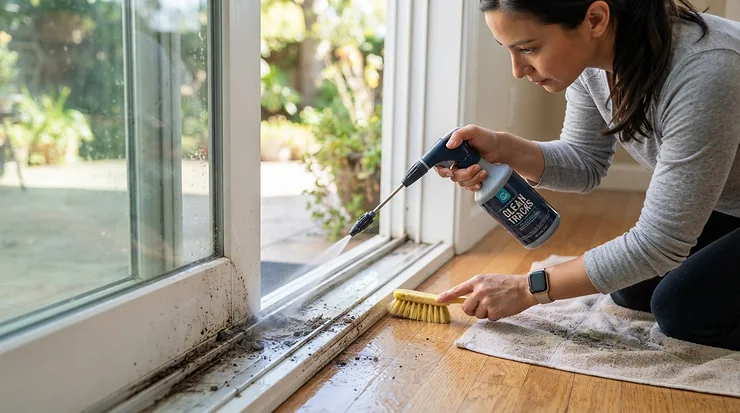
Here’s a scenario you’ve probably lived through: your bike is caked in trail mud, your patio chairs have that fuzzy green film, and hauling out a full-size pressure washer feels like using a sledgehammer to crack an egg. That’s exactly the gap a mini power washer for small cleaning jobs is built to fill. A mini power washer is a compact, lightweight cleaning tool — usually corded electric or battery-powered — that produces a concentrated water stream well above garden-hose pressure but well below the output of a full-size unit, typically in the 300 to 2,000 PSI range. According to Wikipedia’s overview of pressure washing, consumer-grade machines can range anywhere from 750 to well over 30,000 PSI, which tells you just how far down the “mini” category sits on that spectrum, and that’s precisely the point.
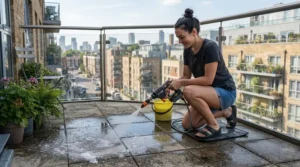
This roundup pulls together seven genuinely available models — from Sun Joe’s featherweight SPX200E to WORX’s cordless Hydroshot line — and picks them apart with honest, spec-grounded commentary instead of the vague “great product” language you’ll find on most listings. We looked at real aggregated customer feedback, cross-checked specs against manufacturer data, and weighed value against long-term maintenance. Whether you’re chasing a portable pressure washer under $100, something dedicated to bikes and small tools, or just a unit that won’t eat your garage shelf, you’ll find a fit here. Let’s get into it.
Quick Comparison Table
Before the deep dive, here’s a snapshot of how the top contenders stack up on the things that actually matter for small cleaning jobs: power, portability, and price tier.
| Model | Max PSI | Power Source | Best For |
|---|---|---|---|
| Sun Joe SPX200E | 870 PSI | Corded electric | Truly mini footprint under $100 |
| Greenworks GPW1501 | 1500 PSI | Corded electric | Best value under $100 |
| Karcher K2 Power Control | 1700 PSI (2000 max) | Corded electric | Bikes, patio furniture, all-rounder |
| WORX Hydroshot 20V | 415 MAX PSI | Battery/cordless | Cordless freedom for small tools |
Looking at this table, the pattern is clear: the corded electric models in the Sun Joe SPX200E and Greenworks GPW1501 class trade raw power for rock-bottom prices, while the Karcher K2 Power Control sits in the sweet spot of pressure and price for anyone regularly washing bikes or patio sets. The WORX Hydroshot 20V, meanwhile, sacrifices PSI for something the others can’t offer — zero cord, zero hose bib required. None of these numbers tell the whole story on their own, though, which is why the full breakdown below matters more than the table.
Just one click — help others make better buying decisions too!😊
Top 7 Mini Power Washers for Small Cleaning Jobs: Expert Analysis
1. Sun Joe SPX200E — lightest true mini for quick jobs
The Sun Joe SPX200E earns its “mini” label honestly — it’s built around a 10-amp motor in a body small enough to tuck onto a shelf rather than roll into a corner. Key specs with real-world meaning: it delivers up to 870 PSI at 1.32 GPM, which is roughly six to eight times the force of an open garden hose without approaching the territory where you’d risk stripping paint or splintering wood trim. Based on the spec comparison with the rest of this list, the Sun Joe SPX200E is the closest thing here to a dedicated small-item cleaning tool — patio furniture, bikes, grills, and window screens are its wheelhouse, not driveways.
Who it’s for: apartment dwellers, renters, and anyone whose cleaning list is short but frequent. Reviewers consistently note that its compact size and light weight make it easy to store in a closet, and aggregated feedback across major retailers frames it as dependable for exactly the kind of light-duty jobs it’s marketed for, though buyers with larger properties tend to outgrow it quickly.
Pros:
- ✅ Genuinely compact — one of the smallest true mini units available
- ✅ Twist nozzle adjusts from wide fan to concentrated jet instantly
- ✅ Budget-friendly enough to pair with a second, higher-PSI unit
Cons:
- ❌ 870 PSI struggles on baked-on driveway stains
- ❌ Stock accessory kit is fairly bare-bones out of the box
Price range: expect this one in the $70-$90 range at the time of research. Value verdict: for pure small-item cleaning, it’s hard to beat the price-to-portability ratio.
2. Greenworks GPW1501 — best value 1500 PSI compact
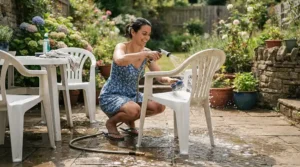
The Greenworks GPW1501 punches well above its price with a 13-amp motor rated at 1500 PSI and 1.2 GPM — enough headroom to tackle light concrete grime, not just wipe-down jobs. What most buyers overlook about this model is that its lack of wheels is actually a feature for the mini-cleaning crowd: at under 20 pounds, it’s genuinely easier to lift onto a shelf than to roll around a cramped garage. The 20-foot hose gives enough reach for most driveways and decks without a second hose extension.
Aggregated reviewer sentiment is notably consistent here: buyers repeatedly describe it as more powerful than its size suggests, and several long-term owners mention replacing a first-generation unit with this one after a decade of use, a good proxy for durability. On the flip side, a handful of reviewers reported assembly instructions that could be clearer, and at least one buyer noted a missing accessory nozzle in their box — worth a quick unboxing check.
Pros:
- ✅ 1500 PSI handles concrete grime, not just wipe-downs
- ✅ Under 20 lbs — easy one-hand carry and shelf storage
- ✅ Backed by a 3-year limited warranty
Cons:
- ❌ No wheels, which matters if your yard is large
- ❌ A few buyers report unclear assembly diagrams
Price range: commonly found in the $80-$100 range. Value verdict: this is the benchmark “portable pressure washer under $100” — genuinely capable, not just cheap.
3. WORX Hydroshot 20V Power Share — best cordless design for bikes and small tools
Here’s what the spec sheet won’t tell you outright: the WORX Hydroshot 20V trades PSI for total freedom from cords, hoses, and outlets. At 415 MAX PSI and roughly 0.92 GPM, it’s the lowest-pressure unit on this list, and that’s intentional — WORX markets it as a power cleaner, not a pressure washer replacement, specifically to avoid the false impression that it’ll strip a deck. Reviewers consistently note the appeal for cleaning window screens, bike frames, camping gear, and boat decks where a battery and a bucket of water beat dragging a hose across a yard.
Based on the spec comparison, its ultra-light 3.7-pound body (with battery and lance attached) makes it the easiest unit here to use one-handed while crouched next to a bike wheel — a genuinely different use case than the driveway-focused corded models. It runs on the same 20V Power Share battery platform as dozens of other WORX tools, which matters for buyers who already own compatible batteries.
Pros:
- ✅ Fully cordless — works anywhere with a bucket of water
- ✅ Lightest unit on this list at under 4 lbs
- ✅ Battery shared across 75+ WORX Power Share tools
Cons:
- ❌ 415 MAX PSI is too gentle for caked-on driveway dirt
- ❌ Battery runtime limits longer sessions without a spare
Price range: typically $130-$150 range with battery and charger included; bare-tool versions run lower for existing WORX battery owners. Value verdict: unmatched portability for bikes and small tools specifically, a poor fit for anything driveway-sized.
4. RYOBI ONE+ 18V EZClean — best if you’re already in the Ryobi ecosystem
The RYOBI ONE+ 18V EZClean delivers 600-700 PSI at roughly 0.7-0.8 GPM depending on the exact model number, drawing from the same 18V ONE+ battery family used across more than 300 Ryobi tools. Key specs with real-world meaning: a 4.0Ah battery is rated for about 25 minutes of continuous run time, which comfortably covers a bike, a grill, or a set of patio chairs in one charge. The adjustable pressure button (low, medium, high) is a genuinely useful touch most competitors in this price bracket skip.
Here’s the honest part: aggregated review sentiment on this model is more mixed than most on this list. Plenty of buyers report exactly the convenience they wanted — quick rinses for RVs, boats, and garden tools without hunting for an outlet. But a meaningful cluster of reviewers describe plastic housing and hose-fitting components cracking or breaking within weeks, and some describe frustrating warranty-claim experiences. If you already own Ryobi ONE+ batteries, the marginal cost is low enough to make the risk worth it; if you’re buying into the platform from scratch, weigh that durability feedback carefully.
Pros:
- ✅ Shares batteries with 300+ other Ryobi ONE+ tools
- ✅ Three adjustable pressure settings in one unit
- ✅ Genuinely cordless convenience for RVs, boats, campers
Cons:
- ❌ Multiple reviewers report cracked plastic fittings
- ❌ Warranty claims described as slow by some buyers
Price range: tool-only versions sit lower, while kits with battery and charger run in the $100-$160 range. Value verdict: best value specifically for existing Ryobi owners; new-to-platform buyers should budget for the possibility of an early replacement.
5. Karcher K2 Power Control — best all-rounder for bikes and patio furniture
Karcher markets the Karcher K2 Power Control explicitly for bicycles, garden tools, and patio furniture, and the spec sheet backs that framing up. It runs a 13-amp universal motor to a rated 1700 PSI (2000 PSI max) at 1.45 GPM, paired with a non-corrosive N-COR pump designed for longevity rather than raw output. What most buyers overlook about this model is the Vario Power spray wand, which lets you dial pressure down at the nozzle itself — genuinely useful when you’re a few inches from a bike derailleur and don’t want to blast grease into places it doesn’t belong.
Independent spec-tracking sites place its “cleaning units” score on the lower end for its $80-$110 competitive bracket, but frame that as a reasonable trade-off for a budget-friendly buy rather than a weakness. Reviewers and the brand’s own companion app both lean into the bike-and-small-object use case, with onboard cord and hose storage plus a telescopic handle making it genuinely easy to wheel in and out of a garage corner.
Pros:
- ✅ Explicitly designed and marketed for bikes and small gear
- ✅ Non-corrosive N-COR pump built for long-term reliability
- ✅ Companion app offers task-specific cleaning guidance
Cons:
- ❌ Cleaning power trails some rivals at a similar price
- ❌ Vario wand pressure adjustment takes a little practice
Price range: generally found in the $100-$140 range. Value verdict: the most purpose-built pick here for bikes and small tools specifically.
6. AR Blue Clean BC142HS — sturdiest build in the compact class
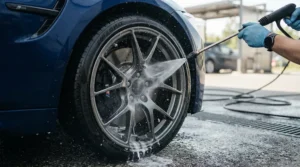
The AR Blue Clean BC142HS comes from Annovi Reverberi, an Italian pump manufacturer with more than five decades of experience building industrial triplex plunger pumps — a pedigree that shows up in the compact 18-pound body’s build quality. Specs with real-world meaning: 1700 PSI at 1.7 GPM from an 11-amp motor, paired with an ergonomic “easy squeeze” spray gun that reduces hand fatigue on longer sessions, plus a 25-foot hose that outreaches most units on this list.
Based on the spec comparison, the included foam cannon is a genuine differentiator — most mini units in this price class skip it entirely, forcing you to buy one separately if you want a pre-soak foam layer for car or bike cleaning. The brand’s decades of industrial pump-building experience are a reasonable proxy for durability, though as with any compact electric unit, the pump still isn’t built for daily commercial-grade use.
Pros:
- ✅ Foam cannon included — rare at this price point
- ✅ 25-ft hose outreaches most compact competitors
- ✅ Ergonomic squeeze-gun design reduces hand fatigue
Cons:
- ❌ At 18 lbs, heavier than some true minis on this list
- ❌ Detergent bottle attachment feels less refined than the wand
Price range: typically $120-$160 range depending on retailer bundle. Value verdict: the pick for buyers who want foam-wash convenience without stepping up to a full-size machine.
7. Teslong XS-MINI Cordless Folding Cleaner — most storage-friendly folding design
The Teslong XS-MINI takes a different approach entirely: instead of maximizing PSI, it maximizes storage-friendly design. It folds flat, runs on a 2000mAh rechargeable battery for up to 35 minutes, and pairs with a 12-liter onboard water tank so you’re not tethered to a hose bib at all. Key specs with real-world meaning: its 72 PSI output (±10%) is intentionally gentle — this is a rinse-and-cleaning tool for bikes, cars, and outdoor gear, not a grime-blasting machine, and the IPX4 water-resistance rating means it can handle incidental splashes without issue.
Honest note on verification: at the time of research, consistent retail pricing for this newer folding-cleaner category wasn’t as easy to pin down across major retailers as the more established brands above, so treat any number you see as a starting point and check the current listing directly. What is verifiable is the design logic — a first-time user needs roughly 35 to 60 seconds for the motor to prime and start pushing water, per the manufacturer’s own guidance, which is worth knowing so you don’t assume it’s broken on first use.
Pros:
- ✅ Folds flat for genuinely compact storage
- ✅ 12-liter tank means no hose bib required
- ✅ LED indicators make charge status obvious at a glance
Cons:
- ❌ 72 PSI is the gentlest output on this list by far
- ❌ Newer to market, so long-term durability data is thinner
Price range: check current listings for exact pricing, as availability and cost were still settling at the time of research; expect it to compete in the premium tier given its folding design and onboard tank. Value verdict: the clear choice if garage or closet space is your binding constraint.
Practical Usage Guide: Setup, First Use, and Maintenance
Getting a mini power washer running correctly on day one prevents most of the early complaints you’ll see in reviews. Start by connecting your water source — a garden hose bib for the corded electric models, or a bucket and the siphon hose for cordless units like the Ryobi ONE+ 18V EZClean or Teslong XS-MINI. Run water through the unit for a few seconds before your first squeeze of the trigger; this clears air from the line and prevents the dry-priming that shortens pump life. On battery units, expect a 35-to-60-second priming delay before the stream reaches full pressure — mistaking this for a defect is one of the most common first-use frustrations reported for units like the Teslong XS-MINI.
For maintenance, the rule with these mini units is refreshingly simple: rinse the nozzle and detergent line after every use, especially if you’ve run soap through the AR Blue Clean BC142HS‘s foam cannon or the Karcher K2 Power Control‘s suction hose, since dried detergent residue is the single most common cause of clogged nozzles. Store corded units with the hose drained and loosely coiled rather than kinked, and keep battery-powered models like the WORX Hydroshot 20V and RYOBI ONE+ 18V EZClean away from freezing temperatures, which can damage both the pump seals and the battery cells. A common mistake in the first 30 days is leaving these units outdoors between uses — even an IPX4-rated body like the one on the Teslong XS-MINI is splash-resistant, not built for prolonged weather exposure.
Real-World Scenarios: Matching a Mini Power Washer to Your Small-Item Cleaning Needs
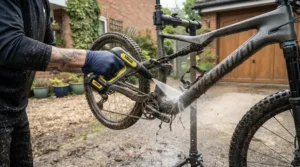
If you’re a college student living in a shared apartment with a mountain bike you ride daily, the WORX Hydroshot 20V or Teslong XS-MINI make more sense than anything corded — no outlet hunting, no hose bib, just a bucket of water in a parking lot. Small-item cleaning like bike frames, cassettes, and camping gear doesn’t need 1700 PSI; it needs control, portability, and something that fits under a bed.
If you’re a homeowner with a modest patio, a grill, and a couple of bikes in the garage, the Karcher K2 Power Control is built almost exactly for that mix — its marketing and Vario wand design point directly at bikes and patio furniture as core use cases, and its onboard storage means it won’t dominate garage shelf space.
If you’re budget-conscious and cleaning frequency is low — a few times a season, mostly patio furniture and outdoor gear — the Greenworks GPW1501 or Sun Joe SPX200E deliver real cleaning capability without the premium price tag, and both are light enough that storage isn’t a second decision you have to make.
Problem → Solution: Fixing Common Small Cleaning Job Headaches
Problem: No outdoor outlet near your cleaning spot. Solution: a battery unit like the WORX Hydroshot 20V or RYOBI ONE+ 18V EZClean sidesteps the issue entirely, since neither needs mains power.
Problem: No hose bib access (apartments, parking garages). Solution: look at units with a siphon hose or onboard tank, like the Teslong XS-MINI‘s 12-liter reservoir, which lets you fill from any bucket or sink.
Problem: Grease and chain gunk on a bike that a garden hose won’t touch. Solution: pair a low-to-mid PSI unit like the Karcher K2 Power Control with its adjustable Vario wand set to a wider angle, keeping the spray far enough from bearings and seals to avoid forcing water into places it shouldn’t go.
Problem: A clogged nozzle after using detergent. Solution: most manufacturers, including AR North America on the AR Blue Clean BC142HS, recommend flushing with clean water immediately after any detergent use — a straightened paper clip clears stubborn nozzle blockages on most models.
Problem: Storage space is tight. Solution: prioritize folding or wall-mountable designs; the Teslong XS-MINI‘s flat-fold body solves this more directly than any wheeled unit can.
How to Choose a Mini Power Washer for Small Cleaning Jobs
- Match PSI to your actual tasks, not your ego. If you’re cleaning bikes, patio furniture, and small tools, 400-1700 PSI covers essentially everything; you don’t need driveway-grade power.
- Decide between corded and cordless first. Corded units like the Greenworks GPW1501 generally deliver more PSI per dollar; cordless units like the WORX Hydroshot 20V trade some power for total placement freedom.
- Check the pump type. Per the Home Depot pressure washer buying guide, axial pumps — common in this mini category — are built for occasional small jobs and need little upkeep, while triplex pumps found in larger units are meant for frequent, heavy-duty use.
- Think about water access before you buy. If you don’t have a nearby hose bib, prioritize a siphon-hose or tank-fed design over a hose-only model.
- Weigh accessories realistically. A foam cannon (like the one bundled with the AR Blue Clean BC142HS) adds real convenience for car and bike washing; a detergent tank matters less if you rarely use soap.
- Consider your storage space honestly. A folding unit earns its premium if your garage or closet space is genuinely tight.
- Read the durability feedback, not just the star average. Recurring complaints about cracked fittings, as seen with some RYOBI ONE+ 18V EZClean reviews, matter more than a high average rating with a few outlier failures buried in it.
Best Portable Pressure Washer Under $100: What You Actually Get
At the sub-$100 tier, you’re generally choosing between the Sun Joe SPX200E and the Greenworks GPW1501 — both corded electric, both realistic performers for patio furniture, bikes, grills, and light concrete grime rather than driveway-deep staining. Here’s what most buyers overlook about this price bracket: the difference between 870 PSI and 1500 PSI matters less in daily use than hose length, nozzle adjustability, and how easy the unit is to store. The Greenworks GPW1501‘s extra headroom makes it the stronger all-around value, while the Sun Joe SPX200E‘s smaller footprint wins if shelf space is your priority.
What you generally give up under $100 is durability margin and accessories — neither of these units ships with a foam cannon, and warranty terms tend to be shorter than the pricier picks on this list. That’s a fair trade for buyers whose cleaning list is genuinely light-duty, but if you’re washing a bike weekly or running detergent through the unit often, stepping up to the Karcher K2 Power Control closes that gap for a modest premium.
Mini Pressure Washer for Bikes and Small Tools: What to Look For
Bikes and small tools have specific needs a driveway-cleaning washer doesn’t: lower minimum pressure settings, narrower nozzle control, and — ideally — a design the manufacturer has actually tested for this use case. The Karcher K2 Power Control is the most directly marketed option here, with Karcher explicitly listing bicycles and garden tools as intended applications and building its Vario wand around adjustable, lower-pressure settings. The WORX Hydroshot 20V‘s low 415 MAX PSI ceiling is a genuine advantage rather than a limitation for this use case, since it reduces the risk of forcing water past bearing seals or derailleur pivots.
The practical rule of thumb: keep the nozzle at least a foot away from bearings, hubs, and derailleurs, use a wider fan angle rather than a pinpoint jet, and never aim directly into a bottom bracket or hub seal at close range regardless of which unit you own. This is one area where more PSI is not better — it’s simply higher risk for the same result a gentler setting achieves just as well.
Storage-Friendly Design: Why Footprint Matters More Than Power
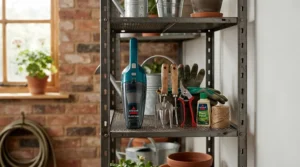
For apartment dwellers, renters, and anyone without a dedicated garage bay, storage-friendly design can matter more than an extra 500 PSI. The Teslong XS-MINI‘s folding body is the standout here, collapsing down for closet or under-bed storage in a way none of the wheeled corded units can match. The WORX Hydroshot 20V, at under 4 pounds with no hose reel to manage, is the runner-up — it stores more like a power drill than a pressure washer.
On the other end, the AR Blue Clean BC142HS and Karcher K2 Power Control, while genuinely compact compared to full-size pressure washers, still carry hose reels, wands, and onboard accessory storage that add real bulk. That’s a fair trade for their added capability, but if a shelf or closet is your only storage option, weigh footprint alongside PSI when comparing the two.
Long-Term Cost & Maintenance of Low-Maintenance Mini Units
One underappreciated advantage of this whole category: axial pumps, common across nearly all seven units here, are inherently low-maintenance compared to the triplex pumps found in commercial-grade machines. That means total cost of ownership skews heavily toward the upfront price rather than ongoing upkeep — there’s no oil to change, no spark plugs, no fuel stabilizer to buy. The ongoing cost that does matter is replacement nozzles and, for battery units like the WORX Hydroshot 20V and RYOBI ONE+ 18V EZClean, eventual battery degradation, typically after several hundred charge cycles.
Water use is worth factoring into “long-term cost” too. The EPA’s archived WaterSense outdoor water use data notes that outdoor water use makes up roughly 30 percent of the average household’s total consumption, and a mini power washer’s lower GPM compared to an open garden hose — often under 1.5 GPM versus a hose’s much higher flow — means these small units can actually reduce water use for the same cleaning job, not just save time. Reviewers consistently frame this as a secondary benefit rather than the headline feature, but it’s a genuine one for water-conscious buyers.
Common Mistakes When Buying a Mini Power Washer
The most common mistake is buying on PSI alone. A 1700 PSI unit isn’t automatically “better” than a 600 PSI one if your actual jobs are bikes and patio chairs rather than driveways — more pressure without matching GPM and nozzle control can do more harm than good on delicate surfaces. Consumer Reports’ testing team has specifically warned against zero-degree nozzles regardless of unit size, since the pinpoint stream they produce can cut through skin and protective gear without adding meaningful cleaning benefit — a detail easy to miss when you’re focused purely on PSI numbers.
A second common mistake is ignoring hose or tank access before buying. Buyers who purchase a hose-only corded unit without checking their available outlets and hose bibs often end up needing an extension cord or hose adapter they didn’t budget for. A third: skipping the accessory unboxing check — several reviewers across this list mention missing or substitute nozzles, which is a five-minute check worth doing immediately rather than after your first cleaning session.
Mini Power Washer vs Traditional Pressure Washer
The core trade-off is straightforward: a full-size traditional pressure washer, gas or electric, delivers 2,000 to 4,000+ PSI and is built for driveways, large decks, and siding, while a mini power washer tops out well below that — usually under 1,700 PSI — in exchange for a fraction of the weight, size, and price. For small cleaning jobs specifically, that trade-off tilts heavily in the mini unit’s favor: you’re not paying for pressure you’d never use on a bike frame or a patio chair, and you’re not storing a machine sized for jobs you rarely do.
| Factor | Mini Power Washer | Traditional Pressure Washer | Best For |
|---|---|---|---|
| Typical PSI | 300-2,000 | 2,000-4,000+ | Karcher K2 Power Control for mixed light duty |
| Weight | 3-20 lbs | 20-60+ lbs | WORX Hydroshot 20V for portability |
| Maintenance | Minimal, axial pump | Moderate to high, triplex pump | Greenworks GPW1501 for low upkeep |
| Storage footprint | Small to foldable | Large, often wheeled | Teslong XS-MINI for tight spaces |
The data above makes the case plainly: unless you’re regularly deep-cleaning concrete or siding, a full-size traditional pressure washer is overkill in cost, storage, and maintenance for the small-item cleaning jobs this article focuses on. The one scenario where it’s worth stepping up is if your cleaning list genuinely includes large hardscape surfaces alongside your bikes and patio furniture — in that case, a mini unit like the Sun Joe SPX200E simply won’t have the throughput to finish the job in a reasonable time.
Safety, Regulations & Compliance Guide
Even at mini scale, these are pressurized electrical devices, and basic precautions matter. Always confirm your unit’s power cord includes a built-in ground-fault circuit interrupter (GFCI) — the CPSC has repeatedly warned consumers about off-brand pressure washers sold online that skip this feature, creating a genuine electrocution risk if the cord or connections get wet. All seven models featured here include GFCI protection on their power cords or, for battery units, avoid the mains-power risk entirely by design.
Beyond electrical safety, wear closed-toe shoes and eye protection when operating any of these units, keep the nozzle at a safe distance from skin, and never point a unit at another person, even at the lower PSI end of this category. If your chosen model includes a zero-degree pinpoint nozzle, treat it with real caution or simply set it aside in favor of the wider-angle tips, since concentrated streams can cause injury even at the pressures found in mini units. Store detergents used with units like the AR Blue Clean BC142HS away from children, and always disconnect battery packs before performing any cleaning or maintenance on cordless models like the RYOBI ONE+ 18V EZClean.
Frequently Asked Questions
❓ What is a mini power washer good for?
❓ How much PSI do I need for small cleaning jobs?
❓ Can I use a mini pressure washer on a bike?
❓ What's the best portable pressure washer under $100?
❓ Do cordless mini power washers work as well as corded ones?
Conclusion
A mini power washer for small cleaning jobs isn’t about chasing the highest PSI number on the shelf — it’s about matching the tool to tasks you’ll actually repeat: a muddy bike, a grimy grill, a patio set that’s lost its shine. Across this list, the Greenworks GPW1501 and Sun Joe SPX200E cover the budget-conscious end convincingly, the Karcher K2 Power Control stands out as the most purpose-built pick for bikes and small tools specifically, and the Teslong XS-MINI solves the storage question better than anything else here if space is genuinely tight.
There’s no single “best” pick, and that’s the honest takeaway — the right mini power washer depends on whether your priority is price, portability, storage footprint, or accessory richness. What all seven share is the core promise of this category: real cleaning power without the bulk, cost, or upkeep of a full-size machine. Take another look at the comparison table above, match it against your actual weekly cleaning list, and you’ll land on the right one.
Recommended for You
- 7 Best Portable Pressure Washer For Camping Picks (2026 Guide)
- Car Washer With Water Tank For Driveway Washing: 7 Top Picks (2026)
- Pressure Washer With Water Tank for Remote Areas: 7 Top Picks 2026
Disclaimer: This article contains affiliate links. As an Amazon Associate, I earn from qualifying purchases. If you purchase products through these links, we may earn a small commission at no additional cost to you.
✨ Found this helpful? Share it with your friends! 💬🤗
