
In This Article
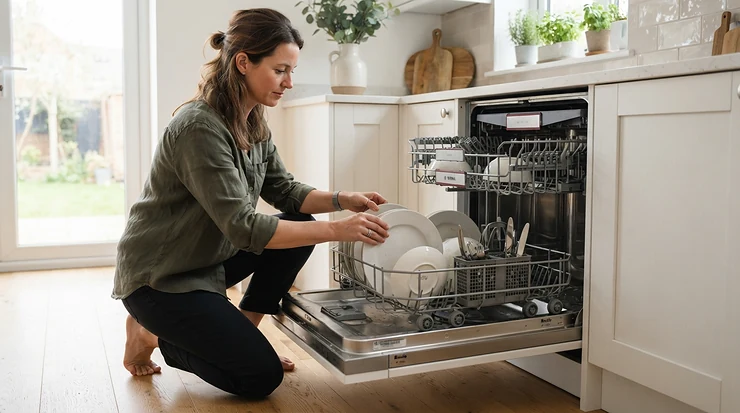
A quiet dishwasher under 45 dBA for open-concept kitchens is a machine rated at 44 dBA or lower, roughly the loudness of a quiet library. It can run a few feet from your sofa without drowning out conversation, a movie, or a podcast. Most are stainless-tub models with layered insulation and low-noise motors.

Open floor plans have a cruel joke built in. You knock down the walls so everyone can hang out together, and then the dishwasher starts sounding like a cement mixer in the middle of the party. There is nowhere for the noise to go. It bounces off hard floors and kitchen islands and lands in your living room.
That’s why the number on the spec sheet matters so much. The unit is dBA, or A-weighted decibels, a scale built to reflect what human ears actually perceive, as KitchenAid explains in its dBA guide. One retailer breakdown sorts the market like this: standard machines run roughly 50-54 dBA, quiet ones 44-49, quieter ones 42-44, and the quietest 38-41. Reviewers also note that a drop of about 3 dBA is where the human ear starts noticing a difference.
This guide covers seven real models, from the budget-friendly to the near-silent. It also digs into tub sound insulation, stainless steel tub noise dampening, ENERGY STAR water savings, and whether paying extra for quiet makes sense. Everything below rests on listed specs and published roundups, not on pretend personal testing. Ratings vary by exact model number, so confirm the spec sheet before you buy.
Quick Comparison: 7 Quiet Dishwashers Under 45 dBA at a Glance
| Model | Listed dBA | Tier | Approx. Price Range* | Best For |
|---|---|---|---|---|
| Samsung Bespoke DW90F89P0USR | 38 | Premium | Low-$1,000s | Quietest overall, big households |
| Bosch Benchmark SHP9PCM5N | 38-39 | Premium | $1,500-$1,900 | Ultra-quiet with built-in extras |
| Miele G 7000 Series | 37 (verify by model) | Luxury | $1,600-$2,200 | Absolute lowest noise, long-term owners |
| KitchenAid KDFE204KPS | 39 | Mid-range | $700-$1,000 | Quiet on a mid-range budget |
| Bosch 800 Series SHP78CM5N | 42 | Upper mid-range | $1,000-$1,300 | Best noise-versus-performance balance |
| LG LDTH7972S | 42 | Mid-range | $800-$1,100 | Smart features without premium cost |
| Kenmore Elite UltraWash+ | 42 | Value | $700-$950 | Most features per dollar |
*Estimated tiers at the time of research. Prices vary by retailer and change often, so check current price before buying.
Look at the dBA column first. Every machine here clears the 45 dBA line, but the spread from 37 to 42 is wider than it looks. The Samsung Bespoke DW90F89P0USR and Bosch Benchmark SHP9PCM5N sit in the quietest bracket, while the Bosch 800 Series SHP78CM5N is the pragmatic pick, since 42 dBA is already very quiet. Buyers who want to keep the budget under control should look closely at the KitchenAid KDFE204KPS and the Kenmore Elite UltraWash+.
💬 Just one click — help others make better buying decisions too!😊
Top 7 Quiet Dishwashers Under 45 dBA for Open-Concept Kitchens: Expert Analysis
Each pick below is judged on noise first, then on what you get for the money. Where I couldn’t verify a detail, I say so instead of guessing.
1. Samsung Bespoke DW90F89P0USR — lowest dBA in the roundups
This is the model most roundups crown when the goal is pure quiet. Reviewed calls it the library-quiet champion at 38 dBA.
On paper it pairs that number with 16 place settings, a third rack, StormWash+ spray technology, and Wi-Fi through SmartThings. In practice, 38 dBA puts it a few decibels under the 42 dBA class, which is a step you notice in a dead-silent room. The 16 place settings matter too, because a family of five can often run one load after dinner instead of two.
Who is it for? Anyone whose dishwasher sits within earshot of the couch, especially in lofts or great rooms with hard floors. Reviewed credits the Bosch 800 Series SHP78CM5N with the best balance of noise and performance. That’s a fair reminder that the extra 4 dBA of quiet from the Samsung is a luxury, not a necessity.
On customer feedback, roundup testers consistently praise the noise level and the cleaning performance. I could not verify a large pool of owner reviews for this exact model, so treat that as expert-roundup sentiment rather than owner consensus.
Pros:
- ✅ Lowest listed noise rating among mainstream models
- ✅ 16 place settings plus a third rack
- ✅ Smart control through SmartThings
Cons:
- ❌ Costs more than 42 dBA models that are nearly as quiet
- ❌ Smart features add complexity you may never use
Price range: low-$1,000s at the time of research. It’s strong value for a 38 dBA machine with this much capacity, but check current price.

2. Bosch Benchmark SHP9PCM5N — extra insulation for spray and drain noise
Bosch’s Benchmark line is where the company’s quiet reputation peaks. Sources list it at 38 dBA, and some retailers list 39, so confirm the figure on the exact model you’re buying.
The spec worth understanding is the extra insulation. One roundup says it dampens both spray noise and drain noise, which matters because the drain pump is often the part you hear when the room is otherwise silent. Reviewers also point to a built-in water softener, smart connectivity, and a flexible rack layout. For anyone with hard water, that softener is a genuine convenience, because it reduces the scale and spotting that can make dishes look cloudy.
Who is it for? It suits an owner who wants Bosch’s quiet engineering and doesn’t mind paying for the top of the lineup. The honest counterpoint comes from one reviewer, who notes that a Bosch 800 Series at 42 dBA is already very quiet. If your kitchen is open but not cavernous, the Benchmark may be more machine than you need.
Reviewer sentiment in these roundups leans positive on cleaning and drying. Owner-review data is not something I could verify for this exact model number.
Pros:
- ✅ Among the quietest listed Bosch ratings
- ✅ Built-in water softener helps in hard-water homes
- ✅ Extra insulation tackles drain and spray noise
Cons:
- ❌ Top-tier pricing for a marginal noise gain
- ❌ dBA is listed inconsistently across retailers
Price range: roughly $1,500-$1,900 at the time of research. Check current price. It earns its premium only if you’re truly noise-sensitive.
3. Miele G 7000 Series — the lowest number I found, with a catch
Miele has a long reputation for quiet appliances, and one roundup lists the G 7000 Series at 37 dBA. That is the lowest figure in this article.
Here’s the catch. Another retailer guide lists a Miele 24-inch built-in at 42 dBA, so the rating clearly depends on the exact model within the family. Always read the model-specific spec sheet. If 37 dBA is why you’re buying, don’t accept a vague “Miele is quiet” answer from a salesperson.
Who is it for? This is a buy-once, keep-for-years purchase for someone who values acoustics above price. Miele sits in the luxury tier, so the spec sheet won’t tell you everything and a showroom demo is worth the trip. In an open-concept kitchen where the dishwasher shares a wall with a dining area, a 37 dBA machine can vanish into background noise. Not every household needs that.
Reviewer sentiment frames Miele as a premium, quiet benchmark. I couldn’t verify detailed owner-review data across the different G 7000 model numbers, so I’m not going to invent any.
Pros:
- ✅ Lowest noise figure in this roundup
- ✅ Strong brand reputation for quiet operation
- ✅ Built for long-term ownership
Cons:
- ❌ Luxury pricing sits above every other pick
- ❌ dBA varies between Miele models
Price range: roughly $1,600-$2,200 at the time of research. Check current price. The value case depends entirely on how much you prize silence.
4. KitchenAid KDFE204KPS — quiet on a mid-range budget
At 39 dBA, this 200 Series model gets close to premium-tier silence without premium pricing. Sources describe it as punching above its price.
KitchenAid says every one of its dishwashers uses a stainless steel tub with sound dampening. That ties straight into the tub-material discussion later in this guide. The brand’s line is also known for PrintShield finishes and FreeFlex third racks, but not every model has both, so check which features this exact number includes.
Who is it for? Open-plan households that want a real quiet-machine upgrade over a 50 dBA builder-grade unit but won’t spend like a luxury buyer. The spec sheet won’t tell you how it handles baked-on lasagna, and I couldn’t verify detailed performance data for this exact model. At 39 dBA, though, the noise battle is already won.
Reviewer sentiment frames it as strong value for the noise rating.
Pros:
- ✅ 39 dBA at a mid-range price tier
- ✅ Stainless tub with sound dampening
- ✅ Trusted brand with broad service coverage
Cons:
- ❌ Fewer smart features than pricier rivals
- ❌ Rack options vary, so verify the exact model
Price range: roughly $700-$1,000 at the time of research. Check current price. It’s excellent value if quiet is your main priority.
5. Bosch 800 Series SHP78CM5N — the balanced all-rounder
Reviewed calls this the best balance of noise versus performance, and 42 dBA is where it lands. For most open kitchens, I’d put it first on the shortlist.
The reasoning is simple. Going from 42 to 38 dBA costs real money, while 42 already sits in the “quieter” bracket where a dishwasher blends into daily life. Bosch pairs it with EcoSilence motor technology and multiple insulation layers, and one efficiency roundup lists the 800 Series at around 3.0 gallons per cycle. That’s a quiet machine that is also frugal with water.
Who is it for? The buyer who wants a dependable, well-reviewed machine without chasing the last decibel. A reviewer in one roundup notes that open-concept homes might step up from other 42-45 dBA models to this one, which signals how highly its sound performance is regarded.
Roundups describe consistently strong cleaning and a quiet cycle. Owner-review details vary by retailer, so check recent reviews on the seller’s page.
Pros:
- ✅ Quiet 42 dBA with strong all-round performance
- ✅ Multi-layer insulation and EcoSilence motor
- ✅ Efficient water use near 3 gallons per cycle
Cons:
- ❌ Not the absolute quietest on the market
- ❌ Costs more than basic mid-range options
Price range: roughly $1,000-$1,300 at the time of research. Check current price. It’s the safest value call in the group.

6. LG LDTH7972S — smart features without the luxury tax
One roundup says this LG at 42 dBA won’t disrupt your dinner. That’s modest praise, but exactly the standard an open plan demands.
LG’s lineup is associated with QuadWash spray design and a LoDecibel label, though I couldn’t confirm which features this exact model number carries, so verify before buying. The practical point is that 42 dBA gets you into the quieter bracket with a feature set that typically includes smart connectivity at a friendlier price than the premium Bosch and Samsung machines.
Who is it for? A household that wants Wi-Fi diagnostics and a decent noise level but not the full luxury package. If you cook heavily and run soiled pots through the machine, check the wash-cycle options on the spec sheet, because the right cycle matters more than a headline decibel figure.
Reviewer sentiment is positive on noise and general performance. I couldn’t verify deep owner-review data for this model number.
Pros:
- ✅ 42 dBA suits most open kitchens
- ✅ Smart-feature options at a lower price tier
- ✅ Widely available with broad service support
Cons:
- ❌ Not as quiet as 38-39 dBA models
- ❌ Feature set varies by exact model number
Price range: roughly $800-$1,100 at the time of research. Check current price. Good value for a smart, quiet mid-range machine.
7. Kenmore Elite UltraWash+ — most features per dollar
At 42 dBA with UltraWash+ three-arm spray, SmartWash, and TurboDry, this is the value pick. One roundup says it offers the most features per dollar in its group, and another notes that it carries ENERGY STAR qualification.
That ENERGY STAR badge is useful if you’re also shopping on water bills. A reviewer in one roundup recommends it for open-concept homes where you want to entertain or watch movies without noticing the cycle. A cautionary note from another source: households that need more than about 12 place settings may find it tight. Large families should compare capacity before buying.
Who is it for? Budget-conscious households that still want to stay under the 45 dBA line. It’s the one model here where I would read the warranty and local service options carefully, because value pricing sometimes means thinner support.
Roundup sentiment calls it quiet and feature-rich for the price. Verified owner-review data was not something I could confirm.
Pros:
- ✅ 42 dBA at a value price tier
- ✅ ENERGY STAR qualification reported
- ✅ Strong feature set for the money
Cons:
- ❌ Capacity may feel tight for large families
- ❌ Not the quietest option available
Price range: roughly $700-$950 at the time of research. Check current price. It’s a strong budget-conscious choice.
How to Choose a Quiet Dishwasher Under 45 dBA for Open-Concept Kitchens
Here are the six criteria that matter most, in order of impact:
- Start with the dBA rating, then verify the model number. Anything at or below 44 dBA qualifies, but 38-42 is the sweet spot for open plans. Brands list different numbers across model families, so read the exact spec sheet.
- Check the tub material. Stainless is generally quieter than plastic, but insulation matters as much as the metal (more on that below).
- Look for multi-layer insulation. Premium machines use dense foam and sound-absorbing pads. Budget ones often skimp.
- Confirm ENERGY STAR status. Quiet and efficient are compatible goals. The EPA’s ENERGY STAR dishwasher page explains the certification and includes a product finder.
- Match capacity to your household. A 12-setting machine that runs twice a day is noisier in total than a 16-setting machine that runs once.
- Think about distance. Sound 42-45 dBA is acceptable with moderate distancing from seating, while 38-42 suits a dishwasher sitting right beside a living area.

Tub Sound Insulation: What’s Really Behind the Door
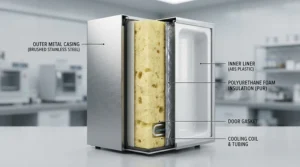
Tub sound insulation is the unglamorous reason two dishwashers with identical-looking stainless fronts can sound completely different. Insulation sits around the outside of the tub, wrapping the wash cavity in layers that absorb the splash, the spray arms, and the pump.
According to Whirlpool’s guidance, the amount and quality of insulation around the appliance directly affects noise output. A separate explainer describes the tiers plainly. Premium models use multi-layer insulation, including dense foam, sound-absorbing pads, and enclosed bases, while mid-range models use moderate insulation with cheaper materials. Budget models often have minimal insulation, making pump and spray sounds more noticeable.
That tells you something useful about the price ladder. When you pay more for a 38 dBA machine than for a 44 dBA one, a big part of the premium goes into what you can’t see. The same source adds a surprising caveat: a well-insulated plastic model can beat a poorly insulated stainless one.
Panel-ready doesn’t fix noise either. The same explainer notes that panel-ready fronts reduce sound only slightly, so don’t count on a custom cabinet door to rescue a loud machine. Spend the money on the insulation inside, not the face outside.
Stainless Steel Tub Noise Dampening: Does the Metal Matter?
Stainless steel tub noise dampening is real, but it works as part of a system. Stainless is denser and heavier than plastic, and one repair-industry explainer notes that most dishwashers rated below 46 dB use stainless tubs, while budget units at 50-55 dB typically use plastic. KitchenAid and Maytag both say a stainless tub with sound dampening on the outside helps cut noise.
Here’s how the three tub types compare:
| Tub Type | Typical Noise Behavior | Price Tier | Best For |
|---|---|---|---|
| Stainless steel | Generally quietest | Highest | Open plans, long-term owners |
| Hybrid (stainless walls, plastic base) | Between the two | Mid-range | Moderate budgets |
| Plastic | Generally loudest | Lowest | Closed kitchens, tight budgets |
The table shows why material choice and the dBA rating should be read together. Stainless is the better bet for stainless steel tub noise dampening, but the rating on the spec sheet is the final word. Plastic does have one genuine advantage, since some buyers report it dries dishes better, whereas stainless can leave more water on them, which TIME notes in its dishwasher guide.
Stainless also resists staining and odors more effectively, according to Whirlpool. That adds to long-term value in a machine you’ll run for a decade. Still, a plastic tub isn’t a deal-breaker if the machine’s rating is 44 dBA or lower. Check the listed number, not the material alone.
Quiet Dishwasher vs Standard Dishwasher: Is the Extra Cost Worth It?
The question behind quiet dishwasher vs standard dishwasher: is the extra cost worth it comes down to where the machine lives and how often you run it. Here’s the simplest way to frame it:
| Category | Listed dBA Range | What It Feels Like in an Open Plan | Best For |
|---|---|---|---|
| Standard | 50-54 | Clearly audible from the living area | Closed kitchens, tight budgets |
| Quiet | 44-49 | Noticeable in quiet rooms | Semi-open layouts |
| Quieter | 42-44 | Blends into everyday noise | Most open plans |
| Quietest | 38-41 | Barely perceptible at a distance | Sofa-adjacent kitchens, light sleepers |
Ranges come from a retailer’s noise-category guide. Real-world perception varies by room acoustics. A rough rule from the table: if your dishwasher sits within sight of your seating area, the upgrade from standard to the 42-44 range delivers most of the benefit. Going from 42 to 38 is a smaller, pricier step.
So is it worth it? If you run the machine nightly in an open plan, probably yes. You’ll pay a premium, but you’re buying usability of your own living space. If your kitchen is closed off, the standard machine is a perfectly sensible buy. The honest middle path is to aim for 42-44 dBA and skip the ultra-premium tier unless silence is a personal obsession.
Best ENERGY STAR Dishwasher for Lowering Your Water Bill
Picking the best ENERGY STAR dishwasher for lowering your water bill starts with the numbers, not the badge. The ENERGY STAR standard for a standard-size dishwasher is 270 kWh per year or less and 3.5 gallons per cycle or less. The Most Efficient tier for 2025 tightened that to 225 kWh and 3.2 gallons, the most recent criteria I could verify.
| Tier / Model | Energy Use | Water per Cycle | Noise Note |
|---|---|---|---|
| ENERGY STAR certified (standard) | ≤270 kWh/yr | ≤3.5 gal | Varies |
| ENERGY STAR Most Efficient (2025 criteria) | ≤225 kWh/yr | ≤3.2 gal | Varies |
| Miele G5892SCViSL | ~200 kWh/yr | ~3.2 gal | Verify dBA on spec sheet |
| Fisher & Paykel DD24DTX6PX1 | ~202 kWh/yr | ~3.1 gal | Reported around 45 dBA |
| Hand washing (running tap) | n/a | Up to ~27 gal | n/a |
The numbers do the talking. The gap between a certified machine and hand washing is enormous, with an ENERGY STAR dishwasher saving around 8,400 gallons per year according to the program. The gap between certified and Most Efficient is much smaller, about 0.3 gallons per cycle. Chasing the very top of the efficiency chart delivers diminishing returns on your water bill.
The Fisher & Paykel DD24DTX6PX1 is listed around 45 dBA, right at the border of this guide’s limit, so I’d treat it as a borderline pick for open plans. The Miele G5892SCViSL is efficient, but I couldn’t verify its noise rating. Among the seven picks above, the Kenmore Elite UltraWash+ is the one with reported ENERGY STAR qualification, and the Bosch 800 Series SHP78CM5N is listed near 3 gallons per cycle. ENERGY STAR status varies by exact model, so check the EPA’s finder.
Savings extend beyond water. ENERGY STAR says a certified dishwasher can cut utility bills by around $220 per year versus hand washing, and the Department of Energy’s dishwasher guide recommends scraping rather than rinsing, avoiding hand washing between runs, and loading pots and pans too. Estimates differ across sources, so use them as a rough guide, not a promise.
What to Expect: Real-World Performance at 38-45 dBA
A dBA rating is a lab figure, and homes aren’t labs. Manufacturers measure noise under standardized conditions, so heavy-duty cycles or unusual installations may sound different.
At 38 dBA, one roundup says you won’t hear the unit from about six feet away in a normal home. Another compares the quietest models to a quiet office or light rain. At 42 dBA, you’ll likely hear it if the room is otherwise dead silent, but music, a TV, or dinner conversation will cover it. At 44 dBA, you’re at the edge of “most people won’t mind,” according to retailer and reviewer guidance.
What the spec sheet won’t tell you is how sound changes with the cycle. The drain phase and the spray phase sound different, and long eco cycles trade speed for lower water and energy use. If you run the machine overnight, that extended runtime hardly matters. If you run it before guests arrive, check the cycle length on the spec sheet.
Hard floors, high ceilings, and open sightlines also amplify noise. A 42 dBA machine in a carpeted room with soft furniture will sound quieter than the same machine in a loft with concrete floors. Plan your expectations around your room, not only the number.
Features That Actually Matter (And Those That Don’t)
Marketing loves a long feature list. Here’s the honest filter.
Features that matter:
- A low dBA rating on the exact model number.
- A stainless tub and real insulation.
- A drying system that suits your habits. Plastic tubs often dry better, while stainless can leave water behind.
- Capacity that lets you run fewer loads.
- A soil sensor, which helps cut waste, according to ENERGY STAR guidance.
Features that matter less:
- Wi-Fi control. It’s handy for diagnostics and delayed starts but doesn’t change noise or cleaning.
- Handleless styling. It looks sleek but adds nothing to performance.
- A fifth and sixth wash cycle you’ll never touch.
Third racks are the interesting middle case. They free up room for utensils and make a 16-setting machine genuinely roomier, which is why the Samsung Bespoke DW90F89P0USR is appealing for big families. If you rarely cook for crowds, skip the premium for it.
✨ Ready to Quiet Your Kitchen?
🔍 Take your open-plan living to the next level with a machine that hums instead of roars. Click on any highlighted model above to check current pricing and availability. A calmer kitchen is closer than you think!
Common Mistakes When Buying a Quiet Dishwasher
Most disappointment comes from a few predictable errors.
First, trusting the brand instead of the model. Miele, Bosch, and Samsung all sell machines with different ratings, so verify the number on the exact model. Second, ignoring installation. A great machine installed badly can sound worse than its rating, so use a qualified installer and follow the manufacturer’s instructions.
Third, buying more quiet than you need. A Bosch Benchmark SHP9PCM5N at 38 dBA is superb, but the Bosch 800 Series SHP78CM5N at 42 dBA is already very quiet, and the price gap is real. Fourth, overlooking capacity. Running two small loads a day isn’t quieter than running one big one.
Fifth, forgetting that plastic tubs can be perfectly fine when the rating is low, and that stainless isn’t automatically silent. Read the number, not the marketing. Finally, don’t pick a model purely on a roundup list, including this one. Verify specs, warranty, and local service before you commit.
Practical Guide: Setup and Your First 30 Days
A few simple habits keep a quiet machine quiet.
During installation: Follow the manufacturer’s directions for leveling and securing the unit. If you plan to add anything extra, such as aftermarket insulation, check the use-and-care guide or ask the manufacturer first, because altering the appliance can cause problems.
First-use tips: Run an initial cycle and listen at different phases, including spray and drain. If something rattles, a dish or utensil is often the cause, not a fault. Load heavy items on the bottom, keep spray arms free to spin, and avoid nesting bowls.
Skip the pre-rinse: According to Virginia Tech’s extension guide, pre-rinsing can waste up to about 20 gallons. Scrape plates and let the soil sensor and filtration do their jobs. The same guide notes that a water heater set to 120°F is adequate for most families.
Maintenance schedule: Run a dishwasher cleaner periodically to prevent mold and scale. Avoid bleach in stainless tubs, which one source warns can damage seals. Check the filter regularly.
Common first-30-day mistakes: Overloading, blocking spray arms, and using too much detergent. Fix those, and most “mystery noises” disappear.
Real-World Scenarios: Which Quiet Dishwasher Fits Your Home?
Three buyer profiles show how the thinking works.
The loft dweller. Your kitchen sits ten feet from the sofa, with concrete floors and no walls to absorb sound. You run one cycle nightly while watching TV. The Samsung Bespoke DW90F89P0USR or the Bosch Benchmark SHP9PCM5N at 38 dBA makes sense here, because hard surfaces amplify every decibel. Budget around the premium tier.
The family of five. You run the machine daily and need capacity. The Bosch 800 Series SHP78CM5N at 42 dBA is the balanced call. The Samsung Bespoke DW90F89P0USR is worth it if you also want 16 place settings and a third rack. If funds are tight, the KitchenAid KDFE204KPS at 39 dBA delivers excellent quiet for less.
The budget-conscious renovator. You’re upgrading a builder-grade machine and want to stay under 45 dBA without luxury pricing. The Kenmore Elite UltraWash+ or the LG LDTH7972S, both at 42 dBA, are sensible. If water bills matter too, lean toward the Kenmore, which has reported ENERGY STAR qualification. In each case, confirm the model number, warranty, and delivery or installation costs before buying.
FAQ: Quiet Dishwashers Under 45 dBA
❓ Is 45 dBA actually quiet enough for an open-concept kitchen?
❓ Does a quieter dishwasher clean worse?
❓ Are ENERGY STAR dishwashers louder than other models?
❓ Can I make my current dishwasher quieter?
❓ Does a panel-ready front make a dishwasher quieter?
Conclusion: Choose Quiet, Not Just Cheap
Open-plan living only works when the appliances behave. A quiet dishwasher under 45 dBA for open-concept kitchens turns the machine from a mealtime interrupter into background hum, and the seven models above show you can do that at several price points.
If you want the lowest noise, the Samsung Bespoke DW90F89P0USR, Bosch Benchmark SHP9PCM5N, and Miele G 7000 Series are the top tier, with the Miele rating worth verifying by model. For the smartest balance, the Bosch 800 Series SHP78CM5N is hard to beat. For tighter budgets, the KitchenAid KDFE204KPS, LG LDTH7972S, and Kenmore Elite UltraWash+ all stay comfortably under the 45 dBA line.
Remember the key lessons. Tub sound insulation and stainless steel tub noise dampening both matter, but the listed dBA on your exact model is the final word. ENERGY STAR certification does the heavy lifting on your water bill, and the premium tiers add little there. When you weigh quiet dishwasher vs standard dishwasher: is the extra cost worth it, the honest answer is yes for open plans and no for closed kitchens.
Finally, verify specs, check current prices, and confirm warranty and service before you buy.
✨ Don’t Wait for the Next Noisy Dinner Party!
🔍 Compare the models above, click through to check current pricing and availability, and pick the quiet dishwasher that fits your kitchen. Your living room will thank you!
Recommended for You
- Drying Dishwasher For Plastics And Tupperware: 7 Proven Picks 2026
- Fast Cycle Dishwasher With 1-Hour Wash: 7 Best Picks (2026)
- Drawer Dishwasher For Accessible ADA-Compliant Kitchens: 7 Best 2026
Disclaimer: This article contains affiliate links. As an Amazon Associate, I earn from qualifying purchases. If you purchase products through these links, we may earn a small commission at no additional cost to you.
✨ Found this helpful? Share it with your friends! 💬🤗
