
In This Article
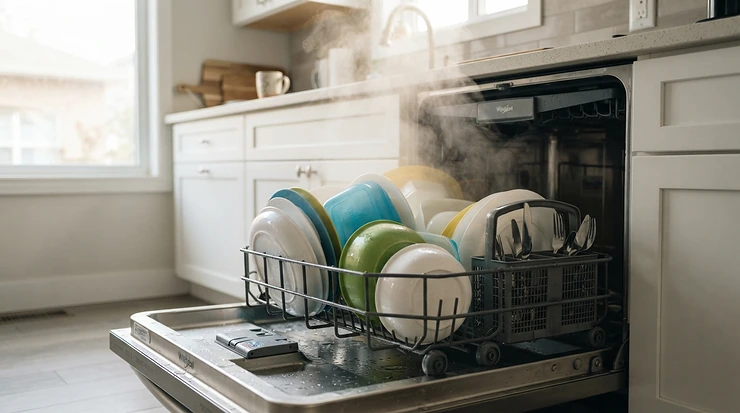
You unload the dishwasher feeling smug. Plates: bone dry. Glasses: sparkling. Then you reach the top rack, and there it is: a Tupperware lid cradling a tiny pond of lukewarm water, like a bird bath nobody asked for. If that pond has ever soaked your shirt sleeve, you’re shopping for a drying dishwasher for plastics and Tupperware, and you’re in very good company.
Here’s the physics in one breath. Ceramic and glass soak up heat during the final hot rinse, then use that stored heat to evaporate their own water. Plastic barely holds any. So the water just sits there, with no energy left to leave. Most modern machines (especially the quiet, efficient, condensation-based ones) quietly assume your dishes are heat sponges. Your containers are not.
This guide cuts through the marketing. As of October 2026, we’ve compared seven real dishwashers by how they dry, what they’re made of, and who they suit. We also cover the Department of Energy’s own advice on rinse aid and air-drying, the tub-material debate, and how to sanitize baby bottles without a headache.
What Is a Drying Dishwasher for Plastics and Tupperware?
A drying dishwasher for plastics and Tupperware is a model engineered to leave low-heat-retention items like food containers, lids, and baby bottles genuinely dry. It does this with tools such as zeolite, fan-assisted heated air, an extended hot final rinse, or automatic door opening, rather than relying only on residual rinse heat.
Quick Comparison: 7 Dishwashers That Take Drying Seriously
| Model | Drying Approach | Tub | Price Range* | Best For |
|---|---|---|---|---|
| Bosch 800 Series SHP78CM5N | Zeolite (CrystalDry) | Stainless | Roughly $1,300–$1,600 | Heavy plastic-container households |
| Miele G 5266 SCVi SFP | AutoOpen door + Extra Dry | Stainless | Premium tier, well above $1,500 | Buyers who want the full premium package |
| LG LDTH7972S | Dynamic Heat Dry | Stainless | Around $1,100–$1,400 | Mixed loads, glass and ceramic-heavy |
| KitchenAid KDPM804KBS | Heated dry (roundups cite fan assist) | Stainless | Around $1,000–$1,400 | Families wanting hands-off heated drying |
| Bosch 500 Series SHP65CM5N | Condensation | Stainless | Around $900–$1,200 | Quiet kitchens, open-plan homes |
| Sharp SDW6767HS | Fan-assisted heated dry | Stainless (per roundups) | Mid-$700s to $1,000 | Smart-home fans on a tighter budget |
| Whirlpool WDP540HAMZ | Basic heated dry (verify on spec sheet) | Verify before buying | Roughly $450–$650 | Small households, tight budgets |
*Ranges are approximate as of the time of research. Prices vary by retailer and change often, so check the current price.
Notice the pattern. The two machines built around active moisture removal (zeolite and AutoOpen) sit at the top of the price ladder, while condensation-only models cost less but give up plastic-drying power. If your priority is Tupperware, the Bosch 800 Series SHP78CM5N is the benchmark everything else gets measured against. Shoppers watching the budget should treat the Sharp SDW6767HS as the “fan-assist without the premium tax” option.
💬 Just one click — help others make better buying decisions too!😊
Top 7 Drying Dishwashers for Plastics and Tupperware: Expert Analysis
1. Bosch 800 Series SHP78CM5N — zeolite drying built for stubborn plastics
Start with the mineral. Zeolite absorbs moisture and gives off heat as it does, so the drying phase doesn’t depend on your plastic staying hot. Bosch brands this CrystalDry, and it’s the reason this machine keeps topping plastics-focused roundups.
On paper, the stainless tub holds heat for the wash while zeolite does the dehumidifying afterward. In practice, that means fewer rescue missions with a dish towel. Based on the spec comparison, this is the model that treats your lids as a design problem rather than an afterthought. Anyone running a weekly meal-prep assembly line should start here.
Reviewers and retailer test teams consistently report this one leaves plastics essentially bead-free. Yale Appliance’s testing named it the best plastic drying they’ve measured, and Reviewed reported no water beads left even on plastics. Both are aggregated review impressions, so your own loading habits still matter.
Pros:
- ✅ Best plastics drying in multiple roundups
- ✅ Stainless tub supports heat retention
- ✅ Quiet operation for open kitchens
Cons:
- ❌ Premium price tier
- ❌ Drying-focused cycles run longer
Price check: roughly $1,300–$1,600. Expensive, yes, but if wet Tupperware is the problem you’re solving, this is the one that actually solves it.
2. Miele G 5266 SCVi SFP — AutoOpen door and Extra Dry for premium buyers
Miele attacks wetness from a different angle: it opens the door for you. AutoOpen cracks the door at the end of the cycle so humid air escapes, and an Extra Dry option raises temperatures and extends the drying phase.
That’s clever engineering. Steam trapped in a closed tub is the enemy of dry plastic, and releasing it automatically beats waiting for you to wander over. Sensor-based drying adds a layer of adaptiveness, which matters when you mix thick ceramic with thin takeout containers.
Aggregated reviews put Miele at the top for wash performance and reliability. In Yale Appliance’s comparison of Miele’s flagship against Bosch, however, Bosch took the plastics-drying crown while Miele won on washing and service rate. Verifiable review data for this exact model is thinner than for the Bosch, so treat that comparison as directional.
Pros:
- ✅ AutoOpen vents steam without your help
- ✅ Extra Dry option for stubborn loads
- ✅ Strong reputation for wash performance
Cons:
- ❌ Premium pricing, well above mid-range
- ❌ Plastics drying trails Bosch’s zeolite in comparisons
Price check: premium tier, well above the mid-range. Worth it if you value the whole package, but not the cheapest route to dry containers.
3. LG LDTH7972S — dry dishes first, plastics a work in progress
LG uses Dynamic Heat Dry, which circulates heat and moisture more evenly through the tub. Reviewed’s testers found no water beads on glasses or dishes after a cycle.
The caveat matters for this article: the same review noted the model may struggle with plastics. That gap is the point. A machine can be excellent at drying a mixed load and still leave a Tupperware lid damp. If your cabinet is mostly ceramic with a few containers, that’s a fine trade. If it’s 70% plastic, look at the Bosch instead.
Reviewers like the cleaning power and the drying on non-plastic items. The plastics note is the recurring asterisk in aggregated coverage.
Pros:
- ✅ Dishes and glasses emerge thoroughly dry
- ✅ Strong cleaning performance in roundups
- ✅ Stainless interior retains heat
Cons:
- ❌ Plastics drying less consistent
- ❌ Mid-premium price for a partial fix
Price check: around $1,100–$1,400. Good value for general drying, but pick it for glass-and-ceramic households.
4. KitchenAid KDPM804KBS — heated dry with muscle for hands-off families
KitchenAid is a classic heated-dry brand. Roundups group this model with fan-assisted designs, and Reviewed counts it among the better dishwashers that dry dishes.
Heat plus airflow is a decent answer to wet plastic because it forces evaporation, not just condensation. The trade-offs are physical. A heating element can warp thin plastics placed near the bottom, so keep containers on the top rack. And per energy guidance, heated dry can add at least 15 percent to a cycle’s energy use.
The consensus in aggregated coverage is dependable overall drying with a premium look. For a busy household that doesn’t want to think about drying settings, it’s an easy default.
Pros:
- ✅ Active heated drying handles most loads
- ✅ Premium build and styling
- ✅ Forgiving for mixed materials
Cons:
- ❌ Heated dry adds energy cost
- ❌ Thin plastics risk warping near the element
Price check: around $1,000–$1,400. A solid, low-fuss pick if you’ll keep plastics on the top rack.
5. Bosch 500 Series SHP65CM5N — whisper-quiet, but plastics need help
Tom’s Guide named this its best overall dishwasher, and a staff editor specifically praised how quietly it runs.
Quiet comes from condensation drying and stainless insulation. It’s also gentle on plastic, because there’s no exposed heating coil under the lower rack. The catch is the one this whole article is about: condensation depends on retained heat, so plastics may come out damp. Pair it with rinse aid, crack the door when the cycle ends, and the gap narrows dramatically.
Reviewers consistently love the sound level and wash quality. For plastics, Yale Appliance’s testers say outright that condensation drying leaves plastic wet.
Pros:
- ✅ Among the quietest options in roundups
- ✅ No exposed heating element near plastics
- ✅ Efficient condensation drying
Cons:
- ❌ Plastics often finish damp
- ❌ Needs rinse aid to perform well
Price check: around $900–$1,200. Buy it for peace and quiet, and plan on a towel for the odd lid.
6. Sharp SDW6767HS — fan-assisted heated dry without the luxury sticker
One roundup crowned this the best drying dishwasher for most buyers because its fan-assisted heated dry reliably handles plastics and mixed loads at around 45 dBA, with Alexa voice control.
The fan is the clever bit. It moves warm air across both racks, which helps concave surfaces like soup-bowl bottoms and lid wells, the exact spots where water pools. The same coverage notes that fan-assisted cycles run a little longer than basic heated dry.
Reviewer sentiment in the coverage we found is positive on drying and noise, though the source pool is smaller than for the big brands. Treat it as promising rather than proven, and check local service coverage before buying.
Pros:
- ✅ Fan assist targets trapped moisture
- ✅ Quiet around 45 dBA
- ✅ Smart-home voice control
Cons:
- ❌ Longer cycles than basic heated dry
- ❌ Smaller review pool than major brands
Price check: mid-$700s to $1,000 range. Strong value if you want active drying on a tighter budget.
7. Whirlpool WDP540HAMZ — budget basics with a few drying tricks
Tom’s Guide picked this as its best-value dishwasher, with 12 place settings suited to smaller households. It covers the fundamentals at a reasonable price.
Be realistic about plastics. Entry-level machines rarely have dedicated drying technology, so check the spec sheet for a heated-dry option and the tub material before you buy. The cheapest upgrade is behavioral: load containers upside-down on the top rack at an angle, add rinse aid, and open the door after the cycle.
Aggregated impressions focus on value and basic cleaning competence, not drying finesse.
Pros:
- ✅ Budget-friendly entry point
- ✅ 12 place settings for small homes
- ✅ Covers dishwasher fundamentals
Cons:
- ❌ Not built around plastics drying
- ❌ Likely louder than premium models
Price check: roughly $450–$650. Great as a first dishwasher, but expect to do a little hand-finishing on Tupperware.
Condensation Dry vs Heated Dry Dishwasher: Which Is Better?
Neither wins outright, because they fail in opposite directions. Condensation drying leaves your final hot rinse to heat the dishes, then lets moisture condense on the cooler stainless wall and drain away. It’s quiet and gentle but slow, and Yale Appliance’s plastics-drying breakdown points out it doesn’t actively dry. Heated dry uses a coil to force evaporation. It’s faster and stronger, but it costs energy and risks warping thin plastics.
| Method | Plastics Result | Energy Use | Plastic Safety | Best For |
|---|---|---|---|---|
| Condensation | Often damp | Low | Gentle | Bosch 500 Series SHP65CM5N buyers |
| Heated dry | Better, not perfect | Higher (at least 15% more) | Keep on top rack | KitchenAid KDPM804KBS users |
| Fan-assisted | Strong | Moderate | Good with airflow | Sharp SDW6767HS buyers |
| Zeolite | Best in roundups | Moderate | Gentle | Bosch 800 Series SHP78CM5N buyers |
Looking at the comparison, the fan-assisted and zeolite methods are the real answer for plastics, since they do something plastic can’t do for itself. Heated dry is the dependable middle ground. Pure condensation is the quiet, efficient choice for people who accept a little air-drying.
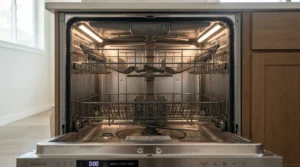
Fan-Assisted Drying: What It Actually Does
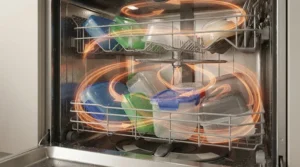
Fan-assisted drying adds a blower that moves warm air across every surface. That matters because plastic dries slowly in still air, and lids and bowl bottoms trap droplets in shallow wells. Moving air breaks the water’s surface tension and carries humidity out of the tub.
One roundup describes fan assist as significantly improving plastic drying compared with passive approaches. The honest limitation: it still can’t conjure heat the plastic lacks, so extra minutes are the price. Expect longer cycles than basic heated dry.
If you hate waiting, pair fan-assisted drying with rinse aid and a sensible load. If you hate noise, check the decibel rating, since some fans add to the soundtrack. And if you’re comparing the Sharp SDW6767HS against the KitchenAid KDPM804KBS, look closely at how each describes its airflow. Not every “heated dry” label includes a fan.
Stainless Steel vs. Plastic Tub Drying
The tub isn’t just cosmetic. It’s the heat battery for your whole drying cycle.
| Feature | Stainless Steel Tub | Plastic Tub |
|---|---|---|
| Heat retention | Strong | Weak |
| Condensation drying | Effective | Less effective |
| Noise | Typically quieter | Typically louder |
| Temperature tolerance | Handles higher water temps | Lower ceiling (around 140°F cited) |
| Upfront cost | Roughly $100–$150 more | Lower |
| Staining/odors | Resists | Can absorb |
Stainless retains heat far better, which helps condensation systems evaporate moisture. Hybrid tubs sit in the middle on price and noise. Plastic tubs cost less, though they stain and absorb odors more readily.
For anyone serious about drying plastics, stainless is the baseline. A plastic tub makes condensation drying a poor bet, so plan on heated dry or a fan if the price ceiling forces plastic. One more trade-off: stainless can show hard-water spotting, so keep up with rinse aid and descaling.
Rinse Aid: The Cheapest Drying Upgrade You Can Buy
Rinse aid is a surfactant that makes water sheet off dishes instead of beading. The Department of Energy lists it among simple tips to dry dishes faster and prevent spots. On condensation-drying machines, it’s effectively non-optional, per repair-industry guidance.
It won’t turn plastic into ceramic, but it shrinks those stubborn beads into thin films that evaporate or drain. Here’s the quick routine:
- Fill the rinse aid dispenser and check it monthly.
- If water spots or droplets remain, raise the dose setting one notch.
- Using all-in-one tablets? Many manufacturers still advise using the dispenser anyway.
- Make sure the dispenser isn’t leaking.
An empty dispenser is the number-one cause of “my dishwasher stopped drying” complaints. Check it before you blame the machine.
Best Dishwasher With Sanitize Cycle for Baby Bottles
Baby bottles raise the stakes, so the best dishwasher with sanitize cycle for baby bottles needs verified heat, not a marketing button. The benchmark is NSF/ANSI Standard 184, under which a dishwasher can claim a sanitizing cycle only if the final rinse reaches at least 150°F. Earth911’s guide to NSF-certified models stresses checking the NSF listing for your exact model, because certification doesn’t automatically extend across a brand’s lineup.
Be careful here: we could not verify NSF 184 status for each of the seven models above, so confirm each one on the NSF listing before relying on it for bottles. Sanitize cycles also add time (some can add up to about 1.5 hours) and use more energy.
Stainless tubs help, since they sustain high temperatures. And drying matters too: bottles with narrow necks collect water, so a strong drying system like the Bosch 800 Series SHP78CM5N or fan-assisted Sharp SDW6767HS reduces the damp-bottle problem.
How to Choose a Drying Dishwasher for Plastics and Tupperware
- Identify the drying mechanism. Zeolite, fan-assisted heated dry, and AutoOpen all actively remove moisture. Pure condensation relies on retained heat.
- Prioritize a stainless tub. It holds heat and supports every drying method.
- Check for an adjustable rinse aid dosage. More control means better results on plastic.
- Look for a heated-dry or extended-dry option. It’s your fallback on heavy plastic loads.
- Confirm top-rack space. Container-heavy homes need room to angle lids and bowls.
- Verify sanitize certification if you have infants. Look for NSF/ANSI 184 on your exact model.
- Balance noise against drying. Quiet condensation models trade some plastic performance for silence.
Features That Actually Matter (And Those That Don’t)
Worth paying for: active drying (zeolite, fan, AutoOpen), a stainless tub, a rinse aid dispenser with adjustable dosing, and a third rack or adjustable top rack for containers.
Mostly noise: Wi-Fi apps and voice control (nice, but they won’t dry a single lid), exotic cycle names, and fingerprint-resistant exteriors. Energy Star certification is genuinely useful, though. The Department of Energy says certified dishwashers use about 12 percent less energy and 30 percent less water than standard models.
The spec-sheet word to distrust is “dry” without a mechanism. Ask how it dries. If the answer is “residual heat” and your cabinet is full of Tupperware, expect damp lids.
Common Mistakes When Buying a Drying Dishwasher for Plastics and Tupperware
The first mistake is trusting the cycle name. “Heated dry” and “ProDry” are labels, not guarantees.
Second: buying on noise alone. A whisper-quiet condensation machine is a delight until you’re towel-drying containers nightly.
Third: ignoring the tub material. A plastic tub with condensation drying is a mismatch.
Fourth: skipping the sanitize-certification check for baby gear.
Fifth: forgetting that technique counts. Even the best machine struggles when lids are stacked flat and nested.
Finally, don’t assume more money equals dry plastic. As the LG LDTH7972S coverage shows, a strong drying machine can still stumble on plastics.
Your First 30 Days: Setup and Loading Guide for Dry Tupperware
Week one: dial in the basics. Fill the rinse aid dispenser and set dosing mid-range. Turn on heated or extended dry, and avoid eco modes that shorten the drying phase.
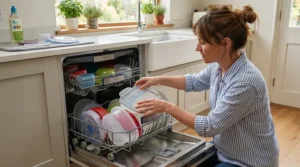
Loading rules that work: place containers on the top rack, angled downward so water drains. Keep lids vertical in the rack slots, not flat. Don’t nest items, because nesting traps water. Leave gaps for airflow.
After the cycle: crack the door and let steam escape. One quick action often finishes the job.
Week three: troubleshoot. If droplets remain, raise rinse aid one notch. Descale monthly in hard-water areas. Clean the filter to protect water flow.
Common first-month mistake: loading plastics near the lower-rack heating element. Keep thin containers up high to avoid warping.
Real-World Scenarios: Which Dishwasher Fits Your Life?
The meal-prepper (20-plus containers weekly). Wet lids ruin your Sunday rhythm. Start with the Bosch 800 Series SHP78CM5N, where zeolite drying does the heavy lifting. Budget: premium, but amortized over daily use.
The new parents (bottles, nipples, sippy cups). Prioritize verified sanitize heat and strong drying. CDC guidance says a dishwasher with hot water and a heated drying cycle or sanitizing setting makes a separate sanitizing step unnecessary. The same page recommends extra sanitizing daily for babies under two months, premature infants, or those with weakened immune systems. The Miele G 5266 SCVi SFP or Bosch 800 Series SHP78CM5N fit, once you’ve confirmed certification.
The renter or first-time buyer on a budget. The Whirlpool WDP540HAMZ covers the basics. Add rinse aid, load smart, and open the door after the cycle. Plan to spend the money you save on a good drying rack for the stragglers.
Problem → Solution Guide: Wet Lids, Warped Containers, Musty Smells
Problem: puddles in lid wells. Solution: tilt lids vertically, add rinse aid, and use fan-assisted or extended dry if available.
Problem: warped containers. Solution: keep them on the top rack, away from the heating element. Reserve heated dry for loads that tolerate it.
Problem: cloudy film on plastic. Solution: this is often hard-water residue. Use rinse aid and run a descaling cycle monthly.
Problem: musty odor after cycles. Solution: trapped moisture is the culprit. Crack the door after every run and clean the filter and door seal.
Problem: dishwasher “stopped drying.” Solution: check rinse aid first, then confirm you haven’t switched to an eco cycle that skips drying. If cycles complete but dishes stay cold and wet, a failed heating element or fan may need service.
Long-Term Cost & Maintenance
A drying dishwasher for plastics and Tupperware costs more upfront, but the math isn’t simple. Heated dry can add at least 15 percent to cycle energy use, while an Energy Star dishwasher costs around $35 a year to run, according to the Department of Energy. The air-dry setting saves energy, though it won’t rescue stubborn plastics.
| Tier | Typical Drying Tech | Value Logic |
|---|---|---|
| Budget (Whirlpool WDP540HAMZ) | Basic or heated dry | Low cost, hand-finish plastics |
| Mid-range (Sharp SDW6767HS, Bosch 500 Series SHP65CM5N) | Fan-assisted or condensation | Balance of price and drying |
| Premium (Bosch 800 Series SHP78CM5N, Miele G 5266 SCVi SFP) | Zeolite or AutoOpen | Best plastics results, higher outlay |
On value: if you hand-dry containers daily, the time saved with premium drying has real worth. Maintenance is cheap: monthly filter cleaning, descaling in hard water, and rinse aid refills. Stainless tubs also tend to outlast plastic ones, since plastic tubs can warp after years of heated-dry cycles.
FAQ
❓ Does heated dry melt plastic Tupperware?
❓ Is a stainless steel tub worth it for drying plastics?
❓ How do I know a sanitize cycle is NSF certified?
❓ Can rinse aid alone fix wet plastic?
❓ Is a dedicated baby bottle washer better than a dishwasher?
Conclusion
Wet Tupperware isn’t a personal failing. It’s physics meeting a design assumption. Plastic doesn’t store heat, and many quiet, efficient dishwashers quietly depend on that stored heat.
The fix is choosing the right mechanism. For the strongest results, the Bosch 800 Series SHP78CM5N leads on plastics, with the Miele G 5266 SCVi SFP as the premium alternative. For fan-assisted value, the Sharp SDW6767HS is a smart mid-range bet. The KitchenAid KDPM804KBS suits families who want heated drying without fuss, and the LG LDTH7972S shines on glass and ceramic. If silence beats everything, the Bosch 500 Series SHP65CM5N works as long as you accept a little hand-finishing. On a budget, the Whirlpool WDP540HAMZ plus rinse aid and smart loading gets you most of the way.
Whatever you choose, favor a stainless tub, use rinse aid, and verify sanitize certification if bottles are in the mix.
✨ Ready to End the Wet-Lid Era?
🔍 Take your kitchen routine to the next level with these carefully selected dishwashers. Click on any highlighted product to check current pricing and availability. A truly dry load of containers is closer than you think! 🍽️
Recommended for You
- Fast Cycle Dishwasher With 1-Hour Wash: 7 Best Picks (2026)
- Drawer Dishwasher For Accessible ADA-Compliant Kitchens: 7 Best 2026
- Single Drawer Dishwasher For Small Households And Couples: 7 Top 2026
Disclaimer: This article contains affiliate links. As an Amazon Associate, I earn from qualifying purchases. If you purchase products through these links, we may earn a small commission at no additional cost to you.
✨ Found this helpful? Share it with your friends! 💬🤗
