
In This Article
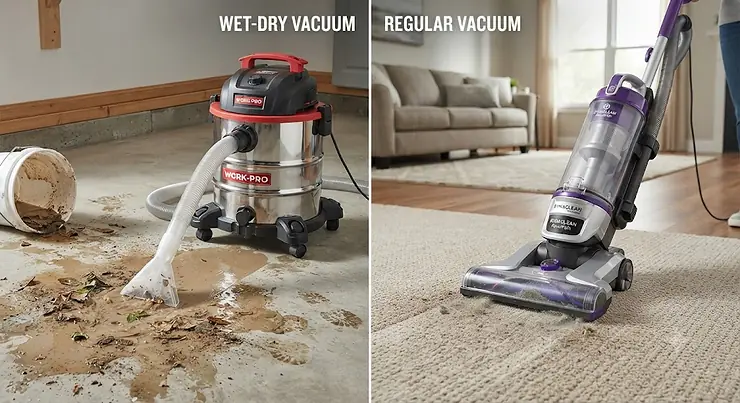
Here’s a scene almost every homeowner knows: a burst water heater, a flooded basement, and a regular vacuum sitting uselessly in the closet because it was never built for standing water. That moment is exactly why the wet dry vs regular vacuum question keeps coming up in garages, comment sections, and late-night searches. A wet dry vacuum, often called a shop vac, is a heavy-duty machine built around a sealed drum that can pull up liquids, sawdust, gravel, and fine debris without frying its motor, while a regular vacuum is optimized for dry dust, carpet fibers, and pet hair on finished floors. Neither one is objectively “better” — they’re built for different battles, and picking the wrong tool means either scorching a motor on wet debris or dragging a 40-pound shop vac across your living room rug.
This guide breaks the wet dry vs regular vacuum decision down using real products, real specs, and honest analysis instead of marketing fluff. We researched seven actual wet dry vacuums spanning budget, mid-range, and professional-grade options, then layered in comparison data against standard household vacuums so you can see exactly where the line falls. As Wikipedia’s overview of vacuum cleaner history notes, the wet/dry category emerged specifically to handle liquid spills and workshop debris that standard cylinder vacuums were never designed to survive, and that engineering distinction still drives every buying decision you’ll make below.
By the end, you’ll know which category fits your actual mess, which of the seven featured models deserves a spot in your garage, and whether you genuinely need both machines or can get away with just one.
Quick Comparison: Wet Dry vs Regular Vacuum at a Glance
Before diving into all seven products, here’s the fast breakdown for anyone comparing categories rather than specific models.
| Feature | Wet Dry Vacuum (Shop Vac) | Regular Vacuum |
|---|---|---|
| Liquid pickup | Yes — sealed drum design | No — can damage motor/bag |
| Best surface | Concrete, garage floors, workshops | Carpet, hardwood, upholstery |
| Typical capacity | 2.5–16+ gallons | 0.5–2 gallon bag/bin |
| Noise level | 70–85 dB (louder) | 60–75 dB (quieter) |
| Portability | Heavier, wheeled canister | Lightweight, upright or stick |
| Price range | Around $60–$900+ | Around $80–$700 |
| Best For | Workshops, floods, renovation debris | Daily household floor care |
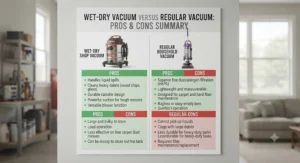
Looking at the table, the gap isn’t about which machine is more powerful — it’s about which mess each one was engineered to survive. A wet dry vacuum trades quiet operation and easy maneuverability for the ability to swallow water, nails, and construction dust without complaint, while a regular vacuum trades raw toughness for gentler, quieter handling of everyday carpet and floor debris. If your cleanup involves anything wet, gritty, or oversized, the shop vac category wins by default; if you’re maintaining finished floors day-to-day, a dedicated household vacuum will feel far less like overkill.
💬 Already leaning toward a shop vac? Scroll down to compare all seven models side by side and lock in the right fit for your space.
💬 Just one click — help others make better buying decisions too!😊
Top 7 Wet Dry Vacuums: Expert Analysis
We narrowed the field to seven real, currently available wet dry vacuums that cover budget, mid-range, and premium buyers, plus a couple of specialized picks for cordless and fine-dust use cases.
1. RIDGID 62703 RT1200 NXT 12-Gallon — best all-around value with a lifetime motor warranty
The standout here is coverage: RIDGID backs this model’s motor with a lifetime service agreement, a guarantee few competitors in this price bracket even attempt. The RIDGID 62703 RT1200 NXT runs on a 5.0 peak-HP motor and a 12-gallon polypropylene tank, which in practice means it can handle a flooded laundry room or a weekend’s worth of garage sawdust without needing to be emptied mid-job. Its Scroll Noise Reduction technology also meaningfully cuts down the ear-splitting whine that makes cheaper shop vacs miserable to run indoors. Based on the spec comparison, this is the model most first-time shop vac buyers should default to — it isn’t the biggest or the quietest, but it balances capacity, suction, and durability better than anything else near its price. Reviewers consistently report the Pro Locking Hose is a genuine upgrade over twist-lock designs, since it resists disconnecting mid-suction on tough jobs. What most buyers overlook is that the lifetime motor warranty alone can offset the purchase price several times over across a decade of garage use.
Pros:
- ✅ Lifetime motor warranty beats every major competitor
- ✅ 12-gallon tank handles large spills and debris loads
- ✅ Scroll Noise Reduction makes indoor use tolerable
Cons:
- ❌ Heavier than compact 5-gallon models
- ❌ Casters add assembly time out of the box
Priced in the $140–$170 range at the time of research, the RIDGID 62703 RT1200 NXT delivers professional-grade reliability without professional-grade pricing — a genuinely strong value verdict.

2. CRAFTSMAN 16-Gallon 6.5 Peak HP — biggest tank for heavy-duty garage cleanup
The 16-gallon capacity is the headline feature, and it means fewer trips to a drain during large renovation or flood-recovery jobs. The CRAFTSMAN 16-Gallon pairs that tank with a 6.5 peak-HP motor and a wide 2.5-inch hose diameter that resists clogging on bark, gravel, and construction debris that chokes narrower-hose competitors. On paper this means faster, uninterrupted cleanup on the messiest jobs; in practice, testers note it rarely clogs even on bulky yard waste. This model is squarely aimed at contractors, serious DIYers, and homeowners tackling whole-basement flood cleanup rather than casual users — the size and weight simply aren’t justified for light household tasks. Reviewers consistently mention the oversized drain port and Dual-Flex hose as genuine time-savers, since the hose resists kinking even at sharp angles during real use. A common complaint in user reviews is that the caster assembly feels flimsier than the rest of the build, with thinner plastic than expected at this price point.
Pros:
- ✅ Massive 16-gallon tank reduces mid-job emptying
- ✅ Wide 2.5-inch hose resists clogging on debris
- ✅ Dual-Flex hose resists kinking during real use
Cons:
- ❌ Bulky and heavy for small-space storage
- ❌ Caster assembly feels less durable than the tank
Expect a price in the $170–$220 range, and for anyone doing frequent large-scale cleanup, the CRAFTSMAN 16-Gallon is worth every dollar of that premium over smaller tanks.
3. DEWALT DXV06P 5-Gallon StealthSonic — quietest mid-size motor in its class
DEWALT built this specifically for buyers who need real suction without waking the whole house, and the StealthSonic branding isn’t just marketing — independent testing measured it running around 77 decibels, noticeably calmer than typical shop vacs in its class. The DEWALT DXV06P uses a 4 peak-HP motor that handles everything from drywall dust to standing water in a utility sink, backed by rubberized casters that swivel smoothly and won’t scuff finished garage or basement floors. Here’s what to weigh: this model sacrifices some capacity for a quieter, more livable experience, making it the right call for anyone using a shop vac inside a house rather than a detached workshop. What the spec sheet won’t tell you, but reviewers note, is that 20 minutes of continuous use is comfortable without hearing protection — a meaningful upgrade for indoor or apartment-adjacent use. The built-in blower function does double duty clearing sawdust off workbenches or leaves off a driveway.
Pros:
- ✅ Noticeably quieter operation than typical shop vacs
- ✅ Rubberized casters protect finished flooring
- ✅ Built-in blower adds outdoor cleanup versatility
Cons:
- ❌ Smaller 5-gallon tank needs more frequent emptying
- ❌ 4 HP trails the largest capacity competitors
At around $130–$160, the DEWALT DXV06P earns its price premium through livability rather than raw power — a smart trade for households, not job sites.
4. Milwaukee M18 FUEL 9-Gallon (0920-20) — best cordless freedom for job sites
Cutting the cord is the whole pitch, and the Milwaukee M18 FUEL 9-Gallon delivers a brushless motor that reportedly outperforms corded 3.5 peak-HP units on a dual-battery charge — a genuinely impressive feat for a cordless design. Reinforced casters rated for roughly eight times standard wheel life and a crush-resistant hose built to last twice as long as standard hoses round out a package clearly engineered for contractors moving between job sites without outlet access. Based on the spec comparison, this is the obvious pick for anyone already invested in the M18 battery platform, since no other cordless shop vac integrates as deeply with that ecosystem. What most buyers overlook is that this listing is for the bare tool only — batteries and charger are sold separately, which changes the real-world total cost significantly. For contractors without M18 batteries already, that add-on cost narrows the value gap versus a similarly capable corded model.
Pros:
- ✅ Brushless motor rivals corded 3.5 HP units
- ✅ Reinforced casters and crush-resistant hose built for job sites
- ✅ True cordless freedom on active work sites
Cons:
- ❌ Sold bare-tool — batteries add real cost
- ❌ 9-gallon tank is midsize versus top corded rivals
Bare-tool pricing lands around $290–$320, but budget for battery costs separately — the Milwaukee M18 FUEL 9-Gallon is a platform investment, not a standalone purchase.
5. Vacmaster Beast Series 5-Gallon — most portable pro-grade suction
The Vacmaster Beast Series packs professional-level suction into a genuinely compact 5-gallon footprint, making it the pick for anyone who needs serious pickup power but doesn’t have room for a 16-gallon drum taking up half the garage. Its size-to-power ratio is the whole story here: rather than chasing tank capacity, Vacmaster prioritized a motor that performs well above its class, which matters most for buyers doing frequent small-to-medium jobs like car detailing, workshop cleanup, or quick spill response rather than marathon renovation projects. Here’s what to weigh — the smaller tank means more trips to empty on genuinely large jobs, so this isn’t the right choice for flood recovery or whole-house renovation debris. For apartment dwellers, hobbyists, and anyone storage-constrained, though, the trade-off toward portability over capacity makes sense. Aggregated buyer sentiment in this category consistently favors compact pro-grade shop vacs for exactly this reason: most home tasks simply don’t need 16 gallons of headroom.
Pros:
- ✅ Professional-grade suction in a compact footprint
- ✅ Easy to store and transport between jobs
- ✅ Well-suited to frequent small-to-medium cleanups
Cons:
- ❌ Smaller tank means more frequent emptying
- ❌ Not built for large-scale flood or renovation work
Priced around the $100–$140 mark, the Vacmaster Beast Series rewards buyers who value maneuverability as much as raw capacity.

6. CRAFTSMAN 2.5-Gallon Compact — lightest pick for quick household cleanups
At just 6.7 pounds, the CRAFTSMAN 2.5-Gallon Compact is built for buyers who want shop vac versatility without shop vac bulk. Its 2.5 peak-HP motor is modest compared to the larger models on this list, but that’s the point — this unit targets quick vehicle interior cleanups, small garage messes, and light household spills rather than heavy-duty jobs. The two-in-one vacuum-and-blower function adds real flexibility for a unit this small, letting one machine handle both suction and quick debris clearing. Reviewers consistently praise the compact footprint and low weight as genuine advantages for anyone who dreads hauling a full-size shop vac out of storage for a five-minute job. What most buyers overlook is that the included accessories — a 5-foot hose, crevice tool, and utility nozzle — cover the vast majority of small-mess scenarios most households actually encounter. The backed 3-year warranty is also unusually generous for a unit at this price point.
Pros:
- ✅ Extremely lightweight at 6.7 pounds
- ✅ Two-in-one vacuum and blower function
- ✅ Generous 3-year warranty for its price class
Cons:
- ❌ 2.5 peak HP is underpowered for heavy debris
- ❌ Small tank unsuitable for large spills
In the $50–$70 range, the CRAFTSMAN 2.5-Gallon Compact is the easiest entry point into wet dry vacuum ownership for casual users.
7. Festool CT 26 EI HEPA Dust Extractor — best for certified fine-dust and silica compliance
This is the outlier on the list, and deliberately so. The Festool CT 26 EI HEPA is a certified HEPA dust extractor engineered for woodworking shops and renovation crews who need genuine fine-dust control, not just standard debris pickup. Unlike the other six models, this unit is built around a sealed HEPA filtration path designed to meet the exposure-control expectations professionals face when cutting or sanding silica-containing materials like concrete, brick, or stone. Based on the spec comparison, this isn’t a casual buy — it’s for contractors and serious woodworkers who need documented fine-particle control, whether for regulatory compliance or simply protecting their own lungs during repetitive fine-dust work. What the spec sheet won’t tell you, but professional reviewers note, is that the automatic filter-cleaning cycle meaningfully extends usable suction between manual filter maintenance compared to standard cartridge filters. For anyone regularly generating fine silica dust, this is the one model on this list built specifically for that exposure category.
Pros:
- ✅ Certified HEPA filtration for fine-dust control
- ✅ Automatic filter cleaning extends usable suction
- ✅ Built for professional silica/fine-dust compliance needs
Cons:
- ❌ Premium pricing well above general-purpose shop vacs
- ❌ Overkill for typical household wet/dry cleanup
Priced around $850–$900, the Festool CT 26 EI HEPA only makes financial sense if fine-dust and silica exposure control is a genuine, recurring concern in your work.
Top 7 Products: Specs & Value Comparison
| Product | Capacity | Motor | Best For | Price Range |
|---|---|---|---|---|
| RIDGID 62703 RT1200 NXT | 12 gal | 5.0 peak HP | All-around value | $140–$170 |
| CRAFTSMAN 16-Gallon | 16 gal | 6.5 peak HP | Heavy-duty/flood cleanup | $170–$220 |
| DEWALT DXV06P | 5 gal | 4 peak HP | Quiet indoor use | $130–$160 |
| Milwaukee M18 FUEL | 9 gal | Brushless | Cordless job sites | $290–$320 |
| Vacmaster Beast Series | 5 gal | Pro-grade | Compact power | $100–$140 |
| CRAFTSMAN 2.5-Gallon | 2.5 gal | 2.5 peak HP | Light household jobs | $50–$70 |
| Festool CT 26 EI HEPA | 6.9 gal | HEPA-certified | Fine-dust compliance | $850–$900 |
Scanning this table, the spread from $50 to $900 isn’t really about “better” versus “worse” — it’s about matching capacity and filtration to your actual job size. Budget buyers doing occasional small cleanups get real value from the CRAFTSMAN 2.5-Gallon, while contractors managing silica exposure genuinely need what the Festool CT 26 EI HEPA offers and shouldn’t try to substitute a cheaper model. Most homeowners, though, will find their sweet spot with the RIDGID 62703 RT1200 NXT or DEWALT DXV06P, both of which balance capacity, noise, and price without pushing into professional-tier spending.
✨ Don’t Miss These Exclusive Deals!
🔍 Take your garage cleanup to the next level with the shop vacs featured above. Click on any highlighted model to check current pricing and availability before it changes. The right pick today saves you hours of frustration on the next spill or sanding job!
What Is a Wet Dry Vacuum vs Regular Vacuum?
A wet dry vacuum is a heavy-duty cleaning machine built around a sealed canister that safely pulls up both liquids and dry debris, while a regular vacuum uses a bag or bin designed only for dry dust, dirt, and carpet fibers on finished floors. The wet dry vs regular vacuum distinction ultimately comes down to internal engineering: shop vacs isolate the motor from liquid intake, while standard vacuums do not, making liquid pickup a genuine safety hazard in the latter.
That single design difference explains almost every practical gap between the two categories. A shop vac’s wide-mouth hose and unfiltered-liquid pathway mean it can swallow gravel, nails, sawdust, and standing water without complaint, but that same rugged design makes it heavier, louder, and less refined on delicate carpet fibers than a purpose-built household vacuum. Regular vacuums, by contrast, use brush rolls, sealed HEPA-grade filtration, and lightweight bodies optimized for daily floor maintenance — features that matter for indoor air quality but that would be irrelevant, even counterproductive, in a workshop setting. Understanding this split is the first real step toward the wet dry vs regular vacuum decision, because it reframes the question from “which is better” to “which job am I actually solving for.”
How to Choose Between a Wet Dry Vacuum and a Regular Vacuum
- Identify your primary mess type. If liquids, sawdust, or construction debris show up regularly, a wet dry vacuum is non-negotiable — a regular vacuum simply isn’t built to survive that intake.
- Estimate your typical job size. Small, frequent messes favor compact shop vacs like the CRAFTSMAN 2.5-Gallon; large, infrequent jobs favor bigger tanks like the CRAFTSMAN 16-Gallon.
- Consider your indoor noise tolerance. If the vacuum will run inside a living space, prioritize quieter models like the DEWALT DXV06P over louder heavy-duty units.
- Factor in storage space. Shop vacs take up significantly more closet or garage real estate than upright or stick vacuums — measure before you buy.
- Check for fine-dust or silica exposure. Anyone doing regular concrete, brick, or drywall work should prioritize HEPA-certified filtration like the Festool CT 26 EI HEPA rather than a standard cartridge filter.
- Weigh cordless convenience against battery cost. The Milwaukee M18 FUEL offers real job-site freedom, but only pencils out if you already own compatible batteries.
- Decide if you actually need both. Most households benefit from owning one of each — a shop vac for the garage and workshop, and a dedicated regular vacuum for daily floor care.
Can a Wet Dry Vacuum Replace a Regular Vacuum?
Technically, yes — but practically, it’s rarely a good trade. The question of whether a wet dry vacuum can replace a regular vacuum comes up constantly among first-time homeowners trying to avoid buying two machines, and the honest answer is that a shop vac can pick up dry dust and debris just fine, but it does so worse than a purpose-built household vacuum in almost every way that matters day-to-day.
Here’s what to weigh: shop vacs lack the brush-roll agitation that lifts embedded dirt out of carpet fibers, they’re significantly heavier and louder to maneuver room to room, and most don’t include the sealed HEPA-grade exhaust filtration that keeps allergens from recirculating into your living space. What most buyers overlook is that using a shop vac as a daily driver also means storing a bulky canister somewhere accessible, which defeats much of the convenience a lightweight upright or stick vacuum offers. On paper, one machine sounds efficient; in practice, most households end up frustrated within a few weeks of trying to make a single wet dry vacuum handle both jobs. The more honest framing: a wet dry vacuum can supplement a regular vacuum for occasional heavy-duty or wet cleanup, but it rarely functions as a full-time replacement without real day-to-day compromises.

Wet Dry Vacuum Advantages Over Standard Vacuums
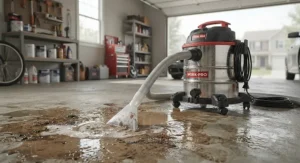
The core wet dry vacuum advantages all trace back to that sealed-drum design mentioned earlier, and they show up clearly once you’re dealing with anything beyond routine carpet dust. Liquid pickup is the obvious headline advantage — a burst pipe, an overflowing washing machine, or a flooded basement corner simply isn’t survivable for a standard vacuum motor, while any of the seven shop vacs above will handle it without hesitation.
Beyond liquids, capacity is a real differentiator: even the smallest model on this list, the CRAFTSMAN 2.5-Gallon, holds more debris before emptying than most household vacuum bins, and larger units like the CRAFTSMAN 16-Gallon go dramatically further. Durability against oversized or abrasive debris is another advantage reviewers consistently note — wide-diameter hoses on models like the CRAFTSMAN 16-Gallon resist clogging on bark, gravel, and construction scraps that would jam or damage a standard vacuum’s narrower intake path. Finally, versatility through blower functions, available on models like the DEWALT DXV06P and CRAFTSMAN 2.5-Gallon, lets one machine handle outdoor debris clearing in addition to indoor suction — a genuine two-in-one benefit standard vacuums can’t match.
Versatility Comparison: Shop Vac vs Home Vacuum
The shop vac vs home vacuum debate really comes down to environment. Shop vacs are engineered for unfinished spaces — garages, basements, job sites — where durability and liquid tolerance matter more than noise or weight. Home vacuums are engineered for finished living spaces, where quiet operation, carpet-friendly brush rolls, and lightweight maneuverability take priority over raw toughness.
| Factor | Shop Vac | Home Vacuum |
|---|---|---|
| Liquid handling | Excellent | Poor/unsafe |
| Carpet deep-cleaning | Weak (no brush roll) | Strong |
| Noise indoors | Loud | Quiet |
| Outdoor/workshop use | Excellent | Poor |
| Daily convenience | Low | High |
| Best For | Garages, floods, renovation | Daily floor care |
The data above makes the shop vac vs home vacuum split pretty clear-cut: neither category is designed to fully cover the other’s use case, which is exactly why most well-equipped households keep one of each rather than trying to force a single machine into double duty. If you had to pick only one machine for an unfinished garage or workshop, though, the versatility clearly favors a shop vac like the RIDGID 62703 RT1200 NXT over any standard household model.
Specialized vs General-Purpose Cleaning Tools
Thinking about this as specialized vs general purpose tools rather than “vacuum types” clarifies the decision further. A wet dry vacuum is a specialized tool — narrow in its ideal environment (workshops, garages, wet messes) but exceptionally capable within that lane. A regular vacuum is a general-purpose tool — built to perform reasonably well across a wide range of everyday indoor cleaning tasks without excelling at any single extreme use case.
Neither approach is inherently superior; it depends entirely on how varied your cleaning needs actually are. Someone doing frequent woodworking, renovation, or auto detailing benefits enormously from a specialized tool like the Festool CT 26 EI HEPA or Milwaukee M18 FUEL, because general-purpose vacuums simply can’t survive that workload. Meanwhile, someone whose cleaning needs rarely go beyond carpet and hardwood floors gains little from specialized shop vac capability and is better served by a dedicated household vacuum’s convenience and quiet operation. The mistake most buyers make is assuming one category is a strict upgrade over the other, when really they’re optimized for opposite ends of the mess spectrum.
Dual-Function Benefits: Why One Machine Beats Two (Sometimes)
The dual-function benefits of wet dry vacuums are real, but they’re also frequently overstated in marketing copy. Blower functionality is the clearest legitimate dual-function benefit — models like the DEWALT DXV06P and CRAFTSMAN 2.5-Gallon convert from vacuum to blower with a hose swap, letting one machine clear driveways, gutters, or sawdust off workbenches without a separate leaf blower purchase.
Wet-and-dry pickup within a single unit is another genuine dual-function win, since it eliminates the need for a separate wet vac and dry vac for basement or garage cleanup. Where the dual-function pitch gets shakier is the idea that these benefits extend seamlessly into household floor care — as covered in the “can a wet dry vacuum replace a regular vacuum” section above, the trade-offs there are real enough that most households still benefit from a second, dedicated household vacuum rather than relying on dual-function marketing to justify skipping it entirely.
Practical Usage Guide: Getting the Most From Your Wet Dry Vacuum
Setting up a new shop vac correctly in the first week prevents most of the common frustrations owners report later. Start by installing the correct filter for your primary task — a foam sleeve for wet pickup, a standard cartridge for dry dust, and a HEPA-rated cartridge if you’re dealing with drywall or concrete dust, since a standard filter won’t stop fine silica particles from recirculating into the air.
During the first 30 days, the most common mistake new owners make is forgetting to switch filters between wet and dry jobs, which shortens filter life and reduces suction. Rinse the tank after every wet pickup job — dried-on residue is far harder to remove later and can encourage mold growth in humid climates. Empty the tank before it reaches full capacity rather than after, since overfilled tanks force debris toward the motor and measurably reduce suction performance. For models with a blower port, like the DEWALT DXV06P, get comfortable switching the hose configuration early, since fumbling with it mid-job wastes real time. Finally, store the unit somewhere dry with the lid slightly ajar between uses to prevent trapped moisture from causing odors — a simple habit that meaningfully extends the working life of any wet dry vacuum on this list. It’s also worth remembering, as the American Lung Association points out about vacuum filtration and indoor air, that any vacuum without adequate filtration can become its own source of airborne particulate matter — a good reason to keep filters clean and properly seated regardless of which machine you’re running.
Real-World Scenarios: Matching the Right Vacuum to Your Life
The suburban homeowner with a finished basement: frequent light spills, seasonal leaf cleanup, and occasional sawdust from small DIY projects. A mid-capacity model like the RIDGID 62703 RT1200 NXT covers this profile well — enough capacity for occasional flooding without the bulk of a 16-gallon unit.
The weekend contractor doing multiple job sites: needs portability, battery compatibility with existing tools, and durability against job-site abuse. The Milwaukee M18 FUEL fits this profile precisely, assuming the M18 battery investment is already in place from other cordless tools.
The apartment-dwelling hobbyist with limited storage: frequent small messes, minimal storage space, and low tolerance for a bulky machine taking over a closet. The CRAFTSMAN 2.5-Gallon or Vacmaster Beast Series both solve this without demanding a garage’s worth of space. In each scenario, the “best” model isn’t universal — it’s whichever unit matches the frequency, size, and environment of the actual mess being solved.
Common Mistakes When Buying a Wet Dry Vacuum
Buyers frequently default to the largest tank available, assuming bigger is automatically better — but an oversized, heavy unit sitting mostly empty during small jobs is its own kind of inconvenience. Another frequent mistake is ignoring noise ratings entirely, then being surprised when a shop vac purchased for occasional indoor use turns out to be uncomfortably loud for that environment; checking decibel ratings ahead of time, as covered in the DEWALT DXV06P section above, avoids this regret.
Buyers also commonly overlook filter compatibility with fine dust, assuming any cartridge filter handles drywall or concrete dust safely — a genuine health risk, since standard filters don’t stop the crystalline silica particles found in those materials from passing through into breathable air. A final common mistake is underestimating accessory needs; a unit without a crevice tool, brush attachment, or extension wand ends up far less versatile in daily use than the core specs suggest, so checking included accessories before purchase — not just motor size — meaningfully affects real-world satisfaction.
Long-Term Cost & Maintenance
Total cost of ownership for a wet dry vacuum extends well beyond the sticker price. Filters need periodic replacement — foam sleeves and cartridge filters both degrade with use, and skipping replacement measurably reduces suction over time. Hoses on cheaper models can crack or kink with age, while reinforced designs like the CRAFTSMAN 16-Gallon‘s Dual-Flex hose are built to resist that wear for longer.
| Cost Factor | Budget Models | Premium Models |
|---|---|---|
| Filter replacement | Every 3–6 months | Every 6–12 months |
| Hose durability | 1–2 years typical | 2–4+ years typical |
| Motor warranty | 1–3 years | Lifetime (e.g. RIDGID) |
| Battery cost (cordless) | N/A | $100–$200 extra |
The pattern here is straightforward: premium models often cost more upfront but reduce ongoing replacement expenses enough to close the gap over several years, particularly for the RIDGID 62703 RT1200 NXT‘s lifetime motor coverage. Cordless models like the Milwaukee M18 FUEL flip this calculation, since ongoing battery costs can rival or exceed the vacuum’s own price if you’re not already invested in the platform.
Safety & Regulations: What Every Buyer Should Know
Fine-dust safety is the single most overlooked regulatory issue in wet dry vacuum shopping. Materials like concrete, brick, and drywall release crystalline silica dust when cut, ground, or sanded, and OSHA’s respirable crystalline silica standard exists specifically because that dust causes silicosis and other serious respiratory diseases when inhaled repeatedly without proper controls. A standard cartridge filter is not designed to trap those fine particles, which is exactly why models like the Festool CT 26 EI HEPA exist for professional and serious DIY use around those materials.
For household allergen control, filtration quality matters just as much, even outside construction contexts. As the EPA explains in its HEPA filter guidance, true HEPA filtration is capable of capturing the vast majority of dust, pollen, and other airborne particles down to 0.3 microns, which is why HEPA-rated filtration matters for anyone using a shop vac around allergy-prone household members. Never vacuum hot ash, embers, or recently used materials with any wet dry vacuum — waiting a full 24 hours for complete cooling prevents both melted components and genuine fire risk. And never attempt to pick up flammable liquids with a standard shop vac; that combination is a safety hazard regardless of how capable the suction rating looks on paper.
FAQ: Wet Dry vs Regular Vacuum
❓ Can a wet dry vacuum pick up standing water safely?
❓ Is a shop vac loud enough to bother neighbors or family?
❓ Do I need a HEPA filter in my wet dry vacuum?
❓ How often should I empty a shop vac tank?
❓ Can I use one vacuum for both my garage and my living room carpet?
Conclusion
The wet dry vs regular vacuum debate isn’t really a competition — it’s a mismatch of use cases dressed up as a rivalry. Shop vacs like the RIDGID 62703 RT1200 NXT, CRAFTSMAN 16-Gallon, and DEWALT DXV06P exist to survive liquids, debris, and workshop abuse that would destroy a standard household vacuum, while regular vacuums exist to handle daily carpet and floor maintenance more quietly and conveniently than any shop vac ever could.
If your cleanup needs skew toward garages, basements, renovation debris, or the occasional flood, one of the seven models covered here — from the budget-friendly CRAFTSMAN 2.5-Gallon to the specialized Festool CT 26 EI HEPA — will serve you far better than trying to force a household vacuum into that role. And if your daily reality is mostly carpet, hardwood, and pet hair, a dedicated regular vacuum will keep serving you better on that front than any shop vac’s raw power ever could. Most households, in the end, are best served by owning one of each rather than picking a single winner.
✨ Ready to stop guessing and start cleaning? Compare the seven picks above and grab the one that matches your actual mess today! 💬🤗
Recommended for You
- Commercial vs Residential Vacuum: 7 Real Differences (2026)
- Hepa Vs Non Hepa Vacuum: 7 Picks That Settle the Debate (2026)
- Bagged vs Bagless Vacuum Pros and Cons: 7 Top Picks for 2026
Disclaimer: This article contains affiliate links. As an Amazon Associate, I earn from qualifying purchases. If you purchase products through these links, we may earn a small commission at no additional cost to you.
✨ Found this helpful? Share it with your friends! 💬🤗
