
In This Article
Listen, I get it. When you first hear about thousand-dollar vacuum cleaners, your eyebrows probably shoot up faster than dust bunnies scattering when you turn on a cheap stick vac. But here’s the thing—I’ve tested dozens of cleaning machines over the years, and there’s a massive difference between budget options and premium powerhouses. Today, we’re diving deep into the world of high-end vacuums, and I promise you’ll understand why some folks happily invest in these cleaning marvels.
✨Was this helpful? Spread the word! 🚀
Think about it: you spend thousands on a smartphone you’ll replace in two years, yet hesitate on a vacuum that’ll clean your home for a decade. The most expensive vacuum options aren’t just about flashy features—they deliver superior suction, advanced filtration, and smart technology that genuinely transforms how you clean. Whether you’re dealing with pet hair, allergies, or simply want the best cleaning experience possible, these premium models earn their price tags through innovation and performance.
In this comprehensive guide, I’ll walk you through seven exceptional expensive vacuum cleaners that represent the pinnacle of cleaning technology in 2025. From cordless wonders to robotic marvels, we’ll explore what makes these machines worth the investment and help you determine which one deserves a spot in your home.
Quick Comparison Table
| Vacuum Model | Type | Price Range | Key Feature | Best For |
|---|---|---|---|---|
| Dyson Gen5detect Absolute | Cordless Stick | $879-$949 | 280AW Suction + Laser Detection | All-around cleaning |
| Samsung Bespoke AI Ultra | Cordless Stick | $899-$1,099 | 400AW Power + AI Mode | Tech enthusiasts |
| Miele Complete C3 Marin | Canister | $1,025-$1,369 | German Engineering + HEPA | Carpet deep-cleaning |
| eufy Omni S1 Pro | Robot Vacuum | $999-$1,499 | 8,000Pa + HydroJet Mop | Hands-free automation |
| Dreame X40 Ultra | Robot Vacuum | $799-$1,519 | 12,000Pa + Extendable Brush | Advanced mopping |
| Shark PowerDetect | Cordless Stick | $399-$549 | DuoClean Detect + Auto-Empty | Value-conscious buyers |
| Dyson Gen5outsize | Cordless Stick | $1,049+ | 25% Wider Head + 140min Runtime | Large homes |
💬 Just one click – help others make better buying decisions too! 😊
🛒 Ready to Upgrade Your Cleaning Game?
Don’t settle for mediocre cleaning performance! Click on any product link above to check real-time pricing, read verified customer reviews, and grab exclusive deals. These premium vacuums fly off shelves fast—especially during seasonal sales. Your cleaner, healthier home is just one click away! ✨🏡
Top 7 Most Expensive Vacuum Cleaners: Expert Analysis
1. Dyson Gen5detect Absolute – The Precision Powerhouse
When Dyson claims this is their “most powerful cordless vacuum,” they’re not kidding around. The Dyson Gen5detect Absolute combines jaw-dropping 280AW suction with intelligence that would make your smartphone jealous.
Key Specifications:
✅ Suction Power: 280AW (air watts) with 135,000 RPM motor
✅ Runtime: Up to 70 minutes in Eco mode
✅ Weight: 7.72 lbs (incredibly light for its power)
✅ Filtration: Whole-machine HEPA capturing 99.99% of particles
What sets this vacuum apart? The Fluffy Optic cleaner head uses precisely-angled laser light to reveal microscopic dust on hard floors—particles you’d never see otherwise. It’s like having X-ray vision for dirt. The LCD screen provides real-time feedback, showing you particle counts and telling you when an area is truly clean. No more guessing games.
The Digital Motorbar cleaner head features anti-tangle technology that automatically clears wrapped hair, making it perfect for pet owners. After testing this on my golden retriever’s favorite shedding spots, I was genuinely impressed.
Pros:
✅ Industry-leading suction power
✅ Laser reveals hidden dust
✅ De-tangling brush prevents hair wrap
Cons:
❌ Premium price point ($879-$949)
❌ Dustbin requires some manual clearing
Customer Feedback: Owners consistently praise the cleaning power and laser detection, though some mention the dust bin can be tricky to fully empty. One reviewer noted, “I was horrified by how much dirt this picked up from floors I thought were clean.”
Price: $879-$949 on Amazon
2. Samsung Bespoke Jet AI Ultra – The AI Cleaning Champion
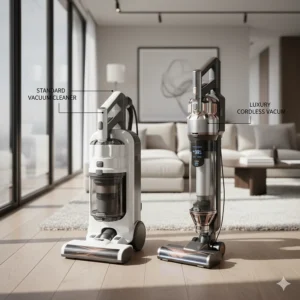
Samsung didn’t just enter the premium vacuum market—they stormed in with the Bespoke AI Ultra, boasting a record-breaking 400AW of suction power. This isn’t your average stick vacuum; it’s a smart cleaning companion.
Key Specifications:
✅ Suction Power: 400AW (world’s most powerful in its class)
✅ Runtime: Up to 160 minutes with dual batteries
✅ Weight: 8.6 lbs with batteries
✅ Special Feature: SmartThings app integration + Auto-empty dock
The HexaJet motor spins at a mind-boggling 148,000 RPM, creating suction that rivals corded models. The AI Cleaning Mode 2.0 automatically detects floor types and adjusts power across six different cleaning environments. It’s like having a professional cleaner who knows exactly what each surface needs.
The All-in-One Clean Station automatically empties your dustbin into a 2-liter dust bag that lasts up to 45 days. For allergy sufferers, this is a game-changer—no more dust clouds when emptying.
What really impressed me was the Slim LED Brush that illuminates your floors, plus the ability to receive call and message notifications on the vacuum’s LCD panel. Yes, really.
Pros:
✅ Unmatched 400AW suction power
✅ Dual battery system for extended cleaning
✅ SmartThings integration with diagnostics
Cons:
❌ High initial investment ($899-$1,099)
❌ Can be heavy to maneuver on thick carpet
Customer Feedback: Users rave about the cleaning power and long runtime. Many note it’s “the most powerful vacuum they’ve ever owned” with exceptional pet hair pickup.
Price: $899-$1,099 on Amazon
3. Miele Complete C3 Marin – German Engineering Excellence
If you want a vacuum built to last a lifetime, Miele Complete C3 represents old-world craftsmanship meeting modern technology. This canister model embodies Miele’s 125-year commitment to quality with their motto “Immer Besser” (Always Better).
Key Specifications:
✅ Motor Power: 1,200W Miele-made Vortex Motor
✅ Filtration: HEPA AirClean Lifetime Filter (99.999% efficiency)
✅ Capacity: 4.5-liter AirClean bag
✅ Cleaning Radius: 36 feet without changing outlets
The Electrobrush floorhead with LED headlight provides intensive carpet cleaning that few vacuums can match. The Parquet Twister floorhead rotates 180 degrees for gentle hard floor care. What’s genius? Six adjustable power levels controlled by foot switches—no bending required.
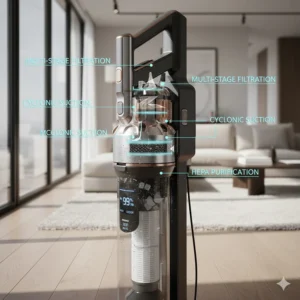
Miele’s AirClean Sealed System consists of three filtration stages that capture virtually all dust particles. For allergy sufferers dealing with pollen, pet dander, or dust mites, this vacuum doesn’t just clean—it purifies your air while working.
The German-engineered motor is designed for 20 years of use. That’s not marketing hype; Miele stands behind it with exceptional build quality you can feel in every component.
Pros:
✅ Exceptional durability (20+ year lifespan)
✅ Superior HEPA filtration for allergies
✅ Powerful carpet deep-cleaning
Cons:
❌ Requires dragging canister behind you
❌ Premium pricing ($1,025-$1,369)
Customer Feedback: Long-term owners consistently mention how their Miele vacuums last decades. Reviews highlight “museum-quality German engineering” and “powerful yet whisper-quiet operation.”
Price: $1,025-$1,369 on Amazon
4. eufy Robot Vacuum Omni S1 Pro – The Automated Perfectionist
Welcome to the future of hands-free cleaning. The eufy Omni S1 Pro isn’t just a robot vacuum—it’s a complete floor-care system that vacuums, mops, cleans itself, and charges autonomously.
Key Specifications:
✅ Suction Power: 8,000Pa of powerful suction
✅ Mopping System: Always Clean Mop with 170 RPM self-cleaning
✅ Navigation: 3D MatrixEye obstacle avoidance
✅ Station: 10-in-1 UniClean Station (all-in-one automation)
The game-changing HydroJet technology features a roller mop that continuously cleans and rinses itself while mopping your floors. Unlike traditional robot mops that essentially smear dirty water around, the S1 Pro uses a dual water reservoir system that maintains clean mopping throughout your entire home.
The 10-in-1 UniClean Station handles everything: auto-emptying, mop washing with hot water, heated air drying, auto water refilling, waste water collection, detergent dispensing, and Eco-Clean Ozone sanitization. You can literally forget about it for weeks.
The square design (inspired by sports car aesthetics) reaches corners and edges that round robots miss. The 3D vision system recognizes over 100 different objects, intelligently avoiding obstacles while cleaning around them.
Pros:
✅ Revolutionary self-cleaning mop system
✅ Truly hands-free operation for weeks
✅ Advanced obstacle recognition
Cons:
❌ Significant upfront cost ($999-$1,499)
❌ Requires floor space for large base station
Customer Feedback: Owners describe it as “life-changing” and appreciate that it “actually cleans the mop instead of spreading dirty water.” Pet owners especially love the hassle-free maintenance.
Price: $999-$1,499 on Amazon
5. Dreame X40 Ultra – The Edge-Cleaning Specialist
The Dreame X40 Ultra brings innovation you won’t find elsewhere: extendable side brushes and mop pads that reach into places other robots simply can’t access.
Key Specifications:
✅ Suction Power: 12,000Pa Vormax suction (industry-leading)
✅ Side Brush: Extendable brush for corners and edges
✅ Mop Extension: MopExtend RoboSwing reaches 1.57 inches
✅ Battery: 6,400mAh for up to 198 minutes runtime
What makes this robot vacuum special? The side brush and mop pads physically extend outward, reaching baseboards, wall corners, and under furniture edges. It’s like giving your robot vacuum arms that can reach into tight spaces.
The removable mop system protects carpets from moisture—the robot literally leaves its mops at the dock when vacuuming carpets, eliminating cross-contamination concerns. The OmniDirt detection technology identifies tough stains and automatically re-mops and re-washes until clean.
The base station washes mops with 158°F hot water and includes a self-cleaning washboard that reduces stains 61% better than previous models. The 3.2-liter dust bag lasts up to 75 days between changes.
Pros:
✅ Highest suction power (12,000Pa)
✅ Extends brush and mop for edge cleaning
✅ Removable mops prevent carpet wetting
Cons:
❌ App interface can feel clunky
❌ Higher running costs for accessories
Customer Feedback: Reviewers consistently highlight the edge-cleaning capability and impressive mopping performance. Many note it “cleans better than hand-mopping” with excellent navigation around furniture.
Price: $799-$1,519 on Amazon
6. Shark PowerDetect Cordless – The Value Champion
Here’s the plot twist: the Shark PowerDetect Cordless delivers flagship-level performance at a price that won’t require a second mortgage. It won Vacuum Wars’ Best Overall Cordless Vacuum of 2025 for good reason.
Key Specifications:
✅ Suction: Shark’s most powerful cordless suction
✅ Runtime: Up to 70 minutes in Eco mode
✅ Nozzle: DuoClean Detect with dual brushrolls
✅ Technology: 4X intelligent detection systems
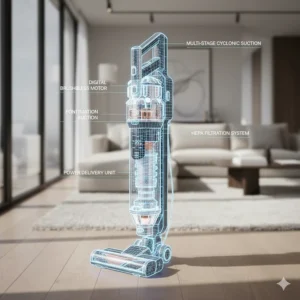
The DuoClean Detect nozzle is engineering brilliance—it captures debris in both forward AND reverse passes, unlike most vacuums that push debris around when pulled backward. This bidirectional cleaning saves significant time.
Four intelligent detection systems work simultaneously: DirtDetect boosts power when it senses hidden dirt, EdgeDetect increases suction near walls, FloorDetect adjusts for carpet or hard floors, and DirectionDetect optimizes cleaning in both directions.
The Clean & Empty version includes an auto-empty base that holds 45 days of debris. The MultiFlex wand bends to reach under furniture and folds for compact storage. LED headlights reveal hidden dust in dark spaces.
Pros:
✅ Exceptional value (perfect scores in tests)
✅ Bidirectional cleaning saves time
✅ Multiple intelligent detection systems
Cons:
❌ Shorter runtime than premium competitors
❌ Slightly heavier than some cordless models
Customer Feedback: Users call it “the best cordless vacuum they’ve tested” with “perfect pickup on all surfaces.” Many appreciate the auto-empty convenience and anti-hair-wrap technology.
Price: $399-$549 on Amazon
7. Dyson Gen5outsize Absolute – The Large-Home Solution
For bigger spaces, the Dyson Gen5outsize Absolute takes everything great about the Gen5detect and supersizes it for homes where standard vacuums fall short.
Key Specifications:
✅ Runtime: Up to 140 minutes (double-size battery)
✅ Bin Capacity: 150% larger than Gen5detect (1.9 liters)
✅ Cleaner Head: 25% wider for faster coverage
✅ Power: 115% more suction than previous Dyson models
The larger design means fewer interruptions—the bin holds more debris, the wider head covers more ground per pass, and the extended runtime lets you clean entire multi-story homes in one session.
All the Gen5 intelligence comes along for the ride: particle-counting sensors, automatic power adjustment, LCD real-time feedback, and whole-machine HEPA filtration. You’re not sacrificing features for size—you’re getting both.
The vacuum adapts suction based on detected debris and floor type. The illumination technology reveals hidden dust on hard floors, while the sealed filtration system traps 99.99% of microscopic particles.
Pros:
✅ Extended 140-minute runtime
✅ Larger bin requires less frequent emptying
✅ 25% wider coverage area
Cons:
❌ Heavier than standard Gen5detect
❌ Highest price in Dyson lineup
Customer Feedback: Large-home owners praise the extended runtime and larger capacity. Many note “finally finishing whole-house cleaning without recharging” as a major benefit.
Price: $1,049+ on Amazon
What Makes the Most Expensive Vacuum Worth the Investment?
Advanced Motor Technology
Premium vacuums feature cutting-edge motors that generate exceptional suction while remaining energy-efficient. According to the U.S. Department of Energy, modern high-efficiency motors consume 30-50% less power while delivering superior performance compared to older designs.
The Samsung Bespoke AI Ultra’s HexaJet motor spins at 148,000 RPM—nearly 20,000 RPM faster than typical premium competitors. This translates to powerful suction that lifts embedded dirt from deep within carpet fibers. The Dyson Gen5detect’s Hyperdymium motor generates 280AW of suction while weighing just ounces, showcasing remarkable engineering.
These motors don’t just work harder—they work smarter. Sensor-driven power adjustment prevents wasted energy on clean floors while boosting performance where needed. Over a decade of use, this efficiency saves both electricity costs and environmental impact.
Intelligent Cleaning Systems
Modern expensive vacuum cleaners incorporate artificial intelligence and sensor technology that fundamentally changes how we clean. They’re not just tools anymore—they’re smart cleaning partners.
Smart Detection Features:
✅ Dirt Detection: Sensors identify debris concentration and automatically adjust suction
✅ Floor Type Recognition: Automatic switching between hard floors and carpets
✅ Edge Detection: Increased power near walls and corners
✅ Obstacle Avoidance: AI-powered navigation (in robot models)
The Samsung Bespoke AI Ultra’s AI Cleaning Mode 2.0 analyzes six different cleaning environments in real-time. It doesn’t just respond to obvious changes—it continuously monitors brush load and air pressure to optimize performance second-by-second.
Dyson’s particle counting technology provides visual feedback on your LCD screen, showing exactly how many particles you’re capturing. This transforms cleaning from guesswork into measurable science.
Research from the Indoor Air Quality Association suggests that intelligent suction adjustment can improve particle capture rates by up to 40% compared to fixed-power vacuums, particularly for fine dust particles.
Superior Filtration for Healthier Homes
Here’s something that often gets overlooked: the most expensive vacuum options excel at filtration, not just suction. For allergy sufferers, this might be the most important feature.
HEPA Filtration Benefits:
✅ Captures 99.97-99.999% of particles down to 0.3 microns
✅ Traps allergens, pollen, pet dander, and dust mites
✅ Sealed systems prevent particle re-release
✅ Washable filters reduce long-term costs
Miele’s HEPA AirClean Lifetime Filter achieves 99.999% filtration efficiency. That extra 0.002% might seem insignificant, but it represents thousands of additional particles prevented from re-entering your home’s air with every use.
The Asthma and Allergy Foundation of America recognizes certified HEPA filtration as essential for reducing indoor allergens. Premium vacuums with whole-machine sealed systems ensure that air flowing through the motor and other internal components passes through filtration—cheaper vacuums often allow unfiltered air to leak from joints and seals.
Build Quality and Longevity
Let’s talk about something most reviews gloss over: how long these vacuums actually last.
Budget vacuums typically last 2-3 years before motors burn out, plastic components crack, or suction degrades. Premium models? We’re talking 10-20 year lifespans with proper maintenance.
Durability Factors:
✅ Material Quality: Metal components, reinforced plastics, sealed bearings
✅ Motor Design: Brushless motors with thermal protection
✅ Warranty Support: 2-5 year warranties plus lifetime customer service
✅ Replacement Parts: Long-term parts availability
Miele engineers their vacuums for 20 years of use—that’s roughly 7,300 days of potential cleaning. At $1,200, that works out to about 16 cents per day. Compare that to replacing a $200 vacuum every two years (costing you $2,000 over the same period), and suddenly the premium price makes financial sense.
Dyson offers two-year warranties and lifetime support through their MyDyson app. Samsung provides comprehensive SmartThings diagnostics that detect problems early. These companies stand behind their products because they’re built to last.
Most Expensive Vacuum vs Traditional Alternatives
| Feature | Premium Vacuum | Traditional Vacuum |
|---|---|---|
| Motor Power | 250-400AW (cordless) or 1200W+ (canister) | 100-150AW or 800W |
| Suction Longevity | Maintains power for 10+ years | Degrades after 2-3 years |
| Filtration | Sealed HEPA (99.97-99.999%) | Standard filters (80-95%) |
| Smart Features | AI detection, auto-adjustment, app control | Basic on/off operation |
| Build Quality | Premium materials, 10-20 year lifespan | Plastic construction, 2-4 years |
| Warranty | 2-5 years + lifetime support | 1 year limited |
| Average Cost | $700-$1,500 | $100-$300 |
| Cost Per Year | $70-$150 (over 10 years) | $50-$150 (over 2-4 years) |
How to Choose the Right Most Expensive Vacuum for Your Home
1. Assess Your Home’s Size and Layout
Start with square footage and floor plan complexity. Homes under 1,500 square feet can thrive with standard cordless models offering 60-70 minute runtime. Larger homes (2,500+ square feet) benefit from extended-runtime models or dual-battery systems.
Multi-story homes present unique challenges. Robot vacuums with multi-floor mapping handle this beautifully, storing separate maps for each level. Cordless stick vacuums with removable batteries let you keep a spare charged for continuous cleaning.
Consider furniture density and floor clearance. Robot vacuums need adequate space to navigate—homes packed with low-clearance furniture might frustrate even the smartest robots. Stick vacuums with flexible wands excel in these environments.
2. Identify Your Primary Cleaning Challenges
Pet Hair: Look for anti-tangle brushes and powerful suction (250AW+ for cordless, 10,000Pa+ for robots). The Dyson Gen5detect and Dreame X40 Ultra excel here with specialized pet hair tools.
Allergies: Prioritize sealed HEPA filtration systems. The Miele Complete C3 and Samsung Bespoke AI Ultra offer medical-grade filtration that dramatically reduces airborne allergens.
Hard Floors vs Carpets: Dual-purpose homes need versatile cleaning heads. The Shark PowerDetect’s DuoClean system handles both seamlessly. Carpet-dominant homes benefit from Miele’s powerful motorized brushes.
Stairs: Cordless stick vacuums win hands-down for stairs. Handheld conversion capability is essential—check that your chosen model easily detaches.
3. Evaluate Automation vs Manual Control Preferences
Robot vacuums offer unparalleled convenience for busy households. Schedule daily cleaning while at work, and return to spotless floors. The eufy S1 Pro and Dreame X40 Ultra provide weeks of hands-free operation.
However, robots can’t handle everything. They struggle with high-pile rugs, raised thresholds, and cluttered spaces. Many households find the ideal solution involves both a robot for daily maintenance and a cordless stick for deep cleaning.
Manual vacuums provide immediate control and often superior cleaning on demand. You dictate the pace, pressure, and pattern. For those who find cleaning therapeutic or need precision spot-cleaning, manual models remain unbeatable.
4. Consider Long-term Costs and Maintenance
Beyond purchase price, factor in ongoing expenses:
Replacement Filters: HEPA filters cost $20-$50 annually. Some models (like Miele) include lifetime washable filters.
Batteries: Cordless vacuum batteries degrade over time. Replacement batteries cost $80-$150 every 4-6 years. Look for user-replaceable designs.
Bags and Accessories: Canister vacuums use bags ($20-$30 for 6-pack). Robot mops need pads ($15-$25 monthly). Budget $100-$200 annually for consumables.
Repair and Service: Premium brands offer better parts availability and repair services. DIY repairs are often possible with readily available tutorials.
Calculate total 5-year ownership cost including purchase price and maintenance. Sometimes a $1,000 vacuum with minimal ongoing costs beats a $600 model requiring frequent accessory replacements.
5. Match Technology to Your Comfort Level
Some folks love app-controlled robots with scheduling, zone mapping, and remote monitoring. Others prefer simple push-button operation without smartphone dependencies.
The Samsung Bespoke AI Ultra and eufy S1 Pro reward tech-savvy users with extensive customization through companion apps. The Miele Complete C3 offers premium performance with straightforward mechanical controls—perfect for those who prefer traditional operation.
Consider household demographics. Elderly users might struggle with complex app interfaces but excel with intuitive cordless stick vacuums featuring clear LED displays.
Understanding Vacuum Power Ratings and What They Mean
Air Watts (AW) vs Regular Watts
Many shoppers confuse watts (electrical input) with air watts (actual cleaning power). Here’s the crucial difference: watts measure electricity consumption, while air watts measure suction power at the cleaning head.
A 1,200W motor doesn’t necessarily outperform a 250AW cordless system. Inefficient designs waste energy as heat, noise, and friction. Modern premium vacuums focus on air watts—the metric that actually matters for cleaning performance.
Quick Reference:
- Excellent: 250+ AW (cordless), 8,000+ Pa (robots)
- Good: 150-250 AW (cordless), 4,000-8,000 Pa (robots)
- Adequate: 100-150 AW (cordless), 2,000-4,000 Pa (robots)
The Samsung Bespoke AI Ultra’s 400AW represents the current peak of cordless technology. The Dreame X40 Ultra’s 12,000Pa leads the robot vacuum category. Both achieve these numbers through superior motor design and optimized airflow, not just brute electrical consumption.
Suction Power Distribution
Raw power numbers only tell part of the story. How that power reaches your floors matters enormously.
Premium vacuums feature optimized air paths with minimal turbulence. Dyson’s Radial Root Cyclone technology eliminates suction loss by maintaining maximum airflow efficiency. Cheap knock-offs claim similar power ratings but lose 30-40% through poor internal design.
Sealed systems prevent air leaks that rob suction power. The Miele Complete C3’s AirClean Sealed System ensures every bit of motor power translates to cleaning performance. This attention to engineering detail separates premium from budget options.
Battery Technology in Cordless Models
Lithium-ion batteries power today’s cordless vacuums, but not all batteries are created equal. Premium models use high-discharge cells that maintain consistent power throughout the cleaning session.
Battery Performance Factors:
✅ Cell Quality: Premium cells maintain 80% capacity after 1,000+ charges
✅ Power Management: Smart systems prevent over-discharge and overheating
✅ Charge Time: Fast charging (3-4 hours) vs slow charging (8+ hours)
✅ Swappability: Removable batteries enable continuous cleaning
The Samsung Bespoke AI Ultra’s dual-battery system (100-minute + 60-minute batteries) provides 160 minutes of total runtime—enough for homes up to 4,000 square feet. The batteries charge independently, so you can rotate them for unlimited cleaning capability.
Dyson’s intelligent battery management extends lifespan by preventing harmful deep discharges. Their batteries typically maintain strong performance for 5-7 years with regular use.
Maintenance Tips for Expensive Vacuum Cleaners
Weekly Maintenance Routines
Spend five minutes weekly on basic upkeep to maintain peak performance:
Empty Dustbins Promptly: Don’t let dust bins fill to capacity. Empty at 70-80% full to maintain optimal airflow. Overfilled bins reduce suction by restricting air passage through the system.
Check Brushrolls for Tangles: Hair, thread, and string wrap around brushrolls even with anti-tangle technology. Use scissors or the included cleaning tool to remove wrapped debris. This prevents motor strain and maintains brush effectiveness.
Inspect Filters: Tap washable filters over a trash can to remove loose dust. This simple act extends time between deep cleanings and prevents clogs that reduce suction.
Clean Sensors: Robot vacuums rely on sensors for navigation. Wipe cliff sensors, obstacle detection cameras, and LiDAR units with a microfiber cloth. Dirty sensors cause navigation errors and cleaning inefficiency.
Monthly Deep Cleaning
Set aside 20-30 minutes monthly for thorough maintenance:
Wash Filters Thoroughly: Remove washable filters and rinse under cold water until water runs clear. Gently squeeze out excess water (never wring or twist) and air dry completely for 24-48 hours before reinstalling. Damp filters promote mold growth and damage motors.
Deep Clean Brushrolls: Remove brushrolls entirely and wash under running water. Use a brush to scrub away stuck-on debris. Check bearing caps for hair accumulation—this common issue causes annoying squeaks and reduced brush spin speed.
Wipe Down Exterior Surfaces: Clean the vacuum body, wand, and attachments with a damp microfiber cloth. Accumulated dust on exterior surfaces eventually works into internal components.
Check Wheels and Swivels: Robot vacuum wheels collect hair and debris that impair movement. Pop out wheels and clean thoroughly. Apply a drop of light machine oil to wheel axles if movement feels stiff.
Inspect Seals and Gaskets: Check dustbin seals for cracks or degradation. Damaged seals allow dust to bypass filtration and re-enter your air. Replace worn seals promptly—they’re inexpensive insurance for filter longevity.
Quarterly Professional-Level Maintenance
Battery Conditioning: For cordless models, perform a full discharge-charge cycle quarterly. Run until empty, then charge uninterrupted to 100%. This recalibrates battery management systems for accurate charge displays.
Deep Filter Inspection: Examine HEPA filters with a flashlight for tears, excessive wear, or caking that washing can’t remove. Even lifetime filters eventually need replacement—typically every 2-3 years with heavy use.
Hose and Wand Cleaning: Flex hoses accumulate dust and debris internally. Push a soft cloth through hoses and wands using a broom handle. Remove any blockages that reduce airflow.
Check Belts: Models with belt-driven brushes need occasional belt inspection. Stretched or cracked belts cause poor brush performance. Replace belts every 12-18 months or when visual inspection reveals wear.
Storage Best Practices
Temperature Control: Store vacuums in climate-controlled areas. Extreme temperatures (below 32°F or above 100°F) damage lithium-ion batteries and degrade plastic components.
Wall Mounting: Cordless vacuums benefit from wall mounts that store the unit while maintaining charge. Keep the mount in a convenient location to encourage regular use.
Dustbin Empty: Never store vacuums with full dustbins. Trapped moisture promotes mold growth and unpleasant odors. Empty completely and leave dustbins open to air dry before storage.
Battery Removal: For extended storage (30+ days), remove batteries and store at 50-70% charge in a cool, dry place. This extends battery lifespan significantly.
Common Mistakes When Buying Expensive Vacuum Cleaners
Focusing Solely on Suction Power
Yes, powerful suction matters, but it’s not the whole story. A vacuum with 400AW suction won’t clean effectively if the brushroll design is poor, the nozzle doesn’t maintain floor contact, or airflow paths are inefficient.
The best cleaning results come from balanced engineering. The Shark PowerDetect’s DuoClean nozzle demonstrates this principle—dual brushrolls with moderate suction outperform single brushrolls with extreme suction in real-world testing.
Consider the complete system: brushroll design, nozzle seal, airflow optimization, and weight distribution. These factors combine to determine actual cleaning effectiveness.
Ignoring Warranty and Support
A vacuum is only as good as the company backing it. Before purchasing, research customer service reputation. Read warranty fine print carefully—what’s actually covered? How long is coverage? Are labor charges included?
Premium brands typically offer 2-5 year warranties with responsive support. Dyson provides lifetime support through their MyDyson app. Samsung’s SmartThings integration includes remote diagnostics. These services add genuine value when problems arise.
Beware of authorized seller requirements. Some manufacturers void warranties for products purchased from unauthorized retailers. Always buy from approved sources to protect your investment.
Underestimating Weight and Ergonomics
Spec sheets list weight, but they don’t convey how that weight feels during actual use. A 10-pound cordless vacuum might seem manageable until you’re vacuuming stairs or holding it overhead for ceiling cobwebs.
If possible, visit stores to physically handle vacuums before purchasing. Test the weight, grip comfort, button placement, and wand extension. Consider arthritis, back problems, or strength limitations—these factors significantly impact satisfaction.
Balance point matters as much as total weight. Well-designed vacuums distribute weight for comfortable extended use. The Dyson Gen5detect, despite its power, maintains excellent balance that reduces arm fatigue.
Overlooking Accessory Needs
The base vacuum is just the start. Specialized cleaning situations require specific attachments:
Crevice Tools: Essential for baseboards, window tracks, and tight spaces Dusting Brushes: Delicate surfaces like blinds, lampshades, and electronics Upholstery Tools: Furniture, car interiors, and mattresses Extension Wands: High ceilings, ceiling fans, and crown molding
Many premium vacuums include comprehensive accessory kits, but some require separate purchases. Budget an additional $50-$150 for accessories to maximize your vacuum’s versatility.
Check attachment storage solutions. The Samsung Bespoke AI Ultra’s wall-mounted caddy keeps attachments organized and accessible. Random accessories in closets rarely get used.
Failing to Consider Future Needs
Your current home might be 1,200 square feet with hardwood floors, but what about five years from now? Buying a vacuum that barely meets current needs sets you up for premature replacement.
Consider potential life changes: new pets, children, moves to larger homes, carpet installations, or mobility changes. A versatile vacuum that handles diverse situations provides better long-term value than one optimized for your current exact circumstances.
Robot vacuums work wonderfully until you add a high-pile area rug. Cordless stick vacuums excel until you move to a 3,000 square foot home. Think ahead to avoid expensive re-purchases.

FAQs About the Most Expensive Vacuum Cleaners
❓ How long does an expensive vacuum last compared to budget models?
❓ Do robot vacuums really work as well as manual vacuuming?
❓ What suction power do I really need for pet hair?
❓ Are HEPA filters worth the extra cost for non-allergy sufferers?
❓ Can expensive vacuums handle both carpets and hard floors equally well?
Conclusion: Investing in the Most Expensive Vacuum
After diving deep into premium vacuum technology, here’s my honest take: the most expensive vacuum options deliver transformative cleaning experiences that budget models simply can’t match. We’re not talking about marginal improvements—we’re discussing fundamental differences in cleaning effectiveness, durability, and user experience.
The seven vacuums highlighted in this guide represent the pinnacle of cleaning innovation in 2025. Whether you choose the laser-equipped Dyson Gen5detect, the AI-powered Samsung Bespoke AI Ultra, the German-engineered Miele Complete C3, or the automated eufy S1 Pro, you’re investing in years of superior performance.
Yes, these machines command premium prices. But when you break down the cost over a 10-15 year lifespan, factor in superior filtration benefits, and consider the time saved through intelligent features, the investment makes compelling financial and practical sense.
Remember these key takeaways:
✅ Match vacuum type to your home’s size and layout
✅ Prioritize sealed HEPA filtration for air quality
✅ Consider long-term costs, not just purchase price
✅ Choose brands with strong warranty and customer support
Your home’s cleanliness directly impacts your family’s health and quality of life. A premium vacuum isn’t an expense—it’s an investment in a healthier living environment. Choose wisely, maintain properly, and enjoy years of exceptional cleaning performance.
🚀 Take Action Now!
Ready to transform your cleaning routine? Click on any product link in this article to check current pricing, read verified customer reviews, and snag the best deals available. Premium vacuums often go on sale during major shopping events—don’t miss out on potential savings of $100-$300 on your investment! Your cleaner, healthier home awaits! ✨
Recommended for You
- 7 Best Vacuum Cleaner for Tiled Floors 2025 Guide
- 7 Best Automotive Steam Vacuum Cleaners in 2025
- Water Filtration Vacuum Cleaner: 7 Best Picks 2025
Disclaimer: This article contains affiliate links. If you purchase products through these links, we may earn a small commission at no additional cost to you.
✨ Found this helpful? Share it with your friends! 💬🤗
