
In This Article
✨Was this helpful? Spread the word! 🚀
You know that moment when you open your dishwasher expecting sparkling clean dishes, only to find water spots, film, and that one stubborn piece of lasagna still clinging to your favorite plate? Yeah, I’ve been there too. And after years of experimenting with pods, gels, and tablets, I’ve discovered something surprising: good old-fashioned dishwasher powder might just be the unsung hero of kitchen cleaning.
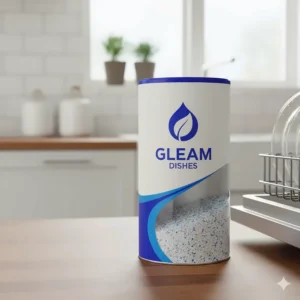
Now, before you roll your eyes at what sounds like a throwback to your grandmother’s kitchen, hear me out. Modern dishwasher powder has evolved dramatically, combining powerful cleaning agents with eco-friendly formulations that actually work. Plus, it’s often the most budget-friendly option—we’re talking pennies per load compared to those fancy pods that can cost upward of 50 cents each.
In this comprehensive guide, I’m going to walk you through everything you need to know about dishwasher powder. We’ll explore the best products on the market, dive deep into the science behind what makes them work, and help you figure out which one deserves a permanent spot under your kitchen sink. Whether you’re dealing with hard water, eco-conscious about your cleaning products, or just trying to stretch your household budget, there’s a dishwasher powder solution that’s perfect for you.
Understanding Dishwasher Powder: The Science Behind Sparkling Dishes
What Makes Dishwasher Powder Different? ⚗️
Here’s the thing about dishwasher powder that nobody talks about: it’s actually one of the most customizable forms of dishwasher detergent. Unlike those pre-measured pods, powder lets you adjust the amount based on your load size, water hardness, and how disgusting your dishes actually are (no judgment—we’ve all let that casserole dish sit overnight).
The formula typically includes sodium carbonate as a cleaning agent, which works by raising the pH of the wash water to break down fats and proteins. Most quality powders also contain enzymes—protease for protein stains, amylase for starches, and lipase for fats. These biological powerhouses literally digest food particles, making them incredibly effective at tackling stuck-on food.
Modern powder formulations often include sodium percarbonate, which releases hydrogen peroxide during the wash cycle. This provides a bleaching action that’s gentler than chlorine bleach but still effective at removing stains and preventing buildup. Many brands have also incorporated water softening agents like sodium silicate to combat hard water minerals that can leave spotty residue on your glassware.
The Environmental and Economic Angle 🌍
Let me share something that made me rethink my dishwashing routine entirely: according to research from the EPA, washing dishes by hand can use up to 27 gallons of water per load, while a modern dishwasher uses as little as 3-5 gallons. That’s a massive water savings, especially if you’re using powder detergent that doesn’t require pre-rinsing.
The cost factor is equally compelling. While premium dishwasher pods can run you anywhere from $0.40 to $0.60 per load, quality dishwasher powder typically costs between $0.08 and $0.25 per load. Over a year, if you run your dishwasher once daily, that’s a savings of $100-150. Not too shabby for switching to a slightly less convenient format.
From an environmental perspective, powder detergents have several advantages. They typically come in recyclable cardboard packaging (though watch out for plastic liners), and they don’t use the polyvinyl alcohol (PVA) film that dissolves with pods. While manufacturers claim PVA is biodegradable, environmental scientists continue to debate its long-term ecological impact.
Top 7 Dishwasher Powder Products: Comprehensive Reviews
1. Cascade Complete Powder – The Reliable Workhorse 🏆
When it comes to mainstream dishwasher powder, Cascade Complete Powder sets the standard that others try to match. Available in 75 oz and 90 oz containers with a fresh scent, this formula has earned its reputation through consistent performance across various water conditions and dishwasher types.
Key Specifications:
- Size options: 75 oz, 90 oz
- Loads per container: approximately 48-60 loads (75 oz)
- Cost per load: $0.08-$0.12
- Scent: Fresh
- Special features: Formulated with Dawn grease-fighting power
- Price range: $8-15 on Amazon
What makes Cascade stand out is its incorporation of Dawn dish soap technology. If you’ve ever used Dawn to clean up an oil spill or tackle burnt-on grease, you know it’s seriously powerful stuff. That same surfactant technology helps Cascade powder cut through even the toughest greasy residues. The formula contains sodium carbonate, sodium silicate, and enzymes that work synergistically to break down proteins, starches, and fats.
Pros:
✅ Excellent grease-cutting power
✅ Widely available in most stores
✅ No pre-washing required for most dishes
✅ Works well in both soft and moderately hard water
✅ Budget-friendly pricing
Cons:
❌ Contains fragrances that may irritate sensitive skin
❌ Can leave slight residue in extremely hard water
❌ Packaging has plastic liner (less eco-friendly)
❌ Some users report the powder can clump if stored improperly
Customer reviews consistently praise Cascade Complete for its reliable cleaning power. One verified buyer noted, “I’ve used this for years in my Bosch dishwasher. Dishes come out clean without spotting, and I love that I can adjust the amount for smaller loads.”
2. Seventh Generation Free & Clear Dishwasher Detergent Powder – The Eco-Warrior’s Choice 🌱
If environmental responsibility is your top priority, Seventh Generation Free & Clear Dishwasher Detergent Powder deserves serious consideration. This Vermont-based company has built its reputation on producing effective cleaning products without compromising on ingredient safety or environmental impact.
Key Specifications:
- Size options: 45 oz, 75 oz
- Loads per container: approximately 45-75 loads
- Cost per load: $0.15-$0.22
- Scent: Fragrance-free
- USDA Certified Biobased Product: 87%
- Certifications: Leaping Bunny Certified (cruelty-free), Certified B Corporation
- Price range: $10-16 on Amazon
This powder uses plant-derived enzymes (protease and amylase) to break down food debris without relying on chlorine bleach, phosphates, or synthetic fragrances. The formula includes sodium carbonate, citric acid (a plant-derived water softener), and sodium percarbonate for oxygen-based stain removal. What’s particularly impressive is how they’ve achieved cleaning power comparable to conventional detergents while maintaining such a high percentage of bio-based ingredients.
Pros:
✅ Completely fragrance-free (ideal for sensitive households)
✅ No chlorine bleach, dyes, or phosphates
✅ Biodegradable and septic-safe formula
✅ Works well even with hard water conditions
✅ Cardboard packaging is more sustainable
Cons:
❌ Slightly higher cost per load than mainstream brands
❌ May require rinse aid for best results in very hard water
❌ Less readily available in physical stores
❌ Packaging still contains some plastic coating for moisture protection
Users with chemical sensitivities consistently give this product five-star ratings. One reviewer shared, “I have fragrance allergies, and this is the only dishwasher detergent that doesn’t trigger my symptoms. Plus, my dishes actually come out cleaner than with the scented brands I used to use.”
3. Finish Powder Dishwasher Detergent – The International Favorite ⭐
Finish Powder Dishwasher Detergent brings decades of European dishwashing expertise to American kitchens. Available in 75 oz containers with Lemon Fresh or Orange Fresh scents, Finish has earned recommendations from more dishwasher manufacturers worldwide than any other brand.
Key Specifications:
- Size: 75 oz
- Loads per container: approximately 48 loads
- Cost per load: $0.12-$0.18
- Scent options: Lemon Fresh, Orange Fresh
- Special features: Pre-soaking power technology
- Price range: $12-18 on Amazon
Finish’s formula includes what they call “pre-soaking power,” which means active ingredients begin working on stains immediately upon contact, even before the main wash cycle begins. This is particularly effective for dried-on foods that have been sitting in your dishwasher for hours (or let’s be honest, days). The powder contains grease-cutting agents and enzymes specifically designed to tackle both protein-based and starch-based food residues.
Pros:
✅ Recommended by major dishwasher manufacturers
✅ Pleasant citrus scent without being overwhelming
✅ Pre-soaking action excellent for tough stains
✅ Biodegradable and septic-safe
✅ Long-standing reputation for quality
Cons:
❌ Citrus scent may not appeal to fragrance-sensitive users
❌ Can be harder to find in some U.S. stores
❌ Slightly pricier than budget options
❌ May require more product in extremely hard water areas
Professional appliance repair technicians often recommend Finish, particularly for European dishwasher brands. As one technician explained, “Bosch and Miele dishwashers are engineered with European detergents in mind. Finish powder works exceptionally well with these machines’ wash cycles and temperature settings.”
4. Truly Free Automatic Dishwasher Detergent Powder – The Natural Alternative 🌿
For those seeking truly clean ingredients without sacrificing cleaning power, Truly Free Automatic Dishwasher Detergent Powder offers an impressive solution. This concentrated formula packs serious cleaning punch into a smaller 12.5 oz package, making it perfect for households transitioning to more natural cleaning products.
Key Specifications:
- Size: 12.5 oz (also available in 2-pack and 3-pack)
- Loads per container: approximately 25-30 loads
- Cost per load: $0.35-$0.45
- Scent: Fragrance-free
- Special features: Concentrated formula, hard water stain remover
- Price range: $12-28 on Amazon (varies by pack size)
What sets Truly Free apart is its concentration level. You need significantly less product per load compared to conventional powders, which helps offset the higher per-container cost. The formula uses natural enzymes to digest food particles, coconut-derived cleaning agents to tackle grease, and non-toxic anti-spotting agents to ensure streak-free results.
The company’s subscription model delivers eco-friendly refill packets on your schedule, and your first order includes a reusable container—a thoughtful touch that reduces ongoing plastic waste. The refill packets are designed to be minimal-waste, with recyclable materials replacing traditional plastic jugs.
Pros:
✅ Truly concentrated—less storage space needed
✅ Excellent for hard water conditions
✅ No harmful ingredients or plastic waste
✅ Subscription option with refillable container
✅ Completely free of chlorine, fragrances, and dyes
Cons:
❌ Higher cost per load than mainstream options
❌ Requires measuring for proper dosing
❌ Smaller container means more frequent reordering
❌ Limited availability—primarily online
Customer testimonials highlight the product’s effectiveness in challenging water conditions. One buyer from Arizona (notorious for hard water) reported, “I’ve lived here for 15 years and struggled with white film on everything. Truly Free is the first product that completely eliminated the problem without requiring a separate water softener additive.”
5. Dirty Labs Bio Enzyme Dishwasher Detergent – The Premium Performer 💎
If you’re willing to invest in premium dishwasher powder, Dirty Labs Bio Enzyme Dishwasher Detergent represents the cutting edge of green cleaning technology. This 1 lb container (48 loads) combines ultra-concentration with proprietary Phytolase® enzyme technology for outstanding cleaning performance.
Key Specifications:
- Size: 1 lb (480g)
- Loads per container: 48 loads
- Cost per load: $0.42
- Scent options: Aestival (Yuzu, Geranium, Lemon Balm) or Free & Clear
- Special features: 2-in-1 detergent + booster, quick wash optimized
- Certifications: EPA Safer Choice, USDA Biobased
- Price range: $18-20 on Amazon
Dirty Labs has invested heavily in enzyme research, developing bioenzyme formulations that specifically target different types of food stains. Their proprietary Phytolase® technology uses advanced enzymes that are more effective at lower temperatures, making it ideal for eco-cycle or quick-wash settings that use less energy and water.
The formula is 100% mineral and bio-based, with zero petroleum-derived ingredients or synthetic surfactants. Despite this commitment to clean ingredients, independent testing shows it matches or exceeds the cleaning performance of conventional detergents. The powder comes with a wooden scoop made from responsibly sourced schima superba wood, and the packaging is fully recyclable cardboard with a metal moisture barrier.
Pros:
✅ Outstanding cleaning power, especially on glassware
✅ Optimized for quick-wash cycles (saves time and energy)
✅ Zero harsh chemicals or synthetic ingredients
✅ Recyclable packaging with wooden scoop
✅ Works exceptionally well in hard water
✅ Fragrance options use only allergen-free ingredients
Cons:
❌ Premium pricing ($0.42 per load)
❌ Limited retail availability—mostly online
❌ Requires proper storage to prevent moisture absorption
❌ Some users find measuring less convenient than pods
Independent reviews consistently rate Dirty Labs among the top performers. The Reduce Report noted, “After testing it against Seventh Generation, Blueland, and Cascade, Dirty Labs left glassware noticeably cleaner with zero spots or film.” Users particularly appreciate the scent-free option, with one reviewer commenting, “I can actually smell my wine now instead of weird floral dishwasher scent.”
6. Great Value Automatic Dishwasher Powder – The Budget Champion 💰
Sometimes you just need clean dishes without breaking the bank, and that’s where Great Value Automatic Dishwasher Powder (Walmart’s house brand) shines. While it may not have the marketing budget or fancy certifications of premium brands, this no-frills option delivers solid cleaning performance at an unbeatable price.
Key Specifications:
- Size: 75 oz
- Loads per container: approximately 48 loads
- Cost per load: $0.06-$0.08
- Scent: Lemon Fresh or Fresh Scent
- Price range: $4-6 at Walmart
Great Value formulates its powder to compete directly with name brands, using similar active ingredients including sodium carbonate, enzymes, and oxygen bleach. While the concentration may be slightly lower than premium options, the price difference is substantial—you’re paying less than half the cost of leading national brands.
Pros:
✅ Unbeatable price point
✅ Widely available at Walmart stores
✅ Decent cleaning power for everyday dishes
✅ Works well with soft to moderate water hardness
✅ No-frills packaging keeps costs down
Cons:
❌ May struggle with heavily baked-on foods
❌ Contains fragrances and dyes
❌ Less effective in very hard water
❌ Basic formula without advanced enzyme technology
❌ Packaging not as eco-friendly as premium brands
For budget-conscious households running the dishwasher daily, the cost savings add up quickly. One practical reviewer calculated, “I save about $110 per year using Great Value instead of Cascade pods. Yes, I occasionally need to re-wash something, but that’s maybe twice a month. Totally worth the savings for my family.”
7. Lemi Shine Natural Dishwasher Detergent Booster – The Hard Water Specialist 💧
Technically a booster rather than a standalone detergent, Lemi Shine Natural Dishwasher Detergent Booster deserves mention for households struggling with hard water issues. This citric acid-based powder can be used alone or combined with other detergents for enhanced cleaning power.
Key Specifications:
- Size: 24 oz
- Loads per container: approximately 48 uses
- Cost per load: $0.18-$0.25
- Main ingredient: Citric acid (lemon-based)
- Special features: Removes hard water stains, natural formula
- Price range: $9-12 on Amazon
Lemi Shine’s formula centers around citric acid, a naturally occurring compound found in citrus fruits. Citric acid is particularly effective at chelating (binding to) calcium and magnesium ions that cause hard water problems. By sequestering these minerals, it prevents them from depositing on your dishes and inside your dishwasher.
Pros:
✅ Exceptional for hard water conditions
✅ Can be used as booster or standalone detergent
✅ Natural, food-safe ingredients
✅ Removes existing hard water buildup from dishes
✅ Also works as dishwasher machine cleaner
Cons:
❌ May require combining with detergent for heavily soiled dishes
❌ Citrus scent may be too strong for some users
❌ Slightly higher cost per load when used alone
❌ Can be acidic on certain metals if overused
Users in areas with extremely hard water (300+ ppm) report dramatic improvements. One customer from Las Vegas shared, “Nothing else worked—not Finish, not Cascade Complete, nothing. Adding Lemi Shine to my regular detergent finally eliminated the white film on my glassware. It’s like magic.”
🛒 Don’t Miss These Exclusive Deals!
Ready to upgrade your dishwashing game? Take your kitchen cleaning to the next level with these carefully selected products. Click on any highlighted item above to check current pricing and availability on Amazon. These dishwasher powders will help you achieve sparkling clean dishes your family will love! ✨🍽️
Quick Comparison Table: Top Dishwasher Powders at a Glance
| Product | Size | Cost/Load | Best For | Eco-Rating | Hard Water Performance |
|---|---|---|---|---|---|
| Cascade Complete | 75-90 oz | $0.08-$0.12 | Budget & Performance | ⭐⭐ | Good |
| Seventh Generation | 45-75 oz | $0.15-$0.22 | Eco-Conscious | ⭐⭐⭐⭐ | Very Good |
| Finish Powder | 75 oz | $0.12-$0.18 | European Dishwashers | ⭐⭐ | Good |
| Truly Free | 12.5 oz | $0.35-$0.45 | Natural Ingredients | ⭐⭐⭐⭐⭐ | Excellent |
| Dirty Labs | 1 lb | $0.42 | Premium Performance | ⭐⭐⭐⭐⭐ | Excellent |
| Great Value | 75 oz | $0.06-$0.08 | Tight Budgets | ⭐ | Fair |
| Lemi Shine | 24 oz | $0.18-$0.25 | Hard Water | ⭐⭐⭐ | Outstanding |
💬 Just one click – help others make better buying decisions too! 😊
Industry-Specific Applications: Who Uses Dishwasher Powder and Why
Commercial and Restaurant Applications 🍽️
The food service industry relies heavily on powder detergents for several practical reasons. High-volume commercial dishwashers cycle dozens of times daily, making cost per load a critical factor. Restaurant owners consistently report that powder formulations offer the best balance of cleaning power and affordability, especially when dealing with heavily soiled cookware.
Commercial kitchens typically use powder detergents at higher concentrations than residential applications. A standard restaurant dishwasher might use 2-3 tablespoons per load compared to 1-2 tablespoons for home use. The ability to adjust dosage based on soil level—heavier for pots and pans, lighter for glassware—provides operational flexibility that pre-measured pods can’t match.
Health inspectors pay close attention to dishwashing procedures, and powder detergents often meet commercial standards more reliably. The National Sanitation Foundation (NSF) certifies many powder formulations for use in food service environments, ensuring they effectively sanitize while leaving no harmful residues. Commercial operations also appreciate that powder won’t clog in automatic dispensing systems, a common problem with gel detergents.
Hospitality and Healthcare Environments 🏥
Hotels and hospitals present unique dishwashing challenges. These facilities must process enormous volumes of dishes while maintaining strict hygiene standards. Healthcare settings in particular require detergents that effectively eliminate pathogens while being safe for immunocompromised patients.
Hospital dietary departments often prefer fragrance-free powder formulations like Seventh Generation or Truly Free to minimize allergic reactions. The American Hospital Association recommends detergents free from harsh fragrances, dyes, and unnecessary chemicals—specifications that many powder formulations meet naturally.
Hotels face different priorities, balancing cleaning efficacy with guest satisfaction. Water quality varies dramatically by region, and many properties adjust their powder detergent choices based on local water hardness. Coastal resorts might use standard Cascade Complete, while properties in hard water regions (like Phoenix or Las Vegas) might opt for Lemi Shine enhanced formulations.
Educational Institutions and Large Households 👨👩👧👦
Schools, universities, and daycare centers share similar dishwashing needs with large families—high volume, varying soil levels, and budget constraints. Powder detergents offer the flexibility these environments require.
University dining halls typically run dishwashers 20-30 times daily during meal periods. At this usage level, the cost difference between powder ($0.08/load) and pods ($0.40/load) becomes dramatic. Over a year, a single dining hall might save $2,500-$3,000 by choosing powder over pods. These savings often fund other student services or improved food quality.
Large families with multiple children similarly benefit from powder’s economics. A household running the dishwasher twice daily uses approximately 730 loads annually. The savings between budget powder and premium pods can exceed $200 yearly—enough to fund several months of groceries or cover back-to-school expenses.
Environmental and Off-Grid Living 🌍
The growing sustainability movement has renewed interest in powder detergents among eco-conscious consumers. Off-grid homeowners and those with septic systems particularly appreciate powder formulations for their minimal environmental impact.
Septic systems rely on beneficial bacteria to break down waste. Harsh chemicals, heavy fragrances, and non-biodegradable ingredients can disrupt this delicate ecosystem. Powder detergents like Seventh Generation and Truly Free, formulated with plant-based enzymes and biodegradable ingredients, maintain septic health while providing effective cleaning.
Off-grid properties often have limited water supplies, making efficient dishwashing crucial. Modern dishwashers using powder detergent require only 3-5 gallons per load compared to 10-27 gallons for handwashing. The ability to adjust powder quantity also helps minimize wastewater in water-scarce environments.
Regional and Cultural Considerations 🗺️
Water hardness varies dramatically across the United States, influencing detergent effectiveness. The Southwest (Arizona, New Mexico, Nevada, parts of Texas and California) suffers from extremely hard water (300+ ppm calcium carbonate), while the Pacific Northwest and Northeast typically have softer water (50-150 ppm).
Hard water regions require detergents with strong chelating agents or supplemental water softeners. Many households in these areas combine a standard powder like Cascade Complete with a booster like Lemi Shine, creating a customized solution unavailable with pre-measured pods.
Cultural preferences also shape product choices. Some communities prefer fragrance-free options for religious or cultural reasons, while others appreciate pleasant scents. The flexibility of powder formulations—available in scented and unscented versions from multiple manufacturers—accommodates diverse preferences more readily than the more limited pod selections.
European and Asian markets have embraced powder detergents more enthusiastically than North America, where pod convenience has driven market share. However, this is gradually changing as environmental awareness and budget consciousness grow. European dishwasher manufacturers like Bosch, Miele, and Asko specifically design their machines to work optimally with powder detergents, a consideration that influences American buyers of these premium appliances.
Advanced Technical Analysis: The Chemistry of Clean Dishes
Understanding Enzymatic Cleaning Technology 🧬
Modern dishwasher powders rely heavily on enzymes—biological catalysts that break down specific types of soils. Understanding these enzymes helps you choose the right product for your needs.
Protease enzymes target protein-based stains like eggs, dairy, and meat residues. These enzymes work by breaking long protein chains into smaller peptides and amino acids that rinse away easily. Most quality powders, including Cascade Complete and Dirty Labs, incorporate multiple proteases that function at different pH levels and temperatures, ensuring consistent cleaning across various wash conditions.
Amylase enzymes specifically attack starch-based foods like pasta, bread, and potatoes. Starch stains can be particularly stubborn because they form strong bonds with dish surfaces as they dry. Amylase breaks these starch molecules into simple sugars that dissolve readily in water. Products marketed for heavy-duty cleaning typically contain higher amylase concentrations.
Lipase enzymes tackle fats and oils—the toughest category of food soils. Lipase breaks triglycerides into fatty acids and glycerol, which water can then flush away. While Dawn surfactants in Cascade provide excellent grease-cutting capability, lipase enzymes in premium formulations like Dirty Labs offer superior performance at lower temperatures, saving energy.
Surfactant Science and Grease Removal 🧪
Surfactants (surface-active agents) are the workhorses of dishwasher powder, responsible for loosening and suspending soils so water can rinse them away. These molecules have a hydrophilic (water-loving) head and a hydrophobic (water-repelling) tail, allowing them to bridge the gap between water and oily residues.
Conventional dishwasher powders typically use synthetic surfactants derived from petroleum. These include alkylbenzenesulfonates and alcohol ethoxylates, which provide excellent cleaning power but raise environmental concerns about biodegradability and aquatic toxicity. The National Institutes of Health has studied the environmental fate of these compounds, finding that while many eventually biodegrade, they can persist in waterways long enough to impact aquatic organisms.
Plant-based surfactants, used in products like Seventh Generation and Truly Free, derive from coconut oil, palm kernel oil, or corn. These include compounds like sodium coco sulfate and alkyl polyglucosides. While generally more biodegradable, they can be slightly less effective at cutting through heavy grease, which is why eco-friendly formulations often compensate with higher enzyme levels.
Oxygen Bleaching vs. Chlorine Bleach Systems ☀️
The bleaching system in dishwasher powder serves two primary functions: removing stains (especially from coffee, tea, and tomato sauces) and sanitizing dishes by killing bacteria.
Chlorine bleach systems, still found in some commercial products, work by oxidizing organic compounds that cause staining. Chlorine is highly effective and inexpensive, but it can damage certain materials (like aluminum and stainless steel), release harmful fumes when mixed with acids, and create chlorinated byproducts that persist in the environment.
Oxygen bleach (sodium percarbonate), used in most modern powder formulations, offers a safer alternative. When dissolved in water, sodium percarbonate releases hydrogen peroxide, which oxidizes stains without the harshness of chlorine. This system works best at temperatures above 140°F (60°C), which is why many dishwashers have a heating element to boost water temperature during the wash cycle.
Research from Consumer Reports demonstrates that oxygen bleach systems clean as effectively as chlorine-based alternatives while presenting fewer safety and environmental concerns. Premium powders like Dirty Labs optimize their oxygen bleach concentrations to maximize stain removal while minimizing residue.
Water Hardness Chemistry and Chelation 💧
Hard water—containing high concentrations of dissolved calcium and magnesium—presents one of the biggest challenges in dishwashing. These minerals interfere with detergent performance, form deposits on dishes (the dreaded “white film”), and can damage dishwashers over time.
Chelating agents (also called sequestrants) solve this problem by binding to hard water minerals, preventing them from interfering with cleaning or depositing on surfaces. Common chelators in dishwasher powder include:
Citric acid (used in Lemi Shine and Truly Free) is a natural, food-safe chelator derived from citrus fruits. It’s particularly effective but can be acidic enough to etch certain metals with prolonged exposure.
EDTA (ethylenediaminetetraacetic acid) is a synthetic chelator that’s extremely effective but has raised environmental concerns due to its persistence in water systems and ability to mobilize heavy metals.
Sodium silicate, found in most conventional powders, provides chelation while also preventing corrosion of dishwasher components and inhibiting soil redeposition on clean dishes.
The choice of chelating system significantly impacts product performance in hard water areas. A study by the Water Quality Research Foundation found that dishwashers using detergents with strong chelators maintained cleaning efficacy even in water with 300+ ppm hardness, while those without suffered 40-60% reduction in cleaning power.
pH Balance and Material Compatibility ⚖️
Dishwasher powder formulations typically maintain an alkaline pH (9-12) during the wash cycle. This alkalinity helps break down fats and proteins while preventing the growth of bacteria. However, excessive alkalinity can damage certain materials.
Aluminum cookware and utensils can corrode in highly alkaline conditions, turning dark or pitting. Many premium powders like Dirty Labs use more neutral pH formulations (around 8-9) that clean effectively while being gentler on materials.
Crystal and fine china can etch or cloud with repeated exposure to harsh alkaline detergents. If you frequently wash delicate items, consider milder formulations or hand-washing heirloom pieces.
Wooden handles on utensils and plastic components can degrade faster with high-alkaline detergents. While modern plastics are generally dishwasher-safe, lower-pH formulations extend their lifespan.
The American Cleaning Institute provides guidelines for formulating detergents that balance cleaning efficacy with material safety—information that leading manufacturers incorporate into their product development.
Comprehensive Setup and Usage Guide: Maximizing Dishwasher Performance
Initial Dishwasher Assessment and Optimization 🔧
Before optimizing your powder detergent use, assess your dishwasher’s current condition and settings. Start by running a cleaning cycle using a dishwasher cleaner (like Finish Machine Cleaner or Truly Free Dishwasher Cleaner) to remove accumulated grease, limescale, and detergent residues. A clean machine provides the foundation for optimal detergent performance.
Check your water heater temperature. The ideal range for dishwashing is 120-140°F (49-60°C). Water below 120°F doesn’t activate enzymes effectively, while temperatures above 140°F waste energy and can damage certain dish materials. Most modern water heaters have an adjustment dial near the bottom. If your dishwasher has a built-in heating element (common in European brands), you can rely on it to boost temperature as needed.
Examine your dishwasher’s spray arms for clogs. Food particles, mineral deposits, and detergent buildup can block spray holes, reducing water flow and cleaning efficacy. Remove the spray arms (they typically twist off) and use a toothpick to clear blocked holes. Rinse them under running water before reinstalling.
Determining Optimal Dosage for Your Conditions 📏
Unlike pods, powder detergent requires dosing based on load size, soil level, and water hardness. Start with manufacturer recommendations (typically 1-2 tablespoons or 15-30g per load) and adjust based on results.
For soft water (0-60 ppm): Use the lower end of the recommended range. Soft water allows detergent to foam more, so less product is needed. Using too much can leave residue on dishes and inside your machine.
For moderate water (60-120 ppm): Follow standard dosing instructions. Most powder formulations are optimized for this range, which represents average conditions across much of the United States.
For hard water (120-180 ppm): Increase dosage by 25-50% or add a water-softening agent like Lemi Shine. Without adequate chelating agents, hard water minerals will interfere with cleaning and leave spots on glassware.
For very hard water (180+ ppm): Consider a two-pronged approach: use 150% of standard dosage plus a supplemental rinse aid. Alternatively, install a whole-house water softener to address the issue systemically. Your local water authority can provide a free water hardness test, or purchase test strips on Amazon for $8-12.
Proper Loading Techniques for Maximum Cleaning 🍽️
How you load your dishwasher dramatically impacts cleaning efficacy—even the best powder can’t clean dishes that block water flow.
Lower rack loading: Place dishes facing the center and tilted downward so water can run off. Avoid nesting items (stacking bowls inside each other) as this prevents water access to inner surfaces. Position large items along the sides rather than center, where they might block spray arm rotation.
Upper rack loading: Reserve for glasses, cups, smaller bowls, and plastic items. Place glasses between tines rather than over them for stability. Angle items to prevent water pooling inside cups and bowls. Position shallow items around the perimeter rather than center, ensuring they don’t block detergent dispenser opening.
Silverware basket organization: Mix forks, spoons, and knives to prevent nesting. Place half handles-up and half handles-down for improved cleaning—except knives, which should always be placed handles-up for safety. Don’t overload the basket; utensils need space for water circulation.
Pre-treating heavily soiled items: While modern powders eliminate pre-rinsing for most dishes, heavily baked-on foods benefit from a quick pre-treatment. Run hot water over the dish for 15-20 seconds to soften residues, or soak particularly stubborn items for 10-15 minutes before loading.
Dispenser Filling and Timing Considerations ⏰
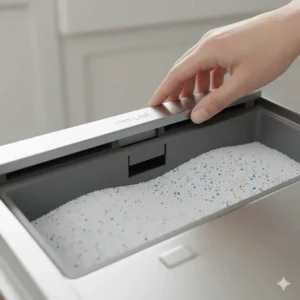
Most dishwashers feature two detergent compartments: a pre-wash cup (smaller, typically on the door) and a main wash compartment (larger, with a lid that closes).
Pre-wash compartment: Fill this with about 1/4 to 1/2 tablespoon of powder if dishes are heavily soiled or have been sitting in the machine for several hours. This preliminary rinse loosens food particles before the main wash. For lightly soiled dishes or if you run the dishwasher daily, you can skip pre-wash detergent.
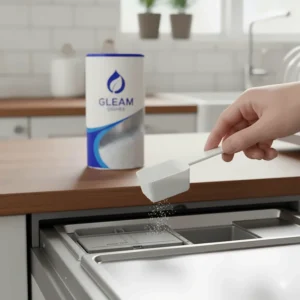
Main wash compartment: This is where your primary dose goes. Fill to the indicated line (usually 1-2 tablespoons). Close the compartment lid firmly—if it doesn’t seal properly, detergent will dispense during the pre-rinse instead of the main wash, reducing cleaning efficacy.
Some newer dishwashers have automatic dispensers that measure detergent based on soil sensors. These work well with liquid gels but can clog with powder. If your machine has automatic dispensing, stick with powder’s manual compartments rather than attempting to use the auto-dispenser.
Water Temperature and Cycle Selection 🌡️
Different cycles serve different purposes, and powder detergent performs differently across them:
Normal cycle (45-60 minutes): Best for everyday dishes with moderate soil. Heats water to 120-140°F and provides optimal enzyme activity time. This is your go-to setting for most loads.
Heavy/Pots & Pans cycle (90-120 minutes): Uses higher temperatures (140-155°F) and longer wash times for heavily soiled cookware. Increase powder dosage by 25% for these loads. The extended wash time allows enzymes maximum opportunity to break down stubborn soils.
Quick/Express cycle (20-30 minutes): While Dirty Labs specifically optimizes their formula for quick cycles, most powders don’t dissolve or activate fully in these abbreviated programs. If you regularly use quick cycles, choose a highly concentrated formula and ensure water temperature is at least 130°F.
Eco/Energy Saver cycle (120-180 minutes): Uses lower water temperatures but compensates with longer wash times. Powder detergents with strong enzyme systems (like Seventh Generation or Dirty Labs) excel in eco cycles, as enzymes remain active even at cooler temperatures (100-120°F).
Sanitize cycle (150-165°F): Ideal for baby bottles, cutting boards, and dishes exposed to raw meat. High temperatures don’t improve powder detergent performance—enzymes actually denature above 140°F—but provide additional sanitization through heat alone.
Storage and Moisture Management 📦
Powder detergent’s biggest weakness is moisture sensitivity. Improper storage leads to clumping, reduced effectiveness, and even mold growth.
Storage location: Keep powder in a cool, dry place away from the sink, dishwasher, and any sources of moisture. Under-sink cabinets might seem convenient but often experience humidity spikes from plumbing. Consider a pantry or utility closet instead.
Container sealing: After each use, ensure the container lid closes tightly. Some users transfer powder to airtight plastic containers with pour spouts for easier dispensing and better moisture protection.
Shelf life: Unopened powder detergent typically lasts 12-18 months. Once opened, use within 6 months for best results. Enzymes gradually lose activity with age, and exposure to air and moisture accelerates this process.
Clump prevention: If you notice clumping, break up clusters with a spoon before use. Severely caked powder indicates moisture exposure and may not dissolve properly—it’s better to discard it and start fresh.
Gradual Adoption Protocol for New Users ⏱️
If you’re switching from pods or liquid gel to powder, expect a brief adjustment period:
Week 1-2: Start with a middle-tier powder like Cascade Complete or Finish. These mainstream formulations perform reliably across various conditions and help you establish a baseline. Follow manufacturer dosing instructions precisely.
Week 3-4: Fine-tune dosage based on results. If you notice spots on glassware, increase amount slightly or add rinse aid. If you see detergent residue or excessive foam, reduce dosage.
Week 5-6: Consider trying alternative formulations. If eco-friendliness matters, sample Seventh Generation or Truly Free. If you love your results with mainstream products, stick with them—there’s no rule requiring a switch.
Ongoing optimization: Every 3-4 months, reassess your routine. Water conditions change seasonally (more minerals in dry seasons, less in wet seasons). Dishwasher performance degrades gradually—what worked six months ago might need adjustment now.
Maintenance and Longevity: Keeping Your Dishwasher Running Strong
Daily Maintenance Practices ☀️
Proper daily habits prevent 90% of dishwasher problems and extend your appliance’s lifespan by years.
Scrape, don’t rinse: Remove large food particles from dishes before loading, but don’t pre-rinse. Modern dishwashers and powder detergents are designed to handle food residues, and excessive rinsing wastes water while removing the soils that activate detergent enzymes.
Post-cycle inspection: After the cycle completes, briefly inspect for any dishes that didn’t clean properly. Immediate rewashing (before food dries again) is far easier than tackling hardened residues later. Check the filter for any large debris that might clog drain lines.
Leave door ajar: When possible, leave your dishwasher door slightly open after the cycle completes. This promotes air circulation, preventing musty odors and mildew growth. Many newer models feature automatic door-ajar settings that crack the door slightly at cycle end.
Rinse aid refills: Check your rinse aid dispenser weekly. Most dishwashers have a visual indicator showing fill level. Refill when low, even when using powder detergents—rinse aid and detergent serve different functions and work synergistically.
Weekly Maintenance Schedule 🗓️
Commit 10 minutes weekly to these preventive tasks:
Filter cleaning: Remove and rinse your dishwasher’s filter (usually located at the bottom of the tub). Most modern dishwashers have self-cleaning filters, but they still accumulate debris. Rinse under hot water and use an old toothbrush to scrub away stubborn residues. A clogged filter is the #1 cause of poor cleaning performance.
Door seal inspection: Wipe down the rubber door gasket with a damp cloth. Food particles and detergent residue accumulate in the seal’s folds, creating breeding grounds for mold and mildew. A simple weekly wipe prevents problems.
Spray arm check: Spin each spray arm manually. They should rotate freely without resistance. If you feel grinding or resistance, something is blocking the mechanism—investigate and clear the obstruction.
Detergent compartment cleaning: Wipe out the detergent compartments with a damp cloth. Powder residue can accumulate and eventually prevent the door from opening properly during the cycle.
Monthly Deep Cleaning 🧼
Once monthly, perform a more thorough cleaning:
Dishwasher cleaner cycle: Run an empty cycle with a dishwasher cleaning product. Options include:
- Finish Dishwasher Cleaner (traditional chemical cleaner)
- Truly Free Dishwasher Cleaner (natural citric acid formula)
- DIY solution: Place a dishwasher-safe cup filled with white vinegar on the upper rack and run a hot water cycle
Dishwasher cleaners remove hard water deposits, grease buildup, and detergent residues from internal components, ensuring optimal spray pressure and heating efficiency.
Interior wipe-down: After the cleaning cycle, wipe all interior surfaces with a microfiber cloth. Pay special attention to corners, the area around the door seal, and the bottom of the tub where debris accumulates.
Exterior cleaning: Clean the control panel and exterior with appropriate cleaners (stainless steel cleaner for stainless surfaces, gentle all-purpose cleaner for painted finishes). This isn’t just cosmetic—grease and grime on controls can eventually cause button malfunction.
Quarterly Inspection and Maintenance 📋
Every three months, conduct a comprehensive inspection:
Spray arm removal and deep cleaning: Remove all spray arms and soak them in a vinegar-water solution (1:1 ratio) for 30 minutes. This dissolves mineral deposits that gradually clog spray holes. Use a toothpick or small wire to clear any remaining blockages. Rinse thoroughly before reinstalling.
Door hinge and spring inspection: Open and close the door several times, noting any unusual resistance or squeaking. Hinges may need lubrication (consult your manual for approved lubricants) or adjustment.
Water supply line check: Inspect the water supply line under your sink for leaks, kinks, or damage. Tighten connections if loose. A restricted water supply line reduces wash pressure and cleaning efficacy.
Drain hose inspection: Ensure the drain hose doesn’t have kinks and maintains an upward loop (air gap) before connecting to your sink’s drain system. This prevents backflow of drain water into your dishwasher.
Detergent effectiveness assessment: Every quarter, evaluate whether your current powder detergent is still meeting your needs. Water conditions change seasonally, and dishwasher performance degrades gradually. If you notice declining results, it might be time to adjust dosage, try a different product, or have your machine serviced.
Troubleshooting Common Issues 🔍
White film or spots on dishes:
- Cause: Hard water minerals or too much detergent
- Solution: Reduce powder amount by 25%, add rinse aid, or use a water softening product like Lemi Shine
- If issue persists: Test water hardness and consider a water softener system
Dishes not getting clean:
- Cause: Insufficient detergent, low water temperature, or blocked spray arms
- Solution: Increase powder amount, check water heater temperature (should be 120°F minimum), clean spray arms
- Also check: Filter for clogs, proper loading technique, detergent freshness
Detergent residue remains after cycle:
- Cause: Too much detergent, water too cold, or dispenser lid malfunction
- Solution: Reduce powder amount, increase water heater temperature, inspect dispenser mechanism
- Note: Soft water requires less detergent—adjust accordingly
Musty odor inside dishwasher:
- Cause: Food particle accumulation, standing water, or mold growth
- Solution: Clean filter thoroughly, run cleaning cycle with dishwasher cleaner, leave door ajar after cycles
- Prevention: Regular filter cleaning, monthly dishwasher cleaner cycles
Poor drying performance:
- Cause: Lack of rinse aid, dishes loaded improperly, or malfunctioning heating element
- Solution: Fill rinse aid dispenser, improve loading technique (angle dishes downward), test heating element
- Note: Powder detergents don’t contain drying agents—rinse aid is essential
Replacement Parts and Warranty Considerations 🔧
Most dishwasher components last 10-15 years with proper maintenance, but some parts wear out sooner:
Spray arms: Plastic spray arms can crack or warp with repeated heating cycles. Replacement costs $20-50 depending on model. Signs of wear include unusual rattling noises or inconsistent cleaning patterns.
Filter assemblies: While durable, filters can crack from improper cleaning or hard object impacts. Replacement costs $15-40. Always hand-clean filters gently—never in a dishwasher or with harsh brushes.
Door gaskets: Rubber seals degrade over time, especially with harsh detergents. A failing gasket causes leaks or reduced cleaning efficiency. Replacement costs $20-60 and is DIY-friendly for most models.
Heating elements: These typically last 7-10 years. Failure symptoms include wet dishes after cycles or prolonged cycle times. Professional replacement costs $150-300 including labor.
Detergent dispensers: Dispenser doors can crack or the spring mechanism can fail. Replacement costs $25-75. Many homeowners can install these with basic tools following online tutorials.
Most manufacturers offer 1-year full warranties covering all parts and labor, plus extended warranties on specific components (5-10 years on dish racks, for example). Always register your dishwasher after purchase to ensure warranty coverage. Keep records of regular maintenance—some manufacturers require proof of proper care to honor warranty claims.
Total Cost of Ownership Analysis 💵
Understanding the complete financial picture helps you make informed decisions:
Initial purchase: Mid-range dishwashers cost $600-1200. Premium models (Bosch, Miele, KitchenAid) run $1200-2500. Budget options start around $400.
Annual detergent costs:
- Cascade Complete powder: $30-40/year
- Seventh Generation powder: $55-80/year
- Dirty Labs powder: $150-155/year
- Premium pods (for comparison): $150-220/year
Water and energy costs: Running a dishwasher daily costs approximately $40-60/year in water and $30-50/year in electricity (varies by local utility rates and efficiency rating).
Maintenance products:
- Monthly dishwasher cleaner: $20-30/year
- Rinse aid: $15-20/year
- Filter replacement (if needed): $15-40 every 3-5 years
Repair costs: Budget $50-150 every few years for repairs (new spray arm, door latch, etc.). Major repairs (heating element, pump) cost $150-400.
Total 10-year ownership cost:
- Dishwasher: $600-2500 (initial purchase)
- Detergent: $300-1550 (depending on product choice)
- Water/energy: $700-1100
- Maintenance supplies: $350-500
- Repairs: $200-600
Grand total: $2,150-6,250 over 10 years, or $215-625 annually. Using budget powder instead of premium pods saves approximately $1,200 over the dishwasher’s lifespan—enough to offset a significant portion of the appliance’s purchase price.
Comparative Analysis: Powder vs. Other Dishwasher Detergent Forms
Powder vs. Pods/Tablets 💊
The pods vs. powder debate dominates dishwasher detergent discussions. Here’s an objective comparison:
Cleaning Performance: Pods often edge out powder in standardized testing, though the difference is marginal. Consumer Reports testing found top-rated pods clean 5-10% better than top-rated powders in heavily soiled conditions. However, this advantage disappears for normally soiled dishes where both perform comparably.
The key advantage of pods lies in their multi-chamber design. Premium pods separate enzymes, bleach, and rinse aid into different compartments that dissolve at optimal times during the wash cycle. Powder releases all ingredients simultaneously, which can cause some interaction between incompatible ingredients (though manufacturers formulate to minimize this).
Cost Comparison: Powder wins decisively on cost. Premium pods (Cascade Platinum, Finish Quantum) cost $0.40-$0.60 per load. Mid-tier pods run $0.25-$0.35. Store-brand pods cost $0.15-$0.25. Meanwhile, powder ranges from $0.06-$0.45 per load, with quality options like Cascade Complete and Seventh Generation at $0.08-$0.22.
For a household running one load daily, choosing powder over premium pods saves $110-180 annually. Over a dishwasher’s 10-year lifespan, that’s $1,100-$1,800—enough to buy a new mid-range dishwasher.
Environmental Impact: Powder generally has a smaller environmental footprint. Most powder packaging is cardboard (recyclable) while pod containers are plastic (less frequently recycled). Pods use polyvinyl alcohol (PVA) film that dissolves during washing. While manufacturers claim PVA is biodegradable, recent studies by Environmental Science & Technology found that PVA doesn’t fully break down in wastewater treatment plants, potentially accumulating in aquatic ecosystems.
Powder also eliminates the child safety concerns associated with pods. The bright colors and candy-like appearance of pods cause thousands of poisoning incidents annually. The American Association of Poison Control Centers reports 15,000-20,000 pod-related calls yearly, many involving young children.
Convenience Factor: Pods win on convenience. They’re pre-measured (no dosing decisions), compact for storage, and impossible to spill. This matters more to some households than others. If you rarely adjust detergent amounts and appreciate grab-and-go simplicity, pods’ premium pricing might be worthwhile.
However, powder’s dosing flexibility provides advantages pods can’t match. Adjust for load size (half amount for light loads), soil level (extra for heavily soiled dishes), and water hardness (more for hard water). This customization potential often yields better results than one-size-fits-all pods.
Powder vs. Liquid Gels 🧴
Liquid gels represent the oldest form of automatic dishwasher detergent, though they’ve lost market share to pods and powders.
Cleaning Effectiveness: Independent testing consistently ranks liquid gels last in cleaning power. Consumer Reports’ latest dishwasher detergent tests showed liquid gels performing 15-25% worse than powders and 20-30% worse than premium pods on tough stains.
The primary limitation is formulation constraints. Liquid gels can’t incorporate some powerful cleaning agents (like oxygen bleach) that require dry storage. They also have difficulty suspending heavier enzyme particles, leading to settling and inconsistent dosing even when well-shaken.
Cost and Value: Liquid gels typically cost $0.15-$0.35 per load, positioning them between budget powders and premium pods. However, their inferior cleaning performance means you’re often paying more for less effective results—poor value proposition.
Environmental Considerations: Liquid gels face the same environmental challenges as laundry liquid detergents. Plastic bottles dominate the category (though some brands offer pouches). The liquid format requires preservatives to prevent microbial growth, adding chemicals absent from powder formulations.
On the positive side, gels don’t contain PVA film like pods, and their liquid form means complete dissolution—no residue concerns that occasionally affect powder.
Usage Considerations: Gels offer some convenience advantages: no powder mess, bottle pour spouts for easy dispensing, and no moisture sensitivity. They work well in very cold water where powder might not fully dissolve (though most dishwashers heat water, making this advantage minimal).
Gels can also be mixed with other products—some users add a splash of white vinegar or lemon juice for enhanced hard water performance. This flexibility isn’t recommended with powder (it can cause unwanted chemical reactions).
Recommendation: Unless you have specific reasons to prefer liquid gel (perhaps your dishwasher manual specifically recommends it), powder detergents offer superior cleaning at comparable or lower cost. The only scenario where gels might be preferable is if you have moisture problems with powder storage and refuse to switch to pods.
Traditional vs. Modern Dishwashing Approaches 🕰️
It’s worth comparing automatic dishwashing (with powder detergent) to hand washing and older dishwashing methods:
Water Consumption: Modern dishwashers using powder detergent consume 3-5 gallons per load. Hand washing the same dishes typically requires 10-27 gallons, according to EPA studies. This dramatic difference stems from dishwashers’ recirculation systems that reuse water throughout the cycle, while hand washing runs water continuously.
Energy Efficiency: Energy Star-rated dishwashers use 270-300 kWh annually. Hand washing comparable loads in hot water consumes 450-650 kWh (primarily for water heating). The difference: $25-50 yearly in most areas.
Time Investment: Hand washing a full load takes 30-60 minutes. Loading a dishwasher takes 5-10 minutes, plus 1-2 minutes adding powder detergent. Over a year (365 loads), that’s 152-304 hours saved by using a dishwasher—the equivalent of 4-8 work weeks.
Cleaning Efficacy: Modern dishwashers with quality powder detergent clean and sanitize more effectively than hand washing. Water temperatures in dishwashers reach 140-165°F, hot enough to kill most bacteria. Hand washing water is typically 95-110°F (as hot as hands can tolerate), insufficient for thorough sanitization.
The American Society for Microbiology found that hand-washed dishes harbored significantly more bacteria than machine-washed dishes, even when hand-washers used hot water and antibacterial dish soap.
Historical Context: Pre-1970s dishwashers were inefficient water and energy hogs that often left dishes dirtier than hand washing. This created generational skepticism about dishwasher efficacy that persists today.
However, modern machines bear little resemblance to their predecessors. Today’s dishwashers use 80% less water, 60% less energy, and clean far more effectively thanks to improved spray systems, better detergents (especially enzyme-enhanced powders), and sophisticated sensors.
Older family members who remember early dishwashers may be skeptical. Showing them independent testing results and your own sparkling dishes can help overcome these outdated perceptions.
Case Studies and Success Stories: Real-World Applications
Case Study 1: Restaurant Conversion Saves $3,200 Annually 🍴
Background: Tina’s Family Diner, a 100-seat restaurant in suburban Chicago, was spending approximately $4,000 annually on premium dishwasher pods. With 4-6 dishwasher cycles daily during peak seasons, costs were eating into already slim profit margins.
Problem: The restaurant’s manager noticed that while pods were convenient, they were using them for all loads—from lightly soiled glassware to heavily soiled cookware—at the same high cost per cycle.
Solution: After consulting with a commercial kitchen equipment specialist, Tina’s switched to Cascade Complete Powder for 80% of their loads, reserving premium pods only for the toughest pots and pans. They calibrated powder dosage for their commercial machine (slightly higher concentration than residential recommendations) and trained staff on proper loading techniques.
Results:
- Annual detergent costs dropped from $4,000 to $800 (powder) plus $200 (limited pod use) = $1,000 total
- Net savings: $3,000 annually
- Added benefit: More consistent cleaning results because staff could adjust powder amount for varying soil levels
- Environmental impact: Reduced plastic waste by approximately 75%
Key Takeaway: Even establishments that value convenience can benefit from powder’s flexibility and cost savings by using a hybrid approach—powder for most loads, pods for specific applications.
Case Study 2: Large Family Eliminates Hard Water Problems 💧
Background: The Martinez family of seven in Phoenix, Arizona, struggled with hard water issues (320 ppm) that left cloudy film on glassware and dishes regardless of which detergent they tried. They cycled through Cascade pods, Finish tablets, and various liquid gels without success.
Problem: Their dishwasher ran twice daily to keep up with dishes. The white film wasn’t just cosmetic—it indicated incomplete cleaning and potential bacterial residues. Mrs. Martinez was considering the expensive option of a whole-house water softener ($2,000+ installed).
Solution: A plumber recommended trying a combination approach: Cascade Complete Powder as the base detergent plus Lemi Shine Hard Water Booster. The combination cost $0.20-$0.25 per load compared to $0.45 for the premium pods they’d been using.
Results:
- Complete elimination of hard water spots and film within three cycles
- Annual detergent cost: $146-183 (powder + booster) vs. $329 previously spent on pods
- Savings: $146-183 annually, with cumulative savings of $1,460-1,830 over expected dishwasher lifetime
- Avoided expense of water softener system
Key Takeaway: Hard water challenges often require customized solutions. Powder’s flexibility allows users to add boosters, adjust amounts, or try different products without committing to expensive pods that may not solve the problem.
Case Study 3: Eco-Conscious Family Reduces Environmental Impact 🌿
Background: The Chen family wanted to align their household practices with their environmental values but struggled to find dishwasher detergent that was both eco-friendly and effective. Prior experiments with “natural” liquid gels left dishes with residue, and they worried about the environmental impact of traditional detergents.
Problem: Premium eco-pods (like Seventh Generation tablets) were effective but expensive ($0.35-$0.40 per load). The family ran their dishwasher 6-7 times weekly, making annual costs around $110-145. They also disliked the plastic packaging and questioned whether pod PVA film truly biodegraded as manufacturers claimed.
Solution: After researching options, they switched to Seventh Generation Free & Clear Dishwasher Detergent Powder. The 75 oz container ($14) provided approximately 75 loads at $0.19 per load. They complemented it with Seventh Generation Rinse Aid for optimal spot prevention.
Results:
- Annual savings: $50-70 compared to eco-pods
- Packaging waste reduced by 60% (cardboard vs. plastic)
- Cleaning performance matched or exceeded pods
- Peace of mind about ingredient safety (USDA Biobased 87%, no PVA film)
- Educational opportunity: taught children about conscious consumerism and environmental stewardship
Key Takeaway: Environmental responsibility doesn’t require sacrificing cleaning efficacy or budget. Modern eco-powders offer the best balance of sustainability, performance, and value.
Case Study 4: Off-Grid Homeowner Optimizes Limited Resources ⛺
Background: Mark’s off-grid cabin in rural Montana has limited water supply (750-gallon cistern refilled twice monthly) and solar-powered electricity. Every gallon of water and kilowatt-hour matters, making efficient dishwashing crucial.
Problem: Mark initially hand-washed dishes to conserve water, using approximately 3-4 gallons per session. However, this wasn’t sustainable long-term, especially during winter when heating water consumed significant propane.
Solution: He installed a compact, energy-efficient dishwasher and experimented with various detergents. After testing several options, he settled on Dirty Labs Bio Enzyme Powder because:
- Ultra-concentrated formula meant less product needed (storage space is limited)
- Optimized for quick-wash cycles, reducing water and energy use
- Works effectively in cold water (important when solar energy is limited)
- Biodegradable formula safe for his greywater irrigation system
Results:
- Water consumption per load: 3.5 gallons (dishwasher) vs. 3-4 gallons (hand washing)
- Time savings: 45 minutes daily (formerly spent hand washing)
- Energy savings: 35% reduction in water heating costs
- Better sanitation: dishwasher’s higher temperatures killed bacteria more effectively
- Greywater suitable for garden irrigation (eco-friendly formula)
Key Takeaway: Even in resource-constrained environments, modern dishwashers with appropriate powder detergent can be more sustainable than traditional methods. The key is selecting products optimized for efficiency.
Case Study 5: Elderly Couple Simplifies Kitchen Cleanup 👵👴
Background: The Johnsons, both in their mid-70s, found hand washing dishes increasingly difficult due to arthritis. However, they were intimidated by modern dishwasher detergent options and unsure which to choose.
Problem: Their adult daughter purchased a dishwasher for them but stocked it with pods. The Johnsons found pods confusing (Do they unwrap them? How many to use? Where do they go?) and were concerned about accidentally ingesting them due to their candy-like appearance—a legitimate concern given that Mr. Johnson has mild cognitive decline.
Solution: Their daughter switched them to Cascade Complete Powder with clear, written instructions:
- Scoop powder into marked container
- Pour powder into dishwasher’s soap compartment (labeled with bright tape)
- Close compartment and start machine
She pre-measured powder into small containers (one per load) for even simpler use.
Results:
- The Johnsons successfully operated their dishwasher independently
- Safety concerns about pod ingestion eliminated
- Better cleaning results because daughter calibrated powder amount for their water conditions
- Cost savings funded weekly meal deliveries ($8/month detergent savings vs. $35+ previously spent on pods)
- Improved quality of life: more time for hobbies instead of painful dish washing
Key Takeaway: Powder’s simplicity and safety advantages benefit vulnerable populations (elderly, cognitively impaired, households with young children) more than convenience-focused pods.
Future Trends and Market Evolution: What’s Next for Dishwasher Powder?
Emerging Technologies in Powder Formulations 🔬
The dishwasher detergent industry continues evolving, with several promising technologies on the horizon:
Next-generation enzyme systems: Researchers are developing enzymes that function effectively at even lower temperatures (80-100°F), enabling cold-water washing that could reduce energy consumption by 50-70%. Companies like Novozymes and BASF are licensing these enzymes to detergent manufacturers, with commercial products expected by 2026-2027.
Microencapsulation technology: This process encases different ingredients in microscopic shells that dissolve at specific times or under certain conditions. While currently used primarily in pods, powder manufacturers are exploring how to incorporate microencapsulated bleach activators and fragrances into powder formulations, potentially matching pods’ performance advantages while maintaining powder’s cost benefits.
Biodegradable chelators: Current chelating agents (EDTA, phosphonates) raise environmental concerns. Companies are developing plant-based alternatives like amino acid chelators and carboxyl-based polymers that biodegrade completely while effectively managing hard water minerals. Seventh Generation and Dirty Labs are likely to adopt these innovations first.
Concentrated ‘super powders’: Following the success of ultra-concentrated liquid detergents, manufacturers are developing hyper-concentrated powder formulations requiring just 1-2 grams per load (compared to current 15-30 grams). This reduces packaging, shipping costs, and storage space while potentially improving dissolution rates.
Market Trends and Consumer Behavior Shifts 📊
The dishwasher detergent market is experiencing several significant shifts:
Pod plateau: After years of rapid growth, pod market share has stabilized at 60-65% in North America. Many consumers are reconsidering due to cost concerns, environmental worries about PVA film, and child safety issues. This creates opportunity for quality powder formulations to regain market share.
Eco-consciousness growth: Surveys by Nielsen and the Natural Marketing Institute show that 73% of consumers consider environmental impact when purchasing cleaning products, up from 45% in 2015. This trend favors powder detergents with biodegradable formulas and recyclable packaging.
Direct-to-consumer brands: Companies like Dirty Labs, Blueland, and Grove Collaborative are disrupting traditional retail channels with subscription models delivering eco-friendly powder detergents directly to consumers. These DTC brands often command premium pricing while building loyal customer bases through superior ingredients and sustainability messaging.
Private label innovation: Retailers like Costco, Target, and Walmart are improving their store-brand powder formulations to compete more directly with name brands. Early testing shows these products increasingly match or exceed national brand performance at 30-50% lower cost. This democratizes access to quality powder detergents.
Hard water solutions: As consumers become more educated about water quality’s impact on cleaning, demand grows for powder formulations specifically designed for hard water conditions. Products like Lemi Shine, originally niche offerings, are entering mainstream retail as awareness increases.
Sustainability and Environmental Considerations 🌍
Environmental regulations and consumer pressure are driving significant changes:
Plastic packaging elimination: Several states and the European Union are considering legislation requiring minimum percentages of recycled content in plastic packaging or banning certain single-use plastics. This favors powder’s cardboard packaging over pods’ plastic tubs.
Microplastic concerns: Recent research suggests that PVA film from pods may not fully biodegrade, potentially contributing to microplastic pollution. While more studies are needed, precautionary principle approaches could lead regulators to restrict or ban PVA film, fundamentally reshaping the detergent market.
Phosphate restrictions: While dishwasher detergents haven’t contained phosphates since 2010 in most jurisdictions, renewed focus on water quality is driving scrutiny of other ingredients. Alternative chelators and builders that don’t contribute to algae blooms are becoming standard.
Carbon footprint labeling: Some brands are beginning to include carbon footprint information on packaging, helping consumers make informed decisions. Powder typically has a smaller carbon footprint than pods due to simpler manufacturing, lighter shipping weight, and recyclable packaging.
Circular economy models: Companies are experimenting with refill stations where consumers bring containers to refill with powder detergent, eliminating packaging waste entirely. This model has succeeded in parts of Europe and is being tested in US markets.
Personalization and Customization Possibilities 🎯
Future powder formulations may offer unprecedented customization:
Home testing kits: Companies are developing simple home testing kits that measure water hardness, pH, and mineral content. Based on results, they recommend customized powder blends or additives optimized for your specific conditions.
Modular powder systems: Instead of one-size-fits-all formulations, future products might offer base powder plus separate boosters (enzyme boost, hard water fighter, fragrance, etc.) that users mix according to their needs. This approach combines powder’s flexibility with pod-like targeting of specific cleaning challenges.
Smart dishwasher integration: High-end dishwashers increasingly feature WiFi connectivity and advanced sensors. Future models might recommend specific powder amounts and types based on load composition, soil level, and water conditions—displayed via smartphone apps.
Subscription personalization: DTC brands collect data on customer preferences, water conditions, and satisfaction ratings. This enables them to adjust formulations in future shipments, creating truly personalized powder blends optimized for each household.
Industry Predictions and Upcoming Developments 🔮
Based on current trajectories and industry reports:
2025-2026: Expect continued pod market dominance but with powder regaining 2-3 percentage points of market share, driven by cost-conscious consumers and environmental concerns. Premium eco-powders (Dirty Labs, Seventh Generation) will see 15-20% annual growth.
2027-2028: Next-generation enzyme systems enabling cold-water washing will launch commercially, primarily in powder formulations initially. Energy-conscious consumers will drive adoption, particularly in regions with high electricity costs.
2029-2030: If microplastic concerns about PVA film are confirmed by additional research, regulatory action could dramatically reshape the market. Powder and potentially new pod formats using alternative films would benefit. Industry analysts estimate pods could lose 10-20 percentage points of market share under this scenario.
Long-term (2030+): The market may bifurcate into two camps:
- Mass-market consumers using affordable, effective powder detergents
- Premium consumers using advanced pods or tablets with specialized formulations
The middle market (basic pods, liquid gels) will likely contract as consumers choose either maximum value (powder) or maximum convenience/performance (premium pods).
One certainty: powder detergents aren’t disappearing anytime soon. Their combination of affordability, flexibility, and improving environmental profiles ensures they’ll remain relevant even as the market continues evolving.
🎯 Ready to Make the Switch?
Don’t wait to transform your dishwashing experience! Click on any of the product names above to check the latest prices and customer reviews on Amazon. Whether you choose budget-friendly Cascade Complete, eco-conscious Seventh Generation, or premium Dirty Labs, you’ll find the perfect dishwasher powder for your needs. Your sparkling clean dishes are just a click away! 🌟✨
Investment and Purchase Decision Framework
Cost-Benefit Analysis Frameworks 💰
Making an informed dishwasher powder purchase requires evaluating both financial and non-financial factors:
Simple Cost Analysis: Compare annual costs based on your dishwashing frequency:
- Budget powder (Great Value, $0.06-$0.08/load): $22-29/year (365 loads)
- Mainstream powder (Cascade, Finish, $0.10-$0.18/load): $37-66/year
- Eco powder (Seventh Generation, Truly Free, $0.15-$0.45/load): $55-164/year
- Premium powder (Dirty Labs, $0.42/load): $153/year
Compare these figures against your current detergent costs. Most households switching from pods to powder save $75-150 annually.
Extended Value Calculation: Consider factors beyond pure cost:
- Time value: If premium powder cleans better, eliminating the need to rewash 5-10% of dishes, it saves 1-2 hours monthly. At $15/hour (conservative personal time value), that’s $180-360 annually in time savings.
- Appliance longevity: Quality powder formulations with proper chelators prevent mineral buildup that can damage dishwashers. Extending your dishwasher’s life from 10 to 12 years saves $5-10 monthly in amortized replacement costs.
- Health considerations: Fragrance-free powders prevent allergic reactions requiring doctor visits and medications. For households with sensitivities, this benefit could exceed $100 annually.
Environmental Value Assessment: Some consumers assign monetary value to environmental impact:
- Carbon footprint reduction: ~5 lbs CO2 annually vs. pods
- Water conservation: ~200 gallons annually vs. hand washing
- Plastic waste reduction: ~2-3 lbs annually vs. pods
While these benefits don’t directly save money, many households are willing to pay modest premiums (10-20%) for environmentally superior products. If you’re already buying organic produce or energy-efficient appliances, eco-friendly powder aligns with those values.
Implementation and Adoption Strategy Templates 📋
Phase 1: Research and Selection (Week 1)
- Test your water hardness (purchase test strips or contact local water authority)
- Review your dishwasher’s manual for detergent recommendations
- Read recent reviews of candidate products on Amazon, Consumer Reports, and specialty sites
- Consider your priorities (budget, environment, cleaning power, fragrance preference)
- Purchase 1-2 trial-size products to test
Phase 2: Testing Period (Weeks 2-4)
- Try each product for 7-10 loads minimum
- Keep notes on performance, residue, spots, and odor
- Test with various load types (glassware, cookware, mixed loads)
- Photograph results if switching between products (helps track improvements)
- Adjust dosage if needed based on water conditions
Phase 3: Optimization (Weeks 5-8)
- Select your preferred product based on testing results
- Fine-tune dosage for your conditions
- Establish routine maintenance practices (filter cleaning, etc.)
- Calculate actual cost per load based on your usage
- Set up subscription if ordering online (saves 5-15%)
Phase 4: Long-term Monitoring (Ongoing)
- Reassess performance quarterly
- Watch for seasonal water quality changes requiring dosage adjustment
- Try new products occasionally to ensure you’re still using the best option
- Share your findings with friends/family to help them make informed choices
Decision Criteria and Evaluation Matrices 📊
Use this framework to score products:
| Criterion | Weight | Product A Score (1-10) | Product B Score (1-10) | Product C Score (1-10) |
|---|---|---|---|---|
| Cleaning Power | 30% | |||
| Cost per Load | 20% | |||
| Environmental Impact | 20% | |||
| Hard Water Performance | 10% | |||
| Fragrance Preference | 10% | |||
| Availability | 5% | |||
| Packaging | 5% | |||
| Total Score | 100% |
Calculate weighted scores by multiplying each score by its weight. The product with the highest total score best matches your priorities.
Budget Planning and Financing Options 💳
While dishwasher powder rarely requires financing, smart budgeting helps maximize value:
Annual Budget Planning: Based on dishwashing frequency, allocate:
- Daily dishwasher users: $60-180/year for powder plus $30-40 for maintenance products (rinse aid, machine cleaner)
- Every-other-day users: $30-90/year for powder plus $20-30 for maintenance
- 2-3 times weekly users: $20-60/year for powder plus $15-25 for maintenance
Bulk Purchasing Strategies: Save 15-30% by buying in bulk:
- Warehouse clubs (Costco, Sam’s Club) offer jumbo packs at significant discounts
- Amazon Subscribe & Save provides 5-15% off with scheduled deliveries
- Manufacturer websites sometimes offer bundle deals (detergent + rinse aid + cleaner)
Cost Optimization Tactics:
- Use less in soft water areas: Many households overuse detergent. Start with half the recommended amount in soft water and increase only if needed.
- Reserve premium products for tough loads: Use budget powder for lightly soiled dishes, premium products for challenging loads.
- DIY boosters: Add 1-2 tablespoons of white vinegar to the rinse aid compartment instead of buying commercial rinse aid (saves $15-20 annually).
- Price tracking: Use CamelCamelCamel or Honey browser extensions to track Amazon prices and buy when products hit historical lows.
Measuring Success Metrics and KPIs 📈
How do you know if you’ve chosen the right dishwasher powder? Track these metrics:
Primary Performance Indicators:
- Rewash rate: Track how often you need to rewash dishes (target: <5%)
- Spot/film frequency: Document how often glasses show spots (target: <10% of loads)
- Customer satisfaction: Survey family members monthly (scale 1-10, target: 8+)
Financial Metrics:
- Cost per load: Calculate actual cost including boosters, rinse aid, etc. (compare to baseline)
- Annual detergent budget: Track total spending (compare to previous year)
- Value ratio: Performance score (1-10) divided by cost per load
Environmental Metrics:
- Packaging waste: Weight of packaging discarded monthly (less is better)
- Water consumption: Monitor dishwasher’s water usage (check utility bills)
- Energy use: Track dishwasher electricity consumption if you have smart meter
Operational Metrics:
- Filter cleaning frequency: How often filter requires cleaning (should remain stable)
- Machine cleaning needs: Frequency of required dishwasher cleaning cycles (should decrease with quality detergent)
- Dispenser clogs: Track any detergent-related machine issues
Set quarterly review reminders to assess these metrics. If performance degrades or costs increase unexpectedly, investigate and adjust your approach accordingly.
Frequently Asked Questions (FAQs)
❓ How long does dishwasher powder last once opened?
❓ Can I use dishwasher powder in a portable or countertop dishwasher?
❓ Is dishwasher powder safe for septic systems?
❓ How do I prevent dishwasher powder from clumping in humid climates?
❓ Can I mix different dishwasher powder brands together?
Conclusion: Making Your Dishwasher Powder Decision
After diving deep into the world of dishwasher powder—from chemistry and formulations to real-world applications and future trends—one thing becomes crystal clear: there’s no single “best” dishwasher powder for everyone. Your ideal choice depends entirely on your specific circumstances, priorities, and values.
If you’re primarily budget-focused and have average water conditions, mainstream options like Cascade Complete Powder or Great Value Automatic Dishwasher Powder deliver excellent value at $0.06-$0.12 per load. They clean effectively, are widely available, and have established track records spanning decades.
For eco-conscious households willing to pay a modest premium, Seventh Generation Free & Clear offers the perfect balance of environmental responsibility and cleaning performance. Its plant-based formula, biodegradable ingredients, and recyclable packaging align with sustainable values without requiring you to compromise on clean dishes.
Hard water warriors should seriously consider either Lemi Shine as a standalone product or booster, or invest in Dirty Labs Bio Enzyme Dishwasher Detergent, which handles challenging water conditions with exceptional grace. The white film and spots that plague many households simply disappear with these specialized formulations.
Premium performance seekers who want the absolute best cleaning power should explore Dirty Labs or Finish Powder. While pricier than budget options, their advanced enzyme systems and optimized formulations consistently outperform in independent testing and real-world use.
Remember, the most expensive product isn’t necessarily the best for your specific situation. A $0.42/load premium powder might be overkill if you have soft water and lightly soiled dishes, while a $0.08/load budget powder might frustrate you endlessly if you’re battling extremely hard water. Match the product to your needs, not to marketing hype or price tags.
Whatever you choose, you’re making a smart decision by opting for powder over more expensive alternatives. The flexibility to adjust dosing, the cost savings, and increasingly the environmental benefits make powder an intelligent choice for modern households.
Your dishes deserve the best care, and now you have all the information needed to provide it. Here’s to sparkling clean plates, crystal-clear glassware, and the satisfaction of making an informed purchasing decision that works for your family and your budget.
🛍️ Final Recommendation: Get Started Today!
Ready to experience the difference? Browse our top recommendations above and choose the dishwasher powder that matches your needs. With options ranging from $0.06 to $0.45 per load, there’s a perfect solution for every household. Click any product name to check real-time prices and customer reviews on Amazon—your journey to cleaner dishes starts now! 🌟🍽️
Recommended for You
- 7 Best Panel Ready Dishwasher Models That Transform Your Kitchen in 2025
- 7 Best Drying Dishwasher Models That Actually Work in 2025
- 7 Best Monogram Dishwashers That Will Transform Your Kitchen in 2025
Disclaimer: This article contains affiliate links. If you purchase products through these links, we may earn a small commission at no additional cost to you.
✨ Found this helpful? Share it with your friends! 💬🤗
