
In This Article
You paid good money for that wood-look floor. It shrugs off dog claws, dropped plates, and toddler chaos. So why does it look cloudy three weeks after install?
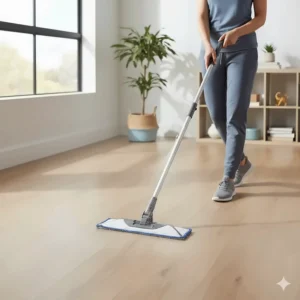
Nine times out of ten, the floor isn’t the problem. The mop is. Choosing the best mop for lvp flooring has little to do with fancy gadgets. It comes down to one unglamorous skill: controlling moisture and residue. Luxury vinyl tile and plank is an industry label rather than a formal standard. In practice it’s a layered product, with a printed image under a clear wear layer and click-together seams between planks. Those seams are the soft underbelly. Soak them, steam them, or glaze them with sticky cleaner, and the floor tells on you.
This guide narrows the field to seven real options: five reusable or disposable spray mops and two wet-dry vacuums. Everything here comes from published specs, aggregated reviewer sentiment from independent roundups, and manufacturer care guidance. I’ve translated it into plain English, with no steam, no soaking, and no marketing fluff. You’ll see what to buy, what to skip, and how to use it so your planks stay flat and glossy for years.
Quick Comparison: Best Mop for LVP Flooring at a Glance
| Product | Type | Key Spec | Price Range | Best For |
|---|---|---|---|---|
| Bona Premium Spray Mop | Spray mop | 850 ml refillable cartridge | $30–$45 range | Buyers who want a cleaner built for vinyl |
| O-Cedar ProMist MAX | Spray mop | Dual-sided flip pad, about 2 lb | $20–$30 range | Best all-round value |
| Rubbermaid Reveal | Spray mop | 22 oz tank, 15″ path | $25–$40 range | Whole-house cleaning with spare pads |
| Libman Freedom | Spray mop | Washable pad, made in the USA | $25–$50 range | Eco-minded users with their own cleaner |
| Swiffer WetJet | Battery spray mop | Disposable pads | $20–$40 range | Quick touch-ups and small spaces |
| Bissell CrossWave OmniForce Edge | Wet-dry vacuum | 12″ path, dry-only mode | $350–$450 range | Pet hair and sticky messes |
| Tineco Floor One S5 | Smart wet-dry vacuum | Sensor-driven, self-cleaning | $300–$500 range | Busy, high-traffic homes |
Looking at the table, the O-Cedar ProMist MAX delivers the strongest value for most households. The Rubbermaid Reveal and Libman Freedom are close behind. If you share your home with shedding pets, the extra money for the Bissell CrossWave OmniForce Edge or Tineco Floor One S5 buys you vacuuming and mopping in a single pass. Budget buyers should note that the Swiffer WetJet is cheap to start but costs more over time, since you keep buying pads and solution.
💬 Just one click — help others make better buying decisions too!😊
What Is the Best Mop for LVP Flooring?
The best mop for lvp flooring is a lightweight microfiber mop that applies only a thin, controlled film of pH-neutral cleaner, so water never lingers in the seams. Spray mops with washable pads and low-moisture wet-dry vacuums fit that description. Steam mops, soaking string mops, and abrasive scrubbers generally don’t.
Here’s the logic. LVP is water-resistant, not water-invincible. One national installer’s care guide describes only 24 to 72 hours of moisture protection. After that, standing liquid can creep into seams and cause lifting, buckling, or mold underneath. A good mop for luxury vinyl plank therefore behaves like a precise instrument, not a bucket on a stick. Microfiber grabs fine grit without scratching. A trigger or sensor limits how much liquid hits the floor. A pad you can launder keeps you from smearing yesterday’s dirt around today.
That’s the whole philosophy behind the picks below.
Top 7 Mops for LVP Flooring: Expert Analysis
I picked these across budget, mid-range, and premium tiers. Each one is judged on how well it keeps moisture under control, not on how loudly the box shouts.
1. Bona Premium Spray Mop — cleaner and mop engineered as one system
Most spray mops let you pour in whatever you like. The Bona Premium Spray Mop goes the other way. It pairs a washable microfiber pad with a sealed 850 ml cartridge of Bona’s hard-surface cleaner, so the chemistry and the hardware were designed together.
On LVP, that pairing matters. The cartridge clicks into place and delivers a fine mist, which keeps liquid at the surface instead of running toward seams. Bona describes the formula as residue-free and streak-free for sealed hard floors, including vinyl. One comparison review measured the mop a little heavier than rivals, around five pounds loaded, so expect slightly more arm work.
Based on the spec comparison, this is the pick for people who want a no-guesswork routine: spray, wipe, move on. Retailer ratings I found across Bona’s spray-mop variants were mixed to positive. The hardwood-focused version has far more reviews than the hard-surface kit, so the sample for the vinyl-oriented version is smaller. The trade-off with any proprietary-cartridge system is ongoing refill cost. Check current pricing on refills before you commit.
Pros:
- ✅ Cleaner formulated for sealed vinyl and tile
- ✅ Fine mist keeps seams from soaking
- ✅ Washable pad cuts down on waste
Cons:
- ❌ Heavier than lightweight spray-mop rivals
- ❌ Refills tie you to one brand
Price: roughly the $30–$45 range. Value verdict: strong if you want the cleaner and mop matched, fair if you’d rather mix your own.
2. O-Cedar ProMist MAX — the spray-mop winner in America’s Test Kitchen’s lineup
When America’s Test Kitchen’s spray-mop testing crowned a winner, it was the O-Cedar ProMist MAX. The testers liked its balance. It’s light enough to steer easily, with enough heft to help when you scrub, and its large double-sided pads soaked up roughly twice what competing pads did.
The specs back that up. The mop weighs about two pounds, the handle runs roughly 55 inches, and the head is about 15 inches wide. A 55-inch handle means you stay upright instead of hunching, which is a bigger deal than it sounds on a big open-plan floor. The refillable bottle takes plain water or a small splash of your preferred cleaner, and the microfiber pad is washable up to 100 times by the maker’s count.
For LVP, the double-sided pad is the clever part. Flip it when one side gets grubby, and you finish a whole room without a pad change. Retailer listings I pulled showed low-4s ratings across several thousand reviews, which is a healthy sample. My analytical caution: because the pad is so absorbent, a heavy trigger hand can still over-wet a patch. Short bursts beat long sprays.
Pros:
- ✅ Lightweight with a tall, back-friendly handle
- ✅ Double-sided pad doubles cleaning time per pad
- ✅ Works with plain water or mild cleaner
Cons:
- ❌ Easy to over-spray if you hold the trigger
- ❌ Non-wringing pad needs flipping in big rooms
Price: around the $20–$30 range. Value verdict: the best all-rounder for most homes.
3. Rubbermaid Reveal — kit with spare pads for rotating through the house
The Rubbermaid Reveal earned top marks from more than one independent roundup. Reviewed named it best mop overall after testing on linoleum and wood. YourBestDigs picked it first in its own hard-floor comparison.
Practical specs explain why. It cleans a 15-inch path, holds a 22-ounce tank, and weighs roughly 3.8 pounds. The trigger is manual, so there are no batteries to die mid-kitchen. The kit version ships with three microfiber pads, which means one pad per zone, with the dirty ones going straight into the laundry. The scraper attachment also detaches for cleaning, a small touch that tells you someone thought about real-world mess.
What stands out for LVP is the wide-angle fine mist. A broad mist lays liquid down evenly, so you wipe it up before it can pool. The caveat is the 22-ounce tank, which on a large open floor means a mid-job refill. Reviewers in those roundups consistently flagged it as lightweight and easy to maneuver along baseboards and corners.
Pros:
- ✅ Three pads in the kit for rotation
- ✅ Wide mist covers more floor per spray
- ✅ No batteries, simple manual trigger
Cons:
- ❌ 22-ounce tank needs a refill on big floors
- ❌ Trigger squeezing can tire your hand
Price: roughly the $25–$40 range. Value verdict: excellent for multi-room homes, especially if you want spare pads ready.
4. Libman Freedom — made in the USA with a wash-and-reuse pad
The Libman Freedom appeals to the “less landfill, fewer receipts” crowd. The pad is machine washable up to 100 times, the mop needs no batteries, and the refillable tank takes your own cleaning solution. Libman also markets it as the only spray mop made in the USA.
The pad measures about 15.4 by 5.1 inches, with a steel handle in the 48–50 inch range. That pad size is generous enough to cover ground quickly while still getting into corners. The thick microfiber is the real star, because it traps grit instead of dragging it, and that’s what protects an LVP wear layer. Libman cites third-party tests showing it removes over 99 percent of certain bacteria on ceramic tile and wood when used with water. Those results aren’t LVP-specific, so treat them as a general cleanliness signal.
Retailer listings showed low-4s ratings on a couple hundred reviews, a decent but smaller pool than the O-Cedar ProMist MAX. Fewer independent lab-style roundups feature it, which is why it ranks fourth. If you’re loyal to American-made products or you hate buying proprietary refills, though, it’s a smart buy.
Pros:
- ✅ Pad is machine washable up to 100 times
- ✅ Refillable tank accepts your own cleaner
- ✅ Made in the USA, no batteries needed
Cons:
- ❌ Fewer independent expert tests published
- ❌ Thick pad can hold extra liquid if oversprayed
Price: around the $25–$50 range, depending on seller. Value verdict: great for eco-minded buyers.
5. Swiffer WetJet — grab-and-go convenience for small spaces
The Swiffer WetJet is the one you reach for when guests are ten minutes away. It runs on batteries to spray solution, uses disposable pads, and pivots at the head to slide under cabinets and around chair legs. It’s also lighter than several competing spray mops.
On LVP, the draw is speed and low liquid volume. The pad is pre-sized to the spray, so you’re not tempted to drench anything. The downside is ongoing cost. One independent review notes the continuing expense of pads and solution is high compared with reusable systems like Bona’s, and there’s no fragrance-free solution option. If you’re sensitive to scents, that’s worth knowing.
My honest take: the Swiffer WetJet suits apartments, rental turnovers, and secondary spaces such as laundry rooms. For a whole house cleaned weekly, the pad math gets ugly fast. Review sentiment tends to praise convenience and criticize running costs, so go in with eyes open.
Pros:
- ✅ Lightweight and quick to grab
- ✅ Disposable pads mean no laundering
- ✅ Pivoting head reaches under furniture
Cons:
- ❌ Ongoing pad and solution costs add up
- ❌ No fragrance-free solution available
Price: roughly the $20–$40 range for a starter kit. Value verdict: fine for light use, poor for large homes.
6. Bissell CrossWave OmniForce Edge — dedicated dry-vacuum mode plus edge cleaning
Now we leave mops behind and enter the machines. The Bissell CrossWave OmniForce Edge is a cordless wet-dry vacuum that can mop and vacuum together or vacuum alone. It’s the only one in its family with a dedicated dry-only mode, and the maker claims 75 percent more suction in that mode.
Key specs: a 12-inch cleaning path, two tanks (roughly 0.58 liters dirty and 0.75 liters clean) that keep dirty water away from fresh solution, and ZeroGap technology that reaches right to baseboards. It weighs about 10.6 pounds and takes around four hours to charge. Tom’s Guide found setup took only minutes and liked the dry-only mode, but noted some dried-on spots needed several passes.
For LVP, the big win is that the machine pulls up water as it goes, which leaves a thinner film than a damp pad does. That’s particularly helpful for pet hair plus muddy-paw days, because you skip the separate sweep. Check that the formula you use is rated for sealed vinyl. Bissell bundles a sanitizing formula for hard floors.
Pros:
- ✅ Dry-vacuum-only mode for everyday debris
- ✅ Two tanks keep clean and dirty water apart
- ✅ Edge technology reaches along baseboards
Cons:
- ❌ Heavier at roughly ten pounds
- ❌ Dried-on spots can need multiple passes
Price: around the $350–$450 range. Value verdict: worth it for pet owners and big floor areas.
7. Tineco Floor One S5 — a smart sensor that adjusts suction and water flow
The Tineco Floor One S5 is the gadget lover’s pick, and a legitimately clever one. Its iLoop sensor detects how dirty the floor is and adjusts suction, water flow, and brush speed to match. It weighs about 9.9 pounds, launched near the $500 mark, and has a self-cleaning cycle that rinses the roller on its dock.
TechRadar’s review called it a smart wet-dry cleaner that handles both solid and liquid messes well, and noted it removes the need to vacuum before mopping. Tom’s Guide praised the self-cleaning feature on a sibling model. It also pointed out that the tank may not suit palatial homes, so very large floors could need a refill mid-job.
Why that suits LVP: the sensor reduces water on lightly soiled floors and ramps up only when it detects real mess, which is the right instinct for a seam-sensitive surface. Retail listings describe it as safe for sealed hard floors, including vinyl. As always, check your own plank manufacturer’s care guide before settling on any machine.
Pros:
- ✅ Sensor tunes water flow to the mess
- ✅ Self-cleaning cycle reduces roller upkeep
- ✅ Vacuums and mops in a single pass
Cons:
- ❌ Highest upfront cost on this list
- ❌ Tank size may need refills on big floors
Price: roughly the $300–$500 range depending on model and promotions. Value verdict: justified for busy households that mop often.
How to Mop LVP Flooring: A Step-by-Step Usage Guide
Buying the right tool is only half the job. Technique decides whether your planks look fresh or foggy. Here’s a routine the spec sheets never mention.
Setup and first use
- Remove grit first. Sweep, dust-mop, or use the dry mode on a wet-dry vacuum. Grit trapped under a pad acts like sandpaper on the wear layer.
- Work in sections of about 4 by 6 feet. Lightly mist, wipe in the direction of the planks, then move on.
- Keep the pad damp, not wet. If you can see a shine of water that doesn’t dry in about a minute, you’ve sprayed too much.
Maintenance schedule
- Daily or every other day: dry sweep high-traffic zones.
- Weekly: damp mop with a pH-neutral cleaner.
- Monthly: deep-check seams and corners for lingering moisture.
Common mistakes in the first 30 days
- Using a cleaner labeled “shine enhancer” that leaves a film.
- Washing pads with fabric softener, which kills absorbency.
- Letting pet accidents or spilled drinks sit overnight.
Put a good mat at each entry. It’s the cheapest upgrade for any LVP floor.
Real-World Scenarios: Which Mop Fits Which Household
Specs are abstract. Households aren’t. These three profiles show how the picks play out.
The renter in a 900-square-foot apartment. Budget is tight and storage is tighter. A mop that hangs on a hook and mops weekly is all this person needs. The O-Cedar ProMist MAX fits perfectly, with a washable pad and a low price. For a quick pre-guest cleanup, a Swiffer WetJet is a handy secondary.
The family with two dogs in 1,800 square feet. Shedding, muddy paws, and kibble crumbs mean this floor needs cleaning most days. A vacuum-and-mop machine like the Bissell CrossWave OmniForce Edge or Tineco Floor One S5 saves the double chore. The dry-only mode of the Bissell CrossWave OmniForce Edge is a bonus for days when mud isn’t an issue.
The retiree with sore wrists and a modest kitchen-living space. Weight matters here. A two-pound O-Cedar ProMist MAX or a lightweight Libman Freedom beats a ten-pound machine. A longer handle also means less bending.
Notice the pattern. Floor size, pet load, and your own body matter as much as mop specs. Pick for your actual life, not an imaginary one.
Mopping Problems on LVP and How to Fix Them
Even a great mop can’t save you from a bad habit. These are the most common problems, with practical fixes.
Cloudy film or dull patches. The usual cause is too much cleaner or a soapy product that doesn’t rinse. Mop once with plain water and a clean pad, then switch to a pH-neutral formula used sparingly. The Bona Premium Spray Mop or Libman Freedom with a diluted solution are both easy to control.
Streaks that appear as the floor dries. That’s typically a dirty pad redistributing grime. Swap in a fresh pad from the Rubbermaid Reveal kit, or flip the O-Cedar ProMist MAX to its clean side.
Gaps or curling at plank edges. This is the worst one, and it usually follows steam or standing water. Stop using heat or heavy moisture immediately and check your warranty terms.
Sticky spots near the kitchen. Pre-treat with a damp cloth, let the cleaner sit for thirty seconds, then wipe. Wet-dry vacuums handle this better than flat mops.
Scuffs from mop heads. Check that no hard plastic edge is dragging. Microfiber pads should cover the full head.
How to Choose the Best Mop for LVP Flooring
Here’s a simple framework. Run through these six steps and the right pick usually falls out.
- Check your plank manufacturer’s care guide. It trumps every review, including this one.
- Prioritize moisture control. Spray triggers and sensor-driven machines beat dripping buckets.
- Demand microfiber. Soft, washable pads trap grit without scratching.
- Match weight to your body. A pound or two sounds trivial until you’re doing a 1,500-square-foot floor.
- Count refill and pad costs. Disposable systems look cheap until month three.
- Consider floor size and pets. Big floors and shedding pets justify a wet-dry vacuum.
If you’re deciding between two models, weigh the long game. The best mop for luxury vinyl plank is the one you’ll actually use every week, not the one that collects dust in a closet.
Spray Mop vs Wet-Dry Vacuum vs Flat Mop: What Works Best on LVP?
| Type | Moisture Control | Effort | Best For |
|---|---|---|---|
| Spray mop (e.g., O-Cedar ProMist MAX) | Very good | Low | Weekly upkeep in most homes |
| Wet-dry vacuum (e.g., Tineco Floor One S5) | Excellent | Low–medium | Pets, sticky messes, daily cleaning |
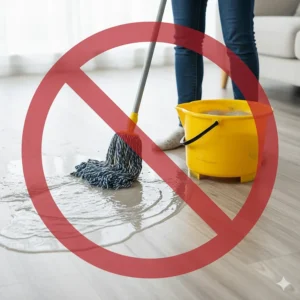
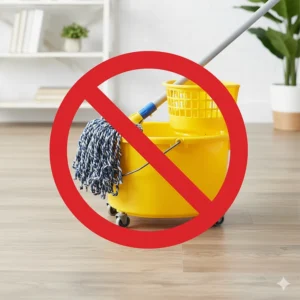
| Flat mop with bucket | Variable | Medium | Large floors with careful wringing |
| Steam mop | Poor for LVP | Medium | Not recommended for vinyl plank |
Read the table with care. Spray mops win on simplicity and price, and they cover most homes comfortably. Wet-dry vacuums take the top spot on moisture control because suction removes water as you go, which matters on seams. A flat mop with a bucket can work, but only if you wring the pad nearly dry, and that requires discipline. For a typical household, a spray mop is the sensible default and a wet-dry vacuum is the upgrade for messy ones.
Why Steam Mops and LVP Don’t Mix
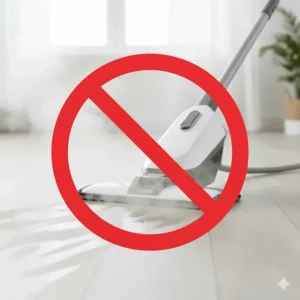
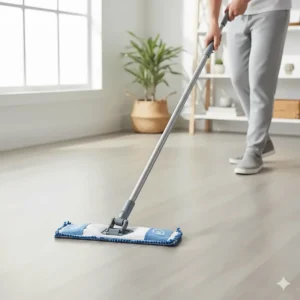
Steam mops are brilliant on glazed tile. They’re a gamble on vinyl plank. A care guide from a national flooring installer says to avoid steam mops on luxury vinyl, because excessive heat and moisture can damage the wear layer or cause edges to curl. It adds that many luxury vinyl warranties exclude coverage for steam-related damage.
That last point deserves emphasis. Even if your floor survives a steam session, a denied warranty claim can cost far more than any mop. Marketing labels like “low moisture” or “vinyl-safe” on a steam machine don’t override your flooring manufacturer’s instructions.
The fix is simple. Use damp microfiber and a pH-neutral cleaner. If you want germ control, ask your plank maker which sanitizing products are approved, rather than reaching for heat. Every pick on this list works without steam.
Long-Term Cost and Maintenance
| Item | Upfront Cost | Ongoing Cost | Notes |
|---|---|---|---|
| O-Cedar ProMist MAX | Low | Low (washable pads) | Replacement pads sold separately |
| Rubbermaid Reveal | Low–mid | Low | Kit includes spare pads |
| Swiffer WetJet | Low | High (disposable pads, solution) | Costs creep up quickly |
| Bissell CrossWave OmniForce Edge | High | Medium (formula, rollers, filters) | Saves time on mixed messes |
| Tineco Floor One S5 | High | Medium (formula, rollers) | Self-cleaning cuts upkeep |
The table tells a clear story. Reusable spray mops win the total-cost race, because a washable pad works for roughly 100 washes by the makers’ counts. The Swiffer WetJet flips that equation, since it’s cheap on day one and expensive by month six. Wet-dry vacuums cost more up front, but they also replace a separate vacuum pass and can save substantial time each week. If you value your Saturday mornings, that time saving is real value, not just a marketing line.
Features That Actually Matter (And Those That Don’t)
Features worth paying for:
- Washable microfiber pads. They cut waste, lower costs, and protect the wear layer.
- A controllable trigger or sensor. This is the heart of moisture control.
- A comfortable handle height. It reduces strain more than any other spec.
- A refillable tank you can fill with plain water. Flexibility beats lock-in.
Features that mostly don’t matter:
- Scent options. Fragrance is optional, and the EPA notes that cleansers and disinfectants are among many household products that emit volatile organic compounds. Its own advice is to follow product directions and ventilate. A fragrance-free or lightly scented formula is the calmer choice.
- “Steam-like” claims. If a product implies heat, check your warranty first.
- Extra gimmicky attachments. A mop that does one job well beats one with six mediocre modes.
- Bold bacteria-killing percentages. These claims often come from testing on tile or wood with specific protocols, so treat them as directional, not guaranteed on your planks.
Ignore the shiny stuff. Spend on what protects the floor.
Cleaners, Indoor Air, and FloorScore: What to Know
A mop is only as good as what you put in it. Stick to pH-neutral, vinyl-safe cleaners, used sparingly. Avoid wax, oil soaps, and anything promising a dramatic shine, because those leave residue.
There’s also an indoor-air angle. The FloorScore program, run through the Resilient Floor Covering Institute, certifies that hard-surface flooring meets California Section 01350 emissions limits for volatile organic compounds. That’s a statement about the floor, not about your cleaning products or the installation process, and the RFCI is explicit that installation isn’t covered.
So if indoor air quality matters in your home, shop in two layers. First, choose a floor with a recognized low-emissions certification. Second, keep cleaner use modest and ventilated. Pair a lightly dosed, fragrance-free formula with a washable pad, and you’ve covered both bases without much effort.
Frequently Asked Questions
❓ Is a Swiffer WetJet safe for LVP floors?
❓ How often should you mop LVP flooring?
❓ Can you use vinegar to mop LVP floors?
❓ Is a wet-dry vacuum better than a spray mop for LVP?
❓ How often should you wash microfiber mop pads?
Conclusion
Here’s the short version. The best mop for lvp flooring keeps water under control, uses soft microfiber, and plays nicely with your plank maker’s warranty. For most households, that means the O-Cedar ProMist MAX, with its low price, tall handle, and double-sided pad. If you prefer a cleaner built for the job, the Bona Premium Spray Mop is a tidy match. The Rubbermaid Reveal shines when you need spare pads for a big house. The Libman Freedom appeals to anyone who wants a reusable, American-made pick. For pets and sticky chaos, the Bissell CrossWave OmniForce Edge and Tineco Floor One S5 earn their higher prices by cleaning and drying as they go.
Skip steam. Skip soaking. Skip anything that promises a mirror shine. Your floor is a layered product with delicate seams, and it rewards a light touch.
Pick the tool that fits your floor size, your household, and your wrists, then use it with the simple routine above. That’s the whole secret behind a vinyl floor that still looks new years later.
✨ Don’t Miss These Exclusive Deals!
🔍 Take your floor care to the next level with these carefully selected mops. Click on any highlighted item to check current pricing and availability. These tools will help you keep a beautiful, long-lasting LVP floor your family will love!
Recommended for You
- Floor Mop Sink: 7 Best Picks for 2026
- Mop Sink Faucet: 7 Best Picks for 2026
- Mop Handle: 7 Best Picks to Buy in 2026
Disclaimer: This article contains affiliate links. As an Amazon Associate, I earn from qualifying purchases. If you purchase products through these links, we may earn a small commission at no additional cost to you.
✨ Found this helpful? Share it with your friends! 💬🤗
