
In This Article
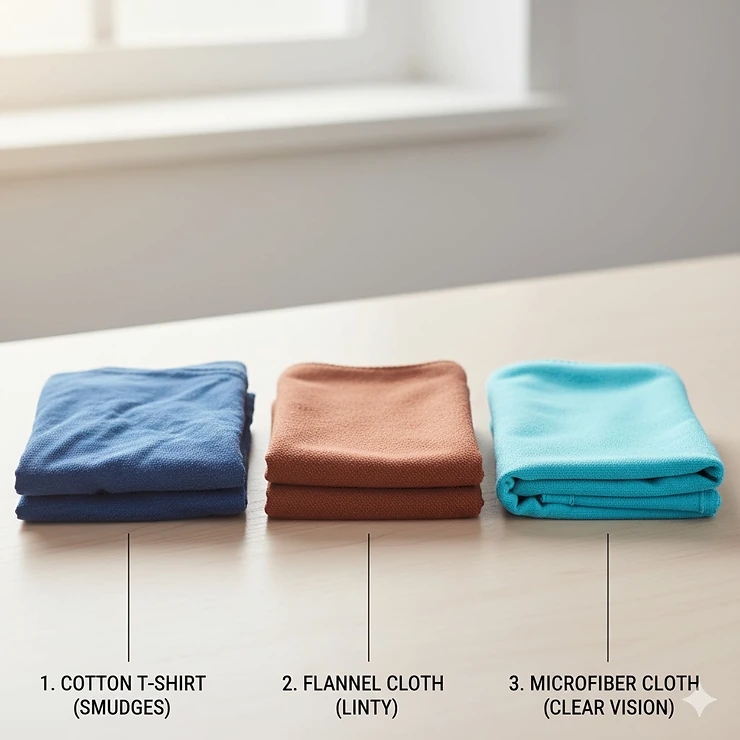
You know that frustrating moment when you wipe your glasses, only to smear them worse? I’ve been there too. The secret isn’t just how you clean—it’s what you clean with. Finding the perfect fabric to clean glasses transforms your daily experience from annoying to effortless.
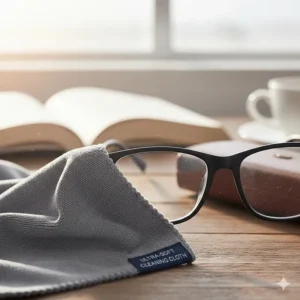
Microfiber consists of synthetic fibers thinner than one denier, with a diameter under ten micrometers—that’s about five times thinner than a human hair! This ultra-fine structure isn’t just marketing hype. These microscopic fibers create millions of tiny hooks that trap dust, oil, and smudges without scratching your precious lenses. Whether you’re cleaning prescription glasses, sunglasses, or camera lenses, the right fabric to clean glasses makes all the difference between streak-free clarity and disappointing results.
In 2025, the market offers hundreds of options, from budget-friendly multipacks to premium Japanese microfiber. I’ve researched the top performers to help you choose the fabric that’ll keep your vision crystal clear without damaging those expensive anti-reflective coatings. Let’s dive into what makes a cleaning cloth truly exceptional.
Quick Comparison Table
| Product | Pack Size | Material Quality | Size | Price Range | Best For |
|---|---|---|---|---|---|
| MagicFiber | 6 cloths | Premium microfiber | 6″×7″ | $7-9 | Everyday use |
| Koala Lens Cloth | 6 cloths | Japanese microfiber | 6″×7″ | $12-15 | Premium quality |
| Crizal Premium | 4 cloths | Proprietary blend | 7″×5.75″ | $14-17 | AR coatings |
| SmoTecQ | 12 cloths | Ultra-soft | 7″×6″ | $10-13 | Multi-device |
| E-Cloth Glasses | 1 cloth | Split microfiber | Standard | $6-8 | Eco-conscious |
| Care Touch | 12 cloths | Standard microfiber | 6″×7″ | $8-11 | Budget value |
| Zeefpod Bulk | 60 cloths | Logo-free | 6″×7″ | $18-22 | Bulk/gifting |
💬 Just one click – help others make better buying decisions too! 😊
Top 7 Fabric to Clean Glasses: Expert Analysis
1. MagicFiber Microfiber Cleaning Cloth – Best Overall
The MagicFiber 6-Pack has earned its reputation as a crowd favorite for good reason. Each cloth measures 6×7 inches—perfectly sized to fit in your glasses case without being too bulky. What impressed me most is the saw-tooth pattern weave, which creates exceptional durability while maintaining that ultra-soft touch your lenses deserve.
Key Specifications:
- Material: Premium split microfiber polyester
- Pack: 6 cloths (5 black, 1 grey)
- GSM: 250 (thicker than average)
The microfiber technology features tightly woven fibers in a saw-tooth pattern ensuring quality and durability, and each cloth comes individually wrapped to stay fresh. Customers consistently praise how these work equally well dry or slightly dampened, removing fingerprints and oil without chemicals.
✅ Pros:
- Individually packaged for cleanliness
- Versatile for all delicate surfaces
- Machine washable 500+ times
❌ Cons:
- Slightly smaller than premium options
- Grey color can show dirt faster
Price: $7-9 | Rating: 4.7/5 stars | Target User: Anyone seeking reliable everyday performance
2. Koala Lens Cleaning Cloth – Premium Japanese Microfiber
When you want the absolute best fabric to clean glasses, Koala Lens Cloth delivers premium Japanese engineering. These cloths stand out with their proprietary honeycomb matrix weave, designed specifically for precision optics. If you’ve invested in expensive progressive lenses or high-end camera equipment, this is your match.
Key Specifications:
- Material: Ultra-dense Japanese microfiber
- Pack: 6 cloths (black/green combo)
- Special Feature: Honeycomb matrix pattern
The ultra-fine, super-dense, totally lint-free Japanese microfiber cloth is woven in a max performance honeycomb matrix. The difference is immediately noticeable—these glide across your lenses with minimal effort while capturing every particle. I particularly appreciate how they maintain their softness even after dozens of washes.
✅ Pros:
- Superior cleaning performance
- Optimized for AR/VR headsets and coated lenses
- Minimal pressure needed
❌ Cons:
- Higher price point ($12-15)
- Only two color options
Price: $12-15 | Rating: 4.8/5 stars | Target User: Professionals and tech enthusiasts
3. Crizal Eyeglass Cleaning Cloths – Doctor Recommended
As the #1 doctor-recommended option, Crizal Premium Cloths were specifically engineered for anti-reflective coatings. If you’ve ever worried about damaging your AR coating with the wrong cloth, this proprietary fabric formula gives you peace of mind.
Key Specifications:
- Material: Exclusive Crizal microfiber blend
- Pack: 4 individually wrapped cloths
- Dimensions: 7″×5.75″
Designed by Crizal for Crizal anti reflective lenses, this microfiber cloth is superior to standard fiber cloths with more surface area. The split fibers add extra cleaning power, getting into microscopic crevices other cloths miss. Each cloth is individually sealed, ensuring maximum cleanliness until you’re ready to use it.
✅ Pros:
- Optimized for anti-reflective treatments
- Professional-grade quality
- Long-lasting with regular washing
❌ Cons:
- Smaller pack size (4 cloths)
- Premium pricing
Price: $14-17 | Rating: 4.6/5 stars | Target User: Anyone with AR-coated lenses
4. SmoTecQ Microfiber Lens Cloths – Best Multi-Device Solution
Need one fabric to clean glasses, phones, tablets, and cameras? SmoTecQ’s 12-pack offers color-coded organization that’s genuinely practical. I love how you can assign different colors to different devices or family members—preventing cross-contamination and keeping everything hygienic.
Key Specifications:
- Material: High-density microfiber
- Pack: 12 cloths in 6 colors (2 of each)
- Size: 7″×6″
Each cloth comes sealed in a protective sleeve, making them perfect for storing in multiple locations—your car, office desk, backpack, and home. The premium ultra-soft microfiber effortlessly removes fingerprints, smudges, oil, and dust without scratching, leaving surfaces spotless and streak-free. Customers report these maintain their cleaning power even after hundreds of washes.
✅ Pros:
- Excellent value (12 cloths)
- Color-coded organization system
- Alcohol-free and safe for all coatings
❌ Cons:
- Some colors show dirt more than others
- Slightly thinner than premium options
Price: $10-13 | Rating: 4.7/5 stars | Target User: Multi-device households
5. E-Cloth Glasses Cloth – Eco-Friendly Excellence
If sustainability matters to you, E-Cloth delivers environmentally conscious cleaning without compromise. This single cloth replaces hundreds of disposable wipes, backed by a 100-wash guarantee. Plus, it removes over 99% of bacteria using just water—no chemicals required.
Key Specifications:
- Material: Precision-engineered split microfiber
- Pack: 1 cloth
- Special Feature: 100-wash guarantee
Masses of precision-engineered microfibers break up and remove grime without adding additional cleaners. The ultra-soft texture works beautifully on all lens types, from everyday prescription glasses to delicate camera optics. Simply dampen with water or use dry—both methods deliver impressive results.
✅ Pros:
- Environmentally sustainable
- No chemicals needed
- Superior bacteria removal (99%+)
❌ Cons:
- Single cloth (though very durable)
- Higher per-cloth cost
Price: $6-8 | Rating: 4.6/5 stars | Target User: Eco-conscious consumers
6. Care Touch Eyeglass Cleaning Cloth – Budget Champion
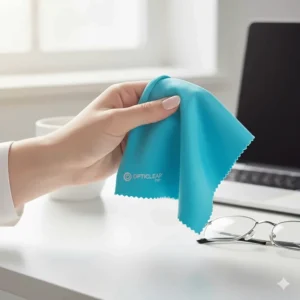
Don’t confuse affordable with low-quality. Care Touch offers exceptional value with their 12-pack of 6×7-inch cloths. Perfect for families or anyone who wants backup cloths everywhere—home, car, office, gym bag.
Key Specifications:
- Material: Standard microfiber polyester
- Pack: 12 cloths in navy
- GSM: 250
These work fast at removing dust, smudges, and oil without leaving lint or scratches. While they don’t match the ultra-premium feel of Japanese microfiber, they absolutely get the job done for everyday cleaning. Customers appreciate how soft and safe they are compared to paper towels—plus they’re machine washable and reusable.
✅ Pros:
- Outstanding value ($8-11 for 12 cloths)
- Large pack size
- Lint-free performance
❌ Cons:
- Basic quality compared to premium options
- Navy color only
Price: $8-11 | Rating: 4.5/5 stars | Target User: Budget-conscious buyers
7. Zeefpod 60-Pack Microfiber Cloths – Bulk Value
Need fabric to clean glasses for your entire office, classroom, or as promotional items? Zeefpod’s massive 60-pack offers unbeatable bulk pricing. The logo-free design makes them perfect for DIY projects or adding your own branding.
Key Specifications:
- Material: 100% premium microfiber
- Pack: 60 cloths in assorted colors
- Size: 6″×7″
Each cloth is ultra-soft, lint-free, and scratch-free—ideal for eyeglasses, camera lenses, phones, tablets, laptops, and TVs. The washable and reusable design means these will last for years even with regular use. At roughly 30-40 cents per cloth, this represents exceptional value for bulk needs.
✅ Pros:
- Massive quantity (60 cloths)
- Logo-free for customization
- Multiple color options
❌ Cons:
- May be overkill for individual use
- Quality varies slightly by color
Price: $18-22 | Rating: 4.6/5 stars | Target User: Businesses, educators, bulk buyers
✨ Don’t Miss These Exclusive Deals!
🔍 Take your glasses care to the next level with these carefully selected products. Click on any highlighted item to check current pricing and availability. These tools will help you maintain crystal-clear vision your eyes will love!
Understanding Microfiber: The Science Behind Superior Cleaning
What makes microfiber the ultimate fabric to clean glasses? The answer lies in its revolutionary construction. Production of ultra-fine fibers dates to the late 1950s, using melt-blown spinning and flash spinning techniques, but the technology truly matured in Japan during the 1960s under scientist Miyoshi Okamoto at Toray Industries.
The Van der Waals Effect
Here’s where it gets fascinating: Microfiber cloth makes use of van der Waals force to remove dirt without scratches. This weak intermolecular force creates attraction between the cloth fibers and particles on your lenses. Think of it as millions of tiny magnets gently pulling away dirt and oil without any abrasive scrubbing.
Split-Fiber Technology
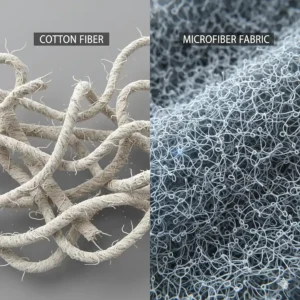
Premium microfiber cloths feature “split” fibers during manufacturing. Under magnification, these look like asterisks with multiple strands extending from a central core. This dramatically increases surface area—a single split microfiber strand has 16-20 times more cleaning surface than a regular fiber. That’s why a good microfiber cloth can remove stubborn smudges with minimal effort.
The structure also creates tiny spaces between fibers that trap and hold dirt, rather than pushing it around your lens surface like cotton does. This is crucial for preventing scratches on soft anti-reflective coatings.
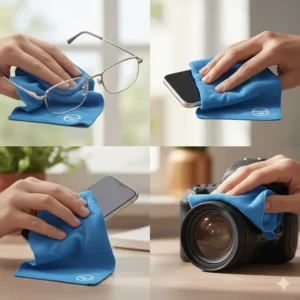
Types of Fabric to Clean Glasses: Material Comparison
| Material Type | Cleaning Power | Scratch Risk | Durability | Best Use Case |
|---|---|---|---|---|
| Split Microfiber | Excellent | Very Low | 500+ washes | Daily cleaning, AR coatings |
| Standard Microfiber | Good | Low | 300+ washes | Budget option, general use |
| Suede Microfiber | Very Good | Very Low | 400+ washes | Premium lenses, camera optics |
| Cotton Cloth | Poor | Medium | 100 washes | ❌ Not recommended |
| Paper Products | Very Poor | High | Single use | ❌ Never use |
Why Cotton Falls Short
Cotton might feel soft to your fingers, but at a microscopic level, it’s relatively coarse. Cotton fibers are round and smooth—they push particles across your lens surface rather than lifting them away. This can actually grind tiny dust particles into your coating, creating micro-scratches over time.
The Paper Towel Trap
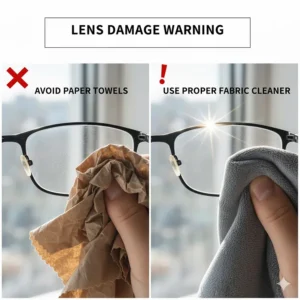
Never, ever use paper towels as a fabric to clean glasses! They might seem convenient, but products like paper towels, tissue paper, and napkins can scratch lenses and often leave bits of themselves behind. Even “soft” paper products contain wood fibers that are far too abrasive for optical surfaces.
How to Choose the Perfect Fabric to Clean Glasses
Consider Your Lens Type
Different coatings require different care approaches:
Anti-Reflective (AR) Coatings:
These delicate coatings need special attention. Anti-reflective coatings are generally recommended when purchasing polycarbonate, high-index, or aspheric lenses. Choose cloths specifically designed for AR coatings like Crizal or premium split microfiber options.
Polarized Sunglasses:
Standard microfiber works beautifully on polarized lenses. Focus on lint-free performance to avoid leaving fibers that catch light.
Blue Light Blocking Lenses:
These coatings are generally durable, so any quality microfiber cloth will work well. Just avoid harsh chemicals in any cleaning solutions you pair with your cloth.
Progressive/Multifocal Lenses:
These expensive lenses deserve premium care. Invest in higher-quality Japanese microfiber or doctor-recommended options.
Assess Your Usage Pattern
Daily Cleaners:
If you clean your glasses 2-3 times daily, buy a 6-12 pack. Keep one in your glasses case, another at work, one in your car, and backup cloths at home.
Occasional Users:
A premium single cloth like E-Cloth might be perfect if you only clean every few days.
Multi-Device Owners:
Color-coded options like SmoTecQ help you maintain hygiene by preventing cross-contamination between devices.
Size Matters
Standard 6×7-inch cloths fit perfectly in most glasses cases. Larger 12×12-inch options offer better grip and work faster on bigger surfaces like computer monitors or TV screens. Smaller 5×5-inch “pocket” cloths are ultra-portable but require more effort for thorough cleaning.
Check the GSM (Grams Per Square Meter)
This measures fabric density. Higher GSM generally means:
- 200-250 GSM: Standard quality, suitable for basic cleaning
- 250-300 GSM: Premium quality, better absorbency
- 300+ GSM: Ultra-premium, longest-lasting
Thicker cloths absorb more oil and last longer through repeated washing. However, extremely thick cloths can be harder to fold small enough for glasses cases.
Proper Technique: Using Fabric to Clean Glasses Correctly
The Right Method
Even the best fabric to clean glasses won’t work magic if you use it wrong. Here’s the proper technique recommended by optometrists:
Step 1: Remove Loose Particles
Before touching your lenses with any cloth, rinse them under lukewarm water or use compressed air to blow away loose dust. This crucial step prevents scratching from trapped particles.
Step 2: Apply Cleaning Solution (Optional)
If your lenses are particularly oily, add one small drop of dish soap or lens cleaning spray. Dawn dish soap and eyeglass cleaning solution from your optometrist are among the best eyeglass cleaners for anti-reflective lenses.
Step 3: Gentle Circular Motions
Use your microfiber cloth with light circular motions. Don’t press hard—let the fabric do the work. Start at the center and work outward.
Step 4: Flip and Finish
Fold your cloth to use a clean section for the final dry wipe. This ensures you’re not redistributing oil you just removed.
Common Mistakes to Avoid
Using Your Shirt: Your clothing collects dust all day and often contains rough fibers. It’s a recipe for scratches.
Cleaning Dry Lenses with Heavy Oil: Always rinse oily lenses first. Dragging a dry cloth across heavy oil can smear it deeper into your lens coating.
Hot Water: Extreme heat can damage certain lens coatings and frame materials. Stick to lukewarm water only.
Aggressive Rubbing: More pressure doesn’t mean better cleaning. It increases scratch risk without improving results.
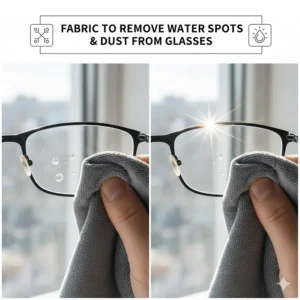
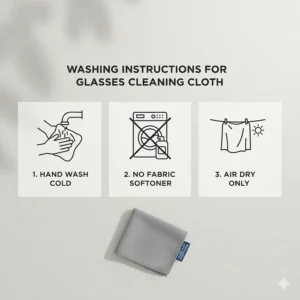
Caring for Your Microfiber Cloths
Your fabric to clean glasses needs regular cleaning too. Here’s how to maintain peak performance:
Hand Washing (Recommended)
- Shake out loose debris vigorously
- Run under cold water
- Add 2-3 drops of mild, fragrance-free soap
- Let the cloth soak in the soap for a few minutes, then rinse clean in cold water
- Squeeze gently (don’t wring)
- Air dry flat or hanging
Machine Washing
You can machine wash microfiber cloths, but follow these rules:
- Use cold or warm water only (never hot)
- Gentle cycle preferred
- Bleach-free detergent required
- Critical: No fabric softener ever!
Fabric softener or dryer sheets leave residue on cloth that can cause smearing on lenses. This residue defeats the entire purpose of microfiber’s cleaning ability.
Drying Guidelines
Best: Air dry flat on a clean surface
Acceptable: Low-heat tumble dry
Never: High heat or leaving in direct sunlight for extended periods
Washing Frequency
Wash your primary cloth weekly if you use it daily. You should wash your eyeglass cleaning cloth once every 1 to 2 weeks for optimal performance. Signs your cloth needs washing include visible dirt, oils transferring back to your lenses, or reduced cleaning effectiveness.
Storage Tips
- Keep cloths in clean, dry locations
- Use the original wrapper or a clean bag
- Avoid throwing loose in your pocket with keys or coins
- Store away from chemicals, perfumes, or cleaning products
Premium microfiber cloths should last 300-500+ washes when properly cared for. That’s years of use from a single cloth, making them incredibly cost-effective.
Fabric to Clean Glasses vs. Other Options
Pre-Moistened Lens Wipes
Pros: Convenient, individually wrapped, portable
Cons: Single-use (wasteful), ongoing cost, can leave streaks
Disposable wipes work in a pinch, but they’re expensive long-term and environmentally unfriendly. A reusable microfiber cloth is more economical and effective.
Lens Cleaning Sprays with Cloths
Pros: Deep cleaning power, removes heavy buildup
Cons: Extra cost, unnecessary for daily maintenance
Sprays are excellent for weekly deep cleaning but aren’t needed for routine touch-ups. A dry or lightly dampened microfiber cloth handles 95% of cleaning situations perfectly.
Ultrasonic Cleaners
Pros: Professional-level cleaning, reaches hinges and nose pads
Cons: Expensive, not portable, overkill for most users
These devices are wonderful for thorough cleaning but don’t replace the need for a good fabric to clean glasses for daily quick cleanings.
Cotton Handkerchiefs
Pros: Soft, available
Cons: Insufficient cleaning power, can scratch coatings
Traditional cotton cloths simply can’t match microfiber’s performance. The fiber structure is fundamentally different and far less effective.
Special Considerations for Different Lens Materials
Polycarbonate Lenses
These impact-resistant lenses are common in safety glasses and children’s eyewear. They’re relatively scratch-resistant but benefit from premium microfiber cloths that minimize any abrasion risk. Avoid aggressive rubbing.
High-Index Lenses
Thinner and lighter than standard plastic, high-index lenses almost always have anti-reflective coatings. High-index lenses can reflect up to 12% of light without anti-reflective coating, which is why AR coatings are essential. Use AR-optimized cloths like Crizal for best results.
Trivex Lenses
Similar care to polycarbonate—any quality microfiber works well. Focus on regular cleaning to prevent buildup.
Glass Lenses
While rare today, glass lenses are more scratch-resistant than plastic. However, anti-reflective coatings on glass are still delicate, so use appropriate microfiber fabric to clean glasses.
CR-39 Plastic
The most common lens material is relatively durable but needs scratch-resistant coatings. Standard microfiber cloths work excellently here.
Environmental Impact: Sustainable Cleaning Choices
Choosing reusable fabric to clean glasses isn’t just smart for your wallet—it’s better for the planet. Consider the math:
- Average person cleans glasses 2x daily = 730 times yearly
- Disposable wipes cost $0.10 each = $73/year
- Generate 730 pieces of waste annually
Compare that to:
- Premium microfiber cloth = $10-15 one-time purchase
- Lasts 2-3 years with proper care
- Zero ongoing waste
Over a decade, reusable microfiber cloths save you $600+ while eliminating 7,300+ disposable wipes from landfills. That’s a win-win scenario.
Look for eco-conscious brands like E-Cloth that prioritize sustainability in their manufacturing and packaging. Some companies now use recycled polyester in their microfiber production, further reducing environmental impact.
Troubleshooting Common Cleaning Problems
Streaks Won’t Go Away
Cause: Oil residue, dirty cloth, or cleaning solution residue
Solution: Wash your cloth, rinse lenses thoroughly with water, use a clean dry section to finish
Cloth Leaves Lint Behind
Cause: Low-quality microfiber or cloth contaminated with cotton fibers
Solution: Wash cloth separately from cotton items, upgrade to split microfiber
Smudges Reappear Immediately
Cause: Facial oils transferring from frames or cloth is saturated
Solution: Clean entire frame including nose pads, fold cloth to fresh section
Fabric Feels Stiff After Washing
Cause: Fabric softener contamination or hard water mineral deposits
Solution: Rewash with vinegar rinse, use distilled water for final rinse
Cloth Isn’t Cleaning Like It Used To
Cause: Accumulated oils, time to replace, or fabric softener residue
Solution: Deep clean with dish soap and hot water rinse, or replace after 500+ washes
FAQ: Everything About Fabric to Clean Glasses
❓ How often should I replace my fabric to clean glasses?
❓ Can I use the same cloth for my phone and glasses?
❓ What's the difference between microfiber for glasses and cleaning cloths?
❓ Why does my cloth stop working when wet?
❓ Are expensive microfiber cloths really better than cheap ones?
Conclusion: Your Path to Crystal-Clear Vision
Finding the perfect fabric to clean glasses transforms your daily experience from frustrating to effortless. Whether you choose budget-friendly Care Touch, premium Koala Japanese microfiber, or eco-conscious E-Cloth, you’re making a smart investment in your vision health.
Remember these key takeaways:
- Microfiber’s split-fiber technology cleans better than any alternative
- Proper washing maintains performance for years
- Never use paper products, cotton, or your shirt on lenses
- Match cloth quality to your lens type and coating
- Keep multiple cloths in different locations for convenience
The right fabric to clean glasses costs just $6-15 but protects lenses worth hundreds of dollars. It’s one of the easiest upgrades you’ll make to your eyewear care routine. Your eyes—and your wallet—will thank you.
Ready to experience the difference? Choose from our top 7 recommendations and enjoy streak-free, crystal-clear vision every single day. Your lenses deserve nothing less!
Recommended for You
- Best Way to Clean Night Guard: 7 Proven Methods (2025)
- Best Way to Clean LVP Flooring: 7 Solutions That Work 2025
- 7 Best Bathroom Cleaning Utensils: Transform Your Space 2025
Disclaimer: This article contains affiliate links. If you purchase products through these links, we may earn a small commission at no additional cost to you.
✨ Found this helpful? Share it with your friends! 💬🤗
