
In This Article
A top load washer with stainless steel tub is a vertical-axis washing machine whose inner wash basket is stainless steel rather than porcelain-coated steel or plastic. That metal basket resists rust, doesn’t chip like enamel, and tolerates faster spin cycles. It’s why the material shows up in both premium machines and plain workhorse models.
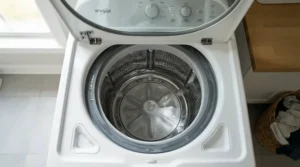
Walk into any appliance showroom and the tubs all look alike: round, shiny-ish, vaguely metallic. They aren’t alike. Some are enamel baked onto steel, one zipper scratch away from a rust freckle. Some are plastic, cheap and cheerful until hot water warps them. And some are genuine stainless, which costs more up front and is meant to last as long as the machine does.
The format itself is a safe bet. The vertical-axis, agitator-style machine is still the dominant washer design in the United States and Canada, so parts and repair knowledge are everywhere. What changes from model to model is what’s inside that drum.
This guide covers seven real machines, from a commercial-heritage tank to a budget-tier model. We dig into the questions that decide whether a washer survives a decade: rust resistance, spin speed, and tub durability. We also settle the porcelain vs stainless steel washer tub debate with real specs.
One honest note before we start. Everything here comes from spec sheets, published editorial testing, and aggregated customer-review data. None of it is hands-on testing. Where a spec couldn’t be verified, I say so instead of guessing.
Quick Comparison: 7 Top Load Washer With Stainless Steel Tub Models
| Model | Tub | Capacity | Max Spin Speed | Price Range | Best For |
|---|---|---|---|---|---|
| Speed Queen TR7 | Stainless (porcelain outer tub) | 3.2 cu. ft. | 820 RPM | Around $1,400–$1,500 | Buy-it-for-life buyers |
| Whirlpool WTW8127LC | Stainless drum | 5.2–5.3 cu. ft. | 850 RPM | Around $1,100 | Flexible agitator/impeller washing |
| Maytag MVW7230HW | Stainless basket | 5.2 cu. ft. | Not confirmed | Around $1,000–$1,150 | Warranty-minded buyers |
| GE Profile PTW800BPWRS | Stainless | 5.4 cu. ft. | 800 RPM | Mid-$800s | Big families wanting extras |
| Samsung WA47CG3500 | Stainless “Diamond Drum” | 4.7 cu. ft. | 700 RPM | $600–$900 range | Smart-feature value |
| Midea MLTW41A1BWW | Stainless | 4.1 cu. ft. | Not published in sources found | $430–$500 range | Simple, low-cost stainless |
| BLACK+DECKER BTLW41MW | Stainless | 4.1 cu. ft. | Listings claim 1300 RPM (unverified) | Budget tier | Entry-level, high review volume |
Prices are ranges at the time of research and shift constantly, so check current price before buying. The table has a clear pattern: the longest-lived-looking machines (Speed Queen TR7, Maytag MVW7230HW) trade capacity or cleaning value for durability promises. The GE Profile PTW800BPWRS and Samsung WA47CG3500 push capacity and features. Meanwhile the Midea MLTW41A1BWW and BLACK+DECKER BTLW41MW prove you can get a stainless tub without a four-figure budget.
💬 Just one click — help others make better buying decisions too!😊
Top 7 Top Load Washer With Stainless Steel Tub Picks: Expert Analysis
1. Speed Queen TR7 — built for decades of heavy use
Longevity is the whole sales pitch here, and this washer leans into it harder than anything else on the list. The Speed Queen TR7 (model TR7003WN) pairs a 3.2 cu. ft. stainless wash tub with a porcelain outer tub, which is a sensible split. The inner basket touches your clothes, and the outer shell just holds water.
Spec-sheet details include an 820 RPM maximum spin, 43 dB quiet agitation, and a 7-year warranty. That spin speed leaves clothes less soggy than budget machines, though it isn’t front-load dry. The 3.2 cu. ft. size is the catch: a king comforter likely means two loads.
Based on the spec comparison, this is a washer for people who keep appliances forever and run regular-sized loads. It’s less suited to a family of six drowning in towels. Retail listings show very high ratings, around 4.6 stars across more than 4,000 reviews at one retailer, with durability a recurring theme. One caution: Reviewed’s testing of the related TC5 model flagged harsh treatment of fabrics and a small capacity. Expect the same character here and treat delicates accordingly.
Pros:
- ✅ Stainless wash tub with porcelain outer tub
- ✅ 7-year warranty on spec sheets
- ✅ Quiet 43 dB agitation
Cons:
- ❌ Small 3.2 cu. ft. capacity for big households
- ❌ Premium price; agitation may wear fabrics faster
Expect around $1,400–$1,500. It’s expensive, but the cost-per-year math improves if it truly lasts decades.
2. Whirlpool WTW8127LC — removable agitator, two ways to wash
Most washers force a choice between agitator and impeller. The Whirlpool WTW8127LC lets you make that choice per load, which is its cleverest trick.
It offers a 5.2 cu. ft. drum with the agitator in (5.3 without), an 850 RPM spin, a built-in faucet, a Load & Go dispenser, and a long list of cycles. A retail listing for a sibling color of this model confirms the stainless drum. At 850 RPM it sits at the faster end of the agitator-style group, so you should expect shorter dryer times than from the 700 RPM machines on this list.
Reviewed named it the best agitator top-loader, praising stain removal. It also found that running without the agitator was gentler and still cleaned well. That’s the spec nobody reads but everybody needs: leave the agitator in for work clothes, pull it for delicates and bedding. Customer-review sentiment specific to this exact model wasn’t verifiable in my research, so Reviewed’s editorial testing is the main evidence here.
Pros:
- ✅ Removable agitator for flexible wash action
- ✅ Built-in faucet for pretreating stains
- ✅ Fast 850 RPM spin for its class
Cons:
- ❌ Rougher on clothes with agitator in place
- ❌ Priced well above entry-level washers
Expect around $1,100. It’s strong value if you want one machine to handle both heavy work clothes and fragile loads.
3. Maytag MVW7230HW — 10-year parts warranty on the basket
Warranty length is one of the few hard signals a manufacturer gives you about its own confidence. The Maytag MVW7230HW advertises a 10-year limited parts warranty on both the direct drive motor and the stainless steel wash basket.
It holds 5.2 cu. ft., adds a built-in faucet and soft-close lid, and offers self-clean and deep wash options. A decade of coverage on the basket means the company is willing to bet on the tub specifically. The spin speed wasn’t confirmed in the sources I found, so check the spec sheet before you compare it against the 800-plus RPM competition.
The honest analytical take: this washer is a durability purchase, not a cleaning-performance purchase. Reviewed’s lab found it performed about like an average washer, with low cleaning power for its price. Thousands of reviews exist on retail listings, but I couldn’t verify a consistent sentiment pattern, so I won’t invent one. If tub durability matters more to you than stain-fighting, the warranty is the reason to look here. Otherwise, the price is hard to justify.
Pros:
- ✅ 10-year limited parts warranty on basket and motor
- ✅ Built-in faucet for quick pretreating
- ✅ Self-clean option and soft-close lid
Cons:
- ❌ Average cleaning power for its price
- ❌ Expensive versus similarly sized rivals
Expect around $1,000–$1,150 depending on retailer. Value is fair only if you prize the warranty.
4. GE Profile PTW800BPWRS — largest stainless drum with smart extras
Here’s the machine Reviewed crowned its best overall top-loader. The GE Profile PTW800BPWRS has a 5.4 cu. ft. stainless steel drum, which is the biggest tub in this lineup.
Its spin tops out at 800 RPM. Extras include an antimicrobial coating, steam, a detergent reservoir, and SmartHQ voice-assistant integration. The big drum means a bulky comforter can actually move around and rinse instead of getting punched into a corner. The detergent reservoir means you stop measuring every load.
Reviewers found the Normal and Delicates cycles removed many test stains. Two caveats came up: the machine can be loud at times, and it’s only offered in Sapphire Blue. If your laundry room is open to the living area, that noise note deserves attention. Customer-review data for this specific model wasn’t verifiable beyond the editorial testing, so weigh it as one expert source rather than a crowd verdict.
Pros:
- ✅ Large 5.4 cu. ft. stainless steel drum
- ✅ Good stain removal in lab testing
- ✅ Steam, detergent reservoir, voice-assistant support
Cons:
- ❌ Loud at times during operation
- ❌ Available only in Sapphire Blue
Expect the mid-$800s. For a big household, that’s strong value for this capacity and feature set.
5. Samsung WA47CG3500 — big-capacity value with Active WaterJet
Pretreating stains usually means a detour to the sink. The Samsung WA47CG3500 puts a faucet-style Active WaterJet into the lid, so you rinse a stain right at the machine.
The spec sheet lists a 4.7 cu. ft. stainless “Diamond Drum,” a 700 RPM maximum spin, Wi-Fi, and 10 preset cycles. Annual energy use is listed around 240 kWh, and typical cycle times run roughly an hour or a bit more. The 700 RPM spin is the lowest on this list, so expect more water left in clothes and a longer dryer run. Retail listings cite a 3-year parts warranty on the drum and 5 years on the motor.
Aggregated retail sentiment is positive: at Sam’s Club, the washer shows a 4.5-star average across 239 ratings, with 77% giving five stars. I couldn’t verify a recurring complaint theme, so treat that as one retailer’s snapshot. It’s a smart compromise if you want capacity and features without paying premium-brand prices.
Pros:
- ✅ Active WaterJet pretreats stains at the machine
- ✅ 4.7 cu. ft. stainless drum for family loads
- ✅ Wi-Fi smart features and soft-close lid
Cons:
- ❌ 700 RPM spin leaves clothes wetter
- ❌ Not ENERGY STAR rated per retailer specs
Expect a $600–$900 range depending on retailer and timing. Strong value for capacity-hungry households.
6. Midea MLTW41A1BWW — simple dial controls in the $430–$500 range
Not everyone wants a touchscreen on a machine that spends its life dripping. The Midea MLTW41A1BWW goes the other way with three dial knobs, no digital display, and a stainless tub.
It holds 4.1 cu. ft., has a power-boost agitator, a soft-close glass lid, eight presets, auto-sensing water levels, and a tub-clean cycle. The manufacturer says it can handle a queen-sized comforter. Fewer electronics means fewer boards to fail, which is a reasonable argument, though it isn’t a proven reliability claim.
Honestly, this is a spec-based recommendation. Retail pages show very thin review histories, so I can’t responsibly summarize customer sentiment. Consumer Reports lists the model in its test program, but its detailed scores sit behind a paywall. The max spin speed wasn’t published in the sources I found. For renters or first-time buyers who want a stainless tub on a tight budget, it’s worth a look. Just verify the spin spec yourself.
Pros:
- ✅ Stainless tub at an entry-level price
- ✅ Simple dial controls with fewer electronics
- ✅ Soft-close glass lid and tub-clean cycle
Cons:
- ❌ No digital display or smart features
- ❌ Limited review history to judge reliability
Expect roughly $430–$500. A solid value verdict, with the caveat of an unproven track record.
7. BLACK+DECKER BTLW41MW — budget pick with big review volume
Review volume matters, and this machine has plenty of it. A retail listing shows a 4.4-star average from roughly 8,700 reviews for the BLACK+DECKER BTLW41MW.
It offers 4.1 cu. ft., an agitator, a stainless tub, a glass lid, an LED display, 10 wash cycles, and a delay start. Listings advertise a 1300 RPM spin. I couldn’t confirm that figure from a manufacturer source, so treat it as a marketing claim until you check the spec sheet. For context, agitator-style top-loaders generally top out well under 1,200 RPM per general references, which makes that number worth double-checking.
The owner’s manual itself flags excessive vibration when the washer isn’t level or the load is unbalanced. That’s normal for the category, but it reminds you that installation matters. Pricing wasn’t consistently verifiable at the time of research; expect entry-level territory and check current price. The review average suggests satisfaction is broadly positive, but one retailer’s ratings aren’t a reliability study.
Pros:
- ✅ Stainless tub with 4.1 cu. ft. capacity
- ✅ LED display and 10 cycles at a budget tier
- ✅ Large review base averaging in the mid-4s
Cons:
- ❌ Spin speed claim not independently verified
- ❌ Vibrates if unlevel or unbalanced, per manual
Budget-tier value verdict: strong on paper, so confirm the spin spec before you commit.
Porcelain vs Stainless Steel Washer Tub: What Really Differs
The porcelain vs stainless steel washer tub question comes down to what happens when the surface gets hurt. Porcelain is a glass-like coating over steel. It handles heat well, but according to Hunker’s breakdown of washer drum materials, the protection only lasts as long as the coating does. A zipper, a metal stud, or a button can chip it, and once bare steel is exposed it rusts, sometimes staining the laundry.
Stainless steel is solid metal through and through. It doesn’t rely on a coating, it’s scratch-resistant, and it’s smoother on fabric over time. Plastic, meanwhile, is cheapest and most common but can warp after repeated hot water exposure, and it can stain and hold odors.
| Tub Material | Rust Behavior | Weak Point | Cost | Best For |
|---|---|---|---|---|
| Stainless steel | Does not rust | Highest purchase price | Highest | Long-term owners, hard use |
| Porcelain-coated steel | Rusts once chipped | Zippers, studs, buttons | Middle | Gentle, careful laundry habits |
| Plastic | No rust | Heat warping, stains, odors | Lowest | Tight budgets, cold-water washers |
The table shows stainless winning on every durability measure and losing only on price. If your laundry includes jeans with rivets, work gear, or kids’ pockets full of mystery metal, the extra cost is cheap insurance. Porcelain suits careful households; plastic suits cold-water loads on a short horizon.
One subtlety worth knowing: some stainless-basket washers, like the Speed Queen TR7, pair the stainless wash tub with a porcelain outer tub. That outer shell never touches clothes, so chipping risk is far lower. When you read specs, check which tub is described.
Stainless Steel Basket Washer Rust Resistant: How Far Does the Protection Go?
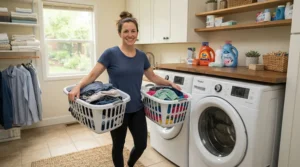
A stainless steel basket washer rust resistant by design still isn’t a magic bullet. “Resistant” is the key word. Stainless steel earns its rust resistance from a thin, self-healing surface layer, which is why a scratch doesn’t start a rust bloom the way a chipped enamel coating does.
That said, rust resistance isn’t the same as immunity. Stray steel objects such as bobby pins, loose screws, or metal buttons can leave orange stains on the tub surface or on clothes. Hard water minerals, leftover detergent, and neglected cleaning can build crusty deposits that look like rust. Harsh chemicals used without diluting can also damage even metal surfaces, so follow the manual’s cleaner and bleach guidance.
Based on the spec comparison, the practical hierarchy goes like this. A stainless wash basket with a porcelain or plastic outer tub, like the Speed Queen TR7, protects the part that touches clothes. A stainless basket paired with a warranty, like the Maytag MVW7230HW, backs the claim in writing. Everything else depends on habits: check pockets, wipe the tub occasionally, and run a cleaning cycle on schedule.
What most buyers overlook is the rest of the machine. A washer’s cabinet, lid hinges, and outer tub can corrode long before a stainless basket shows trouble, especially in humid garages or basements. Keep the lid propped open between loads and the whole machine benefits.
Spin Speed: What the RPM Number Really Tells You
Spin speed is the most misunderstood number on a washer spec sheet. It measures how fast the basket rotates in the final extraction phase, and higher speeds fling out more water. That means shorter dryer times and lower energy bills. But the number alone doesn’t guarantee dry clothes.
The ceiling is physical. General references note that agitator-style top-loaders don’t exceed roughly 1140 RPM, and impeller-style machines top out slightly lower. So treat a headline claim like 1300 RPM with a bit of skepticism until you verify it.
The real range on this list runs from 700 RPM (Samsung WA47CG3500) to 800 (GE Profile PTW800BPWRS), 820 (Speed Queen TR7), and 850 (Whirlpool WTW8127LC). The gaps are modest, but they stack up over hundreds of loads. Reviewed’s testing notes offer a useful data point: the Maytag Pet Pro, rated at 750 RPM, drew a complaint that its spin cycle doesn’t remove much water. Spin speed isn’t everything, but it does show up in practice.
A stainless basket is part of why faster spins are practical. Metal handles centrifugal stress without the warping that plastic can develop over time. Even so, a high RPM only helps if the machine stays balanced. An unlevel washer will bang, vibrate, and sometimes stop mid-spin, which wastes more time than a slower speed ever would. Level the feet first, then worry about RPM.
Tub Durability: Warranties, Materials, and Long-Term Cost
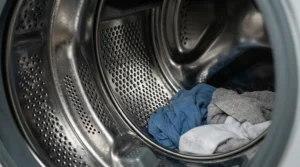
Tub durability is where stainless steel pays you back slowly. Hunker’s summary puts stainless at the highest price but expected to last the life of the machine, which is a different bet than cheaper tubs that may stain, warp, or chip.
Warranties give you something measurable. The Maytag MVW7230HW advertises 10 years on the stainless basket and motor. The Speed Queen TR7 lists 7 years. The Samsung WA47CG3500 shows 3 years on drum parts and 5 on the motor per a retail listing.
| Model | Durability Signal | Watch-Out | Best For |
|---|---|---|---|
| Maytag MVW7230HW | 10-year parts warranty on basket and motor | Average cleaning for price | Warranty-first buyers |
| Speed Queen TR7 | Stainless tub, porcelain outer tub, 7-year warranty | Smaller drum, fabric wear | Keep-it-forever buyers |
| Samsung WA47CG3500 | 3-year drum parts, 5-year motor (retail listing) | Shorter drum coverage | Value-driven families |
| Whirlpool WTW8127LC | Stainless drum; warranty terms not verified | Confirm terms before buying | Versatile washers |
| GE Profile PTW800BPWRS | Stainless drum; warranty terms not verified | Noise at times | Large households |
This table shows that warranty length varies wildly even among stainless machines. If the tub is your priority, ask what the paperwork actually covers. A 10-year parts warranty (Maytag MVW7230HW) is a different promise than 3 years on the drum (Samsung WA47CG3500). For machines marked “not verified,” read the manufacturer’s warranty page before checkout.
The ownership math is simple. A washer that costs more but lasts twice as long can still be the cheaper option, provided its cleaning performance isn’t a letdown. That’s the trade-off hiding in the Maytag MVW7230HW: the warranty is excellent, while the cleaning scores are merely average.
How to Choose a Top Load Washer With Stainless Steel Tub
- Confirm the tub material in the spec sheet. Look for “tub material” or “drum material,” not a stainless-look lid or trim. The words “stainless steel drum” are what count.
- Check the outer tub too. Porcelain or plastic outer shells are fine since clothes never touch them, but know what you’re buying.
- Match capacity to your household. Roughly 3.2 cu. ft. suits couples; 4.1–4.7 cu. ft. fits most families; 5.2–5.4 cu. ft. handles big households and bulky bedding.
- Set realistic spin speed expectations. Treat 700 RPM as the floor of this group and 850 as the ceiling, and verify any claim above 1,000.
- Read the tub warranty line. Basket coverage of 3, 7, or 10 years tells you how confident the maker is.
- Choose agitator or impeller. Agitators scrub harder but are rougher on fabrics; removable-agitator designs like the Whirlpool WTW8127LC offer both.
- Measure the space and hoses. Check width, lid-open height, and hose reach before delivery day.
Common Mistakes When Buying a Top Load Washer With Stainless Steel Tub
The first mistake is shopping by RPM alone. A high number looks great on a listing, but balance, tub design, and load size decide how dry clothes actually come out. The second is assuming all stainless is equal. Machines differ in warranty, outer-tub material, and cabinet build.
The third is ignoring capacity honesty. A 3.2 cu. ft. washer like the Speed Queen TR7 is superb for steady, moderate loads and awkward for a family washing four bath towels and a comforter at once. The fourth is skipping installation details. The BLACK+DECKER BTLW41MW manual explicitly points to leveling feet and balanced loads as fixes for noise and vibration, and that advice applies to every washer here.
Fifth, buyers often overpay for smart features they never use. Wi-Fi alerts are handy, but they won’t clean a sock. If the features cost more than the tub, you’re paying for the wrong thing. Sixth, people forget that “rust resistant” still needs care: a stainless basket doesn’t forgive pocket debris. And finally, some buyers lean on a single review score. Retail averages are useful, but they reflect one site’s snapshot, not a durability study.
Top Load Washer With Stainless Steel Tub vs Front Load and Plastic Alternatives
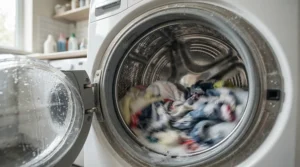
A top load washer with stainless steel tub competes on two fronts: against front loaders and against cheaper plastic-tub top loaders.
Against front loaders, the trade-off is clear. Front loaders are generally more efficient with water and energy and gentler on fabrics, and they usually spin faster. But top loaders win on convenience: no bending, mid-cycle additions, no door gasket to mildew, and typically a lower purchase price. If you hate leaving a door cracked open to prevent odors, a top loader is easier to live with.
Against plastic-tub top loaders, the difference is long-term. Plastic is cheaper, but it can warp from hot water, hold onto odors, and develop rough spots that snag clothes. Stainless adds cost up front and removes those worries. The honest rule is simple. If you plan to keep the machine under five years, plastic may be enough. If you plan to keep it a decade or more, the stainless premium usually pays its way.
Then there’s the third option, porcelain-coated steel. It’s fine for careful households, but any chip invites rust. If your laundry includes work pants with rivets or kids’ clothes with surprise pocket contents, stainless is the safer bet.
Features That Actually Matter (And Those That Don’t)
What matters: tub material and warranty, honest capacity, a reliable spin, and a way to pretreat stains. The built-in faucet on the Whirlpool WTW8127LC and Maytag MVW7230HW, or the Active WaterJet on the Samsung WA47CG3500, genuinely saves time because stain pretreating is where cleaning often starts.
Easy cleaning matters too. A tub-clean cycle, like the one on the Midea MLTW41A1BWW, keeps residue from building up, which protects both the wash quality and the tub surface.
What matters less: app connectivity, voice assistants, and cycle counts. The GE Profile PTW800BPWRS offers SmartHQ support, and it’s a nice extra, but nobody’s laundry got cleaner because of a voice command. Cycle lists look impressive, but most households use three or four. A huge menu can mean more complexity without more cleaning.
Also keep an eye on noise. The GE Profile PTW800BPWRS was noted as loud at times, while the Speed Queen TR7 lists 43 dB agitation. If the washer sits near a bedroom, that spec matters more than a steam cycle.
✨ Ready to Shop Smarter?
🔍 Take your laundry day to the next level with these carefully selected washers. Click on any highlighted product name to check current pricing and availability. These picks will help you get fresh, long-lasting results your whole household will love!
Practical Guide: Your First 30 Days With a New Stainless Steel Tub Washer
A new washer isn’t plug-and-pray. A few habits in the first month set the tone for the next decade.
Week one: install it right. Remove any shipping materials, and level the feet until the machine doesn’t rock. Press down on opposite corners; if it wobbles, adjust again. Use new, undamaged fill hoses and keep them accessible.
Week two: check your pockets. This is the single best rust-prevention habit. Coins, bobby pins, and metal buttons can scratch surfaces and leave stains. A thirty-second pocket check beats a stain-removal project.
Week three: dial in your detergent. Use the amount your manual recommends for your load size. More soap isn’t cleaner, and excess suds leave residue that builds up in the tub.
Week four: start a cleaning routine. Run the tub-clean cycle if your model has one, as on the Midea MLTW41A1BWW, or follow your manual’s monthly guidance. Leave the lid open after loads so moisture can escape.
For energy, ENERGY STAR notes that water heating accounts for about 90% of a washer’s energy use, so washing in cold water when possible is the easiest saving. It also recommends full loads and a high spin speed when appropriate to reduce dryer time. Those tips work with any machine on this list.
Real-World Scenarios: Matching Washers to Households
The family of five on a mid-range budget. Three kids, constant towels, a washer that runs daily. Capacity is the priority, and the GE Profile PTW800BPWRS (5.4 cu. ft., mid-$800s) or the Samsung WA47CG3500 (4.7 cu. ft., $600–$900 range) fit. The GE costs more but offers the larger drum and faster spin. The Samsung saves money, but its 700 RPM spin means longer dryer runs.
The couple in a long-term home. Two people, moderate loads, no plan to move for years. The Speed Queen TR7 (around $1,400–$1,500) is the deliberate choice, because its 3.2 cu. ft. size matches their needs and its stainless tub and 7-year warranty match their time horizon. Pair it with a plan to wash bulky bedding in two loads.
The first-apartment renter. Limited budget, uncertain timeline, and a landlord who won’t care about the washer. The Midea MLTW41A1BWW ($430–$500 range) or BLACK+DECKER BTLW41MW (budget tier) deliver a stainless tub without a premium price. Verify spin specs, confirm the machine fits the space, and level it carefully.
The hard-water household. Mineral buildup is the enemy. Stainless surfaces tend to resist mineral adhesion better than porcelain, and a machine with a tub-clean cycle simplifies upkeep. Pair any pick with regular cleaning cycles.
FAQ: Top Load Washer With Stainless Steel Tub
❓ How long does a top load washer with stainless steel tub last?
❓ Does a higher spin speed damage a stainless steel tub?
❓ Is stainless steel better than porcelain for hard water?
❓ Where can I find a washer's tub material before buying?
❓ Which top load washer with stainless steel tub is best under $500?
Conclusion: Which Stainless Steel Tub Washer Should You Buy?
The right pick depends on what you value most. For pure tub durability and a buy-it-once mindset, the Speed Queen TR7 is the standout, with a stainless wash tub, a 7-year warranty, and a premium price. If you want the longest written promise on the basket itself, the Maytag MVW7230HW offers 10 years of parts coverage, but its average cleaning scores make it a warranty buy rather than a performance buy.
For cleaning flexibility, the Whirlpool WTW8127LC gives you a removable agitator and an 850 RPM spin. For big households, the GE Profile PTW800BPWRS brings the largest stainless drum and the best editorial results here, though it can be loud. The Samsung WA47CG3500 is the value-minded family pick, and the Midea MLTW41A1BWW and BLACK+DECKER BTLW41MW prove a stainless tub doesn’t require a premium budget.
Whichever you pick, remember the three things that decide how a top load washer with stainless steel tub ages: rust resistance, spin speed, and tub durability. Check the spec sheet, read the warranty, and level the machine on day one.
Recommended for You
- Compact Top Load Washer For Apartment Closet: 7 Best Picks 2026
- Top Load Washer With Sanitize Cycle For Allergies: 7 Best Picks 2026
- Top Load Washer For Seniors With Bad Backs: 7 Best Picks 2026
Disclaimer: This article contains affiliate links. As an Amazon Associate, I earn from qualifying purchases. If you purchase products through these links, we may earn a small commission at no additional cost to you.
✨ Found this helpful? Share it with your friends! 💬🤗
