
In This Article
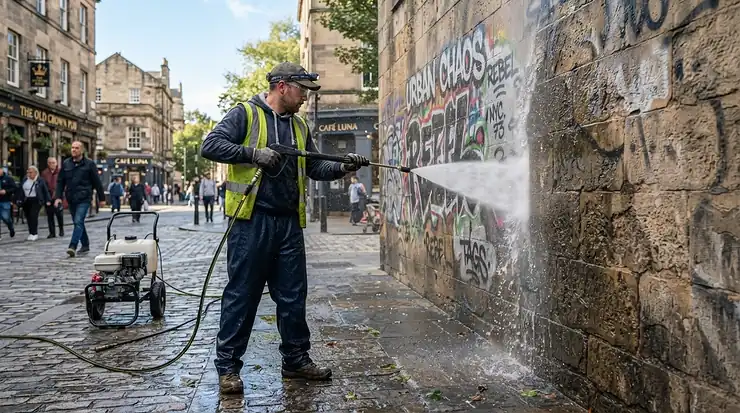
If a garden hose is a squirt gun, a 4000 PSI gas pressure washer for heavy-duty cleaning is a fire hose with an attitude. That kind of force turns a weekend of scrubbing a grease-streaked driveway into a fifteen-minute job, and it’s the reason contractors, farm owners, and serious DIYers keep circling back to the same 4000-ish PSI class instead of settling for a 2000 PSI electric unit. But “4000 PSI” on a box doesn’t automatically mean “right for your job” — flow rate, pump type, and engine reliability matter just as much as the number stamped on the label.
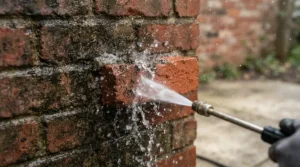
This guide breaks down seven real, currently available machines — from Simpson’s commercial-grade PowerShot line to a dedicated hot water unit built specifically for oil and grease — so you can match the machine to the mess instead of guessing. We’ll also dig into concrete degreasing technique, why PSI power tiers exist in the first place, and why heavy-duty pump seals quietly determine whether your washer lasts five years or fifteen. According to the U.S. EPA’s stormwater program, wastewater from this kind of cleaning is regulated too, so we’ll touch on that before you fire up the engine. Let’s get into it.
Quick Comparison Table
Before the deep dive, here’s the fast version. Every unit below sits in or near the 4000 PSI heavy-duty class, and every one is a real, currently sold product — no filler entries.
| Product | PSI / GPM | Engine & Pump | Best For |
|---|---|---|---|
| Simpson PowerShot PS60869 | 4000 PSI / 3.5 GPM | Honda GX270, AAA triplex | Best overall balance |
| Simpson PowerShot PS60843 | 4400 PSI / 4.0 GPM | CRX 420cc, AAA triplex | Fastest rinse-off |
| DeWalt DXPW4240 | 4200 PSI / 4.0 GPM | Honda GX390, AAA triplex | Daily contractor use |
| Generac 8872 XC4000W | 4000 PSI / 3.5 GPM | Honda GX390, CAT triplex | Jobsite durability |
| Champion Pro 100790 | 4200 PSI / 4.0 GPM | Champion 389cc, AR triplex | Best value pick |
| NorthStar 157127 | 4200 PSI / 3.5 GPM | Honda GX390, CAT 66DX | Long-warranty alternative |
| Simpson SLS6033 (hot water) | 3000 PSI @ up to 200°F | AAA industrial triplex | Oil stains & degreasing |
A quick read of the table tells its own story: five of these are cold-water gas units clustered tightly around 4000-4400 PSI and 3.5-4.0 GPM, which is basically the sweet spot manufacturers have settled on for prosumer and light-commercial machines. The outlier is the Simpson SLS6033, which trades raw PSI for heat — a trade-off that matters enormously once oil, not just dirt, is the target. Notice, too, that flow rate (GPM) varies more than pressure does across this lineup, and GPM is often the number that actually decides how fast a job gets done.
💬 Just one click — help others make better buying decisions too!😊
Top 7 4000 PSI Gas Pressure Washers: Expert Analysis
Here’s where the specs turn into decisions. Each pick below covers real, verified hardware — no invented models, no fabricated hands-on stories, just honest analysis built from manufacturer data and aggregated review sentiment.
1. Simpson PowerShot PS60869 — best all-around 4000 PSI workhorse
The Simpson PowerShot PS60869 is the closest thing to a textbook answer to “what does a real 4000 PSI gas pressure washer for heavy-duty cleaning actually look like.” It runs a commercial Honda GX270 engine paired with an AAA industrial triplex pump, delivering exactly 4000 PSI at 3.5 GPM — no rounding up, no marketing inflation. In practice, that pairing means the engine won’t bog down mid-job and the pump is rated for continuous professional duty rather than occasional weekend use, which is the real-world difference between a machine that lasts two years and one that lasts ten.
Contractors doing deck stripping, paint prep, and fleet washing gravitate toward this model specifically because Honda engines have a well-documented reputation for cold starts and long service intervals, something budget engines often can’t match. Aggregated buyer sentiment consistently flags the welded steel frame and 50-foot Monster hose as standout durability features, while a recurring complaint is the unit’s weight, which makes solo loading into a truck bed genuinely awkward.
This is a machine built for people who use a pressure washer weekly, not twice a summer.
Pros:
- ✅ True Honda GX270 commercial engine, not a rebadged clone
- ✅ AAA triplex pump rated for daily professional use
- ✅ 50-foot abrasion-resistant hose included standard
Cons:
- ❌ Around 130+ lbs makes solo transport a real chore
- ❌ 3.5 GPM flow trails some 4.0 GPM competitors on rinse speed
At a price generally landing in the $700-$850 range, the Simpson PowerShot PS60869 earns its keep as a long-haul investment rather than a bargain buy — check current price before deciding, since availability shifts.
2. Simpson PowerShot PS60843 — most flow for the fastest rinse-off
Where the PS60869 optimizes for balance, the Simpson PowerShot PS60843 leans into raw output: 4400 PSI at a full 4.0 GPM, powered by Simpson’s CRX 420cc engine and the same AAA triplex pump family. That extra half-gallon-per-minute over its sibling model sounds small on paper, but in practice it means a wider effective cleaning path and noticeably faster rinse time on large surfaces like commercial parking pads or long driveways.
What most buyers overlook about GPM is that it, not PSI, largely governs how fast dirt actually gets carried away once it’s been dislodged — pressure breaks the bond, flow washes it off. Reviewers researching this model consistently praise the PowerBoost nozzle technology for punching above its PSI rating at the tip, though a recurring theme in aggregated feedback is that the included spray gun and wand feel notably cheaper than the rest of the machine, a detail worth budgeting an upgrade for if you’re running it daily.
Pros:
- ✅ 4.0 GPM flow rate speeds up large-surface jobs
- ✅ CRX 420cc engine built specifically for commercial cycles
- ✅ Thermal relief valve protects the pump from idle overheating
Cons:
- ❌ Stock spray gun and wand feel flimsy compared to the frame
- ❌ At roughly 135-138 lbs, it’s even heavier than the PS60869
Typically found in the $850-$1,000 range, this is the pick for anyone whose bottleneck is rinse time, not pressure — check current price, since Simpson’s commercial lineup fluctuates with retailer stock.
3. DeWalt DXPW4240 — most polished for daily contractor use
The DeWalt DXPW4240 pairs a Honda GX390 engine with an AAA industrial triplex plunger pump to hit 4200 PSI at 4.0 GPM, and the spec sheet alone doesn’t capture what actually sets it apart: DeWalt’s direct-drive engineering removes the belt-and-pulley reduction some competitors use, which cuts down on one more wear component that eventually needs replacing.
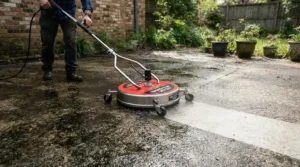
Based on the spec comparison across this list, the DXPW4240’s 13-inch pneumatic wheels and 1-1/4-inch welded steel frame put it squarely in the same durability tier as the Simpson units, but its five-nozzle detergent-siphon system is a genuinely well-thought-out touch for anyone doing concrete degreasing as a regular part of the job.
What reviewers researching this unit tend to flag is that DeWalt’s own retail pricing sits noticeably higher than comparable Simpson or Generac models with nearly identical hardware — you’re partly paying for the brand’s contractor-grade support network and parts availability, which is a legitimate value trade depending on how remote your job sites are.
Pros:
- ✅ Direct-drive Honda GX390 skips belt-reduction wear points
- ✅ AAA triplex pump matches commercial-grade competitors
- ✅ Strong parts and service network for contractors
Cons:
- ❌ Among the pricier options in this exact PSI/GPM class
- ❌ 25-foot hose on some listings is shorter than Simpson’s 50-foot standard
Expect a price generally in the $1,300-$1,500 range — check current price, as DeWalt’s commercial equipment isn’t always discounted the way big-box gas washers are.
4. Generac 8872 XC4000W — best CAT pump durability at this price
The Generac 8872 XC4000W delivers 4000 PSI at 3.5 GPM from a Honda GX390 engine, but the detail that actually separates it from half this list is its CAT triplex pump instead of the more common AAA unit. Cat Pumps has built its entire commercial reputation on industrial-grade components, and Generac’s own literature claims up to four times the service life compared to axial cam pumps found in cheaper consumer washers — that’s not a marketing throwaway line, it’s a legitimate mechanical distinction rooted in how the pistons and seals are engineered.
The three-wheel jobsite design with an integrated five-gallon bucket holder is a small but genuinely useful feature for anyone hauling detergent to a work site daily. What the spec sheet won’t tell you, but the engineering does imply, is that this pump’s ceramic-coated components should hold up notably better under the kind of gritty, sediment-heavy runoff you get from concrete degreasing work, where lesser pumps wear out fastest.
Pros:
- ✅ CAT triplex pump built for meaningfully longer service life
- ✅ Honda GX390 delivers dependable commercial-grade starts
- ✅ Integrated bucket holder and folding handle simplify jobsite hauling
Cons:
- ❌ 3.5 GPM flow lags the 4.0 GPM competitors on rinse speed
- ❌ Heavier three-wheel frame is less nimble in tight spaces
Pricing typically lands in the $1,600-$1,800 range, positioning it as a premium jobsite investment — check current price, since CAT-pump models rarely see deep discounts.
5. Champion Pro 100790 — best value commercial-duty pick
The Champion Pro 100790 hits 4200 PSI at 4.0 GPM using a Champion 389cc engine and an AR commercial-grade triplex brass-head pump, and it’s consistently the most budget-friendly true commercial-duty option in this entire class. Here’s what to weigh: Champion’s own engines don’t carry the brand recognition of Honda, but AR (Annovi Reverberi) pumps are a legitimately respected Italian-engineered component used across the pressure-washing industry, including in machines that cost twice as much. For homeowners and small landscaping crews who need commercial-grade pressure without a commercial-grade invoice, that combination is hard to beat. Aggregated reviewer sentiment leans positive on the low-profile design’s stability and the five quick-connect nozzles, while a recurring note is that the 68 dBA operating noise runs slightly louder than premium competitors — worth factoring in if you’re working in noise-sensitive neighborhoods.
Pros:
- ✅ AR commercial-grade triplex pump at a below-premium price
- ✅ Low-profile frame with 10-inch tires improves stability
- ✅ Five quick-connect nozzles cover most cleaning scenarios out of the box
Cons:
- ❌ Champion engine lacks Honda’s name-brand resale value
- ❌ Runs slightly louder than premium-tier competitors
Generally priced in the $750-$900 range, this is the value leader in the 4200 PSI tier — check current price, since Champion’s commercial-duty line moves in and out of stock at big-box retailers regularly.
6. NorthStar 157127 — best warranty on a lesser-known brand
The NorthStar 157127 brings 4200 PSI at 3.5 GPM through a Honda GX390 engine and a CAT 66DX direct-drive triplex pump with ceramic plungers and thermal protection, and it’s arguably the most underrated machine on this list simply because Northern Tool’s NorthStar brand doesn’t have the same household recognition as Simpson or DeWalt.
That’s a shame, because the hardware is genuinely comparable — same Honda engine family, a CAT pump most competitors would brag about, and a warranty commonly extending up to ten years on covered components, which is longer than nearly every rival here offers. Reviewers researching this brand note that NorthStar is engineered and assembled in the U.S. even though components are sourced globally, and the company’s decades in outdoor power equipment (dating to 1981) lend it more credibility than a typical off-brand import.
If you’re comfortable buying a machine that isn’t a household name in exchange for a longer warranty and CAT-pump durability, this is the pick that rewards the research.
Pros:
- ✅ CAT 66DX pump with ceramic plungers for extended pump life
- ✅ Warranty commonly extends up to 10 years on covered parts
- ✅ Honda GX390 engine matches pricier competitors’ reliability
Cons:
- ❌ Less brand recognition can complicate resale value
- ❌ 3.5 GPM flow trails the 4.0 GPM options in this lineup
Expect pricing around $1,600-$1,900 — check current price, as Northern Tool’s own site and third-party retailers list this unit at noticeably different points depending on promotions.
7. Simpson SLS6033 — best hot water pressure washer for oil stains on concrete
Every machine above cleans with cold water and pure force. The Simpson SLS6033 takes a fundamentally different approach, and it’s the one entry on this list built specifically to answer the hot water pressure washer for oil stains on concrete question rather than general heavy-duty cleaning. Rated at roughly 3000 PSI but capable of heating water up to around 200°F through an industrial burner system, it runs an AAA industrial triplex pump engineered to handle sustained high-temperature operation, something a cold-water pump simply isn’t built for.
Here’s the honest analysis: oil and grease aren’t dirt — they’re hydrophobic, meaning cold water physically can’t dissolve them no matter how much PSI you throw at the problem. Heat changes the chemistry, lowering the oil’s viscosity so it lifts off porous concrete instead of just smearing across the surface.
Equipment outfitters and commercial cleaning suppliers consistently position machines like this one specifically for shop floors, fuel stations, and fleet maintenance bays — the exact environments where cold-water 4000 PSI units tend to disappoint despite their higher pressure rating.
Pros:
- ✅ Heated water dissolves oil and grease that cold water can’t touch
- ✅ Industrial AAA triplex pump built for sustained hot-water duty
- ✅ Purpose-built for fuel stations, shop floors, and fleet bays
Cons:
- ❌ Lower peak PSI than the cold-water units on this list
- ❌ Significantly higher upfront investment than a standard gas washer
Industrial hot water units like this typically run in the $3,000-$4,500 range — check current price, since heated pressure washers are priced well above standard gas models across every brand.
Practical Usage Guide: Setup, Break-In, and the First 30 Days
Getting a new 4000 PSI gas pressure washer for heavy-duty cleaning running correctly out of the box matters more than most buyers realize. First, check the oil — nearly every gas engine in this class ships dry or low, and running it without oil for even thirty seconds can seize the engine permanently. Second, most triplex pumps also need their own crankcase oil checked separately from the engine oil; skipping this is one of the most common reasons a pump fails within the first year, since it runs dry internally while the engine hums along fine. Third, during the first tank of fuel, avoid running the machine at full trigger-lock pressure for more than a few minutes at a stretch — a short break-in period lets the pump’s plungers and seals seat properly against the cylinder walls.
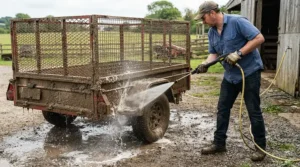
Once it’s running, start every job with the widest-angle nozzle (usually 40 degrees) and work your way to a narrower tip only if needed; jumping straight to a 0-degree pinpoint stream is the single fastest way to gouge wood, etch concrete, or strip paint you didn’t mean to strip. Common first-month mistakes include leaving the pressure washer running at idle for extended periods (which overheats the pump and triggers the thermal relief valve repeatedly, shortening its life) and coiling the high-pressure hose too tightly in cold weather, which can crack the outer jacket. Store the machine with the engine drained of fuel or treated with stabilizer if it’ll sit more than a month, since ethanol-blended gas gums up small engine carburetors faster than almost anything else in the ownership experience.
Real-World Scenarios: Who Actually Needs 4000 PSI
Not every driveway needs this much force, so here’s how three realistic buyer profiles map onto the lineup above. A part-time landscaping contractor running two or three residential jobs a week, on a budget under $900, is well served by the Champion Pro 100790 — its AR commercial pump handles the workload without the premium price tag of Honda-branded competitors. A property manager overseeing multiple commercial lots with heavy tire and oil buildup in a parking structure, cleaning daily and needing genuine longevity, should look hard at the Generac 8872 XC4000W or the Simpson PowerShot PS60869 — both carry pump architecture rated for that duty cycle. And an auto shop owner dealing with actual grease and motor oil baked into a concrete bay floor, not just surface dirt, is the exact use case the Simpson SLS6033 hot water unit was engineered for; no amount of cold-water PSI closes that gap as efficiently as heat does.
A fourth profile worth naming: the serious homeowner tackling an annual deck strip, a two-car driveway, and the occasional oil drip from a home garage, using the machine maybe ten times a year. For that buyer, the NorthStar 157127‘s extended warranty offsets the lower usage frequency nicely, since infrequent use means any manufacturing defect is more likely to surface years down the line rather than in the first busy season.
Problem → Solution: Fixing Common Heavy-Duty Cleaning Headaches
Oil stains that won’t lift with cold water and detergent alone are the single most common frustration reported by pressure washer owners tackling concrete degreasing. The fix isn’t more pressure — it’s heat, a dwell-time degreaser, or both; a hot water unit like the Simpson SLS6033, or a cold-water machine paired with a proper petroleum-based degreaser left to sit for five to ten minutes before rinsing, dramatically outperforms brute-force pressure alone.
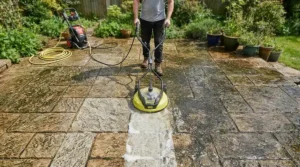
A second recurring problem is pressure that seems to drop mid-job even though the engine sounds fine — this is almost always a clogged nozzle or a failing unloader valve inside the pump, not an engine issue, and it’s worth checking the nozzle first since it’s the cheaper fix. Third, streaking or uneven cleaning on large concrete slabs usually traces back to technique rather than equipment: overlapping each pass by about 50%, working in one consistent direction, and holding the wand at a steady distance solves most of it. Fourth, a pump that loses prime and won’t build pressure at startup is frequently just air trapped in the inlet line after storage — running the trigger open for ten to fifteen seconds before engaging the nozzle usually clears it. And fifth, premature pump failure inside the first two seasons is, more often than any other single cause, traced back to skipped pump-oil changes — the same heavy-duty pump seals that keep water pressurized also rely on that oil for lubrication, and running them dry accelerates wear dramatically.
Understanding PSI Power Tiers: What 4000 PSI Actually Buys You
Pressure washers are generally sorted into rough PSI power tiers, and understanding where 4000 sits clarifies a lot of buying confusion. Light-duty electric units typically run 1,300-1,900 PSI — fine for cars, patio furniture, and small decks, but underpowered for concrete or grease. Mid-duty gas units in the 2,500-3,200 PSI tier handle most home exterior siding and driveway jobs reasonably well. The 3,500-4,400 PSI power tier — where every cold-water product on this list lives — is where genuinely stubborn, baked-on grime, paint prep, and heavy concrete staining finally become fast jobs instead of slow ones. Above that, 4,500 PSI and up tends to belong to specialized industrial or surface-cleaner-attachment applications where the added force risks damaging softer materials if you’re not careful.
Here’s what most buyers overlook about PSI power tiers: moving up a tier doesn’t just clean faster, it also raises the risk of surface damage on wood, vinyl siding, and older mortar joints, so more power isn’t automatically better power for every surface. Choosing the right tier means matching PSI to your hardest material, then using a wider nozzle angle or standoff distance to dial back aggression on anything more delicate — the machine’s ceiling matters less than your control over the low end.
Hot Water vs. Cold Water: When Oil Stains on Concrete Need More Than PSI
This is the comparison most buying guides skip, and it’s the one that matters most if oil is your actual enemy rather than ordinary dirt. The table below lines up the three realistic approaches to concrete degreasing.
| Method | Oil Stain Removal | Typical Time | Relative Cost | Best For |
|---|---|---|---|---|
| Cold water + PSI alone | Weak — oil resists | Slow, often incomplete | Lowest | Dirt, mud, loose debris |
| Cold water + degreaser (dwell time) | Moderate to good | Medium | Low-to-moderate | Light-to-moderate oil stains |
| Hot water pressure washer (e.g. Simpson SLS6033) | Strong — dissolves oil chemistry | Fastest for set-in stains | Highest upfront | Heavy grease, fuel stations, shop floors |
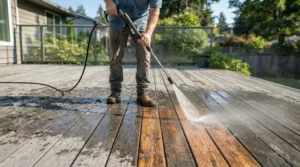
Looking at that comparison, cold-water-only cleaning is essentially the wrong tool for real motor oil or grease, no matter how high the PSI climbs — the physics of hydrophobic residue simply doesn’t respond to force the way loose dirt does. Adding a degreaser and letting it dwell before rinsing closes a meaningful part of that gap at a much lower cost than buying a dedicated hot water unit, which makes it the right call for most homeowners with an occasional oil drip. But for anyone cleaning grease-heavy surfaces on a recurring commercial basis, the Simpson SLS6033‘s heated water pays for itself in labor time saved fairly quickly.
Common Mistakes When Buying a Heavy-Duty Pressure Washer
The most frequent mistake is chasing the highest PSI number without checking GPM, even though flow rate does most of the actual rinsing work once pressure has broken dirt loose. A second common error is ignoring pump type entirely — an axial cam pump costs less upfront but wears out far faster under daily use than a triplex plunger pump, so the sticker price can be misleading about total cost of ownership. Third, buyers regularly underestimate weight; a 130-140 lb machine sounds fine on paper but becomes a real problem if it needs to be lifted into a truck bed solo every day. Fourth, skipping over engine brand matters more than people expect — Honda’s GX-series engines carry a well-earned reputation for longevity and easy cold starts that generic engines frequently can’t match, even when the displacement numbers look similar on a spec sheet. Finally, a surprising number of buyers purchase a cold-water unit for a job that’s fundamentally about oil or grease removal, then wonder why results disappoint — as covered above, that’s a heat problem, not a pressure problem.
Long-Term Cost & Maintenance: Pumps, Seals, and What Actually Breaks
Total cost of ownership on a heavy-duty pressure washer rarely comes down to the purchase price — it comes down to the pump. Heavy-duty pump seals are the single most common failure point across every brand in this category, and they fail for a predictable, preventable reason: running the pump dry of its own crankcase oil, or letting it sit idle at trigger-lock pressure so the water inside overheats and degrades the seal material. Triplex pumps like the ones found in the DeWalt DXPW4240 and NorthStar 157127 use ceramic-coated plungers specifically because ceramic resists the abrasive wear that sediment-laden concrete-cleaning runoff causes to standard steel plungers — that single material choice is often the difference between a two-year pump seal and a five-year one.
Budgeting for ownership should include a $10-$20 bottle of non-detergent pump oil every 50-100 hours of use, occasional nozzle replacement as orifices wear and pressure drifts downward, and — eventually, on any machine run hard enough — a seal kit replacement in the $20-$50 range rather than a full pump swap. Machines built around CAT or AAA industrial pumps, like the Generac 8872 XC4000W and both Simpson PowerShot models, tend to have wider aftermarket parts availability, which keeps that eventual repair affordable instead of forcing a full replacement purchase.
Features That Actually Matter (And Those That Don’t)
Triplex pump construction, engine brand reputation, and hose length in the 50-foot range are features worth paying for — they directly affect longevity and how much ground you can cover without repositioning. A pressure control valve or adjustable nozzle set is genuinely useful for switching between delicate and aggressive cleaning without swapping tips constantly. On the other hand, flashy touchscreen pressure displays and oversized accessory kits with nozzles you’ll rarely use tend to add cost without adding durability — the core mechanicals matter far more than the control panel. Wheel size and frame material matter more than most buyers initially weight them, too: 13-inch pneumatic tires roll over gravel and uneven jobsite terrain far more easily than smaller hard wheels, which becomes a real quality-of-life factor after the tenth time hauling a 130+ lb machine across a yard.
Safety and Regulations Guide
Working with a machine capable of 4000 PSI demands real respect for the equipment. OSHA’s power-tool standard for hose and pressure equipment requires that manufacturer-rated safe operating pressures for hoses and fittings never be exceeded, and industry guidance widely recommends a full face shield rather than standard safety glasses once pressure climbs above roughly 2,000 PSI, since a stream at 4,000 PSI can break skin and cause serious injury in an instant. Closed-toe boots, long sleeves, and hearing protection round out the basic kit for anyone running a gas unit for extended periods, since engine and pump noise commonly sits in the 85-100 decibel range.
Beyond personal safety, wastewater disposal is a genuinely underappreciated legal issue. Runoff from concrete degreasing and oil-stain removal typically carries detergents, petroleum residue, and sediment, and many municipalities classify it as regulated process wastewater rather than harmless rinse water — allowing it to flow into a storm drain can violate local ordinances even when no soap was used. Containing wash water, using a berm or drain cover on commercial jobs, and checking local rules before a large cleaning project protects both nearby waterways and your own liability.
Frequently Asked Questions
❓ Is 4000 PSI too strong for a driveway?
❓ What's the best PSI for removing oil stains from concrete?
❓ How often should I change the pump oil on a gas pressure washer?
❓ Is a 4 GPM or 3.5 GPM pressure washer better for heavy-duty cleaning?
❓ Do heavy-duty pump seals need to be replaced eventually?
Conclusion
A 4000 PSI gas pressure washer for heavy-duty cleaning earns its price tag when the job actually calls for it — stubborn grime, paint prep, fleet maintenance, or a driveway that hasn’t seen real cleaning in years. Among cold-water options, the Simpson PowerShot PS60869 remains the steadiest all-around choice, the Simpson PowerShot PS60843 wins on raw rinse speed, and the Champion Pro 100790 delivers the most commercial-grade pump for the money. For jobsite durability, the Generac 8872 XC4000W and NorthStar 157127 both lean on genuinely tougher CAT pump architecture, while the DeWalt DXPW4240 trades some price premium for contractor-grade support. But if oil and grease, not just dirt, are the actual problem, none of the cold-water machines will fully solve it — that’s where the Simpson SLS6033 and its heated water genuinely change the outcome.
Whichever tier fits your workload, remember that PSI power tiers only tell half the story: pump quality, GPM, and how well you maintain heavy-duty pump seals over time determine whether this purchase lasts two seasons or ten. Match the machine to the mess, not the other way around, and check current pricing before you commit, since availability across these commercial-duty models shifts with retailer stock.
Recommended for You
- Commercial Gas Pressure Washer for Contractors: 7 Picks (2026)
- Best Portable Gas Pressure Washer for Job Sites: 7 Picks for 2026
- Heavy-Duty Electric Pressure Washer for Concrete: 7 Best Picks (2026)
Disclaimer: This article contains affiliate links. As an Amazon Associate, I earn from qualifying purchases. If you purchase products through these links, we may earn a small commission at no additional cost to you.
✨ Found this helpful? Share it with your friends! 💬🤗
