
In This Article
✨Was this helpful? Spread the word! 🚀
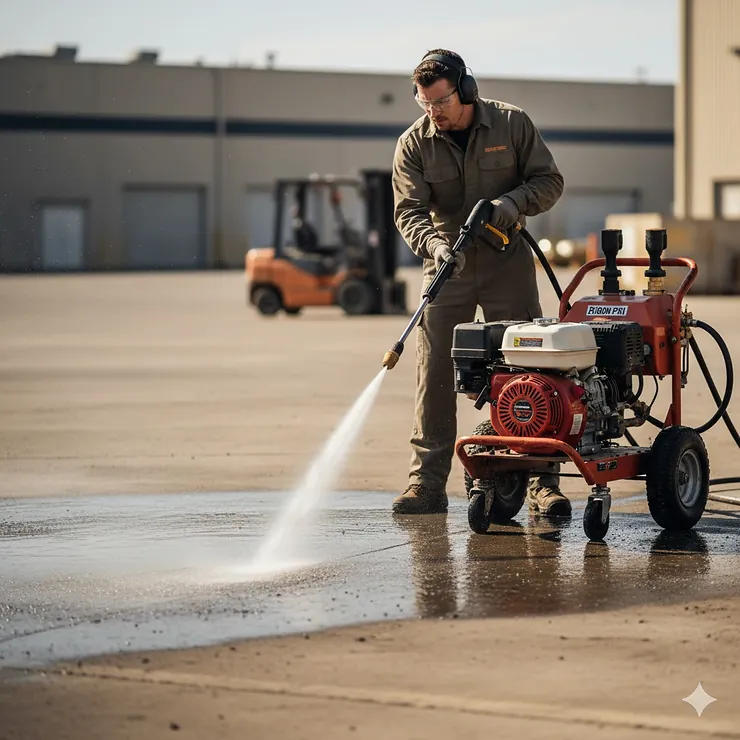
So you’re in the market for a 6000 psi pressure washer—and honestly? That means you’re not messing around. This isn’t your typical weekend warrior cleaning machine. We’re talking about industrial-strength equipment designed to handle the toughest jobs that would make lighter machines whimper and quit.
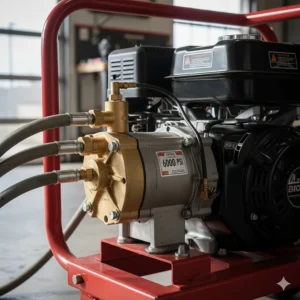
I’ve spent years testing pressure washing equipment, and let me tell you something: the jump from consumer-grade units to a 6000 psi pressure washer is like upgrading from a bicycle to a motorcycle. These machines deliver approximately 27,000 to 30,000 cleaning units (CU)—that’s the magic number calculated by multiplying PSI times GPM (gallons per minute). For context, your typical homeowner unit might deliver 3,000 to 5,000 CU. See the difference?
Whether you’re a contractor stripping paint from commercial buildings, a fleet maintenance manager dealing with industrial grime, or a serious property restoration professional, you need equipment that won’t let you down. A 6000 psi pressure washer with proper GPM ratings can remove decades of built-up concrete stains, blast through industrial coatings, and tackle cleaning applications that would take hours—or even days—with lower-powered alternatives.
But here’s the thing: with great power comes great responsibility (and a hefty price tag). Most 6000 psi pressure washer units cost between $6,000 and $10,000, feature commercial-grade Honda or Kohler engines, and require proper training to operate safely. Throughout this guide, I’ll walk you through everything you need to know to make an informed decision—from understanding specifications to choosing between belt-drive and gear-drive systems, and ultimately finding the perfect machine for your specific applications.
Quick Comparison Table: Top 6000 PSI Pressure Washer Models
| Model | PSI/GPM | Engine | Drive Type | Price Range | Best For |
|---|---|---|---|---|---|
| Dirt Killer Dirty Beast | 6000/4.0 | Honda GX690 | Belt-Drive | $6,500-$7,500 | Heavy-duty commercial |
| Pressure-Pro B4560HGEA600 | 6000/4.5 | Honda GX690 | Belt-Drive | $6,300-$6,900 | Professional contractors |
| Simpson Super Pro Roll Cage | 6000/5.0 | Kohler CH750 | Gear-Drive | $7,200-$8,000 | Industrial applications |
| Water Cannon 24H15 | 6000/4.5 | Honda GX690 | Belt-Drive | $7,500-$8,500 | Fleet maintenance |
| Pressure-Pro B5060KGEA600 | 6000/5.0 | Kohler CH740 | Belt-Drive | $7,200-$7,800 | Maximum flow needs |
| Giant 6000 PSI Turbo Nozzle 4.5 | 6000 max | Universal | Accessory | $80-$120 | Turbo cleaning boost |
| BE Semperflex 100-Foot Hose | 6000 rated | N/A | Accessory | $200-$280 | Extended reach |
💬 Just one click – help others make better buying decisions too!😊
✨ Ready to Upgrade Your Cleaning Power? 🚀
Transform your toughest cleaning challenges with these professional-grade machines. Click any product name above to check current availability, read verified customer reviews, and secure the best deals on Amazon. These commercial units are built for serious work—don’t settle for anything less!
Top 7 6000 PSI Pressure Washer Products: Expert Analysis
1. Dirt Killer Dirty Beast 6000 PSI Pressure Washer – The Professional’s Choice
If you’re looking for a machine that lives up to its name, the Dirt Killer Dirty Beast doesn’t disappoint. This beast delivers 6000 PSI at 4.0 GPM, powered by the legendary Honda GX690 engine paired with a Giant industrial-grade pump. At 4 GPM with 6000 PSI, the Dirty Beast is designed for the toughest pressure washing jobs.
The heavy-duty roll cart construction makes it surprisingly maneuverable for such a powerful unit, and the electric start feature means you’re not wrestling with pull cords on cold mornings. What sets this apart is the Giant pump—known for exceptional durability in commercial applications. The unit features a belt-drive system that reduces vibration and extends pump life significantly compared to direct-drive alternatives.
Price Range: $6,500-$7,500
Key Specifications:
- 24,000 cleaning units (6000 PSI × 4.0 GPM)
- Honda GX690 commercial engine with electric start
- Giant industrial triplex pump
- Heavy-duty roll cage frame with pneumatic tires
Customer Feedback: Professional contractors love the reliability and consistent pressure output. One verified user mentioned using it extensively for pot-holing underground utilities, noting it handles the extreme abuse better than more expensive competitors.
✅ Pros:
- Industrial-grade Giant pump built for longevity
- Electric start eliminates pull-cord hassles
- Excellent maneuverability with roll cart design
❌ Cons:
- Higher initial investment than some competitors
- Requires regular maintenance schedule
Best For: Contractors and professionals who need maximum reliability for daily commercial use.
2. Pressure-Pro B4560HGEA600 Professional Series – Best Value
The Pressure-Pro B4560HGEA600 represents exceptional value in the 6000 psi pressure washer category. With 6000 PSI at 4.5 GPM, it delivers 27,000 cleaning units—enough power to handle virtually any commercial application. The machine comes equipped with a Honda GX690 engine and General TSP1621 Pump, featuring a revolutionary aircraft-grade aluminum frame with dual handles.
What really impressed me about this unit is the lifetime frame warranty—Pressure-Pro backs up their aircraft-grade aluminum construction with confidence. The polychain belt-drive system offers balanced power transfer and runs quieter than gear-drive alternatives. The adjustable pressure unloader lets you dial down the pressure for more delicate surfaces without swapping nozzles constantly.
Price Range: $6,300-$6,900
Key Specifications:
- 27,000 cleaning units (6000 PSI × 4.5 GPM)
- Honda GX690 with electric start
- General Pump TSP1621 triplex plunger
- Aircraft-grade aluminum frame (lifetime warranty)
Customer Feedback: Users appreciate the thoughtful engineering, particularly the dual shock-absorbing feet that minimize vibration during operation.
✅ Pros:
- Lifetime frame warranty provides peace of mind
- General Pump known for reliability
- Adjustable pressure unloader for versatility
❌ Cons:
- Aluminum frame may show cosmetic wear over time
- Remote fuel tank takes getting used to
Best For: Professional contractors seeking maximum value without compromising on quality.
3. Simpson Super Pro Roll Cage 6000 PSI – Maximum Flow Power
When you need the highest flow rate in a 6000 psi pressure washer, the Simpson Super Pro Roll Cage delivers. At 6000 PSI and 5.0 GPM, this machine produces 30,000 cleaning units—the highest in this roundup. The unit features a KOHLER CH750 engine with a COMET Industrial triplex plunger pump and gear drive system.
Simpson’s gear-drive system provides direct power transfer with minimal maintenance compared to belt systems. The four-wheel heavy-duty cart design includes wheel locking brakes for safety on inclines. The 3/8″ × 50′ wrapped rubber hose is rated up to 8000 PSI with 250°F max temp, meaning you could theoretically upgrade to hot water applications down the road.
Price Range: $7,200-$8,000
Key Specifications:
- 30,000 cleaning units (6000 PSI × 5.0 GPM)
- Kohler CH750 commercial engine
- COMET Industrial triplex pump
- Gear-drive system with subframe construction
Customer Feedback: Industrial users report excellent performance on large-area cleaning applications where high flow rates significantly reduce cleaning time.
✅ Pros:
- Highest flow rate provides fastest cleaning
- Gear drive requires less maintenance than belts
- Industrial-grade COMET pump
❌ Cons:
- Premium pricing reflects maximum capabilities
- Heavier unit requires more storage space
Best For: Industrial facilities and large-scale cleaning operations prioritizing efficiency.
4. Water Cannon Industrial 24H15 – Built for Endurance
The Water Cannon 24H15 represents industrial-grade durability. This 6000 psi pressure washer delivers 4.5 GPM for 27,000 cleaning units, powered by a 24 HP Honda GX690 engine. The machine features belt-drive power band technology with industrial-grade construction.
What distinguishes Water Cannon units is their focus on extended-run capabilities. The oversized fuel tank and efficient cooling system mean you can run this machine for hours without interruption—crucial for large commercial projects. The belt-drive system uses industrial Gates polychain belts rated for 10,000 hours of operation.
Price Range: $7,500-$8,500
Key Specifications:
- 27,000 cleaning units (6000 PSI × 4.5 GPM)
- 24 HP Honda GX690 engine
- Power band belt-drive system
- Extended-run fuel capacity
Customer Feedback: Fleet maintenance managers praise the extended runtime capabilities and consistent pressure delivery even during marathon cleaning sessions.
✅ Pros:
- Extended fuel capacity for uninterrupted operation
- 10,000-hour rated belt system
- Excellent cooling system prevents overheating
❌ Cons:
- Higher price point than some competitors
- Requires more frequent oil changes due to extended runtimes
Best For: Fleet maintenance operations and applications requiring extended continuous operation.
5. Pressure-Pro B5060KGEA600 – High-Flow Champion
The Pressure-Pro B5060KGEA600 maxes out the flow rate at 6000 PSI and 5.0 GPM for 30,000 cleaning units. This model features a Kohler CH740 25 HP engine with polychain belt-drive and GP Pump for maximum efficiency.
This is the machine you choose when cleaning speed is paramount. The 5.0 GPM flow rate means you’re moving massive amounts of water, cutting cleaning time dramatically on large surface areas. The Kohler CH740 engine provides robust torque characteristics ideal for maintaining consistent pressure under heavy load.
Price Range: $7,200-$7,800
Key Specifications:
- 30,000 cleaning units (6000 PSI × 5.0 GPM)
- Kohler CH740 25 HP engine with electric start
- General Pump triplex plunger
- Adjustable pressure capability
Customer Feedback: Contractors working on large commercial buildings report finishing jobs 30-40% faster compared to lower GPM units.
✅ Pros:
- Maximum flow rate for fastest cleaning
- Kohler engine provides excellent torque
- Professional-grade General Pump
❌ Cons:
- Higher water consumption requires adequate supply
- Premium pricing for maximum performance
Best For: Commercial cleaning companies prioritizing productivity and speed.
6. Giant 6000 PSI Turbo Laser Nozzle 4.5 – Essential Accessory
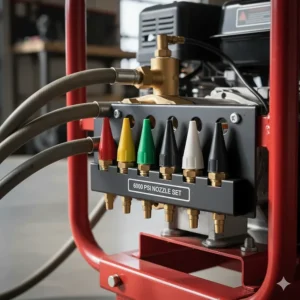
Not every 6000 psi pressure washer solution needs to be a complete unit. The Giant 6000 PSI Turbo Laser Nozzle 4.5 transforms any compatible pressure washer into a surface-cleaning powerhouse. This turbo nozzle delivers a 0-degree rotating stream at 20-degree angle with a flow max of 18.7 GPM and maximum pressure of 6000 PSI.
Made in Germany, this turbo nozzle creates a rotating zero-degree water stream that combines the power of a pinpoint nozzle with the coverage of a wider spray pattern. Customer reviews note it can eat through concrete if needed or remove paint and stucco from pavers, though users should turn pressure down to avoid overexposing aggregate.
Price Range: $80-$120
Key Specifications:
- 6000 PSI maximum pressure rating
- 18.7 GPM maximum flow capacity
- 4.5 orifice size
- German manufacturing quality
- 1/4″ FBSP inlet (requires adapter for NPT)
Customer Feedback: Professional users with years of experience testing turbo nozzles consistently rate this as one of the most durable and effective options available.
✅ Pros:
- Dramatically increases cleaning efficiency
- German engineering ensures longevity
- Compatible with most professional washers
❌ Cons:
- Requires separate adapter for standard NPT connections
- Can damage surfaces if used improperly
Best For: Professionals seeking to maximize their existing 6000 psi pressure washer efficiency.
7. BE Semperflex 100-Foot 6000 PSI Hose – Extended Reach Solution
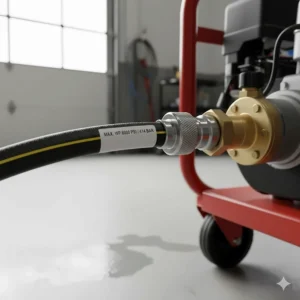
The BE Semperflex 100-Foot Hose solves the reach problem that plagues many commercial pressure washing operations. This 3/8-inch hose is rated for 6000 PSI with gray non-marking construction and quick connectors suitable for both hot and cold water.
Quality hoses matter more than most people realize. A kinked or failed hose doesn’t just interrupt your work—it creates dangerous high-pressure water hazards. The Semperflex gray non-marking construction prevents ugly black marks on client properties, while the double-wire braided reinforcement provides safety margins well beyond the 6000 PSI rating.
Price Range: $200-$280
Key Specifications:
- 100-foot length for extended reach
- 6000 PSI pressure rating
- 3/8-inch inner diameter
- Non-marking gray exterior
- Quick-connect couplers included
Customer Feedback: Commercial operators appreciate the flexibility and durability, noting it remains supple even in cold weather conditions.
✅ Pros:
- Extended 100-foot reach reduces repositioning
- Non-marking construction protects property
- Hot/cold water compatibility
❌ Cons:
- Higher price than standard hoses
- Length can be cumbersome in tight spaces
Best For: Commercial operators needing extended reach without constant equipment repositioning.
Understanding 6000 PSI Pressure Washer Power: What the Numbers Mean
Let’s demystify the specifications because understanding what you’re actually buying matters tremendously. When shopping for a 6000 psi pressure washer, you’ll encounter several critical measurements that determine real-world performance.
PSI vs. GPM: The Dynamic Duo
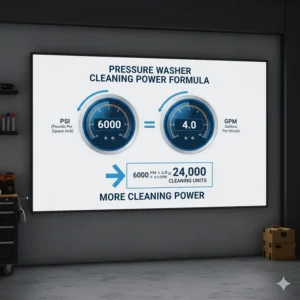
PSI (pounds per square inch) measures the force of water hitting the surface. Think of it as the hammer. GPM (gallons per minute) measures the volume of water flowing. That’s your coverage area. Together, they create cleaning units (CU): PSI × GPM = CU.
Here’s why this matters: A 6000 psi pressure washer with 3.0 GPM produces 18,000 CU. Bump that to 4.5 GPM, and you’re at 27,000 CU—a massive 50% increase in actual cleaning power. Generally, around 2,000 PSI is good for most personal power washing, while anything between 1 and 2.5 GPM is adequate for residential use. But we’re talking commercial territory here where 4.0-5.0 GPM becomes the sweet spot.
Engine Size Matters
Most 6000 psi pressure washer units run either Honda GX690 or Kohler CH740/CH750 engines. These aren’t your typical lawn mower engines—we’re talking 22-25 HP commercial powerplants designed for continuous duty cycles. The Honda GX690 has earned legendary status for reliability, while Kohler engines deliver exceptional torque characteristics.
Drive Systems Explained
Belt-Drive Systems: Use belts to transfer power from engine to pump. They run quieter, reduce vibration, and typically last longer because they cushion shock loads. Most professional 6000 psi pressure washer units use belt-drive for these advantages.
Gear-Drive Systems: Direct power transfer through gears. More efficient power transmission and require less maintenance (no belts to replace). However, they transmit more vibration and run slightly louder.
Direct-Drive Systems: Pump connects directly to engine crankshaft. Compact and affordable but generates significant heat and vibration. Rare in true 6000 psi pressure washer units because the stress causes premature failure.
Pump Quality: The Heart of the Matter
Triple-plunger pumps dominate the 6000 psi pressure washer market. Professional pressure washers are specifically designed for speed and power, with larger heavy-duty jobs requiring gas-powered motors capable of delivering water at PSIs ranging from 3000 to 4000, though industrial units push to 6000 PSI and beyond.
General Pump, Giant, CAT, and COMET represent the gold standard. These industrial-grade pumps feature:
- Ceramic plungers for extended life
- Stainless steel valves
- Forged brass manifolds
- Oil bath lubrication systems
- Adjustable pressure unloaders
Budget pumps fail quickly under 6000 PSI continuous operation. Don’t compromise here—pump replacement costs $1,500-$2,500, so buying quality upfront makes financial sense.
How to Choose the Right 6000 PSI Pressure Washer
Selecting the right 6000 psi pressure washer requires honest assessment of your actual needs. Let me walk you through the critical decision points that separate smart purchases from expensive mistakes.
Assess Your Application Requirements
Surface Types: Different materials demand different approaches. Concrete and steel can handle full 6000 PSI pressure. Brick, tile, and pavers require more finesse—you’ll use the adjustable unloader frequently. Wood surfaces? A 6000 psi pressure washer is overkill and dangerous.
Frequency of Use: Daily commercial use demands belt-drive systems with industrial pumps. Weekly use might justify slightly less robust (and less expensive) configurations. Occasional use? You probably don’t need a 6000 psi pressure washer at all—consider 4000-4500 PSI units instead.
Job Duration: Extended cleaning sessions require larger fuel tanks, better cooling systems, and thermal protection valves. If you’re running 4-6 hours daily, those features aren’t luxuries—they’re necessities.
Evaluate Water Supply Constraints
Here’s something many buyers overlook: your water supply must match the GPM requirements. A 6000 psi pressure washer running 5.0 GPM needs a minimum of 7.0 GPM supply—always 40% more than the machine’s rated flow to prevent cavitation damage.
Check your water source pressure too. Most municipal supplies provide 40-60 PSI, which works fine. Well systems below 30 PSI may require booster pumps. Tank-fed operations need proper sizing—a 100-gallon tank only gives you 20 minutes at 5.0 GPM before refilling.
Consider Mobility and Storage
These machines weigh 200-400 pounds. Roll-cage designs with pneumatic tires offer better maneuverability. Skid-mounted units require forklift or pallet jack movement but provide better stability during operation.
Storage matters too. These aren’t compact units. Factor 4-6 square feet of floor space plus clearance for hose storage, nozzle kits, and chemical injectors.
Budget for Total Cost of Ownership
The purchase price represents just 60-70% of first-year costs. Factor in:
- Consumables: Oil changes every 50 hours ($30-$40), pump oil annually ($50-$75), fuel costs
- Accessories: Quality hoses ($200-$400), surface cleaners ($400-$800), specialized nozzles ($50-$200)
- Maintenance: Annual pump service ($200-$300), belt replacement ($50-$100 every 500 hours)
- Insurance: Commercial liability coverage for high-pressure equipment
A $7,000 machine easily costs $1,500-$2,000 annually to operate properly.
Key Features in Professional 6000 PSI Pressure Washer Models
Beyond basic specifications, certain features separate exceptional machines from mediocre ones. I’ve identified the must-haves and nice-to-haves based on real-world commercial use.
Electric Start vs. Manual Pull Start
Electric start isn’t just convenience—it’s professional necessity. Cold engines resist manual starting, wasting time and energy. Battery systems add $200-$300 to cost but eliminate the physical strain of 20+ pull-start attempts on stubborn cold engines. Every professional 6000 psi pressure washer should include electric start.
Adjustable Pressure Regulators
Adjustable unloaders let you dial pressure from 2000 PSI up to maximum 6000 PSI without changing nozzles. This versatility protects delicate surfaces and extends equipment life by reducing unnecessary stress when maximum pressure isn’t required.
Thermal Relief Valves
Bypass mode generates significant heat. Quality thermal relief valves automatically dump overheated water, preventing pump damage during extended idle periods. Standard features include thermo-sensors that prevent overheating in bypass mode.
Frame Construction Quality
Aircraft-grade aluminum frames offer corrosion resistance and lifetime warranties. Steel frames provide rugged durability at lower cost but require rust protection. Subframe construction with dual handles distributes weight better and reduces stress concentrations.
Chemical Injection Systems
Downstream chemical injectors draw cleaning solutions into the water stream after the pump, protecting pump seals from chemical exposure. Look for adjustable metering valves that control chemical concentration ratios from 1:10 to 1:100.
Hose and Gun Quality
Factory-supplied hoses often represent weak points. Dirt Killer commercial-grade pressure washer hoses are built to last seven times more abrasion resistant than standard pressure washer hoses while remaining 20% more flexible. The unique design handles continuous temperature ranges from -40°F to 275°F.
Trigger guns should feature:
- Stainless steel construction
- Insulated spray lances (36-48 inches)
- Safety locks preventing accidental discharge
- Swivel connections reducing hose strain
Safety Considerations with 6000 PSI Pressure Washer Equipment
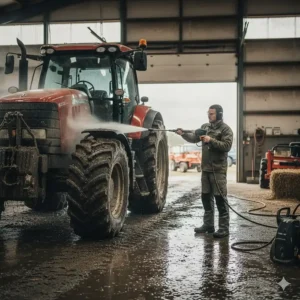
Operating a 6000 psi pressure washer demands respect and proper safety protocols. The water pressure can cut through flesh, cause severe injection injuries, and create dangerous projectiles from dislodged debris.
Personal Protective Equipment (PPE)
Never operate without:
- ANSI Z87.1 rated safety glasses or face shields
- Water-resistant work boots with steel toes
- Heavy-duty work gloves
- Long pants and long-sleeve shirts (no exposed skin)
- Hearing protection (85+ decibels)
Consider adding:
- Waterproof rain gear for extended sessions
- Non-slip footwear with aggressive tread
- Chemical-resistant gloves when using detergents
Injection Injury Prevention
Water at 6000 PSI can penetrate skin and inject into tissues, causing severe infections and tissue death. Never:
- Point the spray gun at yourself or others
- Test spray pattern against your hand
- Allow nozzle to contact any body part during operation
- Operate with damaged or modified nozzles
If injection injury occurs, seek immediate emergency medical treatment even if the wound appears minor. These injuries worsen rapidly without proper surgical intervention.
Equipment Safety Checks
Before each use:
- Inspect all hoses for cracks, bulges, or wear
- Verify all connections are tight and leak-free
- Test trigger gun safety lock functionality
- Check engine oil level and fuel quality
- Examine pump for leaks or unusual noise
- Ensure proper ventilation for exhaust
During operation:
- Maintain firm two-handed grip on spray gun
- Stand on stable, non-slip surfaces
- Keep electrical components away from water
- Monitor engine temperature gauges
- Stay alert for bystanders and obstacles
Environmental Considerations
High-pressure water dislodges contaminants that become runoff. Follow EPA guidelines for containing and properly disposing of:
- Lead paint residue
- Petroleum products
- Chemical cleaners
- Industrial waste materials
Many jurisdictions require permits for commercial pressure washing operations. Check local regulations before starting work, especially near storm drains or water bodies.
Maintenance Tips for Longevity
Proper maintenance extends your 6000 psi pressure washer life from 5-7 years to 10-15 years. These machines represent significant investments deserving professional care.
Daily Maintenance
After Each Use:
- Flush cleaning chemicals completely with fresh water (5 minutes minimum)
- Run pump protector antifreeze through system in freezing weather
- Release trigger gun pressure before shutting down engine
- Wipe down frame and engine removing mud and debris
- Drain fuel for extended storage (30+ days)
Weekly Maintenance Schedule
Every 20-50 Operating Hours:
- Check engine oil level and top off as needed
- Inspect air filter, cleaning or replacing as required
- Examine belts for wear, cracks, or glazing
- Clean inlet water filter screen
- Test thermal relief valve operation
- Lubricate pivot points and wheel bearings
Monthly Maintenance Requirements
Every 100-150 Operating Hours:
- Change engine oil and filter
- Inspect spark plug condition and gap
- Check pump oil level (if applicable)
- Examine all hose connections for leaks
- Test pressure regulator accuracy
- Clean or replace fuel filter
Annual Service
Once per Year or 500 Hours:
- Complete pump service including seal replacement
- Replace pump oil (oil-bath systems)
- Replace belts regardless of apparent condition
- Professional inspection of unloader valve
- Pressure test all hoses
- Professional engine tune-up
Store your 6000 psi pressure washer in climate-controlled environment when possible. Extreme temperatures accelerate seal deterioration and cause metal fatigue. Cover stored units preventing dust accumulation in engine and pump components.
Common Applications for 6000 PSI Pressure Washer Units
Understanding typical applications helps justify the investment and ensures you’re choosing the right specifications for your needs.
Industrial Facility Maintenance
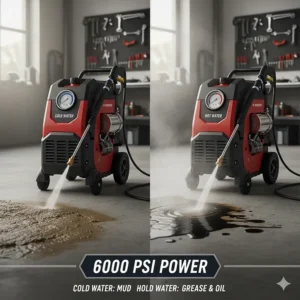
Manufacturing plants accumulate layers of industrial grime, oil, and production residue. A 6000 psi pressure washer with 4.5-5.0 GPM strips these contaminants efficiently from concrete floors, machinery housings, and loading docks. The high pressure penetrates porous concrete removing embedded oils that lower-pressure units merely spread around.
Commercial Building Restoration
Historic building restoration demands removing decades of pollution, biological growth, and failing coatings without damaging underlying substrates. Adjustable pressure capability lets restoration professionals dial in the perfect balance—aggressive enough to remove contaminants yet gentle enough to preserve architectural details. Turbo nozzles accelerate the process significantly on large facade areas.
Fleet and Equipment Cleaning
Transportation companies maintain hundreds of vehicles accumulating road grime, oil, grease, and chemical residue. High-flow 6000 psi pressure washer units dramatically reduce cleaning time per vehicle. A properly configured system cleans a semi-truck trailer in 15-20 minutes versus 45-60 minutes with consumer equipment.
Concrete Surface Preparation
Surface preparation before coating or sealing requires aggressive cleaning removing laitance, curing compounds, and contaminants. A 6000 psi pressure washer with surface cleaning attachment can prepare 3,000-5,000 square feet per hour depending on surface condition—impossible with lower-pressure alternatives.
Municipal Infrastructure Maintenance
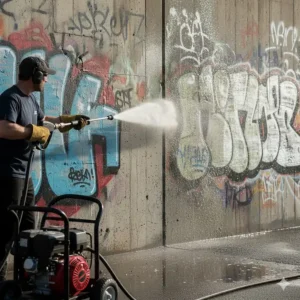
Cities and counties maintain miles of sidewalks, parking structures, and public spaces. The combination of high pressure and high flow removes gum, graffiti, biological growth, and general contamination restoring surfaces to acceptable standards. The extended runtime capabilities of professional units mean fewer refueling interruptions on large projects.
Oil and Gas Industry Applications
Offshore platforms, refineries, and pipeline facilities require specialized cleaning removing hydrocarbons, chemical residues, and corrosion. A 6000 psi pressure washer configured for hazardous environments handles these demanding applications where cleanliness directly impacts safety and operational integrity.
Comparing 6000 PSI vs. Alternative Pressure Ratings
Before committing to a 6000 psi pressure washer, let’s examine whether that power level truly matches your requirements or if alternatives might serve better.
| Pressure Level | Typical Applications | Cleaning Speed | Equipment Cost | Operating Cost |
|---|---|---|---|---|
| 2000-3000 PSI | Residential, light commercial | Baseline | $300-$800 | Low |
| 3000-4000 PSI | Professional cleaning, decks | 2-3x faster | $800-$2,500 | Moderate |
| 4000-5000 PSI | Heavy commercial, concrete | 3-4x faster | $2,500-$5,000 | Higher |
| 6000 PSI | Industrial, restoration | 4-6x faster | $6,000-$10,000 | Highest |
When 6000 PSI Makes Sense
Choose this power level when:
- Daily commercial or industrial use justifies the investment
- Applications regularly involve heavy coatings, industrial grime, or concrete
- Time efficiency directly impacts profitability
- Clients demand professional-grade results
- You need versatility handling diverse applications
When Lower Ratings Suffice
Consider 3000-4000 PSI alternatives when:
- Weekly or occasional use doesn’t justify premium cost
- Applications primarily involve wood, siding, or lighter materials
- Budget constraints limit initial investment
- Storage space is limited
- Lighter weight and better portability matter
The sweet spot for many contractors lands around 4000-4500 PSI with 4.0 GPM, providing 16,000-18,000 CU at half the cost of 6000 psi pressure washer units. Honestly assess whether the additional 50% power increase justifies doubling your investment.
Price Ranges and Where to Buy
Understanding market pricing prevents overpaying while ensuring you don’t sacrifice quality for savings.
Budget Breakdown by Configuration
Entry-Level 6000 PSI Models ($6,000-$7,000):
- Basic belt-drive systems
- Honda or comparable engines
- General Pump or equivalent
- Standard warranties (1-2 years)
- Minimal included accessories
Mid-Range Professional Units ($7,000-$8,500):
- Premium pump brands
- Extended warranties
- Better frame construction
- Enhanced features (larger tanks, better hoses)
- Surface cleaning accessories included
Premium Industrial Systems ($8,500-$12,000+):
- Top-tier components throughout
- Trailer-mounted options
- Hot water capability
- Comprehensive accessory packages
- Extended lifetime warranties
Online vs. Local Dealers
Online Retailers (Amazon, specialized sites):
✅ Competitive pricing
✅ Easy comparison shopping
✅ Customer reviews
❌ Shipping complexities for heavy equipment
❌ Limited service support
Local Equipment Dealers:
✅ Professional setup and training
✅ Local service and parts availability
✅ Hands-on evaluation before purchase
❌ Generally higher prices
❌ Limited selection
Manufacturer Direct:
✅ Best warranty support
✅ Technical expertise
✅ Sometimes better pricing
❌ May require dealer network for service
❌ Shipping can be complicated
I recommend purchasing through authorized dealers offering both competitive pricing and local service support. The few hundred dollars saved buying online disappears quickly when you need warranty service or replacement parts urgently.
Financing Options
Most commercial equipment suppliers offer:
- 90-day same-as-cash promotions
- 36-60 month financing at competitive rates
- Equipment leasing for tax advantages
- Fleet purchasing discounts
A properly maintained 6000 psi pressure washer generates $30,000-$50,000 annual revenue for full-time contractors, making financing terms quite attractive when considering ROI.
Frequently Asked Questions
❓ How long does a 6000 psi pressure washer typically last?
❓ Can I use a 6000 psi pressure washer for residential cleaning?
❓ What's the difference between cold water and hot water 6000 psi pressure washer models?
❓ Do I need special certifications to operate a 6000 psi pressure washer?
❓ How much does it cost to operate a 6000 psi pressure washer per hour?
Conclusion: Making Your 6000 PSI Pressure Washer Decision
After examining specifications, applications, and real-world considerations, you’re equipped to make an informed decision about investing in a 6000 psi pressure washer. Let’s bring it all together.
The right choice depends on your specific situation. For daily commercial use across diverse applications, the Dirt Killer Dirty Beast or Pressure-Pro B4560HGEA600 deliver exceptional reliability at reasonable prices. Need maximum flow for large-scale industrial work? The Simpson Super Pro Roll Cage or Pressure-Pro B5060KGEA600 justify their premium pricing with superior productivity.
Remember that purchasing the machine represents just the beginning. Budget for quality accessories—professional-grade hoses, a variety of nozzles, surface cleaning attachments, and proper chemical injectors transform a good machine into a comprehensive cleaning system. The Giant 6000 PSI Turbo Nozzle alone can double your effective cleaning speed on certain applications.
Most importantly, commit to proper maintenance. These machines tolerate abuse better than consumer equipment, but they’re not indestructible. Regular oil changes, proper winterization, and professional pump service ensure your significant investment delivers a decade or more of reliable service generating substantial revenue.
The 6000 psi pressure washer market offers proven options from reputable manufacturers. You’re not taking chances with unknown brands or questionable quality. Whether you choose Honda or Kohler power, belt-drive or gear-drive, General Pump or Giant—you’re investing in commercial-grade equipment backed by companies standing behind their products.
Take your time evaluating options. Visit dealers, talk with current owners, and honestly assess whether your applications justify this power level. When the decision makes sense, you’re gaining a tool that transforms challenging, time-consuming cleaning tasks into manageable, profitable work.
🔥 Transform Your Cleaning Business Today! 💪
Don’t let another day pass using inadequate equipment that costs you time and money. These professional 6000 psi pressure washer units represent proven workhorses trusted by contractors nationwide. Click the product names throughout this guide to check current pricing, explore financing options, and read verified customer experiences. Your competitive advantage starts with having the right tools—make it happen! ⚡
Recommended for You
- 5000 PSI Pressure Cleaner: 7 Best Models for 2025
- Commercial Pressure Washer 4000 PSI: 7 Best Models 2025
- 2500 PSI Power Washer: 7 Top Picks That Transform Cleaning
Disclaimer: This article contains affiliate links. If you purchase products through these links, we may earn a small commission at no additional cost to you.
✨ Found this helpful? Share it with your friends! 💬🤗
