
In This Article
Concrete doesn’t forgive laziness. A patio might let you get away with a garden hose and a stiff brush, but a concrete driveway that’s spent a decade soaking up tyre rubber, moss spores and the occasional oil drip needs something with real muscle behind it. That’s where a heavy-duty electric pressure washer for concrete earns its keep — not the toy-sized jet washer gathering dust in the shed, but a proper machine built to shift baked-on grime without you needing a shoulder replacement afterwards.
We’ve spent time digging through real specifications, genuine UK buyer feedback and side-by-side comparisons of seven machines that are actually available on amazon.co.uk right now, from budget-friendly entry points to genuinely industrial-feeling flagships. What follows isn’t a rehash of manufacturer marketing copy — it’s an honest look at what bar pressure, flow rate and motor design actually mean once you’re stood on a grey, grubby driveway with a hose in your hand. 🚿
Whether you’re chasing oil stains off a garage floor, prepping a patio for resealing, or simply tired of a driveway that looks ten years older than your house, there’s a machine here that fits your budget and your grime level.
What Is a Heavy-Duty Electric Pressure Washer for Concrete?
A heavy-duty electric pressure washer for concrete is a mains-powered cleaning machine, typically producing 140-180 bar (roughly 2,000-2,600 PSI) and a flow rate above 400 litres per hour, engineered with a metal or reinforced pump to withstand sustained use on tough outdoor surfaces like driveways, garage floors and patios. According to the pressure washing entry on Wikipedia, the technique uses a high-pressure water spray specifically to remove loose paint, mould, grime, dust, mud and dirt from surfaces including concrete.
The “heavy-duty” label isn’t just marketing fluff. It signals a pump built from metal rather than plastic, a motor rated for longer continuous run times, and accessories (rotary brushes, surface cleaners, dirt blaster nozzles) actually designed for masonry rather than delicate car paintwork.
Quick Comparison Table
| Model | Max Pressure | Flow Rate | Best For |
|---|---|---|---|
| Kärcher K7 Full Control | 180 bar / 2,610 PSI | 550 l/h | Best overall for concrete driveways |
| Wilks-USA RX550i | 262 bar / 3,800 PSI | 500 l/h | Highest-PSI option for heavy grime |
| Kärcher K5 Power Control Flex | 145 bar | 500 l/h | Best all-round mid-range pick |
| Nilfisk Core 140 | 140 bar / 2,030 PSI | 474 l/h | Best built-to-last durability |
| Bosch AdvancedAquatak 140 | 140 bar | 450 l/h | Best accessory ecosystem |
| VonHaus 2200W | 165 bar / 2,000 PSI | 408 l/h | Best budget-to-mid value |
| Stanley SXPW22E | 150 bar | 440 l/h | Best true entry-level pick |
Looking across the table, there’s a clear pattern: pressure alone doesn’t tell the whole story. The Nilfisk Core 140 sits at the lower end for bar rating yet consistently punches above its weight thanks to flow rate and pump build quality, while the Wilks-USA RX550i trades some of that refinement for genuinely industrial-feeling pressure at a price most premium brands can’t touch. If your concrete is more “light dust” than “decade of oil”, you can comfortably drop down a tier and save real money without sacrificing results.
💬 Just one click — help others make better buying decisions too!😊
Top 7 Heavy-Duty Electric Pressure Washers for Concrete: Expert Analysis
1. Kärcher K7 Full Control — most powerful mainstream electric model
Topping our list is the machine most UK trade forums point to when someone asks what actually shifts oil-stained concrete: the Kärcher K7 Full Control. Its standout figure is 180 bar (2,610 PSI) paired with a genuinely useful 550 l/h flow rate — the ceiling of what a standard 13-amp domestic socket can realistically support without an electrician getting involved.
That combination means the Kärcher K7 Full Control doesn’t just blast dirt off the surface; the higher flow rate lets it cover roughly 60 m² an hour, which matters enormously once you’re tackling an entire driveway rather than a doorstep. Based on the spec comparison, this is the pick for anyone with a genuinely large concrete area or years of accumulated grime, rather than someone with a small yard doing light annual maintenance.
Reviewers consistently report that the K7 handles oily patches and moss-covered stonework with ease, though several also note the high-pressure hose feels stiff out of the box and that a separate garden hose (not included) is needed to feed the machine. What most buyers overlook is that Kärcher backs this model with a 5-year warranty, which meaningfully changes the long-term value calculation.
Pros:
- ✅ Highest flow rate on this list at 550 l/h for fast coverage
- ✅ 5-year manufacturer warranty backs long-term reliability
- ✅ Bluetooth app control on select variants for easy adjustment
Cons:
- ❌ Feed hose not included, adding to first-time setup cost
- ❌ Heavier at around 17 kg, less nimble to move around
Typically priced in the £320-£420 range depending on the exact variant, the Kärcher K7 Full Control earns its premium tag through raw coverage speed rather than pressure alone — for large concrete areas, that’s the number that actually saves you time.
2. Wilks-USA RX550i — highest pressure available in an electric model
If the keyword “heavy grime” resonates with your driveway, the Wilks-USA RX550i deserves a long look. At 262 bar (3,800 PSI), it’s marketed as the highest-pressure electric jet washer currently sold in the UK — a figure that edges close to the ceiling most 240V domestic circuits can sustain.
The spec sheet won’t tell you this, but user reports suggest the copper-wound motor and metal pump are what let Wilks-USA push pressure this high without the motor overheating on longer jobs, unlike cheaper plastic-pump alternatives that throttle back after 20 minutes. Aggregated review sentiment on independent review-analysis sites describes the RX550i range as well-built and powerful for the price, with buyers frequently comparing it favourably against premium brands costing considerably more.
This machine ships with a genuinely comprehensive accessory bundle — patio cleaner, rotary brush, triangular brush, gutter lance and a 26-metre extension hose — which is unusually generous at this price point and squarely aimed at exactly the oil-stain, grime-heavy concrete jobs this article is about.
Pros:
- ✅ Highest bar/PSI rating of any model on this list
- ✅ Copper-wound motor built for sustained heavy-duty use
- ✅ Comprehensive accessory bundle included as standard
Cons:
- ❌ Less brand recognition than Kärcher or Bosch in the UK
- ❌ Plastic accessory fittings feel basic next to premium rivals
Usually available in the under-£200 bracket, the Wilks-USA RX550i delivers premium-rivalling pressure at a price that undercuts the established brands significantly.
3. Kärcher K5 Power Control Flex — best all-round mid-range pick
Sitting neatly between entry-level and flagship, the Kärcher K5 Power Control Flex offers 145 bar and 500 l/h flow — genuinely strong figures for a machine that doesn’t demand flagship pricing. Its standout feature is the Power Control dial mounted directly on the gun, letting you drop pressure instantly for delicate surfaces without walking back to the machine.
Here’s what to weigh: the 500 l/h flow rate actually matches the pricier K7 on paper, meaning coverage speed on a mid-sized concrete driveway won’t feel meaningfully slower — you’re mainly sacrificing the extra 35 bar of raw pressure, which most domestic concrete jobs don’t strictly need. Reviewers consistently note the built-in water filter as a small but genuinely useful inclusion, protecting the pump from grit drawn up through garden hoses.
The bundled Home Kit, including a T450 patio cleaner attachment, transforms this from a “car and patio” machine into a legitimate concrete-cleaning tool the moment you unbox it.
Pros:
- ✅ 500 l/h flow rate matches machines twice the price
- ✅ On-gun pressure control for quick surface adjustments
- ✅ Water filter protects the pump from grit and debris
Cons:
- ❌ 145 bar ceiling may underwhelm on decade-old oil stains
- ❌ Hose length shorter than some flagship rivals
Generally found in the £220-£280 range, the Kärcher K5 Power Control Flex is the machine we’d point most UK homeowners toward if they want strong concrete performance without flagship spending.
4. Nilfisk Core 140 — best built-to-last durability
Danish brand Nilfisk built its reputation on commercial cleaning equipment, and that engineering pedigree shows in the Nilfisk Core 140. Its standout trait isn’t a headline pressure figure — 140 bar is comparatively modest here — but a long-life metal pump that owners and independent reviewers repeatedly single out as unusually robust for the price bracket.
On paper this means the Core 140 trades outright power for longevity: a 2030 PSI rating with 474 l/h flow is more than adequate for regular concrete maintenance, and the auto start/stop trigger system reduces wear by cutting the motor whenever the gun isn’t firing. Based on the spec comparison against the plastic-pump budget models on this list, that single component difference is likely to add years to the machine’s working life.
Aggregated review sentiment consistently highlights the internal hose reel as a genuine convenience feature — six metres of hose that doesn’t end up in a tangled heap every time you finish a job, which sounds trivial until you’ve fought a knotted hose in the rain.
Pros:
- ✅ Long-life metal pump built for sustained domestic use
- ✅ Internal hose reel keeps storage tidy and tangle-free
- ✅ Auto start/stop trigger reduces unnecessary motor wear
Cons:
- ❌ 140 bar ceiling is modest next to the K7 or Wilks-USA
- ❌ Fewer bundled accessories than some rivals at this price
Typically priced around £150-£190, the Nilfisk Core 140 rewards buyers who value a machine still running strong in year seven over one that peaks on the spec sheet.
5. Bosch AdvancedAquatak 140 — best accessory ecosystem
Bosch’s AdvancedAquatak 140 matches the Nilfisk on headline pressure — 140 bar — but wins on flexibility thanks to a genuinely wide compatible accessory range, including patio surface cleaners, wash brushes and specialist nozzles that click onto the same SDS-style fitting used across Bosch’s entire Aquatak line.
The 2100W motor and 450 l/h flow rate mean this isn’t a machine that struggles on concrete; what most buyers overlook is that the 3-in-1 nozzle bundles a fan jet, rotary jet and point jet into a single attachment, which in practice means fewer nozzle swaps mid-job when you’re moving from broad driveway sweeps to detailed edge work around drains and kerbs.
Reviewers consistently note the push-fit SDS connections as noticeably easier to use than screw-thread rivals, particularly with wet or gloved hands — a small detail that matters more than it sounds like on a two-hour driveway session.
Pros:
- ✅ Wide compatible accessory ecosystem across the Aquatak range
- ✅ 3-in-1 nozzle reduces mid-job attachment swapping
- ✅ Tool-free SDS push-fit connections for fast setup
Cons:
- ❌ Standard hose length of 5m is shorter than some rivals
- ❌ No dedicated concrete surface cleaner included as standard
Commonly priced in the £220-£260 range, the Bosch AdvancedAquatak 140 suits buyers who already own or plan to build a collection of Bosch garden accessories.
6. VonHaus 2200W — best budget-to-mid value
For buyers who want genuine capability without flagship spending, the VonHaus 2200W delivers 165 bar maximum pressure (2,000 PSI) with a 110 bar working pressure — figures that comfortably outperform its price point on paper. Its standout feature is the 8-metre reinforced hose, longer than several pricier rivals on this list.
What the spec sheet won’t tell you, but user reports suggest, is that this machine performs best on lighter-to-moderate concrete grime rather than deeply set oil staining; several reviewers describe it as “good for small jobs” but note it could use more sustained pressure for heavier tasks. Here’s what to weigh: for a driveway that gets an annual clean rather than a decade of neglect, that’s a perfectly reasonable trade-off for the price saved.
The quick-connect nozzle system and included brush attachment make switching between a wide fan spray and a scrubbing nozzle straightforward, and the hose reel keeps the long hose from becoming a tripping hazard once you’re done.
Pros:
- ✅ Longest hose on this list at 8 metres for driveway reach
- ✅ Quick-connect nozzles simplify switching spray patterns
- ✅ Strong value-for-money at its typical price point
Cons:
- ❌ Working pressure of 110 bar softer than premium rivals
- ❌ Some buyers report the cable reel bracket feels flimsy
Usually available in the £90-£120 range, the VonHaus 2200W is the sensible pick for driveways needing regular light-to-moderate upkeep rather than deep restoration.
7. Stanley SXPW22E — best true entry-level pick
Rounding out the list, the Stanley SXPW22E proves you don’t need to spend big to get a genuinely usable concrete-cleaning tool. Its standout feature is an aluminium pump — a material upgrade over the plastic pumps found in many similarly priced rivals — paired with 150 bar maximum pressure and a 440 l/h flow rate.
Based on the spec comparison, those numbers put the SXPW22E roughly on par with machines costing considerably more, which explains why independent reviewers rate it 4.5 out of 5 in several UK buying guides. The built-in Total Stop System cuts power the instant the trigger is released, protecting the pump from unnecessary strain and extending its working life.
Reviewers consistently note the integrated hose reel and accessory holder as thoughtful touches rarely found at this price, alongside an inspectable water inlet filter that guards against grit damage — a feature that genuinely matters when drawing water from an outdoor tap or butt.
Pros:
- ✅ Aluminium pump outperforms plastic rivals at this price
- ✅ Total Stop System reduces unnecessary pump strain
- ✅ Integrated hose reel and inspectable inlet filter included
Cons:
- ❌ Lowest flow rate on this list at 440 l/h
- ❌ Fewer specialist concrete accessories bundled in the box
Typically priced around £90-£130, the Stanley SXPW22E is the machine we’d recommend to anyone testing the waters before committing to a heavier-duty purchase.
High-PSI Electric Motors: What Actually Powers Heavy-Duty Cleaning
Bar and PSI figures get all the marketing attention, but they’re only half the story — the motor underneath determines whether that pressure holds up under real use. Most domestic machines, including several on this list, use universal motors: compact, powerful for their size, but prone to wearing brushes down faster under sustained heavy-duty concrete work.
High-PSI electric motors built for genuine heavy-duty use, like the copper-wound design inside the Wilks-USA RX550i, generally run cooler and tolerate longer continuous sessions before thermal cut-out kicks in. What most buyers overlook is that a thermal relief valve — standard on several machines here — protects the motor by briefly recirculating water rather than forcing the pump to keep pushing against a closed nozzle, which is a common cause of premature motor failure on cheaper units.
Practically speaking, if you’re cleaning an entire concrete driveway in one session rather than a small patch, motor build quality matters just as much as the headline pressure figure printed on the box.
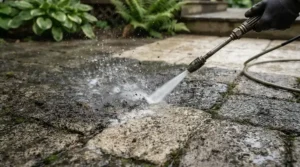
4000 PSI Electric Pressure Washer for Heavy Grime: How Much Pressure Do You Actually Need?
It’s tempting to chase the biggest number available, but according to independent UK testing, domestic 240V electric pressure washers are effectively capped around 170 bar (roughly 2,465 PSI) by the standard 13-amp socket restriction — anything advertised meaningfully above that either needs a 16-amp supply or is stretching the definition of “maximum”. The Wilks-USA RX550i‘s 262 bar rating sits at the genuine top end of what’s realistically achievable domestically.
On paper this means a true 4000 PSI electric pressure washer for heavy grime doesn’t really exist within standard UK domestic wiring — but 3,800 PSI, as the RX550i offers, gets remarkably close and is more than sufficient for baked-on oil, tyre marks and years of embedded dirt on concrete. What most buyers overlook is that flow rate matters as much as peak pressure: a 140-bar machine delivering 550 l/h will often clear a driveway faster than a 180-bar machine delivering only 350 l/h, because flow rate determines how much surface area you cover per minute.
For genuinely heavy grime — think garage floors that have never been cleaned, or driveways stained from years of car maintenance — aim for the 160 bar-plus bracket paired with a dirt blaster or rotary nozzle rather than fixating on PSI alone.
Heavy-Duty Electric Pressure Washer vs a Gas Pressure Washer Under $500 Comparison
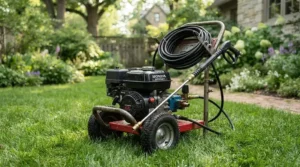
It’s a comparison that comes up constantly, particularly among buyers who’ve seen American forums discussing a gas pressure washer under $500 comparison reference and wondered whether petrol power beats anything mains-powered can offer for concrete work. The honest answer: it depends heavily on what “concrete” actually means for you.
| Factor | Heavy-Duty Electric | Petrol/Gas Equivalent |
|---|---|---|
| Typical pressure ceiling | Up to ~180-262 bar (domestic) | Often 200+ bar, higher continuous output |
| Noise level | Noticeably quieter | Significantly louder, engine noise |
| Maintenance | Minimal, no fuel/oil changes | Requires oil changes, spark plug care |
| Startup reliability | Instant, plug-and-go | Pull-start, can be temperamental |
| Best For | Kärcher K7 Full Control, driveways, patios | Large commercial areas, off-grid sites |
Reading this table, petrol models genuinely outperform electric on sustained industrial-scale jobs — think entire commercial car parks — but for a residential concrete driveway or garage floor, the noise, fuel storage and maintenance burden of a petrol unit rarely justifies the marginal power gain. A machine like the Wilks-USA RX550i closes most of that performance gap while remaining quieter and far simpler to maintain.
✨ Don’t Miss These Exclusive Deals!
🔍 Take your concrete cleaning to the next level with these carefully selected pressure washers. Click on any highlighted item to check current pricing and availability. These tools will help you create a genuinely spotless driveway your neighbours will notice!
How to Choose a Heavy-Duty Electric Pressure Washer for Concrete
- Match flow rate to area size. For driveways over 30 m², prioritise machines like the Kärcher K7 Full Control with 500 l/h-plus flow rather than chasing peak bar pressure alone.
- Check the pump material. Metal or aluminium pumps, as found in the Nilfisk Core 140 and Stanley SXPW22E, outlast plastic equivalents under repeated heavy use.
- Confirm hose length before buying. An 8-metre hose, like on the VonHaus 2200W, avoids repositioning the machine mid-job on longer driveways.
- Look for a thermal relief valve. This single feature protects the motor during accidental idle running with the trigger released.
- Assess included accessories against your actual job. A dirt blaster or rotary nozzle, bundled with the Wilks-USA RX550i, matters far more for concrete than car-focused foam lances.
- Factor in warranty length. A 5-year warranty, as Kärcher offers on select K7 models, meaningfully changes the total cost of ownership calculation.
- Consider storage and weight. At 17 kg, some flagship models are noticeably harder to lift into a shed than an 8-13 kg mid-range unit.
Common Mistakes When Buying a Heavy-Duty Pressure Washer for Concrete
The most common error we see is buyers assuming higher bar pressure automatically means faster, better cleaning — when in reality, as covered above, flow rate frequently matters more for concrete’s flat, wide surface area. A second frequent mistake is ignoring pump material entirely; a plastic-pump machine run for two hours straight on a large driveway is far more likely to overheat than a metal-pump equivalent.
Buyers also regularly underestimate hose and cable length requirements, ending up needing an extension lead they hadn’t budgeted for, or repeatedly dragging the machine across a freshly cleaned area. Finally, several reviewers across multiple models on this list mention purchasing based on price alone and then discovering the bundled accessories don’t include a concrete-appropriate nozzle — something worth checking before, not after, you buy.
What to Expect: Real-World Performance on Concrete
Specs on a box rarely translate directly into lived experience, so here’s what genuinely happens once water meets concrete. A fan-jet nozzle at close range on a 140-180 bar machine will typically strip loose surface dirt, moss and algae within one or two passes, but deeply embedded oil staining almost always requires a dedicated degreaser applied first and left to dwell before rinsing.
Reviewers consistently note that a rotary or “dirt blaster” nozzle concentrates the same water pressure into a smaller, spinning point, dramatically improving results on stubborn concrete stains compared with a standard fan pattern — often cutting cleaning time roughly in half on heavily soiled sections. What the spec sheet won’t tell you is that concrete’s porous surface actually benefits from a slightly wider fan angle on the final pass, since narrow jets can leave visible “tram line” streaking if held too close for too long.
Practical Usage Guide: Setting Up and Maintaining Your Pressure Washer
Getting the most from any of these seven machines starts before the trigger is ever pulled. Connect the machine to a garden tap using a standard non-kink hose, then run water through briefly before attaching the pressure hose to bleed air from the system — skipping this step is a common cause of sputtering on first use.
For the first 30 days, avoid running the pump dry even briefly, as this is the leading cause of premature seal failure across nearly every brand on this list. After each concrete-cleaning session, flush the detergent line with clean water if you’ve used a foam or degreaser attachment, since dried detergent residue is a frequent cause of clogged nozzles months later. Store the machine somewhere frost-free over winter, as residual water expanding in freezing temperatures can crack internal pump components — a mistake that voids warranty claims on several brands.
Garage Floor Cleaning: A Real-World Concrete Case Study
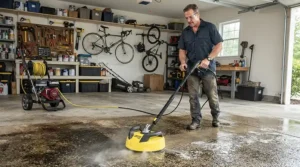
Consider a fairly typical scenario: a homeowner with a single garage, concrete floor untouched for six years, showing a mix of general dust, a couple of small oil patches from an old car, and tyre-mark discolouration near the entrance. This is a genuinely common garage floor cleaning job, and it’s a useful lens for matching machine to task.
For this scenario, a mid-range machine like the Kärcher K5 Power Control Flex or Bosch AdvancedAquatak 140 is comfortably sufficient — the enclosed space means noise matters more than on an open driveway, and 140-145 bar handles general dust and light staining without issue. Apply a concrete-safe degreaser to oil patches first, dwell for the manufacturer’s recommended time, then finish with a rotary nozzle at a 45-degree angle to avoid pushing water toward electrical sockets or stored items along garage walls.
Oil Stain Removal From Concrete: Problem → Solution Guide
Problem 1: Fresh oil stains (under a week old). Absorb excess oil with cat litter or sawdust first, then apply a degreasing detergent through a foam lance before rinsing at 140 bar-plus with a fan nozzle.
Problem 2: Old, set-in oil stains. A single pass rarely works. Apply degreaser, agitate with a stiff brush, dwell 10-15 minutes, then finish with a rotary nozzle like the one bundled with the Wilks-USA RX550i for concentrated spot pressure.
Problem 3: Repeat staining from a leaking vehicle. Cleaning alone won’t solve a recurring problem — fix the mechanical leak first, then treat the stain, or you’ll be repeating this process every few weeks.
Problem 4: Discolouration remaining after cleaning. Some oil penetrates porous concrete permanently. A concrete sealant applied after a thorough clean prevents future staining from soaking in as deeply.
Used engine oil itself must never be tipped down a drain during this process; under UK regulations it’s classified as hazardous waste, and the government’s waste classification guidance confirms it must be handled and disposed of through a registered facility rather than washed into surface drains.
Buyer’s Decision Framework: Which Model Fits You?
If you’re cleaning a small patio or occasional light dirt, choose a budget model like the Stanley SXPW22E or VonHaus 2200W, because the lower running cost and lighter weight outweigh the modest pressure ceiling. If you’re tackling a full driveway with genuine oil staining and years of neglect, choose the Kärcher K7 Full Control or Wilks-USA RX550i, because flow rate and raw pressure both matter at that scale. If you want a dependable middle ground that won’t need replacing in three years, choose the Nilfisk Core 140 or Kärcher K5 Power Control Flex, because pump durability and balanced specs suit regular seasonal use best.
Long-Term Cost & Maintenance: Total Cost of Ownership
The purchase price is only the starting figure — nozzles, hoses and detergent all add up over a machine’s lifespan. Metal-pump machines like the Nilfisk Core 140 typically need fewer seal replacements over five years than plastic-pump budget units, which can partially offset a higher upfront price.
| Model | Typical Price Range | Value Verdict |
|---|---|---|
| Stanley SXPW22E | £90-£130 range | Best entry-level value |
| VonHaus 2200W | £90-£120 range | Strong budget-to-mid pick |
| Nilfisk Core 140 | £150-£190 range | Best long-term durability value |
| Wilks-USA RX550i | Under £200 | Best power-per-pound spent |
| Bosch AdvancedAquatak 140 | £220-£260 range | Solid mid-range, wide accessories |
| Kärcher K5 Power Control Flex | £220-£280 range | Best all-round value |
| Kärcher K7 Full Control | £320-£420 range | Justified by warranty and flow rate |
Looking at this breakdown, the sweet spot for most UK households sits in the £150-£280 bracket, where durability, flow rate and warranty length combine most favourably. Spending beyond that only makes sense once you’re covering genuinely large concrete areas regularly, where the extra flow rate translates into real time saved.
Safety, Regulations & Compliance for Pressure Washing Concrete
Pressure washers operate at forces capable of causing real injury, and UK guidance treats this seriously. The HSE’s guidance on electrical risks from steam and water pressure cleaners specifically addresses installation, maintenance and safe use of exactly this type of equipment, including the electrical hazards posed by water and mains power operating in close proximity.
Always inspect the power cable and plug for damage before each use, never direct the jet at yourself or others, and keep the machine’s electrical connections away from standing water on the concrete surface you’re cleaning. If cleaning shared driveways or communal areas, be mindful that runoff containing detergent or dislodged oil can enter surface drains, so containing and directing wastewater responsibly isn’t just good practice — it avoids potential environmental compliance issues.
Frequently Asked Questions
❓ What PSI do I need to clean a concrete driveway?
❓ Can an electric pressure washer damage concrete?
❓ How much does a heavy-duty electric pressure washer cost in the UK?
❓ Is 2000 PSI enough for concrete?
❓ Do I need permission to pressure wash my driveway in the UK?
Conclusion
Choosing the right heavy-duty electric pressure washer for concrete really comes down to matching flow rate and pump durability to the size and condition of the surface you’re actually cleaning, rather than chasing the highest bar figure on the box. For most UK driveways and garage floors, something in the 140-180 bar range with a metal pump — like the Nilfisk Core 140 or Kärcher K5 Power Control Flex — hits the sweet spot between price and genuine longevity.
If your concrete has years of oil staining and neglect behind it, stepping up to the Kärcher K7 Full Control or the surprisingly affordable Wilks-USA RX550i gets you meaningfully faster results. And if you’re simply testing whether pressure washing is for you before committing serious money, the Stanley SXPW22E or VonHaus 2200W offer a genuinely capable starting point without the flagship price tag.
Whichever you choose, remember that technique — detergent dwell time, correct nozzle angle, and patience on stubborn oil patches — matters just as much as the machine itself.
Recommended for You
- 7 Best Medium-Duty Electric Pressure Washers for Decks (2026)
- Light-Duty Electric Pressure Washer for Patio Furniture: 7 Picks (2026)
- 7 Best Electric Pressure Washer for Driveways Picks in 2026 (Quiet & Powerful)
Disclaimer: This article contains affiliate links. As an Amazon Associate, I earn from qualifying purchases. If you purchase products through these links, we may earn a small commission at no additional cost to you.
✨ Found this helpful? Share it with your friends! 💬🤗
