
In This Article
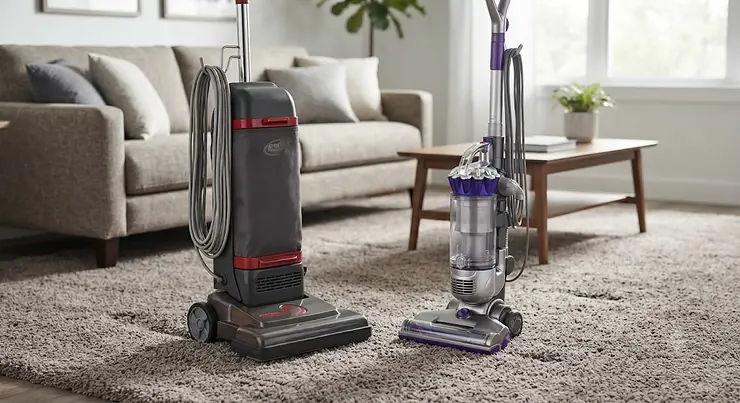
Somewhere between the janitorial closet and the big-box aisle, there’s a genuine fork in the road, and most shoppers never realize they’re standing at it. A commercial vs residential vacuum decision sounds like a simple spec comparison, but it’s really a bet on how hard you’re about to work a machine, and for how many years. Buy the wrong one and you’ll either overpay for firepower your living room never needed, or watch a bargain-bin motor give out three months into a job it was never built for.
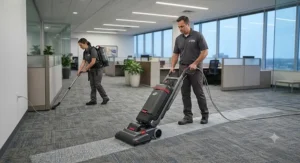
A commercial vacuum is built for daily, multi-hour operation across large or high-traffic spaces — think offices, hotels, gyms, and cleaning businesses — with heavier-duty motors, simplified serviceable parts, and duty cycles rated in hou
rs, not minutes. A residential vacuum, by contrast, is engineered for shorter, intermittent use in a single household, prioritizing quiet operation, lighter weight, and consumer-friendly features like sensors and self-cleaning brushrolls over raw endurance.
Here’s the thing nobody tells you upfront: price is a terrible proxy for the right answer. Some commercial machines cost less than premium residential models and still outlast them by years, while some residential flagships pack more filtration tech than commercial units twice their price. This guide breaks down seven real, currently sold vacuums — a genuine mix of commercial and residential machines across budget, mid-range, and premium tiers — and walks through duty cycle, build quality, warranty terms, and the honest answer to “should I even consider a commercial vacuum for home use?” No fluff, no invented lab coats — just what the spec sheets and aggregated owner feedback actually show.
Quick Comparison Table: Commercial vs Residential Vacuum at a Glance
| Category | Typical Duty Cycle | Typical Weight | Typical Price Range | Best For |
|---|---|---|---|---|
| Commercial vacuum | 4-8+ hours/day, daily use | 8-18 lbs | $150-$650 | Businesses, cleaning crews, high-traffic spaces |
| Residential vacuum | 20-60 min sessions, few times/week | 12-18 lbs | $130-$600 | Single households, mixed flooring, pet hair |
Notice that price ranges genuinely overlap — a budget commercial upright like the Sanitaire SC679K can cost less than a flagship residential model, while a premium commercial backpack like the ProTeam ProForce 1500XP competes dollar-for-dollar with top-tier home vacuums. The real dividing line isn’t the price tag; it’s how the motor, bearings, and belt system are engineered to survive repeated, prolonged runtime. That distinction is exactly what the rest of this guide unpacks, product by product.
💬 Already leaning toward a pick? Scroll down to see current availability before prices shift.
💬 Just one click — help others make better buying decisions too!😊
Top 7 Commercial and Residential Vacuums: Expert Analysis
Below are seven real, currently available vacuums split across commercial and residential categories, spanning budget, mid-range, and premium tiers. Each one gets an honest breakdown of what the specs mean in practice, who it actually suits, and what aggregated owner reviews tend to say — good and bad.
1. ProTeam ProForce 1500XP — commercial dual-motor backpack for large facilities
The ProTeam ProForce 1500XP is the kind of machine that makes a 20,000-square-foot office building feel manageable in a single shift, and that’s really the whole point of a dual-motor backpack design.
Its two-motor configuration separates suction power from the brush/agitation function, which in practice means it doesn’t lose airflow as the bag fills — a common complaint with single-motor uprights toward the end of a long run. It also carries HEPA-level filtration and CRI Seal of Approval-style testing credentials that matter in schools, healthcare, and hospitality settings where indoor air quality gets audited. Based on the spec comparison with the rest of this list, this is squarely a facility-management purchase, not an impulse buy for a studio apartment.
Reviewers consistently report that the harness distributes weight far better than a canister you drag behind you, though a handful of facilities managers note the learning curve for new staff takes a shift or two to get comfortable. What most buyers overlook about this model is that the backpack design also speeds up stairwells and cluttered rooms dramatically compared to any upright, commercial or residential.
Pros:
- ✅ Dual-motor design keeps suction steady as the bag fills
- ✅ HEPA-level filtration suited for schools and healthcare facilities
- ✅ Backpack harness dramatically speeds up stairs and clutter
Cons:
- ❌ Noticeable learning curve for staff unfamiliar with backpack vacuums
- ❌ Overkill and overpriced for single-household residential use
At around $500-$650 depending on the current retailer promotion, the ProTeam ProForce 1500XP earns its premium price if you’re cleaning multiple rooms daily — for a single home, it’s genuinely more machine than you need.
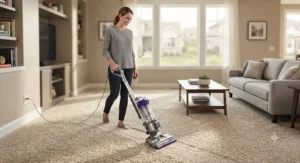
2. Sanitaire SC679K Tradition — commercial budget workhorse with a 500-hour motor
The Sanitaire SC679K Tradition has built its reputation the old-fashioned way: by simply not breaking, which is precisely why it shows up on so many “best commercial vacuum” shortlists year after year.
Its shake-out bag system and roughly 500-hour rated motor life sound modest on paper, but in real-world terms that translates to years of daily commercial use before the motor is the limiting factor rather than the bag or belt. Based on the spec comparison, this is a bare-bones design on purpose — fewer electronic parts means fewer things that can fail under heavy, repeated cycling. Small cleaning businesses and facilities managers gravitate toward it because a $150-ish price point makes a fleet of backup units financially painless.
Aggregated reviewer sentiment consistently praises its reliability and simple belt-and-bag maintenance, while a common complaint centers on the lack of onboard tools or attachments compared to pricier machines — you’re buying floor-cleaning power, not versatility.
Pros:
- ✅ Rated 500-hour motor life built for daily commercial cycling
- ✅ Extremely affordable, ideal for multi-unit fleet purchasing
- ✅ Simple belt-and-bag design keeps maintenance costs low
Cons:
- ❌ Minimal attachments compared to versatile residential models
- ❌ No HEPA sealing, so allergen-sensitive environments should look elsewhere
In the $140-$180 range at the time of research, the Sanitaire SC679K Tradition is arguably the single best value-per-hour-of-runtime pick on this entire list.
3. Oreck Commercial XL — the lightest commercial upright for shared, all-day use
Weighing in around 9 pounds, the Oreck Commercial XL solves a problem that heavier commercial machines create: staff fatigue during back-to-back shifts.
Its lightweight aluminum construction and simplified upright design mean multiple staff members — a hotel housekeeping team, say — can hand it off between rooms without anyone dreading the next floor. Based on the spec comparison, the tradeoff is a narrower cleaning path and less aggressive deep-carpet agitation than the bulkier commercial uprights on this list, which reviewers note makes it better suited to low-pile carpet and hard floors than thick residential-style plush. What most buyers overlook is that its simplicity is a durability feature in disguise — fewer moving parts age better under constant handoffs between different users.
Reviewers consistently highlight its maneuverability in tight hallways and under furniture, while a recurring critique is that it struggles on high-pile carpet compared to dual-motor alternatives.
Pros:
- ✅ Only about 9 pounds — easiest handoff between shared-use staff
- ✅ Excellent maneuverability in hallways and under furniture
- ✅ Simple design reduces long-term mechanical failure points
Cons:
- ❌ Underperforms on thick, high-pile carpet versus dual-motor rivals
- ❌ Narrower cleaning path means more passes for large open floors
Priced around $300-$400, the Oreck Commercial XL is the pick for businesses prioritizing staff ergonomics over raw carpet-deep-cleaning power.
4. Hoover Commercial HushTone CH54115 — CSA-certified and built for noise-sensitive spaces
Offices and retail stores that need cleaning during business hours have one non-negotiable requirement most vacuums ignore completely: noise. The Hoover Commercial HushTone CH54115 was engineered specifically around that gap.
Operating at roughly 69 decibels — noticeably quieter than most commercial uprights — it allows daytime cleaning without disrupting phone calls or customer conversations, and its IntelliBelt system automatically adjusts belt tension to extend service life and cut maintenance costs. Based on the spec comparison, the CSA certification signals it meets recognized health and safety benchmarks that facility managers in regulated industries are often required to document. Here’s what to weigh: the quiet motor trades some raw suction ceiling for that noise reduction, so it’s a better fit for offices and retail than industrial-grade carpet extraction.
Aggregated reviews consistently praise the quiet operation as a genuine differentiator, while some commercial users note the automatic belt adjustment occasionally needs manual recalibration after very heavy debris pickup.
Pros:
- ✅ Roughly 69 dB operation enables cleaning during business hours
- ✅ IntelliBelt auto-adjusts tension, extending belt and motor life
- ✅ CSA-certified for health-and-safety compliant facilities
Cons:
- ❌ Suction ceiling slightly lower than louder commercial rivals
- ❌ Belt system occasionally needs manual recalibration after heavy debris
In the $400-$500 range, the Hoover Commercial HushTone CH54115 earns its premium in any environment where silence during the workday is worth more than maximum raw power.
5. Dyson Ball Animal 2 — residential premium with genuine deep-carpet performance
Every “best upright” list eventually lands on a Dyson, and the Dyson Ball Animal 2 earns its spot through consistent lab and owner-reported performance on the two surfaces that matter most in a home: carpet and pet hair.
At about 17 pounds, its ball-steering chassis pivots around obstacles instead of forcing you to muscle it, and independent testing has repeatedly rated its carpet-cleaning and bare-floor performance as excellent while keeping emissions clean thanks to sealed filtration. Based on the spec comparison, this is where residential engineering philosophy shows its strength — the whole design is optimized for cleaning one home thoroughly rather than surviving eight hours of daily commercial cycling. Reviewers consistently note it aces pet-hair pickup, which is precisely the use case its residential-focused engineering was built around.
A recurring critique in aggregated feedback is that emptying the bin can stir up dust despite the sealed system, and at 17 pounds some owners find it heavier to carry up stairs than lighter competitors.
Pros:
- ✅ Excellent, independently-tested carpet and bare-floor performance
- ✅ Ball-steering chassis pivots easily around furniture and corners
- ✅ Sealed filtration keeps emissions genuinely low during use
Cons:
- ❌ Emptying the bin can stir up dust despite sealed design
- ❌ Heavier than lighter residential alternatives for stair-heavy homes
At around $400-$550 depending on bundled attachments, the Dyson Ball Animal 2 remains one of the strongest all-around residential picks for households prioritizing carpet performance over commercial-grade endurance.
6. Shark PowerDetect — sensor-driven residential upright with adaptive power
The Shark PowerDetect takes a genuinely different approach to the commercial vs residential vacuum divide: instead of chasing raw duty-cycle hours, it chases smarter, shorter cleaning sessions.
Its onboard sensors detect debris density and automatically ramp suction power up or down, while a self-cleaning brushroll and HEPA filtration round out a spec sheet built entirely around single-household convenience rather than facility-scale endurance. Based on the spec comparison, the roughly 1,416-watt motor and 1.9-liter bin capacity are tuned for typical home square footage, not the back-to-back rooms a commercial crew tackles daily. What most buyers overlook is that the self-cleaning brushroll materially cuts the “hair-wrapped-around-the-roller” maintenance chore that eats up time on every other upright on this list.
Aggregated owner sentiment consistently praises the sensor-driven power adjustment and headlight visibility in dim areas, while a recurring theme is that the multi-tool attachments, while useful, add noticeable bulk to storage compared to simpler commercial designs.
Pros:
- ✅ Sensors auto-adjust suction based on real-time debris detection
- ✅ Self-cleaning brushroll cuts hair-tangle maintenance significantly
- ✅ HEPA filtration with genuinely bright LED headlights for dim areas
Cons:
- ❌ Attachment bulk makes storage less compact than simpler models
- ❌ Not rated or intended for daily multi-hour commercial cycling
Typically priced in the $400-$500 range, the Shark PowerDetect is the strongest pick here for households that want smart, adaptive cleaning without commercial-grade bulk.
7. Kenmore FeatherLite Lift-Up — the residential budget pick that still deep-cleans carpet
Budget residential vacuums have a well-earned reputation for surface-only pickup, which is exactly why the Kenmore FeatherLite Lift-Up stands out on this list — independent testing has specifically flagged its ability to deliver real carpet deep-cleaning, not just cosmetic pickup, at a genuinely accessible price.
Its roughly 700-watt corded motor, 10-inch cleaning path, and lightweight lift-up body make it approachable for smaller homes or apartments, and the included Pet TurboBrush and crevice tool cover the basics most single-household buyers actually need. Based on the spec comparison, it can’t match the dual-motor commercial machines on raw runtime, but that was never its job — it’s built for a 20-30 minute weekly clean, not an 8-hour shift. Here’s what to weigh: the 25-foot cord and 1-liter dirt tank mean more frequent emptying and outlet-hopping in larger homes.
Reviewers consistently describe it as surprisingly capable for its price bracket on both carpets and bare floors, while a common critique is the smaller dirt tank requiring more frequent stops during a full-house clean.
Pros:
- ✅ Independently tested for genuine carpet deep-cleaning, not just surface pickup
- ✅ Lightweight, lift-up body ideal for smaller homes and apartments
- ✅ Budget-friendly price with included pet and crevice tools
Cons:
- ❌ Smaller 1-liter dirt tank means more frequent emptying
- ❌ 25-foot cord can mean outlet-hopping in larger homes
At around $130-$180, the Kenmore FeatherLite Lift-Up is the clearest proof that “residential budget” doesn’t have to mean “weak cleaner” — just don’t expect commercial-grade stamina from it.
Practical Usage Guide: Getting the Full Duty Cycle Out of Any Vacuum
Whichever side of the commercial vs residential vacuum line you land on, the first 30 days of ownership quietly determine how long the motor actually lasts. Start by fully seating the bag or bin before first use — a surprising number of early “weak suction” complaints trace back to a bag that wasn’t clicked into its collar properly, starving the motor of airflow and causing it to run hotter than it should.
For commercial machines like the Sanitaire SC679K Tradition or ProTeam ProForce 1500XP, build a simple maintenance rhythm: check and clean the belt every 40-50 operating hours, and swap filters on a calendar schedule rather than waiting for visible clogging, since airflow restriction is what actually shortens motor life, not visible dust buildup. For residential picks like the Dyson Ball Animal 2 or Shark PowerDetect, the equivalent habit is emptying the bin at the “half full” mark rather than waiting for max-fill, since overpacked bins force the motor to work harder per pass and generate more heat.
A mistake nearly everyone makes in the first month: vacuuming small hard debris (screws, pebbles, pet toy fragments) at full power, which is the single most common cause of belt and brushroll damage across every model on this list, commercial or residential. Do a quick visual floor scan before big cleaning sessions, especially in workshop or garage-adjacent rooms.
Real-World Scenarios: Matching the Vacuum to the Life You Actually Live
The small cleaning business owner. You’re running two to three staff across five to eight residential or small-commercial jobs a day, five days a week. The Sanitaire SC679K Tradition makes financial sense as your primary fleet vacuum precisely because its low price lets you keep a spare on hand without denting margins, while its 500-hour motor rating comfortably covers years of daily rotation.
The office manager in a shared workspace. Cleaning has to happen during business hours without disturbing calls or meetings. The Hoover Commercial HushTone CH54115 was essentially built for this exact scenario — its ~69 dB profile and CSA certification check both the noise and compliance boxes that a louder commercial machine would fail on day one.
The pet-owning family in a single-family home. Two dogs, mixed hardwood and carpet, and a 20-30 minute cleaning window most days. This is squarely residential territory — either the Dyson Ball Animal 2 for maximum deep-carpet and pet-hair performance, or the Shark PowerDetect if adaptive sensor-driven power and easier brushroll maintenance matter more than absolute suction ceiling.
The budget-conscious renter in a small apartment. Limited storage, a single floor, and an occasional deep clean rather than daily upkeep. The Kenmore FeatherLite Lift-Up covers this use case affordably without sacrificing real carpet performance, which independent testing has specifically verified for this exact price bracket.
Buyer’s Decision Framework: A Simple Priority Checklist
If daily, multi-hour use across a facility is your reality, choose a commercial vacuum, because duty-cycle-rated motors and simplified serviceable parts are engineered specifically for that punishment — residential motors weren’t designed to survive it and will fail faster under that load.
If quiet operation during business hours matters as much as cleaning power, choose a noise-optimized commercial model like the Hoover Commercial HushTone CH54115 rather than a louder, cheaper alternative, because the productivity and workplace-comfort cost of a loud machine often outweighs the price difference.
If your cleaning sessions are short, occasional, and confined to one household, choose a residential vacuum, because you’ll gain sensor tech, self-cleaning brushrolls, and lighter weight that commercial machines typically skip in favor of raw endurance.
If budget is the binding constraint on either side, prioritize motor-life ratings and shake-out-bag simplicity (commercial) or independently verified deep-clean scores (residential) over attachment count, since attachments rarely determine how long a vacuum actually lasts.
What Is a Commercial Vacuum vs a Residential Vacuum?
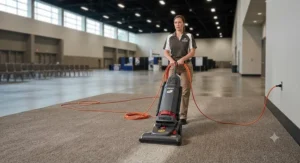
A commercial vacuum is a vacuum engineered for daily, multi-hour operation in businesses and facilities, featuring duty-cycle-rated motors, simplified serviceable parts, and certifications like CRI Seal of Approval or CSA compliance. A residential vacuum is engineered for shorter, intermittent single-household use, prioritizing quiet operation, lighter weight, and consumer convenience features.
The dividing line isn’t cosmetic — it shows up in how each machine is rated and tested. The Carpet and Rug Institute’s Seal of Approval program independently tests vacuums for soil removal, dust containment, and surface-appearance change, and critically, rates vacuums separately across household and commercial categories precisely because the performance bar differs by use case. A vacuum that passes commercial-category testing is being held to a tougher, more repetitive-use standard than one certified only for household use — which is a useful, verifiable signal when you’re comparing spec sheets rather than marketing copy.
How to Choose Between a Commercial and Residential Vacuum
- Estimate your real weekly runtime. If you’re running a vacuum more than 5-10 hours a week across multiple rooms or locations, commercial-grade duty cycling starts paying for itself in avoided motor replacements.
- Check the certification, not just the marketing claim. Look for CRI Seal of Approval household vs. commercial category listings, or CSA/UL certification, rather than taking “commercial-grade” language at face value.
- Weigh noise tolerance against your environment. An 80+ decibel commercial upright is a non-issue in an empty warehouse at night and a genuine problem in a daytime retail floor.
- Match weight to who’s actually carrying it. A 9-pound Oreck-style upright suits shared, multi-staff handoffs; an 18-pound backpack suits a single dedicated operator covering a large facility solo.
- Price the total cost of ownership, not the sticker price. A $150 commercial upright with a 500-hour motor can out-value a $400 residential vacuum if your usage hours are high enough.
- Decide how much you value smart features. Sensor-adjusted suction and self-cleaning brushrolls are almost exclusively a residential-tier feature set; commercial buyers usually trade them for simplicity and serviceability.
- Confirm warranty terms explicitly cover your intended use, since some manufacturers void residential warranties the moment a machine is used commercially — a detail buried in the fine print that trips up more small-business owners than any other factor on this list.
Duty Cycle Differences: How Long Can Each Vacuum Actually Run?
Duty cycle is the single most misunderstood spec in this whole category, and it’s the real technical backbone of the commercial vs residential vacuum divide. In plain terms, duty cycle describes how long a motor can run continuously before heat buildup starts degrading performance or shortening its lifespan — and it’s rated completely differently across the two categories.
| Vacuum | Rated/Typical Duty Cycle | Motor Life Rating | Best For |
|---|---|---|---|
| ProTeam ProForce 1500XP | 4-8 hours continuous, daily | Commercial-grade dual motor | Large facilities, daily multi-room use |
| Sanitaire SC679K Tradition | Multi-hour daily cycling | ~500 hours rated | Cleaning businesses, budget fleets |
| Hoover Commercial HushTone CH54115 | 4-6 hours, daytime-safe | IntelliBelt-extended life | Offices, noise-sensitive facilities |
| Dyson Ball Animal 2 | 20-45 min sessions | Consumer-grade, not hour-rated | Single households, mixed flooring |
| Kenmore FeatherLite Lift-Up | 20-30 min sessions | Consumer-grade, not hour-rated | Apartments, light-duty weekly cleans |
Looking at the table above, the gap isn’t really about peak suction — it’s about sustained suction over hours, which residential motors simply aren’t built or rated to sustain. The ProTeam ProForce 1500XP and Sanitaire SC679K Tradition are explicitly engineered around continuous, high-heat operation, while the Dyson Ball Animal 2 and Kenmore FeatherLite Lift-Up are optimized for short bursts followed by hours of cooldown, which is exactly how a household actually uses a vacuum. Running a residential motor on a commercial schedule is the single fastest way to void a warranty and burn out a motor years ahead of schedule.
✨ Compare Current Duty-Cycle-Rated Models
🔍 Ready to match your actual runtime needs to the right machine? Check current availability and pricing on the picks above before making your call — commercial-grade stock and pricing shift fast.
Build Quality Comparison: What’s Really Inside the Motor and Housing
Pop the housing off a commercial vacuum and a residential one side by side, and the build-quality gap becomes obvious fast — it’s not about which one “feels” more solid, it’s about specific engineering choices that trade cost for longevity.
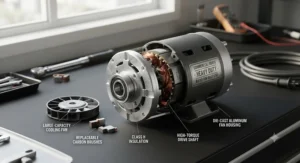
Commercial machines like the Sanitaire SC679K Tradition typically use metal fan housings, sealed ball bearings instead of cheaper bushings, and brush motors rated for continuous-duty operation with better heat dissipation. Reviewers consistently note that this shows up practically as fewer belt failures and less bearing whine after heavy use compared to lighter-duty designs. Residential machines like the Shark PowerDetect and Dyson Ball Animal 2, by contrast, invest that same budget into sensor arrays, self-cleaning brushrolls, and sealed HEPA filtration — genuinely valuable for a household, but built around intermittent rather than continuous operation.
What most buyers overlook is that plastic housing isn’t automatically a red flag — several premium residential models use reinforced polymer specifically because it’s lighter without sacrificing the shorter-duty-cycle durability those machines actually need. The real tell is bearing type and motor duty rating, not housing material alone; a metal-bodied vacuum with cheap bushings can still fail faster than a well-engineered plastic-bodied one.
Noise and heat tolerance also factor into build quality, and it’s worth noting that OSHA requires hearing conservation programs once workplace noise exposure hits 85 decibels as an 8-hour time-weighted average, which is precisely why manufacturers like Hoover engineer dedicated low-noise commercial lines rather than simply throttling down a standard commercial motor — throttling would sacrifice the sustained suction the duty cycle depends on.
Residential vs Commercial Durability: Real-World Lifespan Expectations
Durability numbers get thrown around loosely in vacuum marketing, so it’s worth separating verified testing from assumption. Independent lab testing that evaluates dozens of vacuums annually across categories consistently benchmarks stamina, agility, and cleaning speed — and the pattern that emerges favors commercial machines for sheer longevity under heavy use, while residential machines often win on per-session cleaning performance.
A well-maintained commercial upright like the Sanitaire SC679K Tradition, run daily in a small cleaning business, commonly reaches 3-5 years of service before major component replacement — and because its parts are standardized and widely stocked, a worn belt or motor brush is a $10-20 fix rather than a replace-the-whole-unit situation. A premium residential vacuum like the Dyson Ball Animal 2, used a few times weekly in a single household, often lasts a comparable 5-7 years simply because its total lifetime runtime hours are so much lower, even though its motor wasn’t engineered for continuous-duty cycling.
Here’s what to weigh: durability isn’t a single number, it’s runtime-hours divided by the motor’s duty-cycle rating. A residential vacuum run at commercial frequency will fail dramatically faster than its rated household lifespan suggests, while a commercial vacuum used lightly in a home will likely outlast its owner’s patience for its size and weight long before the motor gives out.
Commercial Vacuum for Home Use: Does It Actually Make Sense?
This is one of the most searched questions in the category, and the honest answer is: sometimes, but less often than shoppers assume. A commercial vacuum for home use makes genuine sense in a few specific situations — a large multi-story house with heavy foot traffic and pets, a home business running a daily cleaning operation out of a garage or workshop, or simply an owner who values the standardized, easily replaceable parts a commercial design offers.
Where it stops making sense is weight and storage. The ProTeam ProForce 1500XP, at roughly 18 pounds with a backpack harness, is genuinely awkward for someone who just wants to run it around a three-bedroom house twice a week — the setup and harness-adjustment overhead alone eats into the time savings a lighter residential upright would offer. Noise is the other overlooked factor: many commercial motors run louder than residential ones by design, since sustained suction over hours was prioritized over quiet operation, which becomes a real household annoyance rather than a facility non-issue.
Based on the spec comparison across this list, if you’re drawn to a commercial vacuum for home use purely for durability, a smart middle path is a budget commercial upright like the Sanitaire SC679K Tradition rather than a premium backpack unit — you get the duty-cycle-rated motor without the bulk, harness, or facility-scale noise profile.
Warranty and Support: What Happens When Something Breaks
Warranty terms are where the commercial vs residential vacuum distinction gets legally real, and it’s the single most common area where buyers get an unpleasant surprise. Residential vacuums typically carry longer consumer-facing warranties — often 5 years on flagship models — but many of those warranties explicitly exclude commercial use entirely, meaning running a residential vacuum in any paid cleaning capacity voids coverage the moment a claim is filed, regardless of how light that “commercial use” actually was.
| Vacuum | Typical Warranty | Commercial-Use Coverage |
|---|---|---|
| ProTeam ProForce 1500XP | 1-2 years commercial | Fully covered for commercial use |
| Sanitaire SC679K Tradition | 1-2 years commercial | Fully covered for commercial use |
| Dyson Ball Animal 2 | Multi-year residential | Typically excluded/voided |
| Shark PowerDetect | Multi-year residential | Typically excluded/voided |
Looking at the table above, the practical takeaway is straightforward: commercial warranties are shorter but explicitly built to survive a claim being filed after real commercial wear, while residential warranties are longer on paper but conditional on the use case matching how the product was marketed. If you’re even considering a commercial vacuum for home use as a side hustle, or a residential vacuum for a small side cleaning gig, read the warranty’s use-case clause before you buy, not after the motor fails.
Parts availability matters just as much as the warranty term itself. Specialized commercial suppliers stock genuine OEM filters, belts, bags, and accessories that keep equipment running at peak performance for years, and buying from a dedicated commercial equipment supplier rather than a general retailer often means faster access to those replacement parts when something eventually wears out.
Should I Buy a Commercial Vacuum? A Straight Answer
If you’re asking “should I buy a commercial vacuum” because you’re running a cleaning business, managing a facility, or vacuuming more than a few hours weekly across multiple spaces, the answer is yes — the duty-cycle math and total-cost-of-ownership numbers favor commercial machines clearly once usage crosses that threshold.
If you’re asking because a commercial vacuum simply seems more durable in the abstract, and your actual usage is a single household a few times a week, the honest answer is probably not — a well-reviewed residential vacuum like the Dyson Ball Animal 2 or Kenmore FeatherLite Lift-Up will outlast your realistic usage pattern, cost less upfront, weigh less, and run quieter, without you ever brushing against the duty-cycle ceiling a commercial machine is solving for.
The one exception worth flagging: if you specifically want the standardized, cheaply-replaceable parts ecosystem that commercial machines offer — a genuine long-term maintenance-cost advantage — a budget commercial upright like the Sanitaire SC679K Tradition is a defensible residential choice even without heavy usage, provided the extra weight and lower feature count don’t bother you.
Common Mistakes When Buying a Commercial or Residential Vacuum
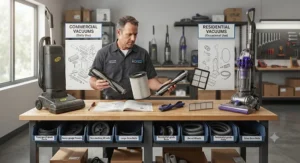
The most expensive mistake is buying based on horsepower or wattage claims alone, without checking duty-cycle rating or certification — a high-wattage residential motor run on a commercial schedule will still fail early, regardless of its peak power number. A close second is ignoring warranty use-case exclusions, which is how small cleaning-business owners end up with a voided warranty on a machine they assumed was covered.
Buyers also frequently underweight weight and ergonomics, picking a powerful commercial backpack for home use and then abandoning it in a closet because the harness setup feels like overkill for a quick weekly clean. On the flip side, some cleaning businesses buy a residential flagship because it scored well in consumer testing, without realizing that score reflected household-frequency use, not eight-hour daily cycling.
Finally, many shoppers skip verifying real certifications — CRI Seal of Approval household vs. commercial category, or CSA/UL listings — and instead trust marketing language like “commercial-grade” printed on a residential-tier product, which isn’t a regulated or independently verified claim in the same way an actual certification is.
Frequently Asked Questions
❓ What is the main difference between commercial and residential vacuums?
❓ Can I use a commercial vacuum for home use?
❓ Do commercial vacuums last longer than residential ones?
❓ Does using a residential vacuum for cleaning jobs void the warranty?
❓ Are commercial vacuums always more expensive than residential ones?
Conclusion
The commercial vs residential vacuum question was never really about which machine is objectively “better” — it’s about matching a motor’s duty-cycle rating to how many hours you’re actually going to run it. A cleaning business or facility manager pushing multi-hour daily sessions across large spaces has real, measurable reasons to lean commercial: standardized parts, tougher certifications, and motors engineered to survive continuous heat buildup that would shorten a residential motor’s life dramatically faster.
A household running a vacuum a few times a week, even a large or pet-heavy one, is usually better served by a well-reviewed residential pick — you’ll get quieter operation, smart features like sensor-adjusted suction, and a lighter machine that was never fighting against a duty cycle it wasn’t designed to hit in the first place. The seven machines covered here — from the budget-friendly Sanitaire SC679K Tradition to the sensor-driven Shark PowerDetect — cover genuine options across both categories and every price tier in between.
Whichever side of the line your usage actually falls on, the buying mistake to avoid is letting price or peak-suction marketing decide for you. Check the duty-cycle rating, confirm the warranty covers your intended use, and buy accordingly.
✨ Don’t Miss These Exclusive Deals!
🔍 Take your cleaning routine to the next level with these carefully selected commercial and residential vacuums. any highlighted model above to check current pricing and avClick on ailability before it changes — the right match for your space is one click away!
Recommended for You
- Hepa Vs Non Hepa Vacuum: 7 Picks That Settle the Debate (2026)
- Bagged vs Bagless Vacuum Pros and Cons: 7 Top Picks for 2026
- Corded vs Cordless Vacuum: 7 Top Picks Ranked for 2026
Disclaimer: This article contains affiliate links. As an Amazon Associate, I earn from qualifying purchases. If you purchase products through these links, we may earn a small commission at no additional cost to you.
✨ Found this helpful? Share it with your friends! 💬🤗
