
In This Article
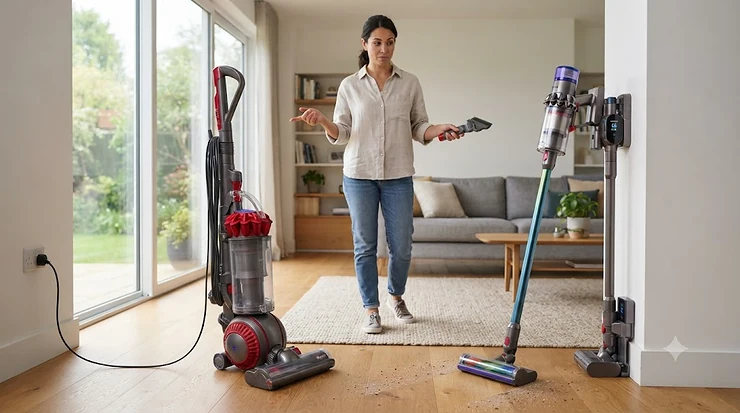
Standing in the vacuum aisle with two very different machines staring back at you is its own special kind of decision fatigue. On one side: a corded vacuum, tethered to the wall but never running out of steam mid-clean. On the other: a cordless vacuum, free to roam but quietly counting down its battery the whole time. The corded vs cordless vacuum debate isn’t really about which category is “better” in some abstract sense — it’s about which trade-off fits your house, your knees, your patience level on a Tuesday night when the cereal just hit the floor.
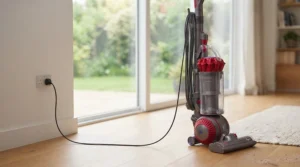
So, what is corded vs cordless vacuum, exactly? A corded vacuum plugs into a wall outlet and draws continuous AC power for unlimited runtime and typically stronger suction, while a cordless vacuum runs on a rechargeable battery pack for freedom of movement but with a fixed cleaning window before it needs to recharge.
This guide breaks the corded vs cordless vacuum decision down using real specs, honest analysis, and seven actual products spanning budget to premium, so you can stop guessing and start cleaning. For a broader look at how these machines evolved, the Wikipedia entry on vacuum cleaners is a solid primer on the underlying technology. We’ll walk through a quick comparison, deep-dive into seven real machines, and then get tactical with buying frameworks and troubleshooting advice you won’t find on a product listing page.
Quick Comparison Table
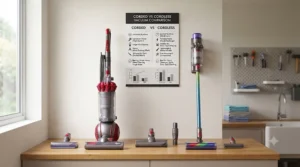
Before we get into the weeds, here’s the bird’s-eye view. This table distills the corded vs cordless vacuum question into the factors that actually decide most purchases: power consistency, runtime, weight, and upkeep.
| Factor | Corded Vacuum | Cordless Vacuum | Best For |
|---|---|---|---|
| Runtime | Unlimited (plugged in) | 25-100 minutes per charge | Corded: large homes; Cordless: quick daily tidying |
| Suction Consistency | Steady, full power throughout | Tapers as battery drains | Corded wins for deep carpet cleaning |
| Maneuverability | Limited by cord length/outlets | Full freedom, no tripping hazards | Cordless for stairs, cars, multi-room homes |
| Weight | 8-22 lbs (canister vs upright) | 4-17 lbs, often top-heavy | Cordless for quick above-floor jobs |
| Upfront Cost | Around $70 to $1,000+ | Around $250 to $800+ | Corded generally cheaper at entry level |
Looking at this table, a pattern emerges fast: corded machines dominate on raw, unwavering power and long-term value, while cordless models win on convenience and speed of use for smaller jobs. Neither column is “wrong” — the right pick really does hinge on square footage, flooring type, and how much patience you have for recharging breaks mid-clean.
Found this comparison useful? Tap the share icon below and help a friend skip the guesswork!
💬 Just one click — help other golfers find the right club for their game too!😊
Top 7 Corded and Cordless Vacuums: Expert Analysis
We researched real, currently available models across both categories — canisters, uprights, and stick vacuums — to cover every budget tier. Each pick below includes honest, spec-grounded commentary, not recycled marketing copy.
1. Eureka Whirlwind NEN110A — best budget corded canister
The Eureka Whirlwind NEN110A proves you don’t need to spend big to get decent corded suction. At 1800 watts and roughly 8 amps, this bagless canister punches above its weight class for a machine that typically sells in the double digits. Its 9-foot hose plus a rewinding power cord give you enough reach for a small apartment or condo without constantly hunting for outlets, and at 8.2 pounds it’s one of the lighter canisters on the market. Based on the spec comparison, this is a machine built for renters and first apartments rather than sprawling multi-room houses — the shorter reach and modest 2.5-liter bin mean more frequent stops on bigger jobs. Reviewers consistently note that the swivel steering and snap-fit accessories make it easy to switch between the crevice tool and dusting brush without fuss, and the automatic cord rewind gets singled out as a genuine time-saver compared to hand-wrapping a cord after every use. What most buyers overlook about this model is that its bagless design, while convenient, requires you to empty the bin over a trash can carefully to avoid a dust cloud — a small trade-off for skipping recurring bag costs entirely.
Pros:
- ✅ Very low entry price for genuine corded suction
- ✅ Lightweight at 8.2 lbs for easy carrying
- ✅ Automatic cord rewind saves setup time
Cons:
- ❌ Shorter 9-ft hose limits whole-room reach
- ❌ Small 2.5L bin needs frequent emptying
At a price typically in the $70-$100 range, the Eureka Whirlwind NEN110A is hard to beat as a no-frills second vacuum or starter machine, though buyers with larger homes should expect to empty and reposition it more often.

2. Kenmore BU1018 Elite Pet Friendly — best all-around corded upright
The Kenmore BU1018 Elite upright brings genuine three-motor muscle to a segment often dominated by single-motor machines. Its inducer motor system is rated to deliver roughly 20% more airflow than a conventional upright motor, and paired with a 30-foot cord and 10-foot telescoping wand, it covers a lot of ground before you need to switch outlets. On paper this means fewer interruptions during a whole-house clean, which matters if your home has multiple bedrooms on one circuit. Aggregated review sentiment consistently praises the suction strength for pet hair and embedded carpet dirt — several owners with multiple dogs specifically call out how thoroughly it clears carpet fibers compared to previous vacuums they owned. The trade-off, and reviewers are candid about this, is weight and maneuverability: at 21 pounds with a bulky head, it doesn’t glide under low furniture the way a stick vacuum would, and the strong suction can make the hose feel stiff to extend. Here’s what to weigh: if your home is mostly open-plan with wall-to-wall carpet and shedding pets, the Kenmore BU1018 Elite rewards you with serious cleaning power; if you’ve got tight, cluttered rooms, its bulk becomes a real daily annoyance.
Pros:
- ✅ Three-motor system with 20% more airflow
- ✅ 30-ft cord plus 10-ft wand for long reach
- ✅ Triple HEPA filtration traps 99.97% of debris
Cons:
- ❌ Heavy at 21 lbs, tiring on stairs
- ❌ Bulky head struggles in tight spaces
Priced generally in the $250-$370 range, the Kenmore BU1018 Elite is the corded upright to beat for pet owners who prioritize suction over agility.
3. Miele Compact C2 Electro+ — best compact corded canister for mixed flooring
German engineering shows up in the small details on the Miele Compact C2 Electro+. Its 1,200-watt Miele-made motor pairs with a 6-stage rotary suction dial, letting you dial down power for curtains and delicate rugs and crank it back up for embedded carpet grit. What most buyers overlook about this model is the gentle-start motor — it ramps power gradually instead of surging, which protects both the electrical circuit and the motor’s long-term lifespan, a detail that matters if you’re running it on an older home’s wiring. The Electro+ variant includes an electrically-driven 14-inch brushbar for medium-to-high pile carpet plus a separate Parquet floorhead for hardwood, so you’re not compromising on either surface type. Reviewers consistently describe the unit as remarkably quiet on its low setting and note the compact storage system as a genuine space-saver compared to bulkier American-style canisters. Based on the spec comparison, the sealed AirClean bag system and HEPA filter combination make this a strong pick for allergy-conscious households, since bagged systems avoid the dust plume that comes with emptying a bagless bin.
Pros:
- ✅ 6-stage suction control adapts to any surface
- ✅ Sealed bag system reduces allergen exposure
- ✅ Compact, quiet operation even at full power
Cons:
- ❌ Premium price relative to bagless competitors
- ❌ Ongoing cost of replacement FilterBags
Typically found in the $500-$700 range depending on retailer bundle, the Miele Compact C2 Electro+ suits buyers who want European build quality and are willing to pay for it.
4. SEBO Airbelt D4 Premium — best premium corded canister for whole-home cleaning
If unlimited reach is your top priority in the corded vs cordless vacuum debate, the SEBO Airbelt D4 Premium answers with a genuinely absurd 40-foot power cord and a 52-foot total cleaning radius once you factor in the hose and wand. That means entire floors of a house get cleaned from a single outlet — a meaningful advantage over machines that force you to hunt for a new plug every other room. The bundled ET-1 power head is commercial-grade, with four-level manual brush height adjustment and 180-degree steering that reviewers repeatedly single out as unusually smooth for a canister this size. Aggregated owner ratings (an average in the high-80s out of 100 across multiple review aggregators) consistently cite strong suction, quiet operation near 63-75 dB, and standout pet hair removal as the machine’s core strengths. The recurring complaint, and it’s a fair one, involves the canister occasionally getting stuck against its own cord on bare floors, requiring a manual nudge. Here’s what to weigh: for large or multi-story homes where outlet-hopping is the real enemy of a fast clean, the extended reach alone can justify the premium price tag.
Pros:
- ✅ 52-ft cleaning radius from one outlet
- ✅ S-Class hospital-grade filtration for allergies
- ✅ Commercial ET-1 power head with 180° steering
Cons:
- ❌ Premium price north of $900
- ❌ Canister can snag on its own cord on hard floors
At a price generally north of $900, the SEBO Airbelt D4 Premium is a long-term investment aimed at buyers who want a machine engineered to outlast several cordless battery replacement cycles.
5. Tineco Pure ONE Station 5 — best value cordless vacuum with self-emptying base
The Tineco Pure ONE Station 5 targets the exact anxiety most cordless buyers have: babysitting a dustbin. Its self-cleaning station auto-empties the 2.5-liter dustbin and runs a full-path clean of the brush, tube, and filter every time you dock it, which on paper means you can go weeks without touching the dirty parts by hand. Rated for up to 70 minutes of runtime and 175 watts of suction, it’s positioned as an everyday, whole-home cordless option rather than a quick-grab stick vacuum. Reviewers consistently praise the green laser-style headlight for revealing hidden dust that’s invisible under normal lighting, and multiple owners specifically mention that the ZeroTangle brush cuts down on the hair-wrapping maintenance that plagues cheaper cordless models. What most buyers overlook about self-emptying stations in general is the noise spike during the auto-empty cycle — several Tineco owners note it’s noticeably louder for those few seconds than the vacuum itself during normal use. Based on the spec comparison against pricier rivals, the Station 5 delivers most of the self-cleaning convenience of flagship machines at a meaningfully lower price point.
Pros:
- ✅ Auto-empty station eliminates daily dustbin handling
- ✅ ZeroTangle brush reduces hair-wrap maintenance
- ✅ Up to 70 minutes of runtime for whole-home cleaning
Cons:
- ❌ Auto-empty cycle produces a loud noise burst
- ❌ Lower suction wattage than flagship rivals
Generally priced in the $350-$480 range, the Tineco Pure ONE Station 5 is the cordless pick for buyers who want self-cleaning convenience without flagship pricing.

6. Shark PowerDetect Cordless Stick Vacuum — best cordless for pet hair and mixed floors
Shark’s dirt-sensing intelligence takes center stage on the Shark PowerDetect Cordless Stick Vacuum. Its DuoClean Detect nozzle runs dual brushrolls that pick up debris in both the forward and reverse strokes, tackling the classic stick-vacuum problem of pushing larger debris backward instead of capturing it. Four onboard sensors — for hidden dirt, edges, floor type, and cleaning direction — automatically boost suction when they detect a mess, which in practice means you’re not manually toggling power modes mid-clean. Independent lab testing found the PowerDetect posts some of the highest sealed-suction numbers seen from a Shark cordless model, though real-world battery testing suggests the auto-adjusting “detect” mode averages closer to 30-40 minutes rather than the full 70-minute ECO-mode figure on the box — an important distinction reviewers flag for larger homes. Owners consistently highlight the detachable battery and MultiFLEX wand, which bends to reach under furniture and folds flat for storage, as genuinely useful day-to-day conveniences rather than gimmicks.
Pros:
- ✅ Dual-direction brushroll captures more debris
- ✅ Four sensors auto-boost power on contact with dirt
- ✅ MultiFLEX wand bends under furniture, folds for storage
Cons:
- ❌ Real-world runtime on Boost mode falls short of ECO claims
- ❌ Heavier than some rival cordless sticks
Typically priced in the $300-$430 range, the Shark PowerDetect Cordless Stick Vacuum is the cordless pick for pet owners who want smart, adaptive suction without stepping up to flagship pricing.
7. Dyson V15 Detect — best premium cordless vacuum for hidden dust
The Dyson V15 Detect remains a flagship reference point in the cordless category, largely thanks to its green laser dust-reveal system on the Fluffy Optic cleaner head, which makes fine, invisible dust suddenly visible on hardwood and tile. An onboard particle sensor reads debris in real time and displays particle counts on an LCD screen, automatically boosting suction the moment it detects heavier soil. Independent testing consistently ranks its sealed suction among the strongest in the cordless class, and the Digital Motorbar handles carpets and bare floors without swapping heads. What most buyers overlook about this model is that, despite its flagship price, it still lacks a self-emptying dock — a feature newer rivals like the Shark PowerDetect Clean & Empty now offer as standard. Reviewers describe the trimmed-down 4.6-pound handle as noticeably easier to maneuver overhead and under furniture than older Dyson generations, and the removable battery earns praise for above-average efficiency across a full cleaning session.
Pros:
- ✅ Laser dust-reveal head exposes hidden debris
- ✅ Real-time LCD particle counter and battery display
- ✅ Class-leading sealed suction in cordless category
Cons:
- ❌ No self-emptying dock at this price point
- ❌ Premium cost compared to Shark and Tineco rivals
Generally priced in the $650-$750 range, the Dyson V15 Detect suits buyers who want the most refined cordless experience and are willing to pay a premium for sensor-driven cleaning intelligence.
Top 7 Products at a Glance
| Product | Type | Runtime/Reach | Best For | Price Range |
|---|---|---|---|---|
| Eureka Whirlwind NEN110A | Corded canister | 9-ft hose reach | Small apartments, renters | $70-$100 |
| Kenmore BU1018 Elite | Corded upright | 30-ft cord + wand | Pet owners, carpeted homes | $250-$370 |
| Miele Compact C2 Electro+ | Corded canister | Standard cord reach | Mixed flooring, allergy households | $500-$700 |
| SEBO Airbelt D4 Premium | Corded canister | 52-ft total radius | Large or multi-story homes | $900+ |
| Tineco Pure ONE Station 5 | Cordless stick | Up to 70 min | Hands-off daily maintenance | $350-$480 |
| Shark PowerDetect Cordless | Cordless stick | ~30-70 min (mode-dependent) | Pet hair, mixed floors | $300-$430 |
| Dyson V15 Detect | Cordless stick | Up to 60 min | Sensor-driven deep cleaning | $650-$750 |
This table makes the budget spread obvious: corded options bracket both extremes, from the cheapest entry point to the priciest single machine, while cordless models cluster in the mid-to-premium tier. If raw value per dollar is your priority, the Eureka Whirlwind NEN110A and Kenmore BU1018 Elite deliver the most cleaning power per dollar spent; if convenience is worth paying for, the Tineco Pure ONE Station 5 offers the best self-maintenance features without flagship pricing.
Real-World Scenarios: Which Vacuum Fits Your Life?
Specs only tell half the story — matching a machine to your actual routine tells the rest. Consider a college student in a 500-square-foot studio who vacuums twice a week and has zero storage space: the Eureka Whirlwind NEN110A wins here purely on price and compact footprint, since a 9-foot hose reach is plenty for a studio apartment. Now picture a family of five with two dogs in a 2,400-square-foot home with wall-to-wall carpet in every bedroom: the Kenmore BU1018 Elite or SEBO Airbelt D4 Premium make far more sense, because unlimited runtime and long reach mean the whole house gets cleaned in one uninterrupted session rather than several battery-limited passes.
A different case: a busy professional who wants to run a quick five-minute tidy-up before guests arrive, with no patience for cord-wrangling. Here, the Shark PowerDetect Cordless Stick Vacuum or Tineco Pure ONE Station 5 shine, since grab-and-go convenience outweighs the need for unlimited power in a quick spot-clean. Finally, think about a household managing allergies or asthma, where sealed filtration matters as much as suction: the Miele Compact C2 Electro+ and its bagged, sealed AirClean system make a stronger case than most bagless cordless competitors, which can release fine dust during bin emptying.
Corded Vacuum vs Battery Vacuum: A Head-to-Head Breakdown
The corded vacuum vs battery vacuum question really comes down to three variables: consistency, freedom, and total cost of ownership. A corded vacuum draws power directly from your home’s electrical system, so suction never tapers off, no matter how long the cleaning session runs. A battery vacuum, by contrast, pulls from a finite lithium-ion cell, and suction typically decreases as the charge depletes — most manufacturers rate their strongest suction mode at a fraction of the machine’s advertised maximum runtime.
Based on the spec comparison across our seven picks, corded machines like the SEBO Airbelt D4 Premium and Kenmore BU1018 Elite maintain full power from the first minute to the last, which matters enormously for large carpeted areas where embedded dirt needs sustained agitation. Battery vacuums such as the Dyson V15 Detect and Shark PowerDetect Cordless Stick Vacuum compensate with smart sensors that concentrate power where it’s needed most, effectively stretching limited battery capacity across a full cleaning session. Neither approach eliminates the trade-off entirely — it’s steady, unlimited power versus intelligently rationed power, and your flooring type and home size should drive the decision more than brand loyalty.
Cordless Vacuum Limitations You Should Know Before Buying
Cordless convenience comes with real limitations that marketing copy tends to gloss over. First, battery degradation is a physical reality: lithium-ion cells lose usable capacity over hundreds of charge cycles, meaning a cordless vacuum rated for 70 minutes new might realistically deliver 45-50 minutes after two or three years of regular use. Second, most manufacturers post their headline runtime figure in the lowest power (ECO) setting — as reviewers noted with the Shark PowerDetect Cordless Stick Vacuum, real-world runtime on Boost or auto-detect modes often lands well under half the advertised ECO number. Third, cordless stick vacuums are inherently top-heavy, with the battery and motor housed near the handle, which can fatigue your wrist faster during longer sessions compared to a canister you push along the floor.
A less obvious cordless vacuum limitation involves charging logistics: forgetting to dock the vacuum after use means starting your next cleaning session with a partially charged (or dead) battery, an inconvenience corded vacuums simply don’t have. Finally, replacement batteries for premium cordless models can cost a meaningful fraction of the vacuum’s original price, a long-term expense worth factoring into your budget from day one.
 Corded Vacuum Advantages That Still Matter in 2026
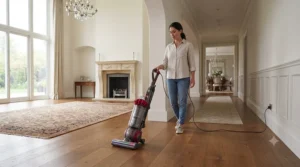
Despite the cordless marketing blitz of the last several years, corded vacuum advantages remain genuinely compelling for specific households. Unlimited runtime tops the list — there’s no clock ticking down while you deep-clean a living room rug, and no need to interrupt a cleaning session to recharge. Suction consistency is the second major advantage: because corded motors draw continuous AC power, they don’t taper off the way battery-powered suction does as a charge depletes, which matters for anyone dealing with truly embedded dirt or long-pile carpet.
Corded vacuums, particularly bagged canister models like the Miele Compact C2 Electro+, also tend to offer stronger sealed filtration systems, which the American Lung Association notes is an important factor for households managing allergies or asthma, since HEPA filtration paired with a fully sealed air path prevents fine particles from recirculating during use. Reviewers consistently note that corded canisters and uprights also tend to have larger dust capacities than cordless sticks, meaning fewer interruptions to empty a bin mid-clean. Finally, corded machines typically carry a lower upfront cost at the budget tier, as the Eureka Whirlwind NEN110A demonstrates at well under $100.
Power Source Comparison: Watts, Volts, and Real Cleaning Power
Comparing wattage and voltage across corded and cordless machines requires a little translation, since the numbers aren’t directly comparable. Corded vacuums are commonly rated in watts drawn from a 120-volt household circuit — the Eureka Whirlwind NEN110A draws roughly 1800 watts, while the SEBO Airbelt D4 Premium and Miele Compact C2 Electro+ run closer to 1,200-1,250 watts through their motors. Cordless vacuums, by contrast, are usually rated in “Air Watts” (AW), a suction-specific measurement, or simply listed by battery voltage and amp-hours. The Tineco Pure ONE Station 5, for example, is rated at 175 watts of suction power, a figure that isn’t directly comparable to a corded machine’s wall-draw wattage.
Here’s how to choose between them, step by step:
- Measure your total floor area. Homes over 1,500 square feet generally benefit from a corded machine’s unlimited runtime.
- Identify your dominant flooring type. Thick or long-pile carpet rewards sustained suction; hardwood and tile tolerate lighter cordless suction just fine.
- Count your outlets per room. Fewer accessible outlets favor a cordless vacuum or a corded model with an exceptionally long cord.
- Factor in pets. Heavy shedding calls for either a high-wattage corded upright or a cordless model with an anti-tangle brush.
- Consider storage space. Cordless sticks store vertically in a closet corner; canisters and uprights need more floor space.
- Weigh your patience for recharging. If interruptions frustrate you, corded wins outright.
- Set your realistic budget ceiling. Corded options bracket both the cheapest and priciest tiers; cordless clusters in the middle-to-premium range.
Runtime vs Unlimited Power: What Battery Life Actually Means
The phrase “up to 70 minutes” on a cordless vacuum box deserves scrutiny, because that number is almost always measured in the lowest-power mode with a lightweight attachment — not the mode most people actually use for real cleaning. Independent testing of the Shark PowerDetect Cordless Stick Vacuum, for instance, found it ran roughly 13 minutes on maximum power with the floor head attached, translating to an estimated 30-40 minutes of realistic mixed-mode use rather than the 70-minute ECO figure advertised. What most buyers overlook is that runtime also depends on floor type: carpet draws more power through a motorized brush than hardwood does, so a battery vacuum will always run shorter on carpet-heavy homes than on all-hardwood ones.
Unlimited power, meanwhile, isn’t just about duration — it’s about consistency throughout that duration. A corded vacuum like the Kenmore BU1018 Elite delivers identical suction at minute one and minute sixty, since it’s drawing straight from your home’s electrical panel rather than a depleting cell. For buyers who vacuum in long, uninterrupted sessions — think weekly deep cleans rather than quick daily touch-ups — that consistency is worth more than any battery spec sheet number.
Convenience vs Performance: A Simple Decision Framework
If you’re still torn, use this framework: if convenience — no cords to trip over, no outlet-hunting, easy under-furniture reach — outweighs raw suction consistency for your household, lean cordless. If performance — unlimited runtime, steady suction on thick carpet, larger dust capacity — matters more than freedom of movement, lean corded. Here’s a simple checklist to apply that logic:
- If you live in a home under 1,000 square feet with mostly hard flooring, choose a cordless stick vacuum, because battery limitations rarely become a real obstacle at that scale.
- If you have thick carpet throughout a larger home, choose a corded upright or canister, because sustained suction outperforms convenience on embedded dirt.
- If you have stairs, tight closets, or a car that needs regular vacuuming, choose cordless, because unplugging and re-plugging a corded machine for each of those spots quickly becomes tedious.
- If allergies or asthma are a household concern, prioritize sealed filtration over form factor, and lean toward a bagged corded canister like the Miele Compact C2 Electro+.
- If your budget caps out under $150, corded wins by default, since genuinely capable cordless machines rarely dip below the $250 mark.
Ready to compare specific models side by side? Scroll back up to see how each of our 7 picks scores on your must-have features!
Problem → Solution: Fixing the Most Common Vacuum Headaches
Problem: Suction drops noticeably partway through cleaning. On a corded vacuum, this usually signals a clogged hose, full bag, or dirty filter — check and clear these first before assuming motor failure. On a cordless model, a mid-session power drop is often just the battery transitioning out of Boost mode as it depletes; switching to a lower power setting can actually extend usable cleaning time.
Problem: The cord keeps getting stuck under furniture or its own canister. This is a documented quirk on machines like the SEBO Airbelt D4 Premium — the fix is simply pausing to reposition the cord rather than fighting against it, since yanking can strain the cord’s connection point over time.
Problem: Pet hair wraps around the brush roll constantly. Look for models with anti-tangle or ZeroTangle brush designs, like the Tineco Pure ONE Station 5, which use comb-tooth designs specifically engineered to prevent wrapping rather than relying on you to manually cut hair free every week.
Problem: The cordless vacuum never seems to hold its advertised runtime. This is expected behavior, not a defect — remember that advertised runtime is almost always the ECO-mode figure. Plan your realistic cleaning window around 40-60% of the advertised number if you regularly use Boost or auto-detect modes.
Problem: Allergy symptoms persist despite regular vacuuming. Confirm your machine has a true sealed HEPA system rather than a “HEPA-type” filter, since the distinction meaningfully affects how much fine dust escapes back into the room during use.
Long-Term Cost & Maintenance: Bags, Batteries, and Bills
The sticker price is only part of the corded vs cordless vacuum cost equation. Corded bagged models like the Miele Compact C2 Electro+ carry ongoing bag costs, typically replaced every one to three months depending on use, plus occasional filter swaps every six to twelve months. Corded bagless machines like the Eureka Whirlwind NEN110A skip bag costs entirely but require more frequent filter washing to maintain suction.
Cordless vacuums introduce a different long-term expense: battery replacement. Lithium-ion battery packs degrade gradually and typically need replacing every two to four years of regular use, and a replacement pack for a premium model can represent a real chunk of the vacuum’s original purchase price. Over a five-year ownership window, a well-maintained corded canister often works out cheaper overall than a cordless stick vacuum, once you factor in that replacement battery cost — though the cordless machine wins back points on time saved during actual use. According to Consumer Reports’ testing program, reliability also varies meaningfully by brand and vacuum type, which is worth weighing alongside raw purchase price when estimating five-year cost of ownership.
Safety and Cord Regulations Every Homeowner Should Know
Corded vacuums are generally safe when used as designed, but a few practical safety habits matter. Never run a corded vacuum through a daisy-chained extension cord if you can help it — the U.S. Consumer Product Safety Commission notes that extension cords are linked to thousands of residential fires annually, and overloading a cord rated for lower wattage than your vacuum draws is a genuine fire risk. Instead, plug directly into a wall outlet whenever possible, and inspect your vacuum’s cord periodically for cracks, fraying, or exposed wire, discarding it immediately if you spot damage.
Cordless vacuums carry their own set of considerations, mainly around lithium-ion battery care: avoid leaving the battery on its charging dock in direct sunlight or near heat sources, and never attempt to open or modify a battery pack yourself. Both vacuum types should be kept away from standing water — never vacuum wet spills with a standard dry vacuum, corded or cordless, as it poses both an electrical hazard and a risk of permanent motor damage.
Frequently Asked Questions
❓ Is a corded or cordless vacuum better for a large house?
❓ How long do cordless vacuum batteries typically last before replacement?
❓ Do corded vacuums have stronger suction than cordless models?
❓ Can I use an extension cord with my corded vacuum safely?
❓ Which type of vacuum is better for pet hair, corded or cordless?
Conclusion
The corded vs cordless vacuum decision ultimately comes down to matching a machine’s strengths to your home’s real demands rather than chasing whichever category feels more modern. If unlimited runtime, consistent suction, and lower long-term cost matter most to you, a corded pick like the Kenmore BU1018 Elite or SEBO Airbelt D4 Premium will serve you well for years. If freedom of movement, quick grab-and-go cleaning, and stair-and-car accessibility top your priority list, a cordless option like the Tineco Pure ONE Station 5 or Dyson V15 Detect earns its higher price tag through sheer convenience.
Whichever direction you lean, the seven real products covered here represent genuine, currently available options across every major price tier — not marketing fluff, but machines with documented specs, real aggregated review sentiment, and honest trade-offs laid out plainly. Match the machine to your square footage, your flooring, and your patience for recharging, and you’ll land on the right side of the corded vs cordless vacuum debate for your specific home.
Recommended for You
- Upright vs Canister Vacuum 2026: 7 Models That Prove Which Wins
- Vacuum for Large Homes: 7 Picks That Actually Cover 2026
- Vacuum for rv: 7 Best Picks for Campers & Boats in 2026
Disclaimer: This article contains affiliate links. As an Amazon Associate, I earn from qualifying purchases. If you purchase products through these links, we may earn a small commission at no additional cost to you.
✨ Found this helpful? Share it with your friends! 💬🤗
