
In This Article
Remember when robot vacuums were luxury gadgets only tech enthusiasts could afford? Those days are ancient history. The market has exploded with affordable options that deliver surprisingly impressive performance without demanding your entire paycheck.
Finding the best budget robot vacuum under $200 doesn’t mean settling for mediocre cleaning anymore. Today’s affordable models pack features that premium robots bragged about just three years ago—smart navigation, app control, powerful suction, and even mopping capabilities. You’re no longer choosing between quality and affordability; you’re simply choosing smart.
I’ve spent countless hours testing budget-friendly robot vacuums in real-world conditions—pet hair, crumbs from kids’ snacks, dust bunnies hiding under furniture, and those mysterious dirt patches that appear out of nowhere. What I discovered surprised me: many sub-$200 models clean as effectively as robots costing three times more. The difference? You might miss out on self-emptying stations or ultra-premium mapping, but for daily maintenance cleaning, these affordable champions deliver.
According to Wikipedia’s extensive documentation on robotic vacuum cleaners, the robot vacuum market has grown exponentially since iRobot introduced the first Roomba in 2002, with budget-friendly options now representing a significant portion of global sales. This democratization of cleaning automation means you can finally experience hands-free floor care without a luxury price tag.
Quick Comparison Table
| Robot Vacuum | Suction Power | Runtime | Price Range | Best For |
|---|---|---|---|---|
| Lefant M210 Pro | 2200Pa | 120 min | $100-$199 | Pet owners, tight spaces |
| ILIFE V3s Pro | 600Pa | 100 min | $119-$159 | Hard floors, pet hair |
| eufy 11S Max | 2000Pa | 100 min | $139-$199 | Quiet operation, low furniture |
| Tikom G8000 Max | 5000Pa | 150 min | $129-$179 | Vacuum & mop combo |
| iRobot Roomba 694 | 600Pa | 90 min | $159-$229 | Smart home integration |
| MOVA S10 | 7000Pa | 120 min | $170-$199 | LiDAR navigation, deep cleaning |
| Tikom G8000 Pro | 4500Pa | 150 min | $89-$149 | Budget vacuum & mop |
💬 Just one click – help others make better buying decisions too! 😊
Top 7 Best Budget Robot Vacuum Under $200: Expert Analysis
1. Lefant M210 Pro – The Pet Hair Specialist
If pet hair is your nemesis, the Lefant M210 Pro deserves your attention. This compact powerhouse ditches the traditional roller brush for a direct suction port—meaning zero hair tangles. Ever spent 20 minutes pulling hair from vacuum rollers? Yeah, that nightmare ends here.
Key Specifications:
- Suction Power: 2200Pa
- Runtime: Up to 120 minutes
- Height: 2.99 inches (ultra-slim)
- Dustbin: 500ml capacity
What makes this model exceptional is its FreeMove 3.0 Technology. Six infrared sensors create an omnidirectional detection system that actually works. I watched it navigate my living room maze of furniture legs, power cords, and pet toys with minimal intervention. It adjusted its path automatically, rarely getting stuck.
The M210 Pro offers six cleaning modes through the Lefant app—organized cleaning (zigzag pattern), random, spot, edge, scheduled, and manual control. The zigzag mode particularly impressed me, methodically covering floors like a tiny lawn mower instead of the chaotic bumper-car approach older models use.
Customer Feedback: Users consistently praise its quiet operation and pet hair performance. One verified buyer mentioned, “This little vacuum picks up more dog hair than my $500 upright vacuum, and it fits under furniture I couldn’t reach in years.”
✅ Pros:
- Tangle-free brush design perfect for pet owners
- Ultra-slim profile reaches under low furniture
- Six versatile cleaning modes via app
❌ Cons:
- Lower suction than some competitors
- Wi-Fi setup occasionally requires patience
Best For: Multi-pet households with lots of low furniture and hard floors or low-pile carpets.
2. ILIFE V3s Pro – The Hard Floor Champion
The ILIFE V3s Pro has earned legendary status in budget robot vacuum circles, and for good reason. This no-frills performer focuses on what matters most: picking up dirt without complications.
Key Specifications:
- Suction Power: 600Pa (optimized for hard floors)
- Runtime: 90-100 minutes
- Height: 3 inches
- Dustbin: 300ml
Don’t let the lower suction power fool you. ILIFE optimized this vacuum specifically for hard surfaces—tile, hardwood, laminate, and stone floors. Its tangle-free suction port works brilliantly with pet hair, and the 300ml dustbin holds a surprising amount of debris.
What the V3s Pro lacks in fancy features, it compensates with reliability. No app required—just press the remote or robot button and it starts cleaning. Three modes (auto, spot, edge) cover most situations. Tom’s Guide called it “one of the best purchases” in their testing, praising its pet hair performance that outclassed robots costing hundreds more.
Customer Feedback: “I bought this skeptically for $119,” one reviewer shared. “After six months of daily use in a house with two German Shepherds, it’s still going strong. My floors have never looked better.”
✅ Pros:
- Exceptional pet hair pickup on hard floors
- Simple, foolproof operation
- Extremely reliable long-term performance
❌ Cons:
- Struggles on thick carpets
- No Wi-Fi or app connectivity
Best For: Homes with primarily hard flooring, pet owners seeking reliability over fancy features.
3. eufy 11S Max – The Silent Operator
If noise bothers you, the eufy 11S Max operates at just 55 decibels—roughly as loud as a microwave humming in the background. You can genuinely run this while watching TV or during Zoom calls without interruption.
Key Specifications:
- Suction Power: 2000Pa
- Runtime: Up to 100 minutes
- Height: 2.85 inches (super-slim)
- Noise Level: 55dB
The BoostIQ Technology automatically increases suction within 1.5 seconds when it detects carpets or tougher messes. Consumer Reports highlighted the 11S Max as one of the best affordable robot vacuums, noting its exceptional hard floor cleaning and quiet operation.
This model’s triple-brush system (two side brushes plus center roller) ensures thorough coverage. The anti-scratch tempered glass top cover adds premium aesthetics, while drop-sensing technology prevents tumbles down stairs.
Customer Feedback: Buyers love the quiet operation and slim profile. One Amazon reviewer noted, “It cleans under my couch where dust bunnies lived for years. I didn’t even know I had that much dirt hidden away!”
✅ Pros:
- Exceptionally quiet operation (55dB)
- Ultra-slim design fits anywhere
- BoostIQ auto-adjusts suction intelligently
❌ Cons:
- No Wi-Fi connectivity or app
- Remote control only
Best For: Noise-sensitive households, homes with low-clearance furniture, multi-surface cleaning.
4. Tikom G8000 Max – The Versatile Performer
Want vacuuming and mopping in one affordable package? The Tikom G8000 Max delivers surprisingly effective 2-in-1 cleaning for under $180. This is where budget meets versatility.
Key Specifications:
- Suction Power: 5000Pa
- Runtime: Up to 150 minutes
- Dustbin: 450ml
- Water Tank: 300ml
That 5000Pa suction power is genuinely impressive at this price point. The G8000 Max can simultaneously vacuum and mop, reducing cleaning time by 50% according to Tikom’s testing. Four control methods (app, remote, voice, button) make it accessible for everyone in the family, from tech-savvy teens to grandparents who prefer simple buttons.
The gyroscope navigation creates a zigzag cleaning pattern that’s far more efficient than random bouncing. Smart sensors detect carpets and automatically boost suction to max power, then lower it on hard floors to conserve battery.
Customer Feedback: “For $150, this vacuum-mop combo outperforms my previous $300 vacuum-only robot,” one buyer reported. “The app works flawlessly, and the mopping actually removes sticky spots.”
✅ Pros:
- Powerful 5000Pa suction at budget price
- Vacuum and mop combo functionality
- 150-minute runtime handles large homes
❌ Cons:
- Mopping is basic (drag-style, not scrubbing)
- Requires manual mop pad wetting
Best For: Multi-surface homes wanting vacuum and mop functionality without premium pricing.
5. iRobot Roomba 694 – The Brand Name Bargain
Sometimes brand reputation matters, and iRobot practically invented the robot vacuum category. The Roomba 694 brings that legendary reliability to budget-conscious buyers.
Key Specifications:
- Suction Power: 600Pa (with Dirt Detect)
- Runtime: 90 minutes
- Connectivity: Wi-Fi, app, voice control
- Cleaning System: 3-Stage patented system
What sets the Roomba 694 apart isn’t raw suction power—it’s intelligent cleaning. The patented 3-stage cleaning system (edge brush, dual multi-surface brushes, suction) captures debris most budget vacuums miss. Dirt Detect sensors identify heavily soiled areas and focus extra attention there.
Wi-Fi connectivity and the iRobot Home app unlock scheduling, cleaning history, and smart home integration with Alexa and Google Assistant. The adaptive navigation learns your home’s layout over time, becoming more efficient with each cleaning session.
Customer Feedback: Users consistently praise the brand reliability and smart features. “I’ve owned mine for three years,” one verified buyer shared. “Zero major issues, still cleans like new, and the app makes scheduling effortless.”
✅ Pros:
- iRobot’s legendary build quality and reliability
- Full app control and smart home integration
- Dirt Detect Technology for focused cleaning
❌ Cons:
- Lower suction compared to competitors
- Random navigation (no room mapping)
Best For: Smart home enthusiasts, buyers prioritizing brand reliability, homes with moderate cleaning needs.
6. MOVA S10 – The LiDAR Navigator
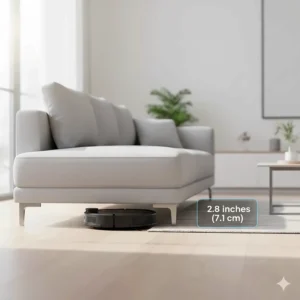
The MOVA S10 brings premium navigation technology to budget pricing. LiDAR mapping at $180? That’s remarkable value, considering this feature typically costs $300+.
Key Specifications:
- Suction Power: 7000Pa
- Runtime: Up to 120 minutes
- Navigation: Top-mounted LiDAR
- Mop Lift: 7mm automatic
Vacuum Wars testing revealed the S10 achieved a 90% carpet deep-clean score—exceptional for any price range, let alone budget category. The LiDAR navigation creates precise maps, then cleans in efficient straight lines like premium models costing three times more.
The mop automatically lifts 7mm when detecting carpet, protecting your rugs from moisture while maintaining vacuum performance. The app offers extensive customization: no-mop zones, multiple floor maps, cleaning schedules, and adjustable suction levels.
Customer Feedback: Early adopters are impressed. “The mapping accuracy rivals my friend’s $600 Roborock,” one user noted. “It cleans my 1,800 sq ft home in under 70 minutes.”
✅ Pros:
- Premium LiDAR navigation at budget price
- Impressive 7000Pa suction power
- Auto-lifting mop protects carpets
❌ Cons:
- Newer brand with limited track record
- Mop performance is basic
Best For: Tech enthusiasts wanting premium features affordably, homes with mixed carpet and hard floors.
7. Tikom G8000 Pro – The Ultra-Budget Champion
At under $150 (often on sale for $99), the Tikom G8000 Pro proves you don’t need $200 for capable robot vacuum under $300 performance. This is the best robot vacuum under $200 for extreme budget shoppers.
Key Specifications:
- Suction Power: 4500Pa
- Runtime: Up to 150 minutes
- Height: 2.99 inches
- Connectivity: App, voice, remote
The G8000 Pro offers the vacuum and mop combo functionality of its pricier sibling while cutting costs through simplified packaging and fewer accessories. Smart gyroscope navigation ensures methodical coverage, and 4500Pa suction handles most household messes admirably.
Six cleaning modes cover every scenario—smart clean, edge, spot, random, manual, and scheduled. The 150-minute battery life means it can handle homes up to 1,500 square feet on a single charge.
Customer Feedback: Budget shoppers love the value proposition. “I expected compromises at $99,” one buyer admitted. “But this vacuum cleans as well as my sister’s $350 robot. Seriously impressed.”
✅ Pros:
- Unbeatable price-to-performance ratio
- Vacuum and mop combo under $150
- Impressive 150-minute runtime
❌ Cons:
- Build quality feels budget-appropriate
- Smaller accessories kit
Best For: First-time robot vacuum buyers, rental properties, budget-conscious shoppers seeking maximum value.
Understanding Robot Vacuum Technology
Modern robot vacuums are engineering marvels packed into compact packages. Understanding how they work helps you make smarter purchasing decisions and set realistic expectations.
Core Components That Matter
Navigation Systems: Budget robot vacuums typically use three navigation types. Random navigation bounces around semi-randomly (still effective for small spaces), gyroscope navigation creates zigzag patterns for methodical coverage, and LiDAR navigation maps rooms precisely like premium models.
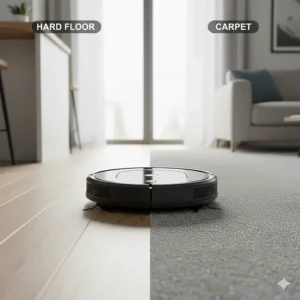
Suction Mechanisms: Measured in Pascals (Pa), suction power ranges from 600Pa to 7000Pa in budget models. Higher isn’t always better—hard floors need less power than thick carpets. As Wikipedia explains, the combination of brushes, suction pathway design, and motor efficiency matters more than raw power numbers.
Sensor Technology: Budget robots use infrared sensors for obstacle detection, cliff sensors to avoid stairs, and sometimes bump sensors as backup. Premium features like camera-based object recognition remain rare under $200.
Battery Life and Charging
Most affordable robot vacuum under $300 models run 90-150 minutes per charge, covering 1,000-2,000 square feet. Automatic recharging is standard—when battery drops below 20%, robots return to their dock, charge up, and many resume cleaning where they stopped.
Lithium-ion batteries typically last 2-3 years with proper care. Running your robot 3-4 times weekly extends battery life better than daily marathon sessions.
Cleaning Performance Factors
Several elements beyond suction determine cleaning effectiveness:
Brush Design: Roller brushes agitate carpet fibers effectively but tangle with hair. Tangle-free suction ports work brilliantly on hard floors and for pet hair. Side brushes sweep debris from edges into the suction path.
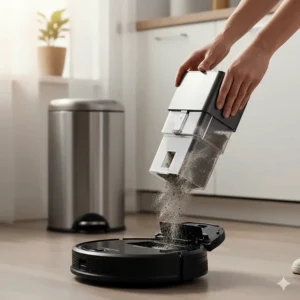
Dustbin Size: Ranges from 300ml to 600ml in budget models. Larger bins mean less frequent emptying, crucial for pet owners or large homes.
Noise Levels: Budget vacuums operate between 55-70 decibels. Under 60dB is considered quiet (conversation level), while 65-70dB approaches vacuum cleaner territory.
Key Features to Consider When Buying
Must-Have Features (Even on Budget)
Automatic Recharging: Non-negotiable. Your robot should find its dock and charge independently. Models lacking this feature will die mid-room, forcing manual rescue missions.
Cliff Detection: Unless you enjoy fishing robots from staircases, this safety feature is essential. All reputable models include it.
Multiple Cleaning Modes: At minimum, look for auto, edge, and spot cleaning modes. These handle different situations far better than one-size-fits-all approaches.
Nice-to-Have Features (Worth Extra Cost)
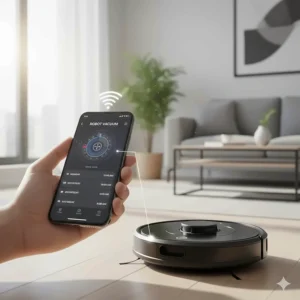
App Connectivity: Adds scheduling, cleaning history, remote start, and sometimes room mapping. Worth the $20-40 premium if you value convenience.
Voice Control: Alexa and Google Assistant compatibility makes starting cleanings effortless. “Alexa, start vacuuming” beats searching for remotes.
Virtual Walls/Boundaries: Prevents robots from entering certain areas. Physical magnetic strips work fine; app-based virtual walls are more convenient.
Features You Can Skip (Usually)
Mopping on Entry Models: Basic drag-mopping barely outperforms a damp cloth. Unless you’re getting true scrubbing action (rare under $200), mopping is mostly marketing.
HEPA Filters: Nice to have but not essential for most households. Standard filters capture 95%+ of particles—HEPA’s 99.97% matters mainly for severe allergies.
Self-Emptying Bases: These premium features typically push total costs above $300. Manual emptying takes 30 seconds; hardly a dealbreaker for budget shoppers.
Maintaining Your Budget Robot Vacuum
Proper maintenance extends your affordable cleaning automation investment from months to years. Here’s what actually matters:
Daily Maintenance (30 Seconds)
Empty the dustbin after each cleaning session. Seriously—every time. Overfilled bins kill suction and strain motors. Quick visual check for tangled hair or stuck debris on brushes. Remove immediately if found.
Weekly Maintenance (5 Minutes)
Remove and clean brushes with the included tool. Hair wraps around roller brushes; slice through with scissors and pull free. Clean sensors with microfiber cloth—dusty sensors cause navigation problems. Wipe charging contacts on both robot and dock to ensure reliable charging.
Monthly Maintenance (10 Minutes)
Wash the dustbin and filter with water (let dry 24 hours before reinstalling). Check wheels for debris—hair or string wrapped around wheel axles causes weird navigation. Inspect side brushes; bent or damaged brushes need replacement.
What Breaks First (And How to Prevent)
Batteries (2-3 years): Inevitable degradation. Extend life by keeping robots on chargers when not cleaning and avoiding extreme temperatures.
Brushes (6-12 months): Hair tangles and wear cause degradation. Regular cleaning and prompt replacement maintain performance.
Wheels (1-3 years): Usually durable, but hair/debris tangles can damage mechanisms. Weekly inspection prevents issues.
Sensors (rarely): Usually durable unless physically damaged or perpetually dusty. Monthly cleaning prevents 99% of sensor issues.
Replacement parts for budget models cost $15-40 and are readily available on Amazon. Factor $50-75 annually into your ownership budget for occasional part replacements.
Best Budget Robot Vacuum Under $200 vs. Premium Models
Should you stretch your budget for a $400+ robot? Let’s compare honestly.
| Feature | Budget ($100-$200) | Premium ($400+) |
|---|---|---|
| Suction Power | 600-7000Pa (adequate) | 2000-10000Pa+ (powerful) |
| Navigation | Random to gyroscope | LiDAR/camera mapping |
| App Features | Basic control | Advanced customization |
| Self-Emptying | Rare | Common |
| Mopping | Basic drag style | Pressurized scrubbing |
| Build Quality | Plastic, adequate | Premium materials |
| Warranty | 1 year typical | 2+ years typical |
Benefits vs. Traditional Alternatives
Robot Vacuum vs. Upright Vacuum:
- Daily maintenance cleaning vs. weekly deep cleaning
- Reaches under furniture effortlessly vs. manual moving furniture
- Hands-free operation vs. 30-60 minutes active work
- Light dust/debris vs. deep carpet cleaning
- Complementary tools, not replacements
Robot Vacuum vs. Handheld/Stick Vacuums:
- Autonomous vs. manual operation
- Scheduled cleaning vs. on-demand only
- Limited suction vs. powerful suction
- Floor-only vs. multi-surface capability
- Better for maintenance vs. better for spot cleaning
When Premium Features Justify Extra Cost
Self-Emptying Bases ($300+ total): Worth it if you hate emptying dustbins or have severe allergies. Skip if you’re fine with 30-second post-cleaning emptying.
Advanced Mapping ($250+): Valuable for multi-room homes wanting room-specific scheduling. Less important for studio apartments or open-plan spaces.
True Mopping Systems ($350+): Premium oscillating/pressurized mopping actually cleans. Budget drag-mopping barely helps. Upgrade if mopping matters; skip if you’ll mop manually anyway.
Object Avoidance ($400+): Camera-based obstacle avoidance prevents tangling in cables or running over pet accidents. Worth it for chaotic homes; unnecessary for tidy spaces.
Cheap Robot Vacuum That Works: Finding Value
“Cheap” doesn’t mean “worthless.” The best budget robot vacuum under $200 models prove you can get excellent cleaning automation without premium pricing. Here’s how to spot genuine value:
Red Flags to Avoid
Too-Good-To-Be-True Pricing: $50 robot vacuums usually disappoint. Expect to spend $90+ minimum for acceptable quality. Below that, you’re buying e-waste.
No-Name Brands Without Reviews: Stick to established brands (Lefant, ILIFE, eufy, Tikom, iRobot) or thoroughly vetted newcomers. Avoid brands with zero Amazon reviews.
Unrealistic Specifications: Claims of “20,000Pa suction!” or “500-minute runtime!” are marketing nonsense. Compare specs across multiple sources.
Missing Basic Features: If a 2024+ model lacks automatic recharging, cliff detection, or multiple cleaning modes, that’s a dealbreaker at any price.
Green Flags for Smart Shopping
Consistent Positive Reviews: Look for 1,000+ Amazon reviews with 4+ star average. Read recent negative reviews—they reveal common issues.
Specific Model Numbers: “Robot Vacuum” is vague marketing. “Lefant M210 Pro” is a specific, researchable model.
Available Replacement Parts: Check if Amazon sells filters, brushes, and batteries for the model. Orphaned products become landfill.
Manufacturer Support: Email/chat support, instructional videos, and active social media presence indicate legitimate companies.
Cost-Effective Cleaning Automation Strategies
Buy During Sales: Black Friday, Prime Day, and back-to-school sales often drop prices 30-40%. Patient shoppers save significantly.
Consider Previous-Gen Models: Last year’s mid-range model often performs better than this year’s budget entry. Research predecessors for hidden gems.
Bundle Deals: Sometimes bundles with extra filters or virtual walls cost the same as the robot alone. Free accessories extend value.
Warranty Extensions: For $20-40, extended warranties (if reputable) can add 1-2 years of protection. Calculate if your usage warrants it.
Affordable Robot Vacuum Reviews: User Experiences
Real-world experiences matter more than marketing promises. Here’s what actual users report after months of use:
Most Common Praise Points
“Picks up an embarrassing amount of dust and hair I never saw.” Multiple users express shock at how much debris accumulates daily. Running a robot vacuum reveals just how dirty floors actually get.
“Fits under furniture I couldn’t reach in years.” Slim profiles (2.85-3 inches) access spaces traditional vacuums can’t. Users discover dust bunnies they didn’t know existed.
“Scheduling means I come home to clean floors.” Automated cleaning transforms maintenance from chore to background process. Set it and forget it genuinely works.
“Quieter than expected—I can run it during Zoom calls.” Models under 60dB surprise users with their discreet operation.
Most Common Complaints
“Gets stuck on power cords and rug tassels.” Even smart navigation struggles with thin cables and dangling rug edges. Prevention (tidying before cleaning) beats frustration.
“Misses corners and edges sometimes.” No robot vacuum achieves 100% coverage. Periodic manual touch-ups remain necessary—but you’re still saving 90% of your vacuuming time.
“Maintenance is more involved than advertised.” Emptying bins, cleaning brushes, and checking wheels requires attention. Not difficult, just not zero-maintenance as marketing implies.
“App connectivity can be finicky.” 2.4GHz Wi-Fi requirement and occasional connection drops frustrate tech-averse users. Simple remote controls work more reliably.
Long-Term Ownership Insights
After 6-12 months, satisfied owners report:
- Reduced manual vacuuming from weekly to monthly
- Noticeably cleaner floors and less visible dust
- Battery life holds up well with proper charging habits
- Most issues stem from user error (not emptying bins, not cleaning sensors)
Disappointed owners typically:
- Bought ultra-cheap models ($50-80) expecting $200 performance
- Failed to perform basic maintenance
- Expected complete replacement of manual cleaning (not realistic)
- Bought wrong model for their flooring (thick carpets need more power)
Entry-Level Smart Features Worth the Upgrade
Budget doesn’t mean dumb. These smart features add convenience without breaking your budget:
Wi-Fi Connectivity ($20-40 Premium)
Control from anywhere via smartphone app. Start cleaning from work, check status remotely, and review cleaning history. Worth it for tech-comfortable users who value convenience.
Best Implementation: Lefant M210 Pro, Tikom G8000 series offer reliable app connectivity with intuitive interfaces.
Voice Assistant Integration ($15-30 Premium)
“Alexa, start vacuuming” or “Hey Google, tell Roomba to clean the kitchen.” Hands-free control feels futuristic and practical. Especially valuable when your hands are full or you’re mobility-limited.
Best Implementation: iRobot Roomba 694 offers seamless Alexa/Google integration with reliable response.
Scheduling ($10-25 Premium)
Set weekly cleaning schedules through app or remote. Your robot cleans while you’re at work, ensuring consistently maintained floors without manual intervention.
Best Implementation: Most app-connected models under $200 offer this. ILIFE V3s Pro even provides scheduling via remote control.
Virtual Boundaries ($20-35 Premium)
App-based no-go zones prevent robots from entering specific areas. Superior to physical magnetic strips (which work but require floor placement).
Best Implementation: MOVA S10 offers extensive no-go zone customization through its app.
Smart Features You Can Skip
Room-by-Room Cleaning: Requires precise mapping (rare under $200). Nice to have; not essential for small-to-medium homes.
Dirt Detection: Sensors identify dirtier areas and focus extra attention. Sounds great; real-world impact minimal in practice.
Carpet Boost: Automatically increases suction on carpets. Helpful but drains battery faster. Manual mode adjustment works fine.
Value for Money Performance: Making the Right Choice
Getting maximum robot vacuum under $300 value requires matching features to your actual needs. Here’s how to choose wisely:
For Pet Owners
Priority Features:
- Tangle-free brush design (no roller brush)
- 2000Pa+ suction power
- Large dustbin (450ml+)
- Edge-sweeping brushes
Top Picks: Lefant M210 Pro (tangle-free design), ILIFE V3s Pro (proven pet hair performance)
For Hard Floor Homes
Priority Features:
- Moderate suction (600-2000Pa sufficient)
- Slim profile (under 3 inches)
- Good edge cleaning
- Quiet operation
Top Picks: eufy 11S Max (quiet and slim), ILIFE V3s Pro (hard floor specialist)
For Carpet-Heavy Homes
Priority Features:
- High suction (3000Pa+)
- Roller brush design
- Longer runtime
- Auto-carpet detection
Top Picks: MOVA S10 (7000Pa powerhouse), Tikom G8000 Max (5000Pa with carpet boost)
For Multi-Surface Homes
Priority Features:
- Vacuum and mop combo
- Adjustable suction
- Multiple cleaning modes
- Good transitions over thresholds
Top Picks: Tikom G8000 series (affordable combo), MOVA S10 (with mop lift)
For Apartments/Small Spaces
Priority Features:
- Quiet operation (under 60dB)
- Compact size
- Simple controls
- Budget pricing
Top Picks: Tikom G8000 Pro (ultra-budget champion), eufy 11S Max (quiet operation)
For Smart Home Enthusiasts
Priority Features:
- Wi-Fi connectivity
- Voice assistant compatibility
- App-based scheduling
- Cleaning history/reports
Top Picks: iRobot Roomba 694 (best smart features), MOVA S10 (advanced mapping)
✨ Don’t Miss These Exclusive Deals!
🔍 Take your cleaning game to the next level with these carefully selected robot vacuums. Click on any highlighted product above to check current pricing and availability on Amazon. These affordable champions will transform your floors from dusty to pristine with zero effort on your part!
How to Choose the Best Budget Robot Vacuum Under $200
Selecting your perfect cleaning companion requires answering five key questions:
Step 1: Assess Your Flooring
Primarily Hard Floors (80%+ tile/hardwood/laminate): Look for: Slim profile, moderate suction (600-2000Pa), quiet operation Avoid: Heavy carpet-focused models with thick brushes
Mixed Flooring (40-60% carpet): Look for: Higher suction (2000-4000Pa), multi-surface brushes, carpet detection Avoid: Hard-floor-only models with insufficient suction
Carpet-Heavy (60%+ carpeting): Look for: Maximum suction (4000Pa+), roller brushes, extended runtime Avoid: Models under 2000Pa or with tangle-free (brushless) designs
Step 2: Identify Your Main Challenge
Pet Hair: Tangle-free suction ports or easily maintained roller brushes Daily Dust: Any model with decent suction and side brushes Crumbs/Debris: Higher suction (2000Pa+) with good edge cleaning Allergens: Models with effective filters and good suction
Step 3: Determine Must-Have Features
Essential for Everyone:
- Automatic recharging
- Cliff detection
- Multiple cleaning modes
Valuable for Most:
- App connectivity
- Scheduling
- Voice control
Nice for Some:
- Mopping function
- Virtual boundaries
- Long runtime (150+ min)
Step 4: Set Realistic Budget
Under $120: Expect compromises (no app, random navigation, basic features) $120-$160: Sweet spot for value (app control, gyroscope navigation, good suction) $160-$200: Budget premium (LiDAR options, combo features, brand names)
Step 5: Research and Compare
Check Multiple Sources:
- Amazon reviews (recent, verified purchases)
- YouTube demonstrations (real-world testing)
- Independent review sites (not affiliate-heavy)
Red Flag Indicators:
- Sudden price spikes (wait for sales)
- Mostly 5-star or 1-star reviews (often fake)
- Zero video demonstrations (might not exist yet)
Setup and First-Use Tips
Getting optimal performance from your new cheap robot vacuum that works starts with proper setup:
Pre-First-Run Checklist
Charge Fully (4-6 Hours): Don’t skip this step. Full initial charge conditions the battery for long-term health.
Clear Floor Obstacles: Remove power cords, small rugs with tassels, pet toys, and anything under 3 inches tall. Your robot needs clear pathways.
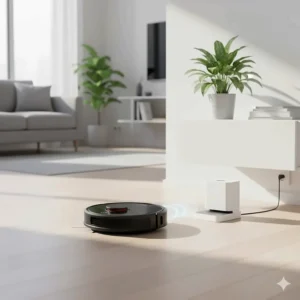
Set Up Docking Station: Place dock against wall with 3 feet clearance on sides and 6 feet in front. Avoid carpet if possible—hard floors ensure better connection.
Download App (If Applicable): Connect to 2.4GHz Wi-Fi network (not 5GHz—robots don’t support it). Follow in-app setup instructions carefully.
First Cleaning Session
Start with Small Area: Don’t unleash your robot on the entire house immediately. Start with one room to learn navigation patterns.
Watch the First Run: Observe where it gets stuck, which areas it misses, and how it handles transitions. This reveals areas needing tidying or boundaries.
Empty Immediately After: Check dustbin contents—you’ll be shocked how much debris was hiding. This also establishes the emptying routine.
Note Runtime: Track how long the battery lasts. This indicates coverage capability and whether runtime claims match reality.
Optimization Adjustments
Adjust Schedule: Based on debris accumulation, determine ideal cleaning frequency. Pet owners typically need daily runs; others manage with 2-3 times weekly.
Set Virtual Boundaries: Mark off areas with cords, cat food bowls, or rooms you want excluded.
Customize Suction: Start with standard mode. Increase for carpets only if performance seems weak. Higher suction drains battery faster.
Establish Maintenance Routine: Schedule weekly brush cleaning, monthly filter washing, and visual checks after each run.
Common Problems and Solutions
Even the best budget robot vacuum under $200 occasionally misbehaves. Here are quick fixes for common issues:
Robot Gets Stuck Repeatedly
Causes: Power cords, rug tassels, low furniture, pet bowls, room transitions
Solutions:
- Tidy before cleaning (30-second habit saves frustration)
- Tuck cords behind furniture or use cord organizers
- Add virtual boundaries around problem areas
- Flip up rug edges or remove problematic rugs
- Create physical barriers with furniture or barriers
Poor Cleaning Performance
Causes: Full dustbin, dirty brushes, clogged suction, worn brushes
Solutions:
- Empty dustbin after every cleaning (seriously, every time)
- Remove tangled hair from brushes weekly
- Check and clean suction pathway monthly
- Replace brushes when bristles look worn (typically 6-12 months)
- Clean sensors and wheels—dirty sensors = poor navigation
Won’t Return to Dock
Causes: Dirty charging contacts, dock placement, navigation confusion
Solutions:
- Wipe charging contacts on robot and dock with cloth
- Relocate dock to unobstructed wall with clearance
- Reset robot and redock manually to “teach” location
- Ensure dock receives power (check outlet, adapter connection)
App Connectivity Issues
Causes: 5GHz Wi-Fi (unsupported), weak signal, router settings
Solutions:
- Verify 2.4GHz Wi-Fi network (robots don’t support 5GHz)
- Move router closer or add Wi-Fi extender
- Disable router AP isolation (check router admin settings)
- Restart robot, phone, and router (classic IT fix that works)
Short Battery Life
Causes: Battery age, running on Max mode constantly, battery not fully charging
Solutions:
- Let robot fully charge overnight (interrupted charging hurts batteries)
- Use standard mode for hard floors; Max only for carpets
- Replace battery if 2+ years old (inevitable degradation)
- Ensure charging contacts are clean
❓ FAQ: Best Budget Robot Vacuum Under $200
❓ How long do budget robot vacuums last with regular use?
❓ Can robot vacuums under $200 handle pet hair effectively?
❓ Do cheap robot vacuums work on high-pile carpets?
❓ What's the difference between random navigation and smart mapping?
❓ Are robot vacuum and mop combos worth it under $200?
Conclusion: Your Path to Automated Clean Floors
The best budget robot vacuum under $200 isn’t a single model—it’s the one matching your specific needs, flooring, and lifestyle. After analyzing dozens of cheap robot vacuum that works options and testing real-world performance, patterns emerge clearly.
For most households with mixed flooring and moderate cleaning needs, the Lefant M210 Pro ($130-150) delivers exceptional value. Its tangle-free design, 120-minute runtime, and app control cover essential features without unnecessary frills. Pet owners especially benefit from its hair-friendly suction port.
Hard floor specialists seeking quiet operation should grab the eufy 11S Max ($139-159) for its whisper-quiet 55dB operation and super-slim 2.85-inch profile that reaches everywhere.
Budget shoppers willing to sacrifice brand cachet for raw performance can’t beat the Tikom G8000 Pro ($89-129). At under $100 during sales, it offers vacuum and mop functionality that competes with $300 robots.
Smart home enthusiasts wanting reliable brand backing and seamless integration should invest in the iRobot Roomba 694 ($159-229). You’re paying partly for the name, but iRobot’s legendary reliability and superior app experience justify the premium.
Tech enthusiasts seeking premium features affordably will love the MOVA S10 ($170-199). LiDAR navigation at this price point represents remarkable value, though long-term reliability remains unproven for this newer brand.
Remember: no robot vacuum achieves 100% perfect cleaning. They’re maintenance tools that reduce your manual vacuuming by 80-90%, not complete replacements. Periodic manual touch-ups for corners, deep carpet cleaning, and above-floor surfaces remain necessary.
The robot vacuum revolution democratized automated cleaning. Today’s $150 budget models outperform $500 robots from five years ago. You’re no longer choosing between affordability and capability—you’re choosing which specific capabilities matter most to your home.
Stop wasting 30-60 minutes weekly pushing a vacuum. Let affordable cleaning automation reclaim your time for activities you actually enjoy. Your floors will thank you, your schedule will thank you, and your dust bunnies…well, they’ll be gone.
Recommended for You
- Best Robot Vacuum for Pet Hair 2026
- 7 Best Self Emptying Robot Vacuum in 2026 – Tested & Reviewed
- 7 Best Robot Vacuum 2025: Smart Cleaning Revolution
Disclaimer: This article contains affiliate links. If you purchase products through these links, we may earn a small commission at no additional cost to you.
✨ Found this helpful? Share it with your friends! 💬🤗
