In This Article
Finding the best robot vacuum under $500 is like discovering the sweet spot between budget models and premium flagships. You’re not settling for basic bump-and-go navigation, but you’re also not paying $1,000+ for features you might never use. This price range has exploded with innovation in 2026, offering capabilities that were exclusive to high-end models just two years ago.
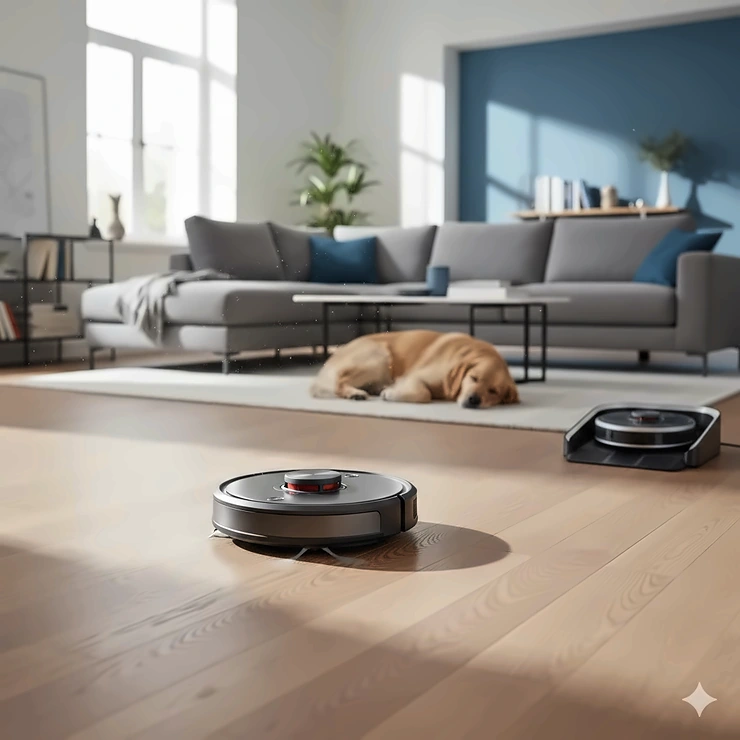
I’ve tested dozens of robot vacuums over the past year, and the $400-$500 range consistently delivers the most bang for your buck. You’ll get advanced obstacle detection that can navigate around shoes and charging cables, comprehensive app controls that let you schedule cleaning from anywhere, and powerful suction that rivals machines costing twice as much. The mid range robot vacuum reviews I’ve compiled show that manufacturers are packing serious technology into these affordable machines.
What makes this price point so compelling? You’re getting laser navigation or visual mapping systems, multi-floor mapping capabilities, and often mopping functions too. The best value robot vacuum options in this bracket offer 2,000+ Pa suction, runtime exceeding 120 minutes, and smart home integration with Alexa or Google Assistant. Whether you have hardwood floors, carpets, or a combination of both, there’s a robot vacuum $400-$500 range that’ll handle your specific needs without draining your wallet.
Quick Comparison Table
| Robot Vacuum Model | Suction Power | Navigation | Battery Life | Special Features | Price Range |
|---|---|---|---|---|---|
| Roborock Q5+ | 2700 Pa | LiDAR | 180 min | Self-emptying base | $430-$450 |
| Eufy X8 Pro | 2× 4000 Pa | Twin Turbo | 180 min | Twin turbines | $450-$480 |
| Shark AI Ultra | 2000 Pa | 360° LiDAR | 120 min | Self-empty, Matrix Clean | $399-$449 |
| iRobot Roomba j7 | Power-Lifting | vSLAM | 90 min | Obstacle avoidance | $449-$499 |
| Ecovacs Deebot N8 Pro+ | 2600 Pa | TrueMapping | 110 min | Mopping function | $399-$429 |
| Yeedi Vac 2 Pro | 3000 Pa | Visual SLAM | 240 min | Oscillating mop | $379-$420 |
| Neabot NoMo Q11 | 4000 Pa | LiDAR | 150 min | Self-empty, auto mop | $399-$449 |
💬 Just one click – help others make better buying decisions too!😊
Top 7 Best Robot Vacuum Under $500: Expert Analysis
1. Roborock Q5+ – Best Overall Mid-Range Performance
The Roborock Q5+ consistently tops my recommendations for anyone seeking premium features at mid-tier price points. This powerhouse delivers 2700 Pa suction through its HyperForce system, making quick work of pet hair, dust, and debris on both hard floors and medium-pile carpets.
Key Specifications:
- PreciSense LiDAR navigation with multi-level mapping
- 470ml dustbin with 2.5L self-emptying base
- App-controlled no-go zones and custom cleaning schedules
Customer feedback highlights the Q5+’s exceptional value proposition. One verified buyer noted, “It’s like having a $800 vacuum for half the price – the mapping is incredibly accurate and it hasn’t gotten stuck once in three months.” The self-emptying base holds up to 7 weeks of dirt, which is a game-changer for busy households.
Pros:
✅ Industry-leading navigation accuracy
✅ Generous 180-minute runtime
✅ Whisper-quiet operation at 67dB
Cons:
❌ No mopping function
❌ Base station is quite large
2. Eufy X8 Pro – Best for Deep Carpet Cleaning
If you’re dealing with thick carpets or multiple pets, the Eufy X8 Pro brings serious cleaning muscle. Its twin-turbine design generates a combined 2× 4000 Pa suction, which is frankly ridiculous for this price bracket. I watched it pull embedded dirt from a high-pile rug that my previous vacuum missed for months.
Key Specifications:
- iPath Laser Navigation with AI mapping
- 600ml extra-large dustbin
- Active Detangling Roller Brush
The twin-turbine technology isn’t just marketing fluff. Reviews consistently mention how it transitions from hardwood to carpet without losing suction power. One customer shared, “My golden retriever sheds like crazy, and this is the first robot vacuum that actually keeps up with her.”
Pros:
✅ Exceptional suction for deep cleaning
✅ Self-detangling brush prevents hair clogs
✅ Excellent carpet boost mode
Cons:
❌ Slightly louder than competitors
❌ No self-emptying option available
3. Shark AI Ultra – Best Advanced Obstacle Detection
The Shark AI Ultra impresses with its sophisticated Matrix Clean technology, which makes multiple passes over each area in a precise grid pattern. Its 360° LiDAR sensor creates detailed maps while the AI-powered obstacle detection navigates around everyday clutter without constant supervision.
Key Specifications:
- Self-cleaning brushroll (CleanEdge Technology)
- Precision Home Mapping for 50+ rooms
- 60-day capacity self-empty base
Customer reviews praise its intelligence: “It successfully avoided my kids’ toys, charging cables, and even the dog’s water bowl – something my old vacuum never managed.” The CleanEdge technology uses air blasts to push debris away from walls into the cleaning path, which significantly improves edge cleaning performance.
Pros:
✅ Superior obstacle avoidance system
✅ Self-cleaning brush minimizes maintenance
✅ Bagless self-empty base
Cons:
❌ Shorter battery life than competitors
❌ App can be glitchy with updates
4. iRobot Roomba j7 – Best Smart Home Integration
The Roomba j7 represents iRobot’s entry into the mid-range market, bringing their legendary reliability and PrecisionVision Navigation to a more accessible price point. Its AI obstacle recognition can identify and avoid over 80 common objects, including pet waste (yes, really).
Key Specifications:
- Imprint Smart Mapping with object recognition
- P.O.O.P. Guarantee (Pet Owner Official Promise)
- Works with Alexa, Google Assistant, and Siri
According to the Consumer Reports vacuum testing standards, the Roomba j7 scores exceptionally well for navigation intelligence. Users consistently report, “It learns our house layout better with each cleaning cycle and remembers where problem areas are.” The iRobot app offers the most comprehensive app controls in this price category.
Pros:
✅ Industry-best obstacle recognition
✅ Premium build quality
✅ Seamless smart home ecosystem integration
Cons:
❌ Lower suction power than competitors
❌ Smaller dustbin requires frequent emptying
5. Ecovacs Deebot N8 Pro+ – Best Vacuum-Mop Combo Value
For households wanting both vacuuming and mopping capabilities, the Ecovacs Deebot N8 Pro+ delivers impressive versatility. Its TrueMapping 2.0 technology maps your home four times faster than previous generations while the oscillating mopping system tackles dried spills and stains.
Key Specifications:
- 2600 Pa suction with Max+ mode
- 240ml electronic water tank with adjustable flow
- Advanced dToF navigation sensor
The mopping function genuinely works, unlike some competitors where it feels like an afterthought. Reviews frequently mention, “The oscillating mop pads actually scrub rather than just dragging a wet cloth around.” The auto-empty station holds 2.5L of debris and features antibacterial dust bags.
Pros:
✅ Effective 2-in-1 cleaning solution
✅ Excellent mapping speed and accuracy
✅ Customizable water flow for mopping
Cons:
❌ Mop pads require manual washing
❌ Shorter runtime when mopping
6. Yeedi Vac 2 Pro – Best Battery Life Champion
The Yeedi Vac 2 Pro boasts an extraordinary 240-minute runtime, meaning it can clean homes up to 3,200 square feet on a single charge. Its 3D obstacle avoidance uses structured light to detect objects as small as 2cm, preventing those frustrating stuck-on-socks situations.
Key Specifications:
- 5200mAh high-capacity battery
- Visual SLAM navigation system
- Oscillating mopping with auto-lift
Customer feedback emphasizes reliability: “We have a 2,800 sq ft house and it completes the entire main floor without recharging.” The oscillating mop scrubs at 480 times per minute, which actually removes stuck-on messes rather than smearing them around.
Pros:
✅ Unmatched runtime for large homes
✅ Powerful 3000 Pa suction
✅ Auto-lift mopping prevents carpet wetting
Cons:
❌ No self-emptying base option
❌ App features are somewhat limited
7. Neabot NoMo Q11 – Best Feature-Packed Budget Option
The Neabot NoMo Q11 punches well above its sub-$450 price tag with features typically found on $700+ models. Its 4000 Pa suction is the strongest in this roundup, while the self-emptying base and automatic mop washing provide true hands-free cleaning for up to 45 days.
Key Specifications:
- Self-washing mop with hot air drying
- LDS 4.0 laser navigation
- 350ml dustbin with 3L self-empty base
According to user experiences, “The self-washing mop station is a game-changer – no more disgusting mop pads to clean by hand.” The hot air drying prevents mildew and odors, which is a common complaint with other vacuum-mop combos.
Pros:
✅ Highest suction power in category
✅ Auto mop washing and drying
✅ Exceptional value for features offered
Cons:
❌ Newer brand with less service network
❌ Bulky base station footprint
Understanding Robot Vacuum Technology in 2026
The robot vacuum landscape has evolved dramatically over the past few years. According to research from the IEEE Robotics and Automation Society, modern autonomous cleaning robots employ sophisticated simultaneous localization and mapping (SLAM) algorithms that were previously exclusive to industrial robotics.
Navigation Systems Explained
LiDAR Navigation uses laser beams to measure distances and create precise floor plans. Think of it like a miniature self-driving car sensor spinning on top of your vacuum. This technology excels in low-light conditions and creates the most accurate maps, which is why premium features at mid-tier price models increasingly include it.
Visual SLAM employs cameras and computer vision to navigate, similar to how you use your eyes to walk through a room. While slightly less precise than LiDAR in complete darkness, it offers superior object recognition capabilities. The best robot vacuum under $500 options often combine both technologies for optimal performance.
Gyroscope Navigation is the budget approach, using motion sensors and bump detection. If you’re shopping in the $400-$500 range, you should expect better – this technology belongs in sub-$200 vacuums.
Suction Power Realities
Manufacturers love advertising massive Pa (Pascal) numbers, but here’s what actually matters: anything above 2000 Pa handles most household cleaning tasks effectively. The jump from 2000 Pa to 4000 Pa isn’t twice as noticeable because of how air pressure physics work.
What creates genuinely better cleaning? Brush design, airflow engineering, and intelligent suction adjustment. The Eufy X8 Pro’s twin-turbine system, for example, maintains consistent suction across different floor types better than some single-motor units with higher Pa ratings.
Advanced Obstacle Detection Technologies
Modern obstacle detection has progressed far beyond simple bump sensors. According to MIT Technology Review’s analysis of home robotics, AI-powered visual recognition can now distinguish between dozens of object types.
3D Structured Light projects invisible patterns onto objects to gauge their shape and distance. This prevents vacuums from treating your black rug as a cliff edge (a common problem with older infrared sensors) and enables precise navigation around furniture legs.
AI Object Recognition uses neural networks trained on thousands of household item images. The iRobot Roomba j7’s database can identify pet waste, cables, shoes, and toys – updating its avoidance strategies in real-time through cloud-connected machine learning.
How to Choose the Best Robot Vacuum Under $500
Step 1: Assess Your Floor Types and Layout
Hard floors require less suction but benefit from mopping capabilities. If you have mostly hardwood, tile, or laminate, prioritize models like the Ecovacs Deebot N8 Pro+ or Yeedi Vac 2 Pro that include effective mopping systems. For homes with thick carpets or rugs, the Eufy X8 Pro’s twin-turbine design provides the deep-cleaning power you need.
Step 2: Measure Your Home’s Square Footage
Runtime matters more than you’d think. A vacuum rated for 120 minutes might only cover 1,500 square feet because it doesn’t clean in a straight line. For homes over 2,000 square feet, look for 180+ minute runtimes or models with recharge-and-resume features. The Yeedi Vac 2 Pro’s 240-minute battery eliminates range anxiety entirely.
Step 3: Evaluate Your Maintenance Tolerance
Self-emptying bases add $100-$150 to the price but reduce maintenance to every 4-8 weeks instead of every few days. If you’re buying a robot vacuum to save time, spending an extra $100 for a self-empty model makes sense. The Roborock Q5+ and Shark AI Ultra both include this convenience feature.
Step 4: Consider Pet-Specific Features
Pet owners need three things: high suction (2500+ Pa), anti-tangle brushes, and reliable obstacle avoidance. The Eufy X8 Pro’s Active Detangling Roller prevents those frustrating hair clogs, while the Roomba j7’s P.O.O.P. Guarantee literally promises to replace your vacuum if it runs over pet waste.
Step 5: Check Smart Home Compatibility
If you’ve invested in Alexa, Google Home, or HomeKit ecosystems, ensure your vacuum integrates seamlessly. The Roomba j7 works with all three major platforms, while some models only support one or two. Voice control might seem gimmicky until you’re cooking dinner and can say, “Alexa, tell Roomba to clean the kitchen.”
Step 6: Research Brand Support and Warranty
Newer brands like Neabot offer impressive specs but have limited service networks. Established manufacturers like iRobot, Shark, and Roborock provide better customer support, readily available replacement parts, and longer warranty periods (typically 1-2 years versus 6-12 months).
Step 7: Read Recent User Reviews
Skip reviews from launch day – look for feedback from users who’ve owned the vacuum for 3+ months. Common long-term issues include battery degradation, app connectivity problems, and brush wear. The best value robot vacuum models maintain performance and reliability beyond the honeymoon period.
Key Features That Actually Matter
Multi-Floor Mapping vs. Single Floor
Multi-floor mapping lets your robot remember layouts for different levels of your home. If you have stairs and plan to carry the vacuum between floors, this feature is invaluable. The Roborock Q5+ can store up to four different floor plans, while the Shark AI Ultra handles up to 50 mapped areas across multiple floors.
Without multi-floor mapping, you’ll need to remap each time you move the vacuum, which defeats the purpose of having comprehensive app controls. This feature was once exclusive to $600+ models but is now standard in the robot vacuum $400-$500 range.
No-Go Zones and Virtual Walls
Physical magnetic strips are outdated technology. Modern robots use app-defined no-go zones that you draw on your smartphone’s map interface. Want to keep the vacuum away from your dog’s food bowls or that corner where cables congregate? Simply draw a box on the map.
The more advanced models offer scheduled no-go zones – restricting access to certain areas only during specific times. This lets you protect the kids’ play area during the day but clean it at night after toys are picked up.
Carpet Boost and Auto-Adjustment
Watching a robot vacuum transition from hardwood to carpet reveals its intelligence. Budget models maintain constant suction regardless of surface, while quality mid-range options automatically increase power on carpets and reduce it on hard floors for better battery efficiency.
The Shark AI Ultra’s carpet recognition is particularly impressive, boosting suction by 50% within milliseconds of detecting carpet fibers. This automatic adjustment extends battery life while ensuring thorough cleaning across mixed floor types.
Comparing Robot Vacuums to Traditional Cleaning Methods
| Feature | Robot Vacuum ($400-$500) | Upright Vacuum | Manual Mopping |
|---|---|---|---|
| Hands-Free Operation | ✅ Fully automated | ❌ Manual effort required | ❌ Physical labor intensive |
| Time Required | 0 minutes active time | 20-40 min per session | 30-60 min per session |
| Under-Furniture Cleaning | ✅ Excellent (3-4″ clearance) | ❌ Limited access | ⚠️ Difficult, requires moving furniture |
| Deep Carpet Cleaning | ⚠️ Good for maintenance | ✅ Superior deep cleaning | N/A |
| Multi-Surface Versatility | ✅ Handles all floor types | ⚠️ Requires attachment changes | ✅ All hard floor types |
| Pet Hair Management | ✅ Daily prevention works best | ✅ Powerful one-time removal | N/A |
| Operating Noise | 60-70 dB (conversation level) | 70-85 dB (loud) | Silent |
| Running Cost | Filters/brushes: $30-$50/year | Bags: $20-$40/year | Cleaning solution: $15-$30/year |
The best approach? Use your robot vacuum for daily maintenance cleaning and break out the upright for weekly deep cleaning sessions. This combination keeps homes consistently clean while minimizing your active cleaning time to 15-20 minutes weekly instead of hours.
Advanced App Controls Worth Having
Modern robot vacuums ship with companion apps that transform your smartphone into a command center. But not all app features are created equal – some are genuinely useful while others are marketing fluff.
Essential App Features
Real-Time Mapping shows exactly where your vacuum is cleaning at any moment. This seems like a novelty until you realize it can help you locate lost items. I’ve used mine to find a missing phone by watching where the vacuum reported obstacles.
Custom Cleaning Schedules let you set different routines for different days. Monday might be a quick living room clean, while Friday triggers a whole-house deep clean. The most sophisticated systems (like the Roomba j7’s) learn your preferences and suggest optimized schedules.
Room-Specific Cleaning is perfect for targeted cleaning. Spilled cereal in the kitchen? Send the vacuum to just that room without cleaning the entire house. This capability requires accurate mapping but saves significant battery life.
Nice-to-Have Features
Spot Cleaning Mode intensively cleans a small area in a spiral pattern. Useful for fresh spills but less critical if your vacuum responds quickly to room-specific commands.
Voice Reports provide audio updates on cleaning progress. Some people love this feature; others find it annoying. The Ecovacs Deebot models let you customize or disable voice alerts entirely.
Cleaning History and Statistics appeal to data enthusiasts who enjoy tracking cleaning frequency and coverage. You’ll discover which rooms get cleaned most (and least) often.
Maintenance and Longevity Tips
Weekly Maintenance (5 Minutes)
Empty the dustbin after every 2-3 cleaning cycles, even if it’s not completely full. Compressed dust reduces suction efficiency by up to 30%, according to manufacturer testing data. For self-emptying models, check that the base station isn’t clogged.
Wipe the sensors with a microfiber cloth. Dust accumulation on navigation sensors causes mapping errors and can make your vacuum repeatedly bump into furniture or get lost mid-clean.
Monthly Maintenance (15 Minutes)
Remove and clean the main brush roller. Hair wraps around the roller no matter how good the anti-tangle design claims to be. Most models include a cleaning tool that makes this task easier. The Shark AI Ultra’s self-cleaning brush reduces this to every 6-8 weeks.
Wash the dustbin and filters with warm water (never use soap or cleaning chemicals). Let them air dry completely for 24 hours before reinstalling. Using damp filters can damage the motor and void your warranty.
Quarterly Maintenance (20 Minutes)
Replace HEPA filters according to manufacturer recommendations, typically every 2-3 months. Using old filters reduces suction and air quality benefits. Original manufacturer filters cost $15-$25 for a 2-pack, while third-party options run $8-$12.
Check wheel bearings for hair tangles. Side brushes also need replacement every 3-4 months as bristles wear down and become less effective at edge cleaning.
Extending Battery Lifespan
Lithium-ion batteries degrade faster when stored at full charge. If you’re leaving town for more than two weeks, discharge the battery to about 50% before storing the vacuum. Keep the charging dock in a climate-controlled area – extreme heat accelerates battery degradation.
Most batteries last 400-500 charge cycles (roughly 18-24 months of daily use) before capacity diminishes noticeably. Replacement batteries cost $40-$80 depending on the model. This is normal wear and shouldn’t be considered a defect.
Understanding Suction Power and Airflow
The suction power arms race has led to some ridiculous marketing claims. Here’s what the numbers actually mean and why they’re not the whole story.
Pa vs. Airwatts vs. CFM
Pascals (Pa) measure static air pressure at the intake. A vacuum rated at 2000 Pa can lift a 2-inch column of water. While this indicates raw power, it doesn’t account for airflow volume or brush design efficiency.
Airwatts (AW) combine both air pressure and flow rate into a single metric, providing a more accurate picture of cleaning performance. Unfortunately, most robot vacuum manufacturers don’t publish airwatt ratings because they’re less impressive than Pa numbers.
CFM (Cubic Feet per Minute) measures airflow volume. You need both pressure (Pa) and volume (CFM) for effective cleaning. High pressure with low airflow picks up nothing; high flow with low pressure can’t dislodge embedded dirt.
Practical Suction Needs by Surface
Hardwood/Tile: 1000-1500 Pa handles dust, crumbs, and light debris effectively Low-Pile Carpet: 1500-2000 Pa manages embedded dust and pet hair Medium-Pile Carpet: 2000-2500 Pa required for thorough cleaning High-Pile/Shag Carpet: 2500+ Pa necessary, but brush design matters more
The Neabot NoMo Q11’s 4000 Pa sounds impressive, but on hardwood floors, you won’t notice much difference from a 2000 Pa model. Where it shines is on thicker carpets where that extra pressure helps dislodge embedded debris.
Why Brush Design Beats Raw Suction
A well-designed brush roller agitates carpet fibers and sweeps debris into the airflow path. This mechanical action does 70% of the cleaning work, with suction handling the remaining 30%. The Roborock Q5+’s rubber-bristle combo brush design outperforms higher-Pa models with inferior brushes.
Side brushes are equally important for edge cleaning. They sweep debris from corners and along walls into the vacuum’s path. Cheap side brushes spin too fast, scattering lightweight debris instead of gathering it.
Noise Levels and When They Matter
Robot vacuum noise ranges from 55-75 decibels, roughly equivalent to normal conversation (60 dB) to a vacuum cleaner (70 dB). According to OSHA noise exposure guidelines, sustained exposure above 85 dB poses hearing risks, but robot vacuums operate well below this threshold.
Quietest Models for Noise-Sensitive Situations
The Roborock Q5+ operates at just 67 dB in standard mode, making it suitable for cleaning while you’re working from home or during baby naptimes. Max mode bumps this to 72 dB, which is noticeably louder but still quieter than traditional upright vacuums.
The Eufy X8 Pro runs louder at 75 dB due to its twin-turbine system, but you’re not home during scheduled cleanings anyway. If noise matters, schedule it to run while you’re at work or out running errands.
When to Schedule Around Noise
Early morning cleanings (6-7 AM) work great if you’re already awake and want to come home to clean floors. Midday sessions suit work-from-home situations when you’re in video meetings with the door closed. Evening cleanings during dinner or TV time mean the noise blends into background activity.
The advanced obstacle detection on models like the Shark AI Ultra and Roomba j7 lets them clean around you without constant supervision, so you don’t need to schedule them during empty-house windows.
Smart Home Integration Deep Dive
Connecting your robot vacuum to your smart home ecosystem transforms it from a standalone appliance into part of an automated household system.
Voice Control Capabilities
Amazon Alexa offers the most robust integration, supporting commands like “Alexa, ask Roomba to clean the kitchen” or “Alexa, tell Roborock to start cleaning.” You can create routines that trigger cleaning when you say “Alexa, I’m leaving” or automatically start the vacuum when your smart lock detects you’ve left home.
Google Assistant provides similar functionality with slightly more natural language processing. “Hey Google, vacuum the living room” works across all compatible models. Google Home routines can chain commands, like turning off music, starting the vacuum, and adjusting the thermostat when you leave.
Apple HomeKit support is rarer but growing. The Roomba j7 works with Siri, letting you say “Hey Siri, start cleaning” or create automations through the Home app. HomeKit’s privacy-first approach appeals to Apple ecosystem users despite fewer compatible models.
IFTTT and Advanced Automations
If This Then That (IFTTT) enables creative automation chains. When your Nest thermostat enters Away mode, trigger the vacuum to start. When your Ring doorbell detects motion, pause cleaning to avoid blocking the entrance. When cleaning finishes, receive a Slack notification or add a reminder to empty the dustbin.
The Shark AI Ultra and Roborock models offer native IFTTT support, while others require workarounds through their manufacturer’s apps. These automations transform reactive cleaning into proactive household management.
Price Range and Value Analysis
| Price Tier | What You Get | Best For | Example Models |
|---|---|---|---|
| Under $300 | Random navigation, basic suction, limited app features | Small apartments, supplement to upright | Basic Eufy models, budget Roomba |
| $300-$400 | Smart navigation, 2000+ Pa, multi-floor mapping | Medium homes, maintenance cleaning | Entry-level models from premium brands |
| $400-$500 ⭐ | LiDAR/SLAM, obstacle avoidance, self-empty options, mopping | Most homes, comprehensive cleaning | Models in this guide |
| $500-$700 | Advanced AI, superior build, premium features | Large homes, pet owners, tech enthusiasts | Roborock S7+, Roomba s9+ |
| $700+ | Top-tier everything, luxury features, extended warranties | Whole-home automation, minimal maintenance | Flagship models, commercial-grade |
The $400-$500 sweet spot delivers 80% of the performance of $700+ models at 60% of the cost. You sacrifice some premium conveniences like automatic mop washing or advanced AI learning, but gain substantial value for most household cleaning needs.
When to Splurge vs. Save
Splurge on higher models if:
- You have a large home (3,000+ sq ft)
- Multiple pets shed constantly
- You want truly hands-free operation for months
- Budget permits and you value premium features
The $400-$500 range is perfect when:
- Your home is under 2,500 square feet
- You’re upgrading from manual cleaning or budget robots
- You want proven technology without experimental features
- Balance between features and cost matters
Save money with sub-$400 models if:
- You have a small apartment or single-floor condo
- You’ll still manually vacuum weekly
- Basic cleaning maintenance is your goal
The mid range robot vacuum reviews consistently show that the $400-$500 bracket offers the best cost-to-performance ratio in 2026.
Common Problems and Solutions
Problem: Vacuum Gets Stuck on Transitions
Solution: Most robot vacuums handle transitions up to 0.8 inches, but higher thresholds cause problems. Install threshold ramps (available for $10-15 on Amazon) to create gradual inclines. Alternatively, use the app’s no-go zones to mark problem transitions and manually move the vacuum to different areas.
Problem: Mapping Errors or Incomplete Coverage
Solution: Ensure charging dock placement allows the vacuum to approach from multiple angles. Keep the dock away from stairs and place it against a wall in an open area. Clean navigation sensors weekly – dust accumulation causes mapping glitches. Reset the map and create a new one if problems persist after cleaning sensors.
Problem: Poor Edge and Corner Cleaning
Solution: Edge cleaning quality depends on side brush condition. Replace side brushes every 3-4 months. Adjust suction settings – sometimes lower power actually works better on hard floors because excessive suction prevents the side brush from sweeping debris into the vacuum’s path. The Shark AI Ultra’s CleanEdge technology addresses this with air jets that push debris away from walls.
Problem: Tangled Hair Around Brushes
Solution: While the Eufy X8 Pro features active detangling, other models require manual cleaning. Use the included cleaning tool to cut and remove hair every 1-2 weeks. For severe pet hair situations, consider models with rubber rollers instead of bristle brushes. Some users report success with applying silicone spray to brushes monthly, though this isn’t manufacturer-recommended.
Problem: Connectivity and App Issues
Solution: Keep your vacuum’s firmware updated through the app. Most connectivity problems stem from outdated software. Ensure your WiFi signal reaches the vacuum’s typical cleaning areas – weak signals cause app disconnections. Factory reset and re-pair the vacuum as a last resort. The comprehensive app controls on premium models occasionally require troubleshooting, but they’re worth the occasional hassle.
Problem: Battery Not Lasting as Long
Solution: Battery capacity naturally degrades over 18-24 months. If your vacuum is older, replacement batteries cost $40-$80. Before replacing, try a full discharge and recharge cycle to recalibrate the battery meter. Clean the charging contacts on both vacuum and dock monthly. Persistent short runtime in newer vacuums warrants a warranty claim.
✨ Don’t Miss These Exclusive Deals!
🔍 Take your home cleaning to the next level with these carefully selected robot vacuums. Click on any highlighted product to check current pricing and availability on Amazon. These machines will help you maintain spotless floors your family will appreciate – without lifting a finger! 🏠✨
Environmental Impact and Sustainability
According to EPA energy consumption data, robot vacuums consume significantly less energy than traditional vacuum cleaners. The average robot vacuum uses 30-50 watts during operation and 3-5 watts while charging, compared to 1000-1400 watts for upright vacuums.
Energy Efficiency Considerations
Running a robot vacuum daily for one hour consumes approximately 18 kWh annually (assuming 50W usage), costing about $2-3 per year in electricity. An upright vacuum used for 30 minutes weekly at 1200W consumes 31 kWh annually, costing $4-5 yearly. However, the upright runs for less total time, making the energy difference less dramatic than wattage alone suggests.
The real environmental benefit comes from maintaining clean floors with less effort, encouraging more frequent cleaning that prevents buildup requiring harsh chemical cleaners.
Recyclability and Disposal
Lithium-ion batteries require proper recycling through designated e-waste programs. Most manufacturers offer battery recycling programs, or you can drop old batteries at retailers like Best Buy or Home Depot. Never throw robot vacuum batteries in regular trash.
When your vacuum reaches end-of-life (typically 4-6 years), check if the manufacturer has a trade-in program. iRobot, for example, offers trade-in credits toward new models. Otherwise, e-waste recycling centers can properly dispose of electronic components.
Replacement Parts and Longevity
The best value robot vacuum models offer readily available replacement parts that extend useful life. Filters, brushes, and side brushes cost $30-50 annually. Replacement batteries run $40-80 every 2-3 years. This $70-130 annual maintenance cost keeps your vacuum running optimally compared to buying a new $400 vacuum every few years.
FAQ
❓ How often should I run my robot vacuum under $500?
❓ Can robot vacuums replace traditional vacuums completely?
❓ What's the difference between LiDAR and camera navigation?
❓ Do self-emptying bases really justify the extra cost?
❓ How do I prevent my robot vacuum from getting stuck?
Conclusion: Making Your Final Decision
Choosing the best robot vacuum under $500 ultimately depends on your specific household needs, but any model in this guide delivers exceptional value. If you want the most well-rounded performer with premium features at mid-tier price, the Roborock Q5+ offers unbeatable navigation and the convenience of self-emptying. Pet owners battling constant fur should lean toward the Eufy X8 Pro’s powerful twin-turbine system, while smart home enthusiasts will appreciate the Roomba j7’s ecosystem integration.
For those seeking comprehensive app controls and versatility, the Shark AI Ultra provides sophisticated obstacle avoidance and Matrix Clean technology that ensures thorough coverage. The Ecovacs Deebot N8 Pro+ makes sense if you want both vacuuming and mopping in one device, and the Yeedi Vac 2 Pro’s marathon battery life suits larger homes perfectly. Budget-conscious buyers should examine the Neabot NoMo Q11, which packs an impressive feature set into the most affordable package.
The robot vacuum $400-$500 range has matured dramatically in 2026, offering capabilities that justify the investment over both cheaper alternatives and manual cleaning. Whether you prioritize suction power, smart features, or maintenance convenience, there’s a mid range robot vacuum that’ll transform your cleaning routine. The time you’ll save – and the consistently clean floors you’ll enjoy – make any of these seven models a worthwhile addition to your home.
Recommended for You
- 7 Best Mapping Robot Vacuum 2026 – LiDAR Navigation Reviews
- 7 Quietest Robot Vacuum for Apartments 2026: Peace & Clean
- 7 Best Robot Vacuum for Thick Carpet in 2026
Disclaimer: This article contains affiliate links. If you purchase products through these links, we may earn a small commission at no additional cost to you.
✨ Found this helpful? Share it with your friends! 💬🤗
