
In This Article
You know that frustrating moment when you’ve just washed your car, but those wheels still look dingy? That stubborn grime isn’t laziness on your part—it’s brake dust, and it’s basically the arch-nemesis of clean rims. I’ve been there, scrubbing away with paper towels and getting nowhere fast. The truth is, regular cleaning tools simply can’t tackle the unique challenges that wheels present.
Finding the right brushes to clean rims changed everything for me. We’re talking about specialized tools designed to navigate tight spaces, reach behind spokes, and lift away corrosive brake dust before it permanently damages your wheels. According to Bendix Brakes, metallic brake dust is highly corrosive and can etch into alloy wheel surfaces, causing irreversible damage if not cleaned regularly.
Whether you’re driving a luxury sedan with intricate spoke designs or a rugged truck with chunky off-road wheels, this guide breaks down the seven best brushes to clean rims that actually deliver results in 2025. I’ve tested dozens of options, read through hundreds of reviews, and consulted with professional detailers to bring you tools that won’t scratch, will last, and make wheel cleaning something you might actually look forward to (or at least not dread).
Quick Comparison: Top Brushes to Clean Rims at a Glance
| Product | Best For | Price Range | Key Feature | Rating |
|---|---|---|---|---|
| Woollywormit Wheel Cleaning Brush | Intricate Wheels | $25-$35 | Patented lug nut cleaner | 4.5/5 |
| Liquid X Wheel Woolies 3-Piece | Professional Detailing | $35-$45 | Angled caliper brush | 4.7/5 |
| Chemical Guys Wheelie Brush | Budget-Friendly | $10-$15 | Soft synthetic bristles | 4.3/5 |
| Meguiar’s Supreme Wheel Brush | Premium Quality | $22-$28 | Thick microfiber pile | 4.4/5 |
| TAKAVU Wheel & Tire Brush Set | Complete Kit | $18-$24 | Includes detailing brush | 4.2/5 |
| oesee 4-Pack Wheel Brush Kit | Value Bundle | $20-$30 | 360° bendable design | 4.5/5 |
| Chemical Guys Gerbil Brush | Delicate Finishes | $15-$20 | Natural sheepskin | 4.6/5 |
💬 Just one click – help others make better buying decisions too! 😊
Top 7 Brushes to Clean Rims: Expert Analysis
1. Woollywormit Wheel Cleaning Brush Car Detailing Kit
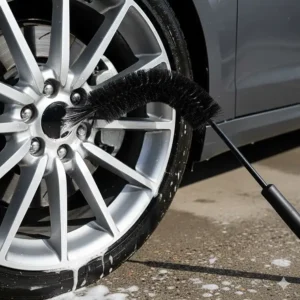
If you’ve ever struggled with cleaning around lug nuts, this patented design is about to become your best friend. The Woollywormit features a 13.25-inch flexible chenille microfiber-covered brush that bends to reach behind spokes while maintaining enough rigidity for effective scrubbing. What really sets it apart is the integrated lug nut cleaner on the opposite end—a game-changer for those hard-to-reach cavities around wheel bolts.
Key Specifications:
- Length: 13.25 inches
- Material: Metal-free chenille microfiber
- Special Feature: Patented dual-end design with lug nut cleaner
- Price: $25-$35
Customers rave about its ability to navigate tight spaces without scratching. One detailer mentioned it transformed their Saturday routine from a two-hour ordeal into a 45-minute breeze. The brush requires openings greater than 1.5″ x 2.5″ to fit, so check your wheel design before purchasing.
✅ Pros:
- No exposed metal parts prevent scratching
- Patented lug nut cleaning system
- Flexible yet rigid construction
❌ Cons:
- Size limitations for very tight spoke designs
- Replacement sponges sold separately
2. Liquid X Original Wheel Woolies Brushes 3-Piece Kit
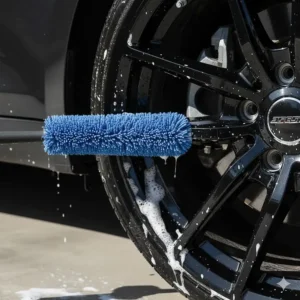
The Liquid X Wheel Woolies set is what professional detailers reach for when nothing else cuts it. This USA-made trio includes an 8-inch, 12-inch, and 18-inch brush, plus a unique 45-degree angled caliper spoke brush that no other brand offers in a complete set. The synthetic wool is top-grade, feeling luxuriously soft yet tough on brake dust.
Key Specifications:
- Set includes: 8″, 12″, 18″ brushes + angled caliper brush
- Material: Premium synthetic wool
- Handle: Flexible polypropylene foam
- Price: $35-$45
Real users report this kit handles everything from delicate chrome to powder-coated racing wheels without issue. The longest brush excels at wheel barrels and fender liners, while the angled brush gets behind wheels where others simply can’t reach. Family-owned and supporting veteran causes adds extra appeal beyond just functionality.
✅ Pros:
- Only brand with angled brush in complete set
- Three size options for versatility
- Made in USA with premium materials
❌ Cons:
- Higher price point
- Larger brushes need storage space
3. Chemical Guys Wheelie All Exterior Surface and Wheel Brush (ACCG08)
Sometimes you don’t need all the bells and whistles—you just need a solid brush to clean car rims that works. The Chemical Guys Wheelie delivers exactly that at a budget-friendly price. Its soft synthetic bristles are split for a gentle touch on sensitive wheels while still removing tough dirt, debris, and brake dust effectively.
Key Specifications:
- Bristle Type: Soft synthetic flagged-tip
- Handle: Ergonomic non-slip grip
- Compatibility: All wheel finishes
- Price: $10-$15
This brush has become a cult favorite in car enthusiast communities. Users appreciate the comfortable handle that prevents slipping during extended cleaning sessions, and the chemical-resistant bristles that withstand wheel cleaners and degreasers. According to Family Handyman, regular cleaning with proper tools like this prevents brake dust from permanently etching wheels.
✅ Pros:
- Excellent value for money
- Safe on all wheel types
- Comfortable extended use
❌ Cons:
- Single brush limits reach in deep barrels
- May need complementary tools for complete cleaning
4. Meguiar’s Supreme Microfiber Wheel Brush (X1901/X1902)
When Meguiar’s redesigned their wheel brush line, they created something special. The Supreme Microfiber Wheel Brush features an ultra-thick microfiber head with no wire or metal parts—a common source of potential wheel damage. Available in two sizes (15″ medium and 18″ large), these brushes reach deep into wheel barrels with their long, plush microfiber pile.
Key Specifications:
- Available sizes: 15″ or 18″
- Material: Thick pile microfiber
- Shaft: Premium solid construction
- Price: $22-$28
Professional detailers note the improved durability over earlier generations. The solid shaft provides excellent control while the microfiber head holds substantial cleaning solution. One unique benefit: the long microfiber strands can clean behind spokes when angled properly, eliminating some of the need for a second specialized tool.
✅ Pros:
- Zero metal parts eliminate scratch risk
- Superior cleaning solution retention
- Reaches difficult areas effectively
❌ Cons:
- Takes longer to dry between uses
- Premium pricing compared to alternatives
5. TAKAVU Wheel Tire Brush with Detailing Brush Kit
The TAKAVU kit understands that wheels aren’t the only part needing attention. This set includes a main soft-bristle wheel brush plus a specialized detailing brush perfect for lug nuts, grills, emblems, and even interior vents. It’s essentially two tools that cover your entire cleaning workflow at an incredibly reasonable price point.
Key Specifications:
- Main brush: Ultra-soft dense synthetic bristles
- Bonus: Long precision detailing brush
- Handle: Short ergonomic design
- Price: $18-$24
Customers love the versatility. The main brush works on wheels, tires, inner fenders, and undercarriages without scratching, while the detailing brush gets into every crevice. The short handle provides exceptional control compared to longer alternatives, though it does mean less reach for very deep wheel barrels.
✅ Pros:
- Two brushes for comprehensive cleaning
- Excellent price-to-value ratio
- Scratch-safe on delicate finishes
❌ Cons:
- Shorter reach than some alternatives
- Detailing brush bristles can wear with heavy use
6. oesee Professional 4-Pack Long Handle Wheel Brush Kit
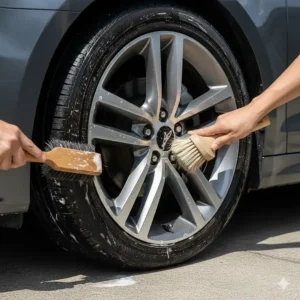
If you’re serious about wheel maintenance, the oesee 4-Pack provides everything you need in one comprehensive package. This kit includes two ultra-soft synthetic woolies brushes in different sizes, one soft detailing brush for lug nut cavities, and one stiff tire brush—basically a complete wheel-care arsenal.
Key Specifications:
- Set includes: 2 woolies brushes, 1 detailing brush, 1 tire brush
- Flexibility: 360-degree bend capability
- Handle: Comfortable silicone grip
- Price: $20-$30
The standout feature is the 360-degree bendability of the woolies brushes, allowing you to contort them into virtually any position for thorough cleaning. Users report the metal-free design and extra-soft bristles minimize scratching risks, while the larger brush head size compared to competitors means faster, more efficient cleaning.
✅ Pros:
- Complete four-piece system
- Superior flexibility for hard-reach areas
- Larger brush heads clean faster
❌ Cons:
- Bundle may be excessive for casual users
- Multiple brushes need storage organization
7. Chemical Guys Gerbil Wheel and Rim Cleaning Brush (ACC_B01)
For those with high-end wheels featuring delicate finishes, the Chemical Guys Gerbil Brush is the gentle giant you need. Made with genuine natural sheepskin fibers rather than synthetic bristles, this short, fat brush profile perfectly scrubs spokes and rims in one pass without any risk of marring surfaces.
Key Specifications:
- Bristle Type: Natural soft sheepskin
- Length: Compact short design
- Construction: Epoxy-set to prevent fiber loss
- Price: $15-$20
This brush excels where others struggle—between tight spokes on custom alloy wheels and polished surfaces that show every tiny scratch. The natural fibers conform to intricate shapes while the compact design fills the space between spokes effectively. Trusted worldwide by professional detailers working on show cars and luxury vehicles.
✅ Pros:
- Natural fibers safest for delicate finishes
- Perfect for tight spoke spaces
- Professional-grade construction
❌ Cons:
- Shorter length limits deep barrel access
- Natural materials require more careful maintenance
Understanding Brake Dust: Your Wheels’ Silent Enemy
Before we dive deeper into cleaning techniques, you need to understand what you’re actually fighting. Brake dust isn’t just dirt—it’s a corrosive mixture of metallic particles from brake pads and rotors, combined with carbon fibers and adhesive materials. Every time you press your brake pedal, microscopic fragments scrape off and acquire a static charge, causing them to stick aggressively to your warm wheels.
Here’s the concerning part: Tire Agent reports that chrome rims are particularly susceptible to brake dust damage because hot brake dust can burn into chrome finishes and create vulnerable areas for corrosion to start. Even if you have alloy or powder-coated wheels, leaving brake dust unchecked leads to pitting, discoloration, and permanent etching of the protective coating.
The good news? Regular cleaning with proper brushes to clean rims prevents all these issues. The bad news? You can’t just spray and pray with a garden hose. You need the right tools to physically agitate and remove the bonded particles before they cause lasting damage.
How to Choose the Perfect Brush to Clean Car Rims
Selecting the right brush isn’t as simple as grabbing the cheapest option on Amazon. Your wheel design, finish type, and cleaning frequency all play crucial roles in determining which tool will work best. Let me walk you through the key considerations.
Material Matters More Than You Think
Metal-free construction is non-negotiable if you care about your wheels. Many cheaper brushes use twisted wire cores that can scratch finishes if the outer material wears down. Look for brushes explicitly marketed as “metal-free” or featuring polypropylene cores. Microfiber, synthetic wool, and natural sheepskin are all excellent bristle materials that effectively lift brake dust without scratching.
Size and Flexibility for Your Wheel Design
Wheels come in countless designs, from simple five-spoke patterns to complex multi-spoke racing wheels. Measure the gaps between your spokes and the depth of your wheel barrels before purchasing. If you have tight spaces, shorter brushes with compact heads work better. For deep barrels, you’ll need 15-18 inch options. Bendable brushes excel for reaching the backside of spokes without removing the wheel entirely.
Handle Ergonomics Save Your Hands
You’ll be gripping this brush for 15-30 minutes per wheel cleaning session. Ergonomic handles with non-slip grips reduce hand fatigue significantly. Some detailers prefer longer handles for better reach, while others favor short handles for more precise control. Consider your physical comfort—there’s no “best” length, only what works for your body and cleaning style.
Chemical Compatibility Protects Your Investment
Different wheel cleaners have varying pH levels and active ingredients. Ensure any brush you purchase explicitly states chemical resistance to wheel cleaners and degreasers. Natural bristles sometimes deteriorate faster with harsh chemicals, while quality synthetic materials typically withstand everything you’ll throw at them.
Price vs. Performance: Finding the Balance
Budget brushes in the $10-15 range work fine for occasional cleaning of standard wheels. If you’re detailing regularly or have expensive custom wheels, investing $25-45 in premium brushes makes sense. The durability, effectiveness, and scratch-prevention features justify the cost difference. Think of it as protecting a multi-thousand-dollar wheel investment with a $30 tool.
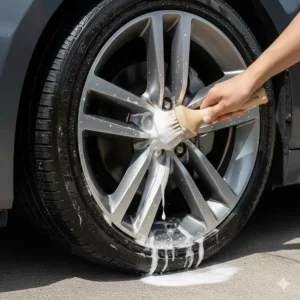
Step-by-Step Guide: Using Brushes to Clean Rims Like a Pro
Having the right brush means nothing if you don’t use it correctly. Follow this professional detailing sequence for spotless, scratch-free wheels every time.
Preparation Phase
Start by ensuring your wheels are completely cool—never clean hot wheels as temperature shock can damage finishes. Remove loose dirt with a pressure washer or strong spray from your garden hose. This prevents abrasive grit from scratching when you start scrubbing. If your wheels haven’t been cleaned in months, consider using an iron fallout remover first to chemically dissolve bonded contamination.
Application Technique
Apply your chosen wheel cleaner according to product directions, typically spraying generously and letting it dwell for 1-2 minutes. Don’t let it dry on the surface. Working one wheel at a time prevents cleaner from drying and becoming difficult to remove. Start with the face of the wheel using your main brush, working in overlapping circular motions. Apply moderate pressure—you’re not trying to scrub through the finish, just agitate the contamination.
Reaching Difficult Areas
This is where specialized brushes shine. Use your longest brush for deep wheel barrels, inserting it through the spokes and rotating to clean the entire inner circumference. Your angled or bendable brush should tackle the backside of spokes and areas around brake calipers. For lug nut areas, switch to a small detailing brush or specialized lug nut cleaner. Take your time in these areas—they harbor the most corrosive buildup.
Rinsing and Drying
Rinse thoroughly with high-pressure water, ensuring all cleaner and loosened brake dust wash away completely. Any residue left behind can cause streaking or spotting. Dry immediately with a clean microfiber towel. This prevents water spots and gives you a chance to inspect your work. If you spot remaining contamination, repeat the process on affected areas.
Post-Cleaning Protection
Once clean and dry, consider applying a wheel sealant or coating. These products create a barrier that makes future cleaning easier and provides some protection against brake dust bonding to the surface. Many professional detailers apply sealants after every cleaning to maintain that showroom shine with minimal effort.
Common Mistakes That Damage Your Wheels
Even with proper brushes to clean rims, technique errors can cause problems. Avoid these rookie mistakes that I learned the hard way.
Using the Wrong Cleaning Products
Not all wheel cleaners work with all wheel finishes. Acid-based cleaners can strip the protective coating from powder-coated or anodized wheels. Always check compatibility with your specific wheel finish. When in doubt, pH-balanced cleaners are safest across all wheel types, though they may require more elbow grease on heavy buildup.
Neglecting Regular Maintenance
The single biggest mistake is waiting too long between cleanings. Brake dust becomes exponentially harder to remove the longer it sits, essentially baking onto the surface through heat cycles. Weekly quick cleanings take far less time than monthly deep cleaning sessions. Think of it like brushing your teeth—consistency prevents major problems.
Aggressive Scrubbing on Delicate Finishes
More pressure doesn’t equal better cleaning. In fact, it increases scratch risk, especially on polished, chrome, or clear-coated wheels. Let your cleaning chemicals do the heavy lifting while your brush provides gentle agitation. If something won’t come off with moderate pressure, you need a stronger cleaner or longer dwell time, not more force.
Cross-Contaminating Your Tools
Using the same brush for tires and wheels spreads tire dressing and rubber particles onto your wheel face. Similarly, using wheel brushes on painted bodywork can transfer brake dust to your car’s paint. Maintain separate tools for different surfaces, or at minimum, thoroughly clean brushes between uses on different surfaces.
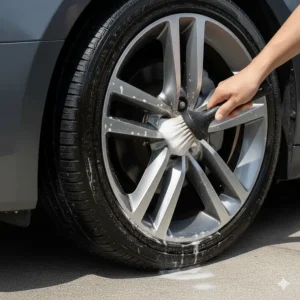
Maintaining Your Rim Cleaning Brushes
Quality brushes to clean rims last years with proper care. These tools represent an investment in your vehicle’s appearance, so treat them accordingly.
Post-Use Cleaning Ritual
After every use, rinse brushes thoroughly under running water until the water runs completely clear. Use a small amount of car wash soap to help release trapped brake dust and oils from the bristles. Gently squeeze synthetic bristles to express water; don’t wring or twist aggressively as this can damage fibers or loosen the bond between bristles and handle.
Proper Drying Techniques
Hang brushes bristle-down or lay them flat to air dry completely before storage. Never store damp brushes in closed containers—moisture promotes mold, mildew, and bacterial growth that can degrade materials and create unpleasant odors. For natural bristle brushes, ensure they dry in a well-ventilated area away from direct sunlight, which can damage natural fibers over time.
Storage Best Practices
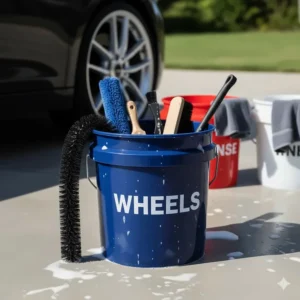
Store brushes in a clean, dry location away from chemicals and automotive fluids. Hanging storage keeps bristles from becoming permanently bent or deformed. If you must store brushes together, ensure they’re completely dry first and place them bristle-up or separated to maintain their shape. Professional detailers often use tool organizers or dedicated brush racks.
When to Replace Your Brushes
Even quality brushes eventually wear out. Replace brushes when you notice significant bristle loss, exposed core materials, permanent bends that affect function, or deterioration from chemical exposure. Worn brushes become less effective and increase scratch risk. Most professionals replace heavily-used brushes annually, while casual users can expect 2-3 years of service.
Advanced Techniques for Professional Results
Ready to take your wheel cleaning game to the next level? These pro tips transform good results into showroom-quality perfection.
Two-Bucket Method for Wheels
Just like washing your car’s paint, use a dedicated two-bucket system for wheels. One bucket holds soapy cleaning solution while the second contains clean rinse water. Dip your brush in the cleaning solution, scrub a section of wheel, rinse the brush in the clean water bucket, then reload with cleaning solution. This prevents redepositing brake dust and grit onto wheels you’ve already cleaned.
Temperature Timing Strategy
Clean wheels in the early morning or late evening when ambient temperatures are cooler. This prevents cleaning solutions from evaporating too quickly and gives you more working time. Additionally, wheels naturally cool faster in lower ambient temps, allowing you to start cleaning sooner after driving. Professional detailers know temperature management is half the battle.
Progressive Cleaning Approach
For severely neglected wheels, use a progressive approach with multiple cleaning sessions. First pass removes the bulk contamination with a strong wheel cleaner and stiff brush. Second pass uses a milder cleaner and softer brush for final detailing. Third pass involves claying the wheel surface to remove bonded contamination your brushes couldn’t lift. This multi-stage process prevents excessive scrubbing that risks damage.
Wheel-Off Deep Cleaning
Once or twice a year, consider removing wheels entirely for ultimate access. This allows you to clean the inner barrel, wheel well, and hidden surfaces that harbor corrosive buildup. While time-consuming, wheel-off cleaning reveals areas you can’t properly maintain otherwise and extends wheel lifespan significantly.
Troubleshooting Stubborn Wheel Problems
Sometimes even the best brushes to clean rims meet their match. Here’s how to handle common challenging situations.
Baked-On Brake Dust
When brake dust has literally baked onto your wheels through multiple heat cycles, standard cleaning may not suffice. Try an iron fallout remover (turns purple when reacting with iron particles), let it dwell for 5 minutes, then agitate with your brush. For extreme cases, use a dedicated brake dust eraser pad in combination with your brush and cleaner—these non-abrasive pads are specifically designed to attack bonded contamination.
Corrosion and Pitting
If you’re seeing corrosion or pitting, you’re past the prevention stage. Light surface corrosion sometimes responds to aluminum brighteners or dedicated wheel restoration products used with soft brushes. Deep pitting requires professional refinishing—there’s no DIY solution that reverses material loss. This underscores why regular cleaning matters so much.
Lug Nut Area Buildup
That ring of crud around lug nuts resists many brushes because of the cavity shape. Specialized lug nut brushes like the Woollywormit attachment or small cylindrical brushes specifically fit these spaces. Alternatively, wrap a small detailing brush with a microfiber towel for more surface contact. Chemical wheel cleaners need direct contact with lug nut areas, so don’t rely solely on spray-and-rinse methods.
Behind-Spoke Challenges
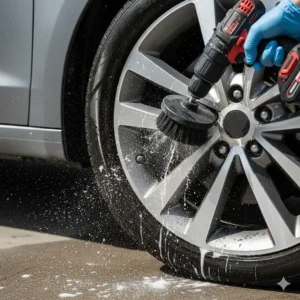
Some wheel designs feature spokes so close together that no brush head fits. For these wheels, flexible synthetic wool brushes bent into narrow profiles work best. You can also use microfiber towels wrapped around your finger for manual access. Rotating brushes (drill attachments) sometimes help but carry higher scratch risk—use with extreme caution on expensive wheels.
Seasonal Considerations for Wheel Maintenance
Your wheel cleaning strategy should adapt throughout the year based on environmental factors and driving conditions.
Winter Challenges
Road salt mixed with brake dust creates an especially corrosive combination that attacks wheels aggressively. In winter climates, increase cleaning frequency to weekly if possible. Use gentler brushes more frequently rather than aggressive tools occasionally. After each winter storm, rinse wheels even if you don’t have time for a full cleaning—removing salt alone prevents significant damage.
Summer Strategies
Hot summer temperatures cause brake dust to bond more quickly to wheel surfaces. Clean wheels more frequently but earlier in the morning when temperatures are manageable. Summer also brings road tar and bug splatter that affect lower wheel areas. Use dedicated tar removers before your regular cleaning routine for best results.
Spring and Fall Maintenance
Transitional seasons are perfect for deep cleaning projects. Spring is ideal for wheel-off cleaning after winter salt exposure, while fall prepares wheels for upcoming harsh conditions. These moderate temperature periods also make it comfortable to spend extra time on detailed cleaning work without freezing or overheating.
Budget vs. Premium: What’s Actually Worth It?
Understanding the real differences between budget and premium brushes to clean rims helps you make informed purchasing decisions based on your specific needs.
Where Budget Brushes Succeed
Entry-level brushes in the $10-15 range work perfectly fine for standard wheels cleaned monthly on daily driver vehicles. If you’re not overly concerned with perfect detailing and have simple five-spoke wheels, budget options deliver acceptable results. They’re also great for first-time wheel cleaners who want to test the waters before committing to premium tools.
Premium Brush Benefits
Spending $25-45 on quality brushes brings several tangible advantages. Superior materials mean longer lifespan—a $35 brush lasting five years costs less annually than replacing $12 brushes every year. Better construction provides more effective cleaning with less effort, saving time and reducing physical strain. Scratch-prevention features protect expensive custom wheels, potentially saving thousands in refinishing costs. For enthusiasts and those with high-end wheels, premium is the smart long-term choice.
The Sweet Spot Strategy
Many detailers find success with a mixed approach: invest in one or two premium specialty brushes for your specific wheel challenges, then supplement with budget options for less critical tasks. For example, pair a premium synthetic wool barrel brush with a budget tire brush. This optimizes spending while ensuring you have excellent tools where they matter most.
Environmental and Health Considerations
Responsible wheel maintenance extends beyond just getting them clean. Understanding environmental and health implications makes you a better car owner and citizen.
Chemical Impact
Many wheel cleaners contain harsh acids or strong alkalines that harm aquatic ecosystems when washed down storm drains. Choose pH-balanced, biodegradable formulas whenever possible. Alternatively, use mechanical cleaning with more brush work and less chemical reliance. If using strong cleaners, try to wash in areas where runoff goes to sanitary sewers (treated) rather than storm drains (direct to waterways).
Brake Dust Health Risks
Research from UK Research and Innovation shows brake dust accounts for 20% of PM2.5 traffic pollution. These microscopic particles can become airborne during dry brushing or high-pressure washing. Always wet your wheels before scrubbing to minimize dust becoming airborne. Consider wearing a basic dust mask when cleaning severely contaminated wheels, especially if you have respiratory sensitivities.
Water Conservation
Traditional wheel cleaning wastes significant water. Use the two-bucket method to minimize water usage while maintaining cleanliness. Consider waterless or rinseless wash products for light maintenance cleanings. Professional-grade low-flow pressure washers clean effectively while using 80% less water than garden hoses. Every gallon saved matters, especially in drought-prone regions.
❓ Frequently Asked Questions About Brushes to Clean Rims
❓ How often should I clean my car rims with a brush to clean car rims?
❓ Can I use the same brush for tires and rims?
❓ Do expensive brushes to clean rims really work better than cheap ones?
❓ How do I remove stubborn baked-on brake dust from my rims?
❓ Are metal wire brushes safe for cleaning alloy wheels?
Wrapping Up: Your Path to Pristine Wheels
Investing in quality brushes to clean rims isn’t just about aesthetics—it’s about protecting your wheels from corrosive brake dust damage and maintaining your vehicle’s value. Throughout this guide, we’ve explored seven exceptional tools that handle everything from intricate spoke designs to deep wheel barrels without risking scratches or damage.
Remember that the perfect brush depends on your specific wheels, cleaning frequency, and budget. The Woollywormit excels for lug nut precision, Liquid X Wheel Woolies deliver professional-grade performance, Chemical Guys offers budget-friendly reliability, and Meguiar’s provides premium microfiber technology. Don’t overlook the value of complete kits like the oesee 4-Pack or TAKAVU set that cover all your cleaning needs in one purchase.
Your wheels face constant assault from brake dust, road grime, and environmental contaminants. Regular cleaning with the right tools prevents thousands of dollars in wheel refinishing costs down the road. Make wheel maintenance a consistent part of your vehicle care routine, and your rims will maintain their showroom appearance for years to come. Start with the quick comparison table above, choose the brush that matches your needs, and transform those dingy wheels into something you’re proud to show off.
✨ Don’t Miss These Exclusive Deals!
🔍 Take your wheel care to the next level with these carefully selected products. Click on any highlighted item above to check current pricing and availability. These brushes to clean rims will help you achieve professional detailing results that make your ride shine!
Recommended for You
- Stick Vacuum vs Upright: 7 Proven Differences (2025 Guide)
- 7 Best Handheld Vacuum for Car Detailing 2025 – Top Rated
- 7 Best Robot Vacuum Mop Combo 2025 – Ultimate Expert Guide
Disclaimer: This article contains affiliate links. If you purchase products through these links, we may earn a small commission at no additional cost to you.
✨ Found this helpful? Share it with your friends! 💬🤗
