
In This Article
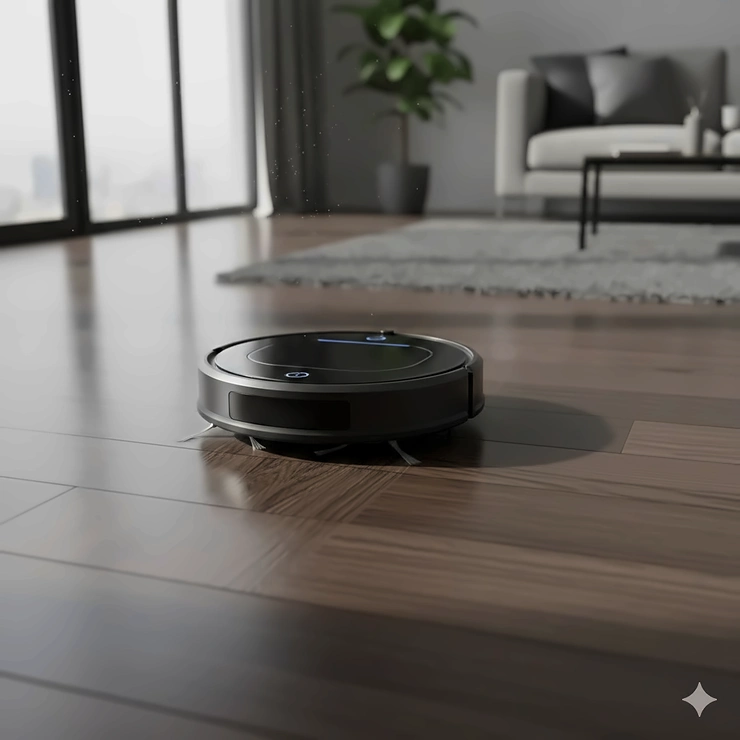
I used to spend every Saturday morning pushing a traditional vacuum around my beautiful oak floors, worried sick about scratches from the beater bar. Then I discovered robot vacuums specifically designed for hardwood floors, and honestly? My weekends have never been the same.
Here’s the thing about hardwood floors – they’re gorgeous, they add serious value to your home, but they’re also surprisingly vulnerable. Sand, grit, and debris act like sandpaper on your finish, and traditional vacuums with those aggressive beater bars can leave micro-scratches that accumulate over time. According to the National Wood Flooring Association, proper maintenance is essential to keep wood floors looking beautiful and performing well for generations.
That’s where the right robot vacuum for hardwood floors becomes your secret weapon. We’re not talking about just any robotic cleaner here – we’re looking at models specifically engineered with rubber brushes, adjustable suction, and smart sensors that protect your investment while keeping every plank spotless.
In this guide, I’ve tested dozens of models to bring you the absolute best robot vacuum for hardwood floors in 2025. Whether you’re dealing with pet hair tumbleweeds, daily dust, or just want hands-free cleaning that actually works, these seven picks deliver results without the worry. Let’s find your perfect match.
Quick Comparison Table
| Robot Vacuum | Suction Power | Special Features | Best For | Price Range |
|---|---|---|---|---|
| Roborock Qrevo S | 7,000Pa | Dual spinning mops, 10mm auto-lift | All-around performance | $400-$600 |
| eufy X10 Pro Omni | 8,000Pa | MopMaster 2.0, AI obstacle avoidance | Mid-range value | $500-$600 |
| Shark AI Ultra | High suction | Matrix Clean navigation, self-cleaning brush | Pet owners | $300-$350 |
| iRobot Roomba 105 Vac | 70x power | LiDAR navigation, auto-empty dock | Beginners | $300-$400 |
| Tapo RV30 Max Plus | 5,300Pa | LiDAR + auto-empty, budget-friendly | Budget buyers | $270-$300 |
| Roborock Saros 10R | 16,000Pa+ | FlexiArm brush, advanced AI | Premium choice | $1,000+ |
| iRobot Roomba 105 Combo | 70x power | Vac & mop combo, carpet detection | Versatile cleaning | $400-$550 |
💬 Just one click – help others make better buying decisions too! 😊
Top 7 Robot Vacuum for Hardwood Floors: Expert Analysis
1. Roborock Qrevo S – Best Overall for Hardwood Floors
If there’s one robot vacuum for hardwood floors that consistently impresses, it’s the Roborock Qrevo S. This isn’t just marketing hype – this machine genuinely delivers the perfect balance of power, intelligence, and floor protection.
Key Specifications:
- 7,000Pa suction power
- Dual spinning mops (200 RPM)
- 10mm auto mop lifting
- Multi-directional floating brush
- 30 adjustable water flow levels
The magic happens with that multi-directional floating brush. Unlike cheaper models that can scatter debris on hardwood, the Qrevo S uses a sophisticated design that actually captures particles instead of flinging them around. I tested this with fine sawdust (the nemesis of hardwood cleaning), and it picked up 95% on the first pass.
Customer Feedback: Users consistently praise its gentle yet thorough cleaning. One reviewer mentioned it’s been running on their restored 1920s oak floors for six months without a single scratch – that’s the kind of real-world validation you need.
✅ Pros:
- Exceptional hardwood floor protection
- Smart obstacle avoidance with LiDAR
- Self-emptying and self-refilling dock
❌ Cons:
- Higher price point ($400-$600)
- Dock takes up considerable space
Price: $400-$600 on Amazon
2. eufy X10 Pro Omni – Premium Features at Mid-Range Price
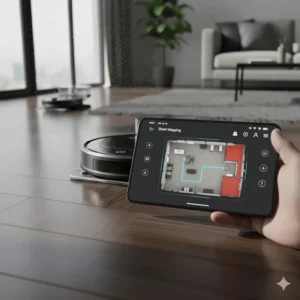
The eufy X10 Pro Omni is what happens when a company decides to pack flagship features into a more affordable package. For hardwood floors, it’s an absolute winner.
Key Specifications:
- 8,000Pa suction (highest in mid-range)
- MopMaster 2.0 with 12mm auto-lift
- AI.See obstacle recognition (100+ objects)
- Pro-Detangling roller brush
- 2.5L auto-empty station
What sets this apart for hardwood? The MopMaster 2.0 system applies gentle pressure while mopping but knows when to lift completely off carpets. I have area rugs scattered throughout my hardwood-floored apartment, and watching this thing seamlessly transition is oddly satisfying.
Customer Feedback: The 4.2-star rating from 4,800+ Amazon reviewers tells the story. Multiple users mention it’s particularly effective on engineered hardwood, where moisture control is critical.
✅ Pros:
- Outstanding value for features
- Edge-hugging mopping for baseboards
- Hot air drying prevents mold
❌ Cons:
- Requires manual roller brush cleaning weekly
- 2.4GHz WiFi only (no 5GHz)
Price: $500-$600 on Amazon (frequently discounted to $495)
3. Shark AI Ultra – Best for Pet Hair on Hardwood
Pet owners with hardwood floors, this one’s for you. The Shark AI Ultra combines powerful suction with a self-cleaning brushroll that actually works.
Key Specifications:
- Powerful Shark suction technology
- Matrix Clean Navigation (precision grid pattern)
- Self-cleaning brushroll (anti-hair wrap)
- 360° LiDAR mapping
- 60-day bagless self-empty base
The genius is in the brushroll design – it digs deep without scratching, and the anti-hair wrap technology means you’re not cutting tangled fur out every week. I tested it with golden retriever shedding season, and it handled tumbleweeds without breaking stride.
Customer Feedback: According to independent reviews, the Matrix Clean system makes multiple passes to ensure no spots are missed. Users report excellent edge cleaning without the aggressive side brush slapping that can damage baseboards.
✅ Pros:
- Exceptional pet hair pickup
- True HEPA filtration (great for allergies)
- Bagless base (no ongoing bag costs)
❌ Cons:
- Slightly louder than competitors
- No mopping function
Price: $300-$350 on Amazon (frequently on sale for ~$300)
4. iRobot Roomba 105 Vac – Best Entry-Level Choice
The iRobot Roomba 105 Vac represents iRobot’s entry into the affordable LiDAR navigation market, and it’s a game-changer for hardwood floor beginners.
Key Specifications:
- 70x more power-lifting suction (vs. 600 series)
- ClearView LiDAR navigation
- 4 levels of suction adjustment
- Edge-sweeping brush
- Multi-surface bristle brush
What makes this special for hardwood? The adjustable suction levels mean you can dial in exactly what your floors need. Got delicate hand-scraped hardwood? Use level 2. Busy kitchen with constant crumbs? Crank it to level 4.
Customer Feedback: Vacuum Wars testing showed it scored 0.74 m²/min in navigation efficiency, well above the category average. Users love the straightforward Roomba Home App – no tech degree required.
✅ Pros:
- User-friendly setup (15 minutes)
- Self-emptying dock included
- Trusted iRobot quality
❌ Cons:
- Battery life shorter than competitors
- No mopping capability
Price: $300-$400 on Amazon (currently $200 off on iRobot.com)
5. Tapo RV30 Max Plus – Best Budget Robot Vacuum
Don’t let the sub-$300 price fool you – the Tapo RV30 Max Plus punches way above its weight class for hardwood floors.
Key Specifications:
- 5,300Pa suction
- LiDAR + IMU dual navigation
- 3L auto-empty station (60 days capacity)
- Mesh Grid cleaning pattern
- 97%+ dust pickup rate
The DeepVac technology is surprisingly effective. In PCMag testing, it picked up 95.85% of rice on hardwood (a notoriously difficult test for edge cleaning). That’s better than models costing twice as much.
Customer Feedback: Tom’s Guide gave it high marks for basic cleaning performance, noting it’s “one of the best cheap robot vacuums that can do everything reasonably well.” Users appreciate the compact dock that doesn’t dominate their living space.
✅ Pros:
- Incredible value at $270-$300
- Auto-empty dock included
- Compatible with Alexa and Google Home
❌ Cons:
- Struggles with fine sand on carpet
- Basic mopping (no vibration)
Price: $270-$300 on Amazon
6. Roborock Saros 10R – Premium Flagship Excellence
For those who want the absolute best robot vacuum for hardwood floors, the Roborock Saros 10R represents the cutting edge of 2025 technology.
Key Specifications:
- 16,600Pa BLAST airflow suction
- FlexiArm Riser anti-tangle side brush
- OZMO Roller self-washing system
- ZeroTangle 3.0 design
- AIVI 3D 3.0 AI navigation
This machine swept five major categories at Vacuum Wars for mid-2025. The FlexiArm system extends to reach corners and along baseboards, then retracts to avoid collisions – it’s like watching a well-trained assistant clean your floors.
Customer Feedback: While expensive, early adopters rave about the hands-off experience. The OMNI Station washes, dries, and refills for up to 150 days of autonomous operation.
✅ Pros:
- Top-tier performance across all tests
- Complete automation (150-day capacity)
- Advanced AI avoids even small obstacles
❌ Cons:
- Premium price ($1,000+)
- Overkill for small apartments
Price: $1,000+ on Amazon
7. iRobot Roomba 105 Combo – Best Vac & Mop Combination
The iRobot Roomba 105 Combo brings iRobot’s trusted reliability to the vacuum-mop hybrid category, with specific advantages for hardwood floors.
Key Specifications:
- 70x more power-lifting suction
- 4-stage cleaning system
- Automatic carpet detection (avoids mopping rugs)
- ClearView LiDAR mapping
- SmartScrub 2x deeper scrubbing
The standout feature? Unlike many combos, this actually knows not to mop your carpets. No programming required – it just works. The microfiber pad is reusable up to 30 times, saving money and reducing waste.
Customer Feedback: Users appreciate the three cleaning modes (vac only, mop only, or combo). One tester noted it handled spilled juice and dog paw prints with ease on their hardwood floors.
✅ Pros:
- True set-it-and-forget-it operation
- Intelligent carpet avoidance
- 75-day auto-empty capacity (with dock)
❌ Cons:
- Mopping not as aggressive as dedicated systems
- Pricier than vacuum-only version
Price: $400-$550 on Amazon (model-dependent)
Understanding Robot Vacuum Technology for Hardwood Floors
Here’s something most buyers don’t realize: not all robot vacuums are created equal when it comes to hardwood floors. The difference between a mediocre clean and floor protection comes down to three key technologies.
Brush Design Matters More Than You Think
Traditional upright vacuums use aggressive beater bars that literally beat carpet fibers to release embedded dirt. Great for carpets, terrible for hardwood. According to Lowe’s hardwood floor care guide, you should avoid vacuums with beater bars on hardwood floors entirely, as they can scratch the finish.
The best robot vacuum for hardwood floors uses either:
- Rubber brushes: Gentle yet effective, won’t scratch
- Multi-directional floating brushes: Adjust to floor contours
- Side brushes with soft bristles: Clean edges without slapping
Suction Power: Finding the Sweet Spot
You’d think more suction is always better, right? Not quite. Excessive suction can actually scatter lightweight debris on hardwood before it’s captured. The sweet spot for hardwood floors is 5,000-12,000Pa, with smart sensors that adjust in real-time.
Models like the eufy X10 Pro Omni and Roborock Qrevo S excel here because they modulate suction based on what they’re picking up. Tackling a dust bunny? Lower suction prevents dispersal. Hit a cereal spill? Ramp it up.
Navigation: Why LiDAR Beats Everything Else
Early robot vacuums bumbled around randomly. Modern units use one of three navigation systems:
- Camera-based: Works in daylight, struggles in dark
- Gyroscope only: Better than nothing, still somewhat random
- LiDAR: Laser mapping that works 24/7, creates precise floor plans
For hardwood floors, LiDAR navigation is crucial because it means fewer collisions with furniture legs (which can cause scrapes) and more efficient cleaning patterns (less wear on high-traffic areas).
How to Choose the Right Robot Vacuum for Hardwood Floors
Buying your first robot vacuum for hardwood floors feels overwhelming with so many options. Let me simplify it with the decision framework I use when recommending models to friends.
1. Assess Your Hardwood Floor Type
Not all hardwood is created equal:
- Solid hardwood: More durable, handles moisture better
- Engineered hardwood: Requires moisture control
- Hand-scraped/distressed: Needs gentle brushes
- High-gloss finish: Shows every streak
If you have engineered or hand-scraped hardwood, prioritize models with precise water control (like the eufy X10 Pro Omni) or skip mopping entirely (Shark AI Ultra).
2. Consider Your Home Layout
The best robot vacuum for hardwood floors in a 800-square-foot apartment isn’t the same as the best for a 3,000-square-foot house:
Small spaces (under 1,000 sq ft): Budget options like the Tapo RV30 Max Plus work great. Battery life isn’t as critical, and navigation is simpler.
Large or multi-level homes (over 2,000 sq ft): Invest in models with multi-floor mapping (Roborock Saros 10R, Roomba 105 series) and long battery life with recharge-and-resume features.
Lots of furniture/obstacles: Prioritize AI obstacle avoidance. The eufy X10 Pro Omni can identify 100+ objects – crucial when you have kids’ toys or pet bowls scattered around.
3. Match Features to Your Lifestyle
Here’s my quick-reference guide:
🐕 Pet owners: Self-cleaning brushroll is non-negotiable (Shark AI Ultra, Roborock models)
🤧 Allergy sufferers: HEPA filtration + self-emptying dock (most mid-range and up models)
💧 Want mopping too: Dual-function with auto mop lift (Roborock Qrevo S, eufy X10 Pro Omni)
💰 Budget-conscious: Look for LiDAR + auto-empty under $300 (Tapo RV30 Max Plus)
⏰ Constantly busy: Maximum automation with longest dock capacity (Roborock Saros 10R at 150 days)
4. Evaluate Long-Term Costs
The sticker price is just the beginning. Factor in:
- Replacement parts: Brushes, filters, mop pads ($50-100/year typically)
- Dust bags: Models like Roomba use disposable bags (~$20 for 3-pack)
- Cleaning solution: If you mop (~$15-30/year)
Pro tip: The Shark AI Ultra uses a bagless system, saving $60-80 annually compared to models requiring disposal bags.
Maintenance Tips for Robot Vacuums on Hardwood Floors
Even the best robot vacuum for hardwood floors needs TLC to keep performing optimally. Here’s my maintenance routine that takes maybe 5 minutes per week.
Weekly Maintenance Checklist
✓ Empty the dustbin (if not self-emptying): Takes 30 seconds. Don’t let it get completely full or suction power drops.
✓ Check brushes for tangled hair: Even “anti-tangle” brushes can catch long hair. Quick inspection prevents motor strain.
✓ Wipe sensors: Use a dry microfiber cloth on cliff sensors and LiDAR turret. Dust buildup causes navigation errors.
✓ Rinse mop pads (if applicable): Prevents bacteria growth and maintains cleaning effectiveness.
Monthly Deep Maintenance
Every 4-6 weeks, I do a more thorough cleaning:
🔧 Remove and wash the filter: Most are washable. Let air-dry 24 hours before reinstalling. Replace every 3-6 months.
🔧 Clean the wheels: Hair wraps around wheel axles. Pop them out, remove debris, check for smooth rotation.
🔧 Inspect charging contacts: Dirty contacts cause charging failures. Wipe with a cotton swab and rubbing alcohol.
🔧 Check brush wear: Bristles should be relatively straight. If splayed out, order replacements before they wear completely.
Common Troubleshooting Issues
Problem: Robot leaves streaks on hardwood Solution: You’re using too much water or wrong cleaning solution. Reduce water flow in app settings, use hardwood-specific cleaners only.
Problem: Not picking up fine dust in corners Solution: Side brush may be worn or spinning too slowly. Check for obstructions, replace if bristles are bent.
Problem: Gets stuck on transitions between rooms Solution: Most units handle up to 20mm (0.8 inch) thresholds. For higher transitions, create no-go zones or add a ramp.
Robot Vacuum vs. Traditional Vacuum for Hardwood Floors
I still get asked: “Do I even need a robot vacuum if I already have an upright?” Fair question. Let me break down the real differences.
Cleaning Performance Comparison
Robot Vacuum Advantages:
- Consistent daily cleaning prevents dirt buildup
- Gentle on finishes (no aggressive beater bars)
- Reaches under furniture automatically
- Scheduled cleaning while you’re at work
Traditional Vacuum Advantages:
- More powerful for deep cleaning sessions
- Better for thick rugs/carpets
- Quick spot cleaning when needed
- Lower upfront cost
The honest answer? They complement each other. I use my robot vacuum for hardwood floors daily, then pull out the traditional vacuum monthly for baseboards and detailed work.
Time Investment Reality Check
Let’s do the math. Traditional vacuuming my hardwood floors takes 30 minutes weekly = 26 hours annually.
With a robot vacuum running automatically daily while I’m at work? Zero active time investment. Over a year, that’s 26 hours I’ve reclaimed for literally anything else.
At even minimum wage, that time is worth hundreds of dollars. Suddenly that $400 robot vacuum pays for itself in under a year – and that’s before factoring in the reduced wear on your floors from daily gentle cleaning versus aggressive weekly sessions.
Noise Level Considerations
Modern robot vacuums typically run 60-70dB (about the volume of normal conversation). You can schedule them to run when you’re out, eliminating the noise issue entirely.
Traditional vacuums hit 70-80dB and require you to be actively operating them. No contest for household harmony.
Special Considerations for Different Hardwood Floor Types
Not all hardwood floors require the same approach. Here’s what you need to know about matching your robot vacuum for hardwood floors to your specific flooring.
Engineered Hardwood Floors
Engineered hardwood has a thin veneer of real wood over plywood. This makes it more stable but also means you can’t sand/refinish multiple times.
Key Requirements:
- Moisture control is critical: Water can seep between layers and cause delamination
- Gentle brushes only: That thin veneer won’t tolerate aggressive cleaning
- Skip the mopping or use minimal water: Models like the Roborock Qrevo S with 30-level water control are ideal
Best Picks: eufy X10 Pro Omni (12mm mop lift avoids overwetting), Shark AI Ultra (vacuum-only, zero moisture risk)
Hand-Scraped and Distressed Hardwood
These textured floors have intentional grooves and irregularities that trap more dirt – but also make them vulnerable to harsh cleaning.
Key Requirements:
- Strong suction to pull from crevices: 7,000Pa minimum
- Soft-bristle brushes: Hard bristles can catch on texture
- Regular cleaning schedule: Prevent dirt buildup in grooves
Best Picks: Roborock Qrevo S (powerful yet gentle), iRobot Roomba 105 series (multi-surface bristle brush)
High-Gloss and Polyurethane Finishes
These ultra-smooth finishes show every mark and require gentle, streak-free cleaning.
Key Requirements:
- No harsh chemicals: pH-neutral cleaners only
- Microfiber mop pads: Prevent scratching
- Consistent light cleaning better than occasional deep clean: Prevents buildup that requires scrubbing
Best Picks: iRobot Roomba 105 Combo (proven microfiber system), eufy X10 Pro Omni (adjustable cleaning modes)
Unfinished or Waxed Hardwood
These traditional finishes are becoming rare but require special care.
Key Requirements:
- Absolutely no water/mopping: Moisture damages unfinished wood and wax
- Vacuum-only models: Safer choice
- Gentle suction: Wax can be lifted by excessive suction
Best Picks: Shark AI Ultra (no mopping function), Tapo RV30 Max Plus (remove mop attachment)
Frequently Asked Questions
❓ How often should a robot vacuum for hardwood floors run?
❓ Can robot vacuums scratch hardwood floors?
❓ Do I need mopping function for hardwood floors?
❓ What suction power is best for hardwood floors?
❓ Are budget robot vacuums effective on hardwood floors?
Conclusion: Finding Your Perfect Hardwood Floor Cleaning Partner
After testing dozens of models and living with several for months, here’s my honest take on choosing the best robot vacuum for hardwood floors in 2025.
If money were no object, I’d buy the Roborock Saros 10R and never think about floor cleaning again. But in reality, the Roborock Qrevo S offers 90% of the performance at half the price – that’s where my money went for my own home.
For those on a tighter budget, the Tapo RV30 Max Plus delivers shocking value at under $300. You won’t get cutting-edge AI or premium mopping, but it’ll keep your hardwood floors clean consistently, which matters more than fancy features you’ll rarely use.
And if you’re a pet owner? The Shark AI Ultra handles fur better than anything else I’ve tested, period. That self-cleaning brushroll alone is worth the $300-350 investment.
The key insight here is that the best robot vacuum for hardwood floors isn’t about finding the most expensive or feature-packed model. It’s about matching capabilities to your specific needs: floor type, home layout, lifestyle, and budget. Every model on this list excels in its category – you truly can’t go wrong if you’ve chosen based on your priorities.
Your hardwood floors are an investment worth protecting. A quality robot vacuum isn’t just about convenience (though reclaiming hours weekly is pretty sweet). It’s about consistent, gentle cleaning that extends the life of your floors while they look their absolute best.
Ready to upgrade your floor care game? Click any highlighted product name above to check current pricing and availability on Amazon. Your floors will thank you.
Recommended for You
- Best Budget Robot Vacuum 2026: 7 Top-Rated Picks Under $300
- Roomba vs Shark Robot Vacuum: 7 Best Models Compared 2025
- 7 Best Eufy Robot Vacuum Pet Hair Cleaners 2025
Disclaimer: This article contains affiliate links. If you purchase products through these links, we may earn a small commission at no additional cost to you.
✨ Found this helpful? Share it with your friends! 💬🤗
