
In This Article
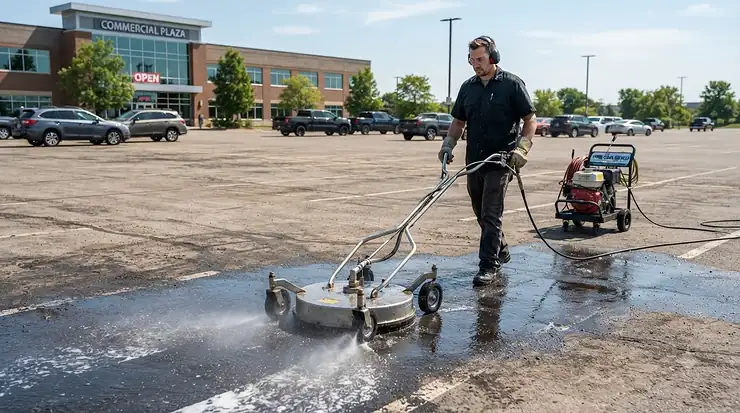
A commercial gas pressure washer for contractors is a heavy-duty, gas-engine-powered cleaning machine — typically running 3,300 to 4,400+ PSI at 2.5 to 4.0+ GPM — built with an industrial pump, a rugged frame, and a warranty rated for daily professional use rather than occasional weekend chores…
Here’s the thing nobody tells you at the hardware store: the machine that looks identical to a homeowner’s weekend toy on the shelf can be an entirely different animal underneath the hood. Swap in a Honda commercial engine, a real triplex pump instead of a wobble pump, and a frame that won’t rattle apart after 40 hours of bouncing around in a truck bed, and you’ve got something that can actually earn its keep on a job site. If you’re a pressure washing contractor, a property maintenance crew, or someone running a fleet-washing side hustle that’s turned into a real business, the difference between a “good enough” unit and a genuine commercial gas pressure washer for contractors shows up fast — usually right around the time a cheap pump seizes mid-contract.
This guide breaks down seven real, currently available machines spanning budget, mid-range, and premium tiers. You’ll get honest analysis grounded in actual specs and aggregated review sentiment — not recycled marketing copy — plus practical guidance on maintenance, farm equipment cleaning, pump durability, warranty coverage, and how to actually keep professional cleaning contracts once you’ve won them. Pressure washing itself is a decades-old technique used across industrial and residential cleaning, but the equipment built for contractors has evolved considerably, and picking the wrong machine is an expensive mistake to make twice.
Quick Comparison Table: Commercial Gas Pressure Washers at a Glance
| Product | PSI / GPM | Best For |
|---|---|---|
| Simpson PowerShot PS4240 | 4200 PSI / 4.0 GPM | All-around commercial workhorse |
| Simpson Aluminum ALH4240 | 4200 PSI / 4.0 GPM | Lightweight daily hauling |
| NorthStar Pressure Washer Kit | 3300–4000 PSI / 2.5–4.0 GPM | Farm & truck/trailer mounting |
| Mi-T-M Medium Duty GC-Series | 3000 PSI / 2.4 GPM | Reliable daily commercial use |
| BE Professional Belt-Drive 4200 | 4200 PSI / 4.0 GPM | Maximum pump longevity |
| Westinghouse WPX4400 | 4400 PSI / 4.2 GPM | Budget-conscious contractors |
| DeWalt DXPW3300-S | 3300 PSI / 2.5 GPM | Lightweight, detail-oriented work |
Looking at this lineup, there’s a clear split between direct-drive machines built for portability and belt-drive or skid-mounted units built for sheer longevity under continuous load. The Westinghouse WPX4400 and DeWalt DXPW3300-S are the entry points for contractors just building out their equipment fleet, while the BE Professional Belt-Drive 4200 and NorthStar Pressure Washer Kit are aimed at operations running the machine five or six days a week. Notice that PSI alone doesn’t tell the whole story — GPM (flow rate) is often the more important number for stripping large surfaces quickly, which matters a lot once you’re billing by the job instead of the hour.
Top 7 Commercial Gas Pressure Washers for Contractors: Expert Analysis
1. Simpson PowerShot PS4240 — best all-around commercial workhorse
The Simpson PowerShot PS4240 has become something of a default recommendation among pressure washing contractors, and once you look at the spec sheet, it’s easy to see why. The Honda GX390 commercial engine is paired with an AAA industrial triplex pump — a genuine step up from the axial-cam pumps found on residential units, because triplex pumps distribute wear across three separate plungers instead of concentrating stress on a single point.
In practice, the 4200 PSI at 4.0 GPM output means you’re moving enough water volume to strip a driveway or a stretch of siding without babysitting the wand for twice as long. The welded steel frame and 13-inch pneumatic tires trade a little weight for genuine jobsite durability — this isn’t a machine you baby around a smooth garage floor. Based on the spec comparison against lighter aluminum-frame competitors, the PS4240 is the pick for contractors who value ruggedness over portability. Reviewers consistently note that the Honda engine starts reliably even after sitting for weeks between jobs, though a handful mention frame or axle alignment issues on delivery — worth inspecting on arrival. Manufacturer documentation lists a 3-year commercial engine warranty, a 5-year pump warranty, and a 10-year frame warranty, which is unusually generous for this price tier.
Pros:
- ✅ AAA triplex pump built for continuous commercial cycles
- ✅ Strong multi-year warranty coverage across engine, pump, frame
- ✅ 50-ft hose and 5 quick-connect nozzles included
Cons:
- ❌ Steel frame adds noticeable weight versus aluminum rivals
- ❌ Some buyers report shipping-related frame alignment issues
Expect this unit to land in the mid-$700s to mid-$900s range depending on retailer and included accessories, at the time of research — check current price before buying, since retail pricing shifts often. For a contractor who needs one dependable machine that does everything reasonably well, this is hard to beat on value.
2. Simpson Aluminum ALH4240 — lightest frame for daily hauling
If your day involves loading and unloading a pressure washer out of a truck bed six or seven times, the Simpson Aluminum ALH4240 solves a problem the steel-frame PS4240 doesn’t: weight. Built on an aircraft-grade aluminum frame, this model pairs the same Honda GX390 engine with a CAT Pumps triplex unit instead of AAA, delivering identical 4200 PSI at 4.0 GPM output in a noticeably lighter package.
What most buyers overlook about aluminum-frame commercial units is that the weight savings compound over a workday — less strain lifting it in and out of a truck bed translates to less fatigue by hour eight. The CAT Pumps triplex design includes an integrated unloader and thermal relief valve, protecting the pump if the trigger is left closed too long, a common rookie mistake that kills cheaper pumps outright. Aggregated review sentiment is largely positive on build quality and pump smoothness, though a subset of buyers have flagged inconsistent shipping packaging leading to cosmetic damage on arrival — a logistics issue more than a design flaw. On paper, this makes the ALH4240 the better choice for mobile contractors and fleet-washing operations that relocate the machine constantly, while the steel PS4240 suits stationary or trailer-based setups.
Pros:
- ✅ Aircraft-grade aluminum frame cuts hauling fatigue
- ✅ CAT Pumps triplex with integrated thermal relief valve
- ✅ Same 4200 PSI / 4.0 GPM output as heavier steel rivals
Cons:
- ❌ Premium pricing versus the steel-frame equivalent
- ❌ Packaging/shipping damage reported by some buyers
Pricing generally sits in the $800-$1,000 range at the time of research, reflecting the aluminum frame premium — always check current price since availability by retailer varies. For contractors constantly moving between job sites, the reduced hauling fatigue alone can justify the extra cost.
3. NorthStar Pressure Washer Kit — best for farm and truck/trailer mounting
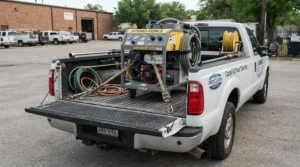
The NorthStar Pressure Washer Kit takes a different approach entirely: rather than a wheeled cart unit, it ships as a mountable kit — engine, CAT direct-drive triplex pump with a forged brass manifold, and a 12-gauge steel mounting platform designed to bolt straight onto a trailer, flatbed, or existing pressure washer cart. That mounting flexibility is exactly why it shows up so often among contractors who clean farm equipment, livestock trailers, or large fleet vehicles that need the washer to travel with the truck rather than get loaded and unloaded separately.
Depending on configuration, output ranges from roughly 3300 PSI at 2.5 GPM up to 4000 PSI at 4.0 GPM on higher-tier kits, powered by Honda GX-series engines. The CAT pump’s ceramic plungers and forged brass manifold are genuinely durable components — what the spec sheet won’t tell you, but industry sourcing confirms, is that CAT pumps are among the most commonly rebuilt-in-the-field pump brands, meaning replacement parts are easy to find years down the line. This matters enormously for anyone doing gas pressure washer for farm equipment cleaning work, where mud, manure, and organic buildup demand higher water volume over raw pressure. NorthStar backs its kits with a 2-year limited warranty, and the sight-glass oil check is a small but genuinely useful convenience for crews doing quick pre-shift inspections.
Pros:
- ✅ Bolts directly onto trailers, trucks, or existing carts
- ✅ CAT triplex pump with forged brass manifold and ceramic plungers
- ✅ Sight-glass oil check speeds up daily maintenance routines
Cons:
- ❌ Requires separate cart or mount if not already truck-equipped
- ❌ Higher-PSI configurations command a real price premium
Kit pricing spans a wide range — roughly $900 on the lower-output end up to $1,500+ for higher-PSI configurations — so check current price and specific configuration carefully before ordering. For agricultural and mobile fleet-washing contractors, the mounting flexibility alone often outweighs the extra shopping effort.
4. Mi-T-M Medium Duty GC-Series — most reliable for daily commercial use
Mi-T-M has built its reputation almost entirely on one thing: machines that start every morning and keep running for years without drama. The Mi-T-M Medium Duty GC-Series reflects that philosophy directly — a triplex pump with ceramic plungers, a gas engine sized appropriately for the 3000 PSI at 2.4 GPM output, and a straightforward design with fewer failure points than flashier competitors.
Here’s what the spec sheet doesn’t fully capture: Mi-T-M’s target customer is the property maintenance company or rental fleet operator running a machine five days a week, all year, not the occasional weekend user. Based on the spec comparison, the lower PSI/GPM numbers relative to the Simpson and Westinghouse units reflect a deliberate choice toward reliability and control over raw power — a sensible tradeoff for daily commercial use where consistency beats peak output. Reviewers and industry buyers consistently cite Mi-T-M’s parts availability and dealer support network as standout advantages, which matters more than almost any other single factor once a machine breaks down mid-contract and you need a same-week fix rather than a two-week backorder.
Pros:
- ✅ Triplex ceramic-plunger pump built for daily duty cycles
- ✅ Strong dealer network for fast parts and service
- ✅ Simpler design with fewer premature failure points
Cons:
- ❌ Lower PSI/GPM ceiling than higher-output rivals
- ❌ Less flashy feature set than newer competitor models
Expect a price generally in the $650-$900 range at the time of research, positioning it as a genuinely practical mid-tier option — check current price, as Mi-T-M’s dealer-driven pricing can vary more by region than big-box competitors.
5. BE Professional Belt-Drive 4200 — built for maximum pump longevity
Most commercial pressure washers use a direct-drive setup, where the engine crankshaft connects straight to the pump. The BE Professional Belt-Drive 4200 does something different: a belt-drive system paired with a General triplex pump, which reduces vibration transferred directly to pump components and — critically for anyone chasing commercial-grade pump durability for pressure washers — runs the pump at a different, often gentler, RPM than the engine itself.
That belt-drive design is the whole story here. Running a pump slightly below the engine’s native speed reduces cavitation risk and heat buildup over long runs, which is exactly the kind of stress that kills pumps prematurely on machines run six-plus hours a day. Paired with a Honda GX390 engine at 4200 PSI and 4.0 GPM, this is a genuinely industrial-grade setup, and BE’s parts ecosystem (hoses, guns, nozzles, and pump rebuild kits) is widely stocked, which matters when downtime costs you billable hours. Aggregated commercial buyer feedback repeatedly points to belt-drive units lasting longer under sustained daily use than comparable direct-drive machines, though the tradeoff is a bulkier, heavier footprint and a higher upfront cost.
Pros:
- ✅ Belt-drive design reduces pump vibration and heat stress
- ✅ General triplex pump with wide parts availability
- ✅ Engineered specifically for sustained daily commercial use
Cons:
- ❌ Bulkier and heavier than direct-drive alternatives
- ❌ Higher upfront price than comparable direct-drive units
Pricing typically falls in the $1,000-$1,600 range depending on configuration at the time of research — check current price, since belt-drive commercial units are often sold through dealer networks rather than standard retail. If your business model depends on the washer running nearly every day, this is worth the premium.
6. Westinghouse WPX4400 — best budget-friendly entry point
Not every contractor needs — or can immediately afford — a $1,000+ machine, and the Westinghouse WPX4400 exists for exactly that reality. At 4400 PSI and 4.2 GPM with a 50-foot abrasion-resistant hose, it actually outputs more raw pressure and flow than several pricier competitors on this list, which on paper looks like the best deal in the category.
The catch, and it’s an honest one: Westinghouse targets the prosumer-to-light-commercial line rather than the heavy-duty daily-use segment that Mi-T-M or BE serve. The 1.7-gallon gas tank keeps refueling stops manageable during a workday, and reviewers consistently praise the strong pressure output for the price point. What most buyers overlook is that “PSI” alone doesn’t guarantee commercial-grade internals — the pump and engine components on budget-tier units generally aren’t rated for the same duty cycle as the Simpson or BE machines above, so this is better suited to contractors just starting out, doing 2-3 jobs a week, than a crew running the machine daily. Reviewers generally rate it well for driveways, siding, and fleet washing at a moderate frequency.
Pros:
- ✅ Strong 4400 PSI / 4.2 GPM output for the price tier
- ✅ 50-ft hose extends reach on larger properties
- ✅ Approachable price point for contractors starting out
Cons:
- ❌ Not rated for the heaviest daily commercial duty cycles
- ❌ Shorter track record for sustained multi-year commercial use
Expect pricing in the $400-$600 range at the time of research, making it one of the most accessible entries here — always check current price and confirm duty-cycle expectations before committing it to daily commercial routes.
7. DeWalt DXPW3300-S — lightest option for detail-oriented work
Rounding out the list, the DeWalt DXPW3300-S trades raw power for control and portability. At 3300 PSI and 2.5 GPM, powered by a 208cc engine and an axial-cam pump, it’s the lightest and most maneuverable machine here, shipped with five nozzles and a 25-foot hose for precise, detail-focused cleaning work.
This isn’t the machine for stripping acres of concrete — it’s the machine for contractors whose work leans toward smaller, precision jobs: fleet detailing, storefront maintenance, or equipment cleaning where control matters more than sheer blasting power. Reviewers consistently highlight the five-nozzle set and DeWalt’s brand-name reliability reputation as strong selling points, and the lighter chassis means less operator fatigue on jobs requiring frequent repositioning. Based on the spec comparison, the axial-cam pump — while durable — isn’t quite in the same duty-cycle league as the triplex pumps found on the Simpson, BE, or Mi-T-M units, so treat this as the specialist’s tool rather than the do-everything machine for a growing commercial operation.
Pros:
- ✅ Lightweight chassis reduces fatigue on mobile jobs
- ✅ Five included nozzles for precise application control
- ✅ Trusted DeWalt brand backing and accessory ecosystem
Cons:
- ❌ Axial-cam pump has a lower duty-cycle ceiling than triplex rivals
- ❌ Lower PSI/GPM limits use on the heaviest stripping jobs
Pricing generally runs $350-$500 at the time of research — check current price, as DeWalt power equipment often sees seasonal promotions. For detail-focused contractors, this compact machine earns its spot in the truck.
Top 7 Commercial Gas Pressure Washers: Full Spec Comparison
| Product | Engine | Pump | Price Range | Best For |
|---|---|---|---|---|
| Simpson PowerShot PS4240 | Honda GX390 | AAA Triplex | $700s–$900s | All-around commercial use |
| Simpson Aluminum ALH4240 | Honda GX390 | CAT Pumps Triplex | $800–$1,000 | Frequent hauling/loading |
| NorthStar Pressure Washer Kit | Honda GX200/GX390 | CAT Triplex | $900–$1,500+ | Farm & trailer mounting |
| Mi-T-M Medium Duty GC-Series | Gas (medium duty) | Triplex Ceramic | $650–$900 | Daily commercial reliability |
| BE Professional Belt-Drive | Honda GX390 | General Triplex | $1,000–$1,600 | Maximum pump longevity |
| Westinghouse WPX4400 | Westinghouse | Axial Cam | $400–$600 | Budget-conscious contractors |
| DeWalt DXPW3300-S | 208cc | Axial Cam | $350–$500 | Detail-oriented, lighter jobs |
Stacked side by side, the pattern is obvious: triplex pumps dominate the mid-to-premium tier, while axial-cam pumps cluster at the entry-level price points. The BE Professional Belt-Drive and NorthStar Pressure Washer Kit command the highest prices here, but they’re also the two built explicitly for sustained, near-daily duty cycles rather than moderate weekly use. If budget is your primary constraint, the Westinghouse WPX4400 delivers surprisingly strong raw output, but pair it with realistic expectations about long-term duty cycle.
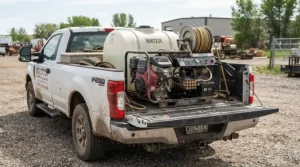
Practical Usage Guide: Setup, Maintenance & Daily Commercial Use
Getting a new commercial gas pressure washer running correctly on day one prevents most of the early failures contractors report. Start by checking engine oil before first use — most gas-powered units ship without oil in the crankcase, and running dry for even thirty seconds can damage the engine permanently. Next, always connect your water supply and confirm flow before starting the engine; running a pump dry, even briefly, destroys seals and plungers almost instantly, and it’s the single most common rookie mistake reported across nearly every brand’s review section.
For daily commercial use, build a five-minute pre-shift routine: check the oil sight glass, inspect the high-pressure hose for kinks or abrasion, verify the quick-connect nozzles seat properly, and confirm the trigger gun’s safety lock functions. Pump oil should be changed after the first 25 hours of operation, then roughly every 3 months or 250 hours after that — a schedule nearly universal across CAT, AAA, and General pump manufacturers. Common mistakes in the first 30 days include leaving the trigger closed with the engine running (which builds heat and stresses the unloader valve), using too-narrow a nozzle angle on delicate surfaces, and skipping the fuel stabilizer during weeks the machine sits idle. A simple fuel stabilizer added at each fill-up prevents the gummed-carburetor issues that sideline gas engines after seasonal storage — a five-dollar habit that avoids a multi-week repair delay during peak season.
Real-World Scenarios: Matching the Machine to the Job
Consider three common contractor profiles. First, the solo operator just starting a pressure washing side business, doing two or three residential driveway jobs a week on weekends: the Westinghouse WPX4400 or DeWalt DXPW3300-S makes financial sense here — lower upfront cost, adequate power for the job frequency, and less risk if the business doesn’t scale immediately. Second, a two-person crew running commercial building maintenance contracts five days a week, cleaning parking structures, loading docks, and storefronts: the Simpson PowerShot PS4240 or BE Professional Belt-Drive fits better, since daily duty cycles demand the triplex pump durability and warranty backing these units provide.
Third, an agricultural service contractor cleaning tractors, livestock trailers, and grain equipment between seasons — someone doing gas pressure washer for farm equipment cleaning work specifically: the NorthStar Pressure Washer Kit, mounted to a service truck or trailer, solves the mobility problem that a wheeled cart unit can’t. Each scenario weighs the same three factors differently — job frequency, surface type, and mobility needs — and getting that weighting right up front saves you from buying twice.
Gas Pressure Washer for Farm Equipment Cleaning
Farm equipment cleaning presents a genuinely different challenge than residential or commercial building work. Manure, mud, feed residue, and organic buildup respond better to water volume than raw pressure, and agricultural extension research backs this up directly — disinfectants generally won’t work effectively on surfaces that aren’t cleaned of organic matter first, making the pressure-washing step a prerequisite for any farm biosecurity protocol, not just a cosmetic task.
For this reason, a gas pressure washer for farm equipment cleaning should prioritize GPM over maximum PSI — industry sourcing on agricultural equipment washing generally recommends 4-5.5 GPM units running a moderate 1,500-2,000 PSI, since excessive pressure risks damaging sensors, hydraulic seals, and painted surfaces on expensive machinery. This is exactly where the NorthStar Pressure Washer Kit‘s configurability and mountable design earn their keep — a unit permanently mounted to a farm truck or trailer means it’s always on hand between fields, and the CAT pump’s ceramic plungers tolerate the gritty, mineral-heavy well water common on rural properties better than lower-grade alternatives. Reviewers doing agricultural work consistently note that hot-water configurations perform noticeably better against grease and oil residue than cold-water-only units, so contractors serving livestock operations or equipment dealerships should weigh that upgrade carefully against the added cost.
How to Choose a Commercial Gas Pressure Washer for Contractors
Choosing the right commercial gas pressure washer for contractors comes down to matching duty cycle, pump type, and mobility needs to your actual workload, following this framework:
- Estimate your weekly run hours honestly. Under 10 hours a week points toward direct-drive, axial-cam units; over 20 hours a week justifies triplex pumps and belt-drive designs.
- Prioritize GPM for large or organic-heavy surfaces. Flow rate clears mud, grease, and dirt faster than pressure alone, especially on farm or fleet-washing contracts.
- Match the frame material to your hauling routine. Aluminum frames reduce fatigue for contractors loading and unloading daily; steel frames suit stationary or trailer-mounted setups.
- Check the pump brand’s parts availability locally. CAT, AAA, and General all have strong aftermarket support — a no-name pump can leave you stranded mid-contract.
- Compare warranty length on the pump specifically, not just the engine. Engine warranties from Honda are often excellent regardless of brand; pump warranties vary far more and reveal how confident the manufacturer really is.
- Factor in fuel tank size against your typical job length. A 1-gallon tank versus a 2-gallon tank can mean the difference between one refueling stop and three on a long job.
- Decide on cold water versus hot water based on your grease/oil exposure. Hot water dramatically improves degreasing performance but adds cost and complexity.
Working through these seven criteria in order — rather than starting with price — tends to produce a shortlist of two or three realistic options instead of an overwhelming list of forty.
Commercial-Grade Pump Durability for Pressure Washers
Pump durability is arguably the single most important factor separating a genuine commercial gas pressure washer for contractors from a rebadged homeowner model, because the pump — not the engine — is almost always the first component to fail under sustained professional use. The core distinction is triplex versus axial-cam design: triplex pumps use three ceramic or ceramic-coated plungers operating out of phase with each other, distributing mechanical stress and producing smoother, more consistent pressure output over long runs. Axial-cam pumps, by contrast, use a simpler wobble-plate mechanism that’s cheaper to manufacture but wears faster under continuous multi-hour operation.
| Pump Type | Typical Duty Cycle | Found On | Rebuild-Friendly |
|---|---|---|---|
| Triplex (CAT/AAA/General) | Heavy daily commercial | Simpson, BE, NorthStar, Mi-T-M | Yes, widely stocked parts |
| Axial Cam | Light-to-moderate use | Westinghouse, DeWalt | Limited, often full-unit replacement |
What most buyers overlook is that direct-drive versus belt-drive matters almost as much as the pump type itself — belt-drive systems, like the one on the BE Professional Belt-Drive 4200, run the pump at a slightly reduced RPM relative to the engine, which measurably cuts down on heat buildup and cavitation risk during back-to-back multi-hour jobs. For contractors evaluating commercial-grade pump durability for pressure washers specifically, the practical takeaway is simple: if you’re running the machine daily, the extra upfront cost of a triplex pump (and ideally belt-drive) pays for itself within a season through fewer mid-contract breakdowns and lower total repair costs.
Pump Warranty: What Coverage Actually Protects You
Pump warranty length is one of the most honest signals a manufacturer sends about how confident they are in their own product, and it’s worth reading the fine print rather than skimming the headline number. The Simpson PowerShot PS4240, for example, carries a notably generous 5-year limited commercial pump warranty alongside a 3-year engine warranty — a strong statement of confidence in the AAA triplex pump inside it. NorthStar’s kits, by comparison, carry a 2-year limited warranty across the whole unit, which is still solid but reflects a different risk calculation given the kit’s more varied mounting configurations.
Here’s what most contractors miss when comparing pump warranty terms: “commercial use” warranties are frequently shorter than “residential use” warranty periods on the exact same physical pump, because manufacturers know duty cycles differ dramatically. Always confirm whether the advertised warranty period applies to commercial/professional use specifically, since running a residential-rated warranty period against a commercial daily-use machine is a common point of dispute during claims. Keep your proof of purchase and log basic maintenance (oil changes, filter checks) — most warranty denials on pumps stem from an inability to prove routine maintenance was performed, not from the failure itself being excluded.
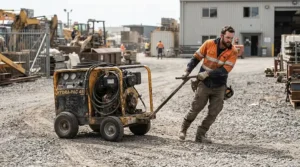
Common Mistakes When Buying a Commercial Gas Pressure Washer
The most expensive mistake contractors make is buying on PSI alone, ignoring GPM entirely — a 4400 PSI machine with low flow can actually clean slower than a 3300 PSI unit with higher GPM on large, flat surfaces. A close second is underestimating duty cycle needs: buying an axial-cam budget unit for a workload that actually demands daily 6-hour runs sets you up for a mid-season pump failure and an unplanned equipment replacement cost.
Contractors also frequently skip checking local parts and service availability before buying, discovering only after a breakdown that the nearest authorized repair center is two states away. Another overlooked detail: ignoring hose length and reach, which forces excessive machine repositioning and adds unbillable time to every job. Finally, many buyers focus exclusively on the initial purchase price while ignoring total cost of ownership — fuel consumption, pump rebuild costs, and downtime during repairs all factor into which machine is actually cheaper over a two- or three-year window.
Winning and Keeping Professional Cleaning Contracts With the Right Equipment
Professional cleaning contracts, whether with property management companies, municipalities, or agricultural operations, are won on reliability as much as on price. A missed appointment because your pressure washer wouldn’t start, or a job that runs long because your GPM was too low for the surface, damages your reputation far more than losing a single bid on cost. If [situation] is that you’re bidding on recurring, high-frequency contracts — weekly parking lot cleanings, for example — choose a triplex-pump unit like the Simpson PowerShot PS4240 or BE Professional Belt-Drive because the reliability and warranty backing directly protect your ability to show up consistently.
If [situation] is that you’re bidding on occasional, lower-frequency contracts — seasonal deck and siding work for a handful of clients — a budget-tier unit like the Westinghouse WPX4400 lets you keep overhead low while you build the client base needed to justify a premium machine. Contracts involving specialized surfaces, like agricultural facilities requiring biosecurity-grade cleaning, should weight equipment selection toward the NorthStar Pressure Washer Kit‘s mounting flexibility and higher GPM output. Matching your equipment tier to your actual contract mix — rather than buying the most impressive-looking machine upfront — keeps your margins healthier while you scale.
Commercial Gas Pressure Washer vs Electric: Which Wins for Contractors
Electric pressure washers have genuine advantages for specific contractor niches: no exhaust fumes, quieter operation suitable for noise-restricted or indoor environments, and generally lower maintenance since there’s no engine oil or spark plug to service. For storefront cleaning, parking garages, or any job near residential neighbors sensitive to noise, an electric commercial unit is often the smarter choice despite typically lower maximum PSI and GPM output than gas equivalents.
Gas units win decisively, though, on raw output, mobility, and run time. There’s no cord to manage, no outlet to locate, and no risk of tripping a breaker mid-job — genuinely important for exterior work on large properties, construction sites, or rural locations where an electrical hookup may not even exist. For agricultural and farm equipment cleaning specifically, gas is close to a requirement, since electrical infrastructure at barns and equipment yards is often limited or entirely absent. The honest answer for most contractors is a hybrid fleet: a gas commercial unit as the primary workhorse, with a smaller electric unit reserved for noise-sensitive or indoor jobs where the gas engine’s fumes and volume would be a liability.
Safety, Regulations & Compliance Guide for Commercial Pressure Washing
Commercial gas pressure washers operate at pressures capable of causing serious injury, and OSHA treats this as a genuine workplace hazard rather than a minor inconvenience. High-pressure injection wounds — where the water jet breaches skin and drives contaminants into underlying tissue — often look minor at first but can lead to serious infection if untreated, which is why proper personal protective equipment isn’t optional on a professional job site. Under OSHA’s eye and face protection standard, employers must ensure workers use appropriate eye protection whenever there’s a hazard from flying particles or debris — a category that squarely includes pressure washing operations, particularly above 2,000 PSI where a full face shield is commonly recommended.
Beyond eye protection, closed-toe non-slip boots, long sleeves, and gloves are standard PPE for any commercial pressure washing crew, and gas-powered units should never be run in enclosed spaces due to carbon monoxide risk. Contractors working near stormwater drains should also be aware that many municipalities regulate wastewater runoff from commercial washing operations, requiring containment or filtration in certain jurisdictions — a compliance detail worth confirming with local authorities before bidding on high-volume contracts like fleet washing or construction site cleanup.
Features That Actually Matter (And Those That Don’t)
Marketing copy loves to highlight maximum PSI numbers, but for most contractor workloads, GPM, pump type, and warranty length matter more day-to-day than chasing an extra few hundred PSI. Genuinely useful features include sight-glass oil checks (saves real time on pre-shift inspections), quick-connect nozzles (speeds up switching between tasks), and low-oil engine shutoff (prevents catastrophic engine damage from a missed oil check).
Features that generate less real-world value than their marketing suggests include oversized onboard soap tanks (most contractors use downstream injectors anyway for stronger detergent control), and flashy digital pressure gauges on entry-level units, which tend to be the first component to fail and rarely justify their added cost. The spec sheet won’t tell you this, but experienced contractors consistently prioritize hose length and pump brand reputation over nearly every other listed feature, because those two factors most directly affect daily efficiency and long-term reliability.
Frequently Asked Questions
❓ What PSI do I need for a commercial gas pressure washer for contractors?
❓ How often should I change the pump oil on a commercial pressure washer?
❓ Is a gas pressure washer better than electric for farm equipment cleaning?
❓ What's the difference between a triplex pump and an axial-cam pump?
❓ How long should a commercial-grade pressure washer pump warranty be?
Conclusion
Choosing the right commercial gas pressure washer for contractors ultimately comes down to being honest about your actual duty cycle rather than chasing the biggest PSI number on the shelf. A solo operator doing a handful of weekend jobs has genuinely different needs than a crew running daily commercial building maintenance or an agricultural service business cleaning tractors and trailers between seasons. The seven machines covered here — from the budget-friendly Westinghouse WPX4400 to the daily-duty BE Professional Belt-Drive 4200 and the farm-ready NorthStar Pressure Washer Kit — span that range deliberately.
Whatever you choose, prioritize pump type and warranty coverage over headline PSI figures, build a real maintenance routine from day one, and match your equipment tier to the professional cleaning contracts you’re actually bidding on rather than the ones you hope to land someday. A reliable machine that starts every morning and runs the full shift is worth more to your bottom line than a few hundred extra PSI sitting unused in the spec sheet.
Recommended for You
- Best Portable Gas Pressure Washer for Job Sites: 7 Picks for 2026
- Heavy-Duty Electric Pressure Washer for Concrete: 7 Best Picks (2026)
- 7 Best Medium-Duty Electric Pressure Washers for Decks (2026)
Disclaimer: This article contains affiliate links. As an Amazon Associate, I earn from qualifying purchases. If you purchase products through these links, we may earn a small commission at no additional cost to you.
💬 Just one click — help others make better buying decisions too!😊
