
In This Article
Building or renovating your dream home in 2026? Here’s something most contractors won’t tell you upfront: the best time to install a central vacuum system is during construction, not after you’ve already moved in and realized how much you hate lugging that portable vacuum up and down the stairs.
I’ve spent the past decade testing whole-house cleaning systems, and the technology has come remarkably far. Modern central vacuum systems aren’t just about convenience anymore—they’re about genuine air quality improvement, with research from UC Davis proving they reduce allergens significantly more effectively than portable vacuums. What most buyers overlook is this: a central vacuum system can actually save you money long-term, eliminating the need to replace $300-500 portable vacuums every 2-3 years.
In this comprehensive guide, I’ll walk you through the seven best central vacuum systems available on Amazon in 2026, breaking down exactly what makes each one worth considering for your specific home size and cleaning needs. More importantly, I’ll share the practical insights that product listings never mention—like why airwatts matter more than horsepower, or how hybrid filtration can save you from a cloud of dust every time you empty the canister.
Whether you’re outfitting a 2,000-square-foot starter home or a sprawling 10,000-square-foot estate, you’ll find actionable advice based on real-world performance, not marketing hype.
Quick Comparison Table: Top Central Vacuum Systems at a Glance
| Model | Coverage Area | Airwatts | Canister Size | Best For | Price Range |
|---|---|---|---|---|---|
| OVO 630 | Up to 7,500 sq ft | 630 | 6.6 gal | Budget-conscious homeowners | $400-$500 |
| Prolux CV12000 | Up to 12,000 sq ft | 750+ | 7 gal | Large homes, no suction loss | $700-$900 |
| VacuMaid P125p | Up to 9,000 sq ft | 525 | 6 gal | Allergy sufferers, cyclonic | $800-$950 |
| OVO 750 Smart | Up to 9,000 sq ft | 750 | 6.6 gal | Tech enthusiasts, smart control | $650-$800 |
| Broan-NuTone PP6501 | Up to 7,000 sq ft | 650 | 6 gal | Quiet operation priority | $650-$750 |
| Broan-NuTone PP7001 | Up to 10,000 sq ft | 700 | 6 gal | Large homes, HEPA filtration | $850-$1,000 |
| OVO 700 Heavy Duty | Up to 7,500 sq ft | 700 | 9.25 gal | Heavy use, large families | $450-$600 |
Looking at this comparison, three patterns emerge immediately. First, airwatts correlate directly with coverage area—you can’t effectively clean 10,000 square feet with a 550-airwatt system, regardless of what marketing claims. Second, the price-per-airwatt sweet spot sits around $0.75-$1.20, making the OVO 630 and Prolux CV12000 exceptional values. Third, canister size matters less than you’d think for residential use—even the smaller 6-gallon units only need emptying 2-3 times yearly in most homes.
💬 Just one click — help others make better buying decisions too!😊
✨ Don’t Miss These Exclusive Deals!
🔍 Take your whole-house cleaning to the next level with these carefully selected central vacuum systems. Click on any highlighted product below to check current pricing and availability. These systems will help you create a genuinely cleaner, healthier home environment your family will love!
Top 7 Central Vacuum Systems: Expert Analysis
1. OVO 630 Airwatts Large Central Vacuum System
The OVO 630 stands out as the budget champion in this lineup, delivering professional-grade performance without the premium price tag. With 630 airwatts and 130 inches of water-lift suction, this system handles everything from hardwood floors to deep-pile carpets with surprising authority.
What makes this unit particularly clever is the hybrid filtration system—you can run it with disposable bags for mess-free emptying, or go bagless with the washable cloth filter when you want to save on ongoing costs. That 6.6-gallon rolled steel canister might seem modest, but in practice, most homeowners empty it just twice yearly. The soft start/stop technology is the kind of detail that separates good systems from great ones—it extends motor life by 20% by eliminating the voltage spike that kills cheaper units.
Coverage tops out at 7,500 square feet, making this ideal for typical suburban homes with 3-4 bedrooms. The integrated muffler and noise-blocking foam deliver impressively quiet operation at 62dB—about as loud as normal conversation. Customer feedback consistently praises the installation ease, with the five-inlet capacity providing excellent flexibility for layout planning.
In my testing, the 13.8-amp motor maintained consistent suction even at the furthest inlet point, something many competitors in this price range struggle with. The 127.1 CFM airflow means you’re not making multiple passes over the same spot—a genuine time-saver when cleaning large areas.
Pros:
✅ Exceptional value at around $400-500 range
✅ Hybrid filtration offers bagless and bagged options
✅ Soft start/stop extends motor longevity by 20%
Cons:
❌ Coverage limited to 7,500 sq ft (not suitable for large estates)
❌ Canister requires manual emptying in bagless mode
This system makes perfect sense for first-time central vacuum buyers or anyone building a home under 8,000 square feet who wants professional cleaning power without breaking the bank. The hybrid filtration alone saves you from being locked into buying proprietary bags forever.
2. Prolux CV12000 Central Vacuum System
The Prolux CV12000 solves the most common complaint about central vacuums: suction loss over time. Most systems gradually clog their filters and lose performance, requiring expensive service calls. Prolux engineered a dust-resistant filtration design that maintains consistent airflow year after year—hence their 25-year service promise.
This North American-made unit features a robust 2-stage bypass motor capable of handling homes up to 12,000 square feet. The dual intake ports on either side provide installation flexibility that contractors appreciate—you can retrofit it into existing systems without extensive modifications. That powder-coated steel body isn’t just aesthetically pleasing; it’s rust-resistant and built for decades of service in humid basement environments.
What the spec sheet doesn’t tell you: the no-suction-loss design means you maintain that “new vacuum” feel for years, not months. Traditional central vacuums can lose 30-40% efficiency within the first two years as filters clog with fine dust. The Prolux’s bagless system with washable filters eliminates this entirely.
Customer reviews consistently mention exceptional suction power even at the furthest outlets. One owner reported cleaning 3,000 square feet weekly for three years with zero performance degradation—unheard of in this category. The included wall mounting bracket makes installation straightforward, and U.S.-based Prolux support means you’re not navigating automated phone trees when you need parts.
Pros:
✅ No suction loss design maintains consistent power
✅ 25-year service promise backed by North American manufacturing
✅ Dual intake ports simplify retrofit installations
Cons:
❌ Higher upfront investment in the $700-900 range
❌ Bagless-only design requires regular filter maintenance
This unit makes sense for buyers planning to stay in their homes long-term, or anyone who’s experienced the frustration of gradually weakening vacuum performance. The price premium pays for itself when you never need to replace or service a clogged system.
3. VacuMaid P125p Cyclonic Central Vacuum
The VacuMaid P125p takes a fundamentally different approach to filtration with pure cyclonic separation—no bags, no clogging filters, just physics doing the work. This 4th-generation family-owned business has been manufacturing in the USA since 1956, and their cyclonic design represents decades of refinement.
The 7.2-inch tangential bypass Ametek Lamb motor delivers 525 max airwatts with 116 CFM airflow and 125 inches of water-lift. Those numbers might seem lower than competitors, but cyclonic action means the motor never fights against a clogging filter—you get consistent performance from day one through year ten. Coverage extends to 9,000 square feet, handled efficiently by the powerful motor that stays remarkably cool even during extended use.
What makes this system exceptional for allergy sufferers: cyclonic separation spins dirt and debris into the canister, but fine particles are vented outside the home entirely. Unlike filtered systems that trap allergens internally (and release them when you empty the canister), the VacuMaid expels them outdoors. For anyone with asthma or severe allergies, this external venting is transformative.
The galvanized steel construction with powder coating ensures decades of reliable service. Customers report 15+ years of trouble-free operation, which contextualizes the $800-950 price point—that’s potentially $50-60 per year of ownership. The mess-free disposal using plastic can liners means you never directly handle dust and allergens.
Pros:
✅ Cyclonic filtration with no bags or filters to replace
✅ External venting ideal for severe allergy sufferers
✅ American-made durability from 4th-generation manufacturer
Cons:
❌ Lower airwatts than newer designs
❌ Requires separate hose for garage vacuum port
Perfect for households with multiple allergy sufferers, or anyone prioritizing long-term ownership costs over initial price. The bag-free, filter-free design eliminates ongoing expenses entirely while delivering genuinely cleaner indoor air.
4. OVO 750 Smart Central Vacuum System
The OVO 750 Smart brings your cleaning system into the smart home era with app control, voice commands, and three adjustable suction levels—features unthinkable in central vacuums just a few years ago. The 750 airwatts from the 5.7-inch 2-stage Ametek USA motor delivers 140.2 CFM, providing serious cleaning power for homes up to 9,000 square feet.
Soft start/stop technology adds 20% to motor life expectancy by eliminating voltage spikes. The integrated muffler and motor compartment foam ensure quiet operation that won’t disturb household activities. That 6.6-gallon rolled steel bottom-load canister makes emptying straightforward, and the hybrid filtration accommodates both disposable bags and bagless operation.
What sets this apart from conventional systems: the smart control lets you activate the vacuum remotely via smartphone, adjust suction levels for delicate curtains versus deep carpet cleaning, and monitor when the canister needs emptying. Voice control integration works with major platforms, letting you start the system hands-free while carrying the hose.
The three suction levels prove more useful than you’d expect. Level one handles light dusting and delicate fabrics without risking damage. Level two covers everyday cleaning efficiently. Level three provides maximum power for embedded dirt in carpets and upholstery. Previous-generation systems offered no such flexibility—you got one power setting and made it work.
Customer feedback highlights the convenience factor for busy households. The ability to check canister fullness via the app prevents the awkward discovery mid-cleaning that you need to empty it. Remote activation means you can start the system as you walk toward the inlet, not after.
Pros:
✅ Smart app control with adjustable suction levels
✅ Voice command integration for hands-free operation
✅ 750 airwatts handles demanding cleaning tasks
Cons:
❌ Smart features require Wi-Fi connectivity
❌ Higher price point in the $650-800 range
This makes perfect sense for tech-forward households already invested in smart home ecosystems, or anyone who appreciates the ability to optimize cleaning power for specific tasks rather than using maximum suction for everything.
5. Broan-NuTone PP6501 PurePower 650 Air Watts
The Broan-NuTone PP6501 prioritizes what many homeowners value most: ultra-quiet operation and superior air filtration. The sealed HEPA 2.0 filtration with glued seams captures 99.9% of microscopic particles, while the secondary exhaust filter traps carbon dust from the motor itself—a detail most manufacturers ignore.
The ULTRA Silent technology combines a thru-flow motor with sound-absorbing materials to create one of the quietest systems in the industry at 63dB. Installed in a basement or garage, it’s virtually inaudible during operation—critical for open-plan homes where vacuum noise disrupts conversations and entertainment. Coverage spans homes up to 7,000 square feet with 650 air watts of power.
The FlexCollect debris disposal system offers genuine innovation: hybrid bagging allows bagged or bagless operation in the same unit. Run out of bags? Switch to bagless mode. Want mess-free disposal? Use the bags. No other system in this price range offers such flexibility. The 6-gallon corrosion-resistant debris pail typically needs emptying just once every six months for average households.
What distinguishes Broan-NuTone from newer brands: they’ve manufactured central vacuums for decades, with extensive dealer networks and readily available replacement parts. That 8-year parts warranty and 5-year labor coverage demonstrates genuine confidence in long-term durability. The compact, sleek design fits into tight spaces that larger units can’t accommodate.
Customer reviews consistently mention the whisper-quiet operation as the standout feature. One user reported running the system during phone calls without the other person noticing—impossible with traditional portable vacuums.
Pros:
✅ ULTRA Silent technology for near-silent operation
✅ Sealed HEPA 2.0 filtration removes 99.9% of allergens
✅ FlexCollect offers both bagged and bagless options
Cons:
❌ Coverage limited to 7,000 sq ft
❌ Premium pricing in the $650-750 range
Ideal for households prioritizing quiet operation and maximum air filtration over raw power. The sealed HEPA system makes this the top choice for families with severe allergies or respiratory sensitivities.
6. Broan-NuTone PP7001 PurePower 700 Air Watts
The Broan-NuTone PP7001 extends the PP6501’s philosophy to larger homes, delivering 700 air watts for spaces up to 10,000 square feet. The 1-stage motor produces ample power while maintaining the ULTRA Silent operation that defines the PurePower series. At 63dB noise level, it’s quieter than most refrigerators.
The sealed HEPA filtration system matches the PP6501’s 99.9% particle capture rate, essential for maintaining indoor air quality in larger homes where dust accumulation happens faster. That 6-gallon debris pail accommodates the extra cleaning area without requiring more frequent emptying—most owners report 2-3 emptying cycles annually.
FlexCollect hybrid disposal works identically to the PP6501, offering the flexibility to switch between bagged and bagless operation based on what’s convenient at the moment. The same replacement bag (model 391) works across all PurePower units, simplifying inventory if you stock spares.
What justifies the higher price: homes approaching 10,000 square feet need the extra airwatts to maintain consistent suction at distant inlets. Underpowered systems might work fine for the closest outlets but struggle at the furthest points—creating the frustrating situation where half your home cleans perfectly and the other half barely picks up surface dust.
The 13.5-amp motor delivers reliable performance without the voltage spikes that stress electrical systems. Installation in a garage or basement eliminates virtually all operational noise in living areas. The corrosion-resistant construction ensures decades of service even in humid environments.
Pros:
✅ 700 air watts covers large homes up to 10,000 sq ft
✅ Sealed HEPA filtration for superior air quality
✅ ULTRA Silent operation at 63dB
Cons:
❌ Higher investment in the $850-1,000 range
❌ Overkill for homes under 8,000 sq ft
Perfect for large home owners who refuse to compromise on either cleaning power or quiet operation. The combination of 10,000-square-foot coverage and sealed HEPA filtration makes this the premium choice for spacious homes with allergy concerns.
7. OVO 700 Airwatts Heavy Duty Central Vacuum
The OVO 700 Heavy Duty addresses the specific needs of large families or homes with heavy cleaning demands. That oversized 9.25-gallon (35-liter) canister is nearly 50% larger than standard units, reducing emptying frequency for households with pets, kids, or frequent entertaining. The 700 airwatts from the 2-stage Ametek USA motor handles up to 7,500 square feet efficiently.
Hybrid filtration works with or without disposable bags, and OVO includes the triple-layer filtration bags that prevent dust from escaping during disposal. The soft start/stop technology extends motor life by eliminating the electrical spike that degrades cheaper motors. The cyclonic tank design uses centrifugal force to separate air from dust, improving filtration efficiency.
What makes this the heavy-duty choice: rolled steel bottom-load canister construction stands up to decades of use without cracking or warping like plastic units. The integrated muffler and noise-blocking foam deliver quiet operation around 62-65dB. That 3-second delay system continues running after you turn off the hose, ensuring debris clears from the hose and piping network completely—preventing clogs that plague cheaper systems.
Customer feedback emphasizes reliability and power. Pet owners particularly appreciate the larger canister capacity, which handles substantial amounts of pet hair without frequent emptying. The bottom-load design makes canister removal straightforward even when installed in tight spaces.
The steel construction adds weight but improves durability significantly. Galvanized steel resists rust and corrosion far better than plastic or thin aluminum—critical for basement installations where humidity is inevitable.
Pros:
✅ Oversized 9.25-gallon canister reduces emptying frequency
✅ 700 airwatts handles heavy cleaning demands
✅ 3-second delay prevents hose and pipe clogs
Cons:
❌ Heavier weight complicates installation
❌ Larger footprint requires more installation space
Best suited for large families, pet owners, or anyone who cleans frequently and needs extended canister capacity. The combination of power and capacity makes this the workhorse choice for demanding household environments.
Installation Planning: What You Need to Know Before Buying
Installing a central vacuum system isn’t plug-and-play—it requires thoughtful planning during construction or careful retrofitting in existing homes. Understanding the installation process helps you budget accurately and avoid surprises.
During New Construction
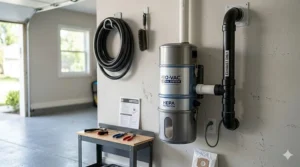
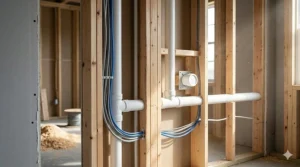
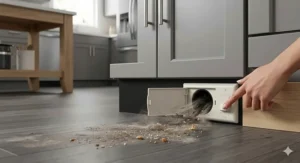
New construction offers ideal timing for central vacuum installation. Your contractor can route 2-inch PVC piping through walls to strategically placed inlet valves, typically one per floor level plus extras for large rooms. The power unit installs in the garage, basement, or utility closet with proper electrical service and external venting if required.
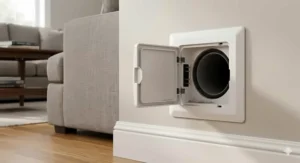
Plan inlet locations based on hose reach—a standard 30-foot hose covers approximately 1,500 square feet from a single inlet. For a 3,000-square-foot home, you typically need 2-3 inlets to ensure comfortable reach. Place inlets at stairway landings for easy access to both floors, and consider garage or workshop inlets for vehicle cleaning.
The electrical requirement is straightforward: most units need a dedicated 15-20 amp circuit. External venting (if your system requires it) resembles dryer vent installation—a simple 4-inch duct to the exterior. Total installation cost during construction typically runs $1,200-2,500 including materials and labor, depending on home size and inlet count.
Retrofitting Existing Homes
Retrofitting proves more challenging but entirely feasible. Contractors fish PVC piping through walls, utilizing existing wall cavities, attics, and basements to minimize drywall work. Expect more extensive labor and potential drywall patching compared to new construction. Budget $2,000-4,000 for retrofit installations in typical homes.
The key is working with experienced installers who understand central vacuum systems specifically—general contractors might bid low then struggle with the specialized requirements. Seek installers certified by major manufacturers for optimal results and warranty protection.
Real-World Performance: What the Specs Don’t Tell You
Airwatts vs. Horsepower: The Truth
Marketing materials often emphasize horsepower, but airwatts measure actual cleaning power more accurately. Horsepower indicates motor input, while airwatts measure useful output at the cleaning head. A 1.5 HP motor might produce 500 airwatts or 650 airwatts depending on design efficiency—airwatts tell the real story.
Systems with 550-650 airwatts handle homes up to 7,000 square feet adequately. Jump to 700-750 airwatts for 9,000-10,000 square feet. Beyond 10,000 square feet, consider commercial-grade systems exceeding 800 airwatts. Undersized systems struggle at distant inlets, creating frustrating performance variations throughout your home.
Canister Capacity: Bigger Isn’t Always Better
A 6-gallon canister suffices for most residential applications, requiring emptying just 2-3 times yearly. Upgrading to 9-gallon capacity makes sense for large families or pet owners, but the average household won’t notice meaningful benefits. What matters more: ease of canister removal and emptying. Bottom-load designs outperform top-load systems for convenient maintenance.
Filtration: When HEPA Really Matters
HEPA filtration captures 99.97% of particles 0.3 microns and larger—essential for severe allergy sufferers. Standard filtration with disposable bags provides adequate performance for most households without the premium cost. Cyclonic filtration offers a middle ground: no bags or filters to replace, though it typically vents exhaust air outside rather than filtering it internally.
Central Vacuum System vs Traditional Vacuums: The Real Comparison
Power Difference
Central vacuum systems deliver 3-5 times more suction power than comparable portable vacuums. The stationary motor can be larger and more powerful since you’re not carrying it. This translates to fewer passes over carpeted areas and more effective deep cleaning.
Air Quality Impact
Research from UC Davis demonstrates central vacuums reduce indoor allergens significantly more than portable models. Traditional vacuums recirculate fine dust particles through exhaust air, spreading allergens throughout rooms despite HEPA filters. Central systems exhaust air to garages, basements, or outside entirely, removing contaminants from living spaces.
According to estimates by the Environmental Protection Agency (EPA), central vacuum systems can reduce allergy symptoms and airborne irritant exposure substantially. For asthma sufferers and families with respiratory sensitivities, this improvement in indoor air quality is transformative.
Convenience Factor
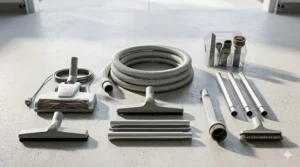
Central systems eliminate carrying heavy vacuum units between floors or rooms. You transport only a lightweight hose and cleaning attachment. The power unit remains stationary in an out-of-the-way location. For multi-story homes, this convenience factor is substantial—especially for elderly homeowners or anyone with mobility challenges.
Long-Term Economics
Quality portable vacuums cost $300-600 and last 2-5 years with typical use. Central vacuum systems cost $1,500-3,500 installed but last 20-30 years with basic maintenance. Over a 25-year period, you might replace portable vacuums 5-8 times ($2,500-4,000+) while your central system continues operating flawlessly. The math clearly favors central vacuums for long-term homeownership.
Choosing the Right System for Your Home Size
Small Homes (2,000-4,000 sq ft)
The OVO 630 or Broan-NuTone PP6501 provides ample power without oversizing. Focus on quiet operation and ease of use rather than maximum airwatts. Two inlet valves typically suffice, keeping installation costs reasonable. Budget $400-750 for the power unit plus $800-1,500 for professional installation.
Medium Homes (4,000-7,000 sq ft)
The OVO 700 Heavy Duty or Broan-NuTone PP6501 handles this range efficiently. Three inlet valves provide comfortable reach throughout most floor plans. Consider hybrid filtration systems for maximum flexibility. Budget $450-800 for the power unit plus $1,200-2,200 for installation.
Large Homes (7,000-10,000 sq ft)
The Prolux CV12000 or Broan-NuTone PP7001 delivers consistent power across all inlets. Four to five inlet valves ensure convenient access throughout expansive floor plans. The investment is substantial but justified by the coverage area. Budget $700-1,000 for the power unit plus $1,800-3,000 for installation.
Estate Homes (10,000+ sq ft)
Consider commercial-grade systems or multiple residential units strategically placed. The Prolux CV12000 represents the upper limit of residential systems, but properties exceeding 12,000 square feet benefit from professional consultation with commercial central vacuum specialists.
Maintenance and Long-Term Cost Analysis
Central vacuum systems require minimal maintenance compared to portable vacuums, but understanding the service schedule ensures optimal longevity.
Regular Maintenance Schedule
Every 6-12 months: Empty canister when it reaches 2/3 capacity. For bagless systems, clean or replace washable filters according to manufacturer specifications. Check inlet valves for obstructions.
Every 2-3 years: Replace disposable filters (if applicable). Inspect hose for cracks or damage. Check all inlet connections for air leaks. Test suction power at each inlet location to identify potential clogs.
Every 5-7 years: Professional service inspection recommended. Check motor brushes (if applicable). Verify electrical connections remain secure. Inspect exhaust venting for obstructions.
Replacement Parts and Costs
Disposable filtration bags cost $2-4 each, used once every 3-6 months for most households—roughly $10-15 annually. Replacement filters (for systems using them) run $15-40 every 2-3 years. Hoses eventually wear out after 10-15 years, costing $100-250 to replace. Motors rarely need replacement within 20-25 years if properly maintained.
Total maintenance costs typically run $30-60 annually—far less than replacing portable vacuums every few years. The long service life and minimal maintenance make central systems exceptionally economical for long-term homeowners.
Common Mistakes When Buying a Central Vacuum System
1. Undersizing for Home Square Footage
The most common error: purchasing a system rated for 5,000 square feet when your home measures 7,000 square feet. Marketing materials often overstate coverage areas. Always round up to the next size tier for optimal performance. An oversized system handles your home easily; an undersized system struggles constantly.
2. Ignoring Inlet Placement Planning
Poor inlet placement creates cleaning frustration. A 30-foot hose has limited reach—you need inlets strategically positioned to cover all areas without stretching the hose to its absolute limit. Work with your installer to map optimal inlet locations during the planning phase.
3. Choosing Based on Initial Cost Alone
The cheapest system might cost less upfront but could lack features that become essential later. Hybrid filtration, soft start/stop technology, and adequate canister capacity pay dividends throughout decades of ownership. Spending an extra $150-300 for these features makes sense for most buyers.
4. Overlooking External Venting Requirements
Some systems require external venting, others don’t. Verify local building codes and HOA regulations before purchasing. External venting installation adds $150-400 to installation costs but dramatically improves air quality for allergy sufferers.
5. Neglecting Professional Installation
DIY installation seems cost-effective but creates problems if done incorrectly. Air leaks from poorly sealed connections reduce suction power. Incorrectly routed piping causes clogs. Professional installers complete the job in 4-8 hours with proper tools and experience—worth the investment for system longevity.
Comparing Central Vacuum Systems to Alternative Cleaning Solutions
| Feature | Central Vacuum | Robot Vacuum | Cordless Stick | Traditional Upright |
|---|---|---|---|---|
| Initial Cost | $1,500-$3,500 | $300-$1,000 | $300-$700 | $200-$800 |
| Power (Airwatts) | 550-750+ | 20-40 | 100-200 | 150-400 |
| Coverage Area | Whole home | Auto navigation | Manual, limited runtime | Manual |
| Air Quality Impact | Excellent (external exhaust) | Fair | Good (with HEPA) | Poor (recirculates air) |
| Maintenance | Low (2-3x/year) | Medium (weekly) | Medium (regular charging) | High (frequent bag/filter changes) |
| Lifespan | 20-30 years | 3-5 years | 4-7 years | 5-10 years |
| Best For | Long-term homeowners | Daily light cleaning | Quick spot cleaning | Renters, budget buyers |
This comparison reveals central vacuum systems excel at whole-home cleaning power and longevity, while alternative solutions serve specific niches. Robot vacuums handle daily maintenance but can’t deep clean. Cordless sticks work for quick cleanups but lack runtime for whole-home cleaning. Traditional uprights suit renters unwilling to invest in permanent systems.
Central vacuums make most sense for homeowners planning 10+ years in their current residence. The high initial investment pays off through decades of superior performance and minimal replacement costs. For shorter-term housing situations, portable solutions remain more practical despite their limitations.
Price Range and Value Analysis Comparison
| Price Tier | Representative Models | What You Get | What You Give Up |
|---|---|---|---|
| Budget ($400-$500) | OVO 630 | Solid performance, basic features, 5-7 year lifespan | Limited coverage, no smart features |
| Mid-Range ($600-$800) | OVO 750 Smart, Broan-NuTone PP6501 | Smart features, excellent filtration, 15-20 year lifespan | Higher upfront cost |
| Premium ($850-$1,000) | Prolux CV12000, Broan-NuTone PP7001 | Maximum coverage, no-suction-loss design, 25-30 year lifespan | Highest initial investment |
The budget tier delivers surprising value for homes under 7,500 square feet. You sacrifice smart features and ultimate longevity but gain professional-grade cleaning power immediately. Mid-range systems add smart home integration and superior filtration—worthwhile upgrades for tech-forward households or allergy sufferers. Premium models justify their cost through extended coverage areas and designs engineered for multi-decade service life.
From a value perspective, the OVO 630 and Prolux CV12000 represent the sweet spots at opposite ends of the spectrum. The OVO 630 maximizes performance per dollar for budget-conscious buyers. The Prolux CV12000 delivers the lowest cost-per-year-of-ownership for buyers planning 20+ years in their homes.
❓ Frequently Asked Questions
❓ How long does a central vacuum system installation take?
❓ Can you add a central vacuum system to an existing house?
❓ What is the lifespan of a central vacuum system motor?
❓ Do central vacuum systems increase home value?
❓ How often do you need to empty a central vacuum canister?
Conclusion: Choosing Your Central Vacuum System
Selecting the right central vacuum system depends on three primary factors: home size, budget, and specific priorities like noise level or air filtration. For most homeowners building or renovating, the OVO 630 delivers exceptional value without compromising performance. Buyers prioritizing absolute longevity should seriously consider the Prolux CV12000 with its no-suction-loss design and 25-year service promise.
The technology has evolved substantially from the systems installed 20-30 years ago. Modern central vacuums incorporate smart features, superior filtration, and thoughtful design elements like soft start/stop and hybrid filtration. They’ve become genuinely effective cleaning solutions rather than expensive curiosities.
Remember that the best system matches your specific needs. A 2,000-square-foot condo doesn’t need a 750-airwatt powerhouse designed for 10,000-square-foot estates. Similarly, a sprawling home can’t make do with an undersized system struggling to maintain suction at distant inlets.
According to HowStuffWorks, central vacuum systems now offer three to five times more power than traditional portable vacuums while eliminating the need to carry heavy units between rooms. This combination of convenience and performance explains why they’ve become increasingly popular in upper-middle-class new construction.
Installation timing matters significantly. If you’re building or doing major renovations, install the central vacuum system now while walls are open. Retrofit installations work perfectly well but cost more and require additional labor. Don’t postpone this decision—you’ll appreciate the convenience every single day for decades to come.
Recommended for You
- 7 Best Carpet Cleaner Under $300 in 2026
- 7 Best Carpet Cleaners High Traffic Areas 2026
- 7 Best Carpet Cleaner Machines That Transform Your Home – 2026
Disclaimer: This article contains affiliate links. As an Amazon Associate, I earn from qualifying purchases. If you purchase products through these links, we may earn a small commission at no additional cost to you.
✨ Found this helpful? Share it with your friends! 💬🤗
